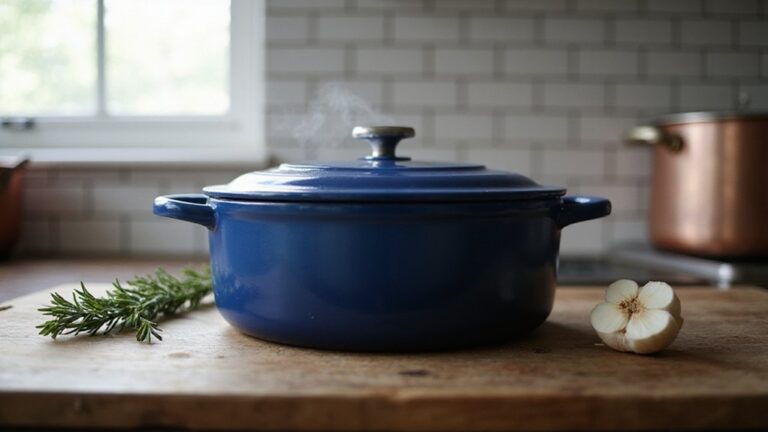
You’ll master hassle-free, restaurant-quality chicken dishes by leveraging your Dutch oven’s superior heat retention and moisture control. Start with a high-temperature sear to develop a flavorful crust, then braise bone-in cuts like thighs or breasts at reduced heat with aromatics, vegetables, and quality stock. Whether you’re preparing Spanish-style chicken with smoked paprika and olives or classic preparations with potatoes and root vegetables, proper temperature management and resting techniques guarantee tender, juicy results every time. Explore specific recipes that’ll elevate your weeknight dinners.
Dutch Oven Spanish Style Chicken
When you’re seeking a one-pot meal that delivers authentic Spanish flavors with minimal cleanup, Dutch oven Spanish style chicken combines tender bone-in thighs with a vibrant rice base and aromatic spices. You’ll sear seasoned chicken until golden, then sauté aromatics before deglazing with lemon juice or beer for flavor enhancement. Adding basmati rice, smoked paprika, cumin, and turmeric creates the foundational profile. Incorporate fire-roasted tomatoes, roasted red peppers, and green olives for depth and complexity. Proper care of your Dutch oven is essential to maintaining its functionality and appearance over time. Pour chicken stock into your Dutch oven, nestle the seared chicken atop the rice mixture, cover, and braise at 350°F for 30–40 minutes. The result yields tender Spanish chicken with perfectly cooked rice that absorbs all the aromatic spices and savory broth, making it a standout option for hearty one-pot meals that are easy to prepare.

Even Heat Distribution Retention: This Umite Chef Dutch oven Made with heavy-duty enameled cast iron, ensures even heat distribution for perfect searing and slow cooking, locking in flavors. thickened walls lock in heat for slow braising, searing, and baking. Unlike thin pots that scorch food, this professional-grade Enameled cast iron potSuperior heat retention after preheating (allow 5-7 mins for even distribution). CRITICAL: Always cool naturally for 45+ mins before cleaning. Thermal shock (hot-to-cold contact) cracks enamel. USE TIP: Preheat 2-3 mins on medium-low only

PRE-SEASONED CAST IRON: 7-quart heavy-duty dutch oven pot with lid and dual side handles for easy lifting and maneuvering

What's in the box: one 5.3-quart Dutch oven, one braiser, one grill pan and one lid.
Classic Roast Chicken Recipes
A perfectly roasted whole chicken—typically 4 to 5 pounds—begins with meticulous preparation: you’ll remove the giblets and neck, pat the bird dry with paper towels to promote crispy skin development, and season both the cavity and exterior liberally with a blend of kosher salt, black pepper, paprika, thyme, and sage, working the rub under the breast skin for maximum flavor penetration. You’ll tie the legs with kitchen twine for even cooking, then roast at 350–450°F covered for 30–35 minutes before revealing. After reaching 165°F internally, you’ll rest the chicken 10–15 minutes before carving. A classic method of preparing chicken variations include herbed butter basting, fresh rosemary infusions, and lemon-garlic aromatics. This classic roast technique yields moist meat and golden, crispy skin while roasted vegetables absorb flavorful pan drippings. Additionally, cooking covered initially helps keep the bird moist by cooking it over a bed of vegetables.
Dutch Oven Chicken Breast With Potatoes
Dutch oven chicken breast with potatoes streamlines the classic roast technique into a single, efficient vessel where you’ll brown seasoned chicken breasts in butter and olive oil over medium-high heat for 2–3 minutes per side, then nestle them atop cubed potatoes, carrots, and onions before braising at 400°F for 30–45 minutes until the chicken reaches 165°F internally and the vegetables absorb the rendered juices.
Your chicken seasoning—paprika, garlic powder, onion powder, salt, and pepper—applied before browning develops a flavorful crust that anchors the dish. Dutch oven techniques like nesting proteins above vegetables enhance flavor transfer while minimizing preparation steps. Searing the chicken before baking is a key technique for achieving a rich, caramelized exterior. Baste halfway through cooking to maintain moisture. Remove the lid during final minutes to concentrate sauce and enhance browning. Rest the chicken 3–5 minutes post-cooking for ideal juice redistribution before serving. Additionally, using a Dutch oven allows for one-pot convenience in roasting and braising techniques, resulting in a flavorful, juicy chicken with tender vegetables.

PREMIUM ENAMELED CAST IRON DUTCH OVEN WITH LID - Made from heavy-duty enameled cast iron, this Dutch oven with lid delivers even heat distribution and excellent heat retention for reliably cooking meals evenly and keeping them warm for longer. Use for soups, braising meats, roasting, simmering, and slow cooking without hot spots or scorching.

【Airtight Lid Locks In Freshness & Flavor】Experience the magic of this Dutch oven with lid, precision-engineered to create a tight seal. It locks in moisture and essential nutrients, delivering richer flavor and incredibly tender, juicy results in every dish—from slow-braised meats to hearty soups. Achieve a perfect, crispy crust on your artisan loaves—it's the ultimate Dutch oven for bread baking. The interior self-basting dots continuously redistribute condensation, ensuring your food stays perfectly moist, never dry or mushy

Common Ingredients Across Recipes
While the Dutch oven chicken breast with potatoes showcases one approach to braising, you’ll find that successful Dutch oven chicken recipes—whether cacciatore, Spanish-style, roast, or fall-apart preparations—rely on a consistent foundation of ingredients that shift in proportion and combination rather than in kind.
You’ll consistently employ bone-in chicken cuts as your protein foundation, selecting thighs, legs, or quartered pieces depending on your chosen style. Aromatics and vegetables form your flavor base: onions and garlic appear universally, while bell peppers, carrots, and mushrooms vary by recipe type. Notably, the timing and method of cooking ensure that meats preserve peak quality similar to vacuum sealed storage methods, preventing dryness.
Your seasoning profile remains anchored in salt, black pepper, and fresh herbs like rosemary and thyme. Olive oil provides your cooking medium, and you’ll incorporate tomatoes, wine, or broth as braising liquids. These fundamental components create the structural integrity underlying every Dutch oven variation. Additionally, utilizing gentle preheating helps preserve the enamel while ensuring even cooking throughout your dish.

Pre-seasoned 2-in-1 cast iron dutch oven: The 2-In-1 cast iron dutch oven pot with skillet lid has been burned with vegetable oil,(no synthetic coatings or chemicals). The shallow skillet that can be used as a lid

IDEAL FOR FAMILY MEALS - Perfectly sized for families of 3–5 people, this 5.5QT Dutch oven handles everything from hearty soups and stews to one-pot dinners, pasta dishes, and Sunday pot roasts. Spacious enough for a whole chicken yet practical for everyday cooking, it delivers the ideal balance between daily family meals and weekend entertaining. Also well-sized for artisan bread bakers who want one pot for both family dinners and sourdough baking.

2-in-1 Versatile Cookware Design: The Lodge Cast Iron Double Dutch Oven is a Dutch oven and dual-handle skillet in one smart design, expanding your options for searing, baking, frying, and more
Cooking Techniques and Tips
Because proper heat management fundamentally determines your success with Dutch oven chicken, you’ll need to master three critical temperature phases: the initial sear, the primary braise, and the finishing phase. Begin at 425-475°F for 5-10 minutes to develop a flavorful crust that enhances the final dish. This searing process is essential for creating a flavorful crust, which is a technique also used in beef brisket recipes. Reduce heat to 350-400°F for covered cooking, which retains moisture while you braise the chicken. During this phase, root vegetables nestled around the bird absorb pan juices, creating natural sauce.
Adding chicken stock or broth not only boosts flavor but also helps in tenderizing the meat during the cooking process.
Uncover your Dutch oven during the final 30-40 minutes at your primary temperature to achieve skin crispness. This covering-and-uncovering strategy combines two distinct cooking methods: steam-based braising for tenderness and dry-heat roasting for texture contrast. Insert your thermometer into the thickest thigh portion, avoiding bone contact, until you reach 165°F for doneness confirmation.