If you’re trying to get an accurate body temperature quickly, a non-contact infrared thermometer can be a handy tool. It works by measuring the heat emitted from your forehead without touching your skin.
To ensure reliable results, you’ll need to follow a few simple steps. Here’s what you should know to use it correctly every time.
Get Your Thermometer Ready for Accurate Results
First, verify that your device is set to “body mode” rather than surface mode. If needed, switch the setting to Celsius for consistent readings. Perform calibration procedures by consulting your manual to adjust the emissivity, setting it to 0.98 if adjustable. Use the manufacturer’s supplied cover to check calibration accuracy, ensuring the thermometer reads correctly. Lastly, make sure the thermometer has been stored in the same environment for at least 30 minutes before use. This allows it to equalize with the ambient temperature, providing the most accurate measurement possible. For consistent results, think of low cooking temperatures like those used for pot roast to maintain stable conditions. This process is similar to how a cast iron skillet maintains consistent heat for an even sear. Similarly, an oven requires trapped steam to create a crisp exterior just as a Dutch oven does for artisan bread.

Non-contact Thermometer: According to the infrared technology, you can measure body temperature without touching the ear or the forehead, prevent cross-infection between multiple people. Measurement Distance: 2-3.15 inch.

★【MULTI-MODE THERMOMETER】:The Berrcom forehead thermometer is designed for all ages, adults, infants and elders. It not only supports forehead function, but is able to take room/object temperature. ℃ and ℉ are easily switchable.

High Accuracy & Reliable Performance: This VIEK infrared thermometer delivers precise readings (±0.4°F) for infants, children, and adults, designed for consistent and dependable temperature monitoring at home.
Set Up the Environment for Your Non-Contact Thermometer
The environment where you take the measurement should be carefully controlled. Keep the room temperature between 60.8 and 104 degrees Fahrenheit, and ensure humidity stays below 85 percent—higher levels can cause your sensor to struggle. Avoid placing yourself in drafty areas, direct sunlight, or near radiant heaters, as these conditions can skew your readings. Your thermometer’s calibration cannot compensate for poor environmental conditions. Allow your thermometer to acclimate to the room temperature for at least 10 to 30 minutes before first use. If you move between different temperature zones, wait a minimum of 15 minutes for the internal components to stabilize. Make sure there is a clear line of sight to the forehead—no steam, dust, or hair should block the sensor. Keep mobile phones and other electronic devices at a distance to prevent electromagnetic interference. Also, avoid shiny surfaces or glare that can scatter infrared light and affect accuracy. If the sensor lens becomes contaminated, carefully clean it using a vinegar spray solution to remove any buildup that could interfere with readings. Infrared thermometers are less reliable for measuring internal temperatures, making digital probe thermometers a superior choice for consistent results. For similar precision in other applications, a controlled water bath temperature is crucial for achieving consistent results.
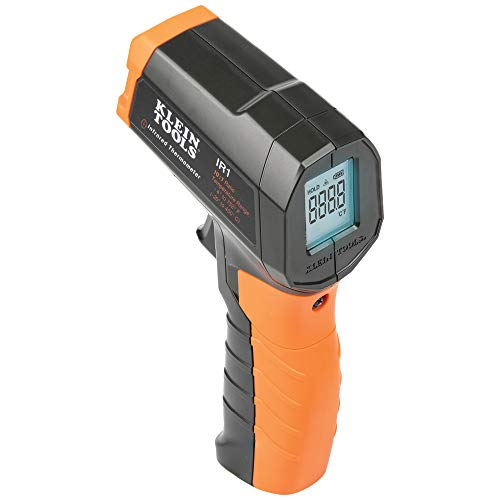
PRECISE TEMPERATURE MEASUREMENT: Optical resolution (distance-to-spot) of 10:1 ensures accurate temperature readings from a distance

✅ 3-in-1 Non-Contact Infrared Thermometer (2-Pack Value): Two versatile thermometers measure body, milk, food, and room temps. Share one in the nursery and kitchen – backlit LCD works day or night

PRECISE TEMPERATURE MEASUREMENT: Infrared Thermometer (Cat. No. IR1) with a 10:1 optical resolution ensures accurate temperature readings from a distance
Prep the Person’s Forehead for a Better Reading
To ensure accurate forehead readings, proper preparation is essential. Begin with hair management—brush long hair or bangs aside so they do not cover the center of the forehead. Move or secure loose strands and remove headbands or clips that may block the vascular area, as these can interfere with temperature detection. Next, focus on skin preparation by wiping away sweat, makeup, or face creams with a clean, dry cloth. These substances create thermal barriers that can distort the reading. Remove any head coverings like hats or bandages and wait at least 10 minutes if you’ve recently taken them off. Avoid measuring immediately after exercise or exposure to extreme cold; instead, allow the forehead to acclimate to room temperature. Keep the skin bare and dry for the clearest and most accurate measurement. Just as cast iron cookware requires preheating for 15-20 minutes to achieve consistent heat, the forehead needs a stable, interference-free surface for reliable temperature detection. Similarly, during routine maintenance of a rusty Dutch oven, removing dirt and oil residues before re-seasoning is crucial for building a durable protective coating. This process mirrors how stripping away old seasoning from a skillet prepares the surface for a fresh, durable layer.

✨Swift Results in Just 1 Second: Experience the efficiency of ANMEATE thermometer for adults with its remarkable 1-second read capability. Obtain accurate temperature readings swiftly, providing you with timely and dependable results.

No-touch: non-contact infrared technology produces clinically-proven accurate temperature readings in as little as 2 seconds
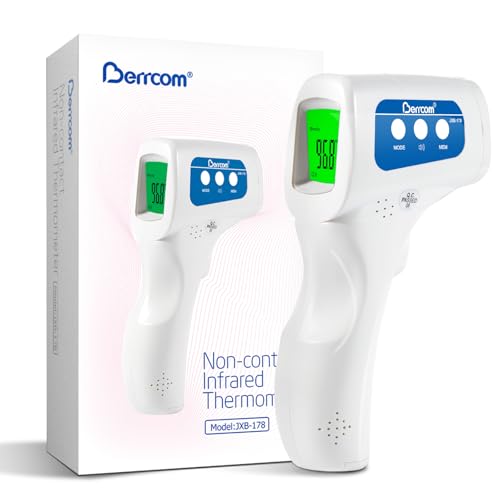
【3-in-1 non-contact infrared thermometer】The 3-in-1 infrared thermometer can not only measure body temperature, but also milk temperature, food temperature and room temperature.The backlit LCD display makes the measured values still visible at night
Measure Forehead Temperature Correctly With a Non-Contact Thermometer
To measure the forehead temperature accurately with a non-contact thermometer, position the device perpendicular to the skin and aim it at the center of the forehead, between the eyebrows and the hairline. Hold the thermometer steady at a distance of 1 to 3 centimeters from the skin without moving until you hear a beep, which indicates a successful reading. Keep the sensor aligned and parallel to the skin throughout the process to avoid skewed results.
Ensure the thermometer has acclimated to the room temperature for at least 10 minutes before use. Avoid measuring in drafty spaces or in direct sunlight, as these conditions can affect sensor calibration. Maintain ambient room conditions between 16 and 40 degrees Celsius for accurate readings. Confirm that the thermometer is set to forehead mode and the correct measurement scale. Have the person stay still, avoiding eating or drinking before measurement, to ensure consistent and precise temperature readings. If a fever is detected, the display will show an orangey yellow or red color and a frowny face to indicate high temperature. For best care of the device, avoid using dish soap or soaking the sensor overnight to protect the seasoning and prevent damage. These thermometers feature adjustable emissivity to ensure readings remain accurate across different surface types. For a truly comforting meal, the same principle of low and slow cooking in a Dutch oven transforms a tough cut of meat into a fall-apart tender roast.

No-Contact Thermometer: GoodBaby touchless thermometer provides contactless accurate temperature reading that helps you avoid cross infections. No need to clean the thermometer after every use

Fast, Accurate Temperature Readings for All Ages: Instant readings for adults, kids, and babies with this touch-free Amplim AmpMed thermometer for newborn essentials and infant temperature monitoring

【0-3 Years Old Child Mode】The Momcozy baby digital thermometer is equipped with a child mode specifically designed for infants aged 0-3 years. This mode ensures safe and accurate temperature measurements for your little baby, providing you with peace of mind during critical moments.It is also suitable for older kids and adults, making it a practical thermometer for the whole family.
Interpret Temperature Readings and Error Codes Correctly
Interpreting temperature readings and error codes correctly is essential for accurate results. When you take a reading with your non-contact thermometer, first look at the color of the display. A green screen means the temperature is normal, yellow indicates an elevated temperature, and red suggests a potential fever. Typically, a forehead reading above 35.6°C (96.1°F) signals a fever, though it’s usually about 0.5–1°F lower than an oral measurement. Keep in mind that subtle differences can occur, so consider other symptoms if you’re unsure. Because forehead skin surface temperatures are naturally lower than core body temperature, a normal reading commonly falls within the 91°F to 96°F range. Error codes provide additional clues if your readings seem off. An “H” indicates the temperature exceeds 42.2°C (108°F)—you should re-measure immediately. An “L” means the reading is below 34°C (93.2°F), which also warrants a retake. “Err” signals a display error; in this case, try measuring again. If your screen is blank, check the batteries to ensure the device is powered properly. Additionally, allow the device to acclimate to the room temperature for a few minutes, similar to resting the steak after cooking, to improve consistency. Always verify that your thermometer is in body mode, not surface mode, because incorrect settings can lead to inaccurate results. This non-contact method is essential for human temperature screening in medical settings to prevent cross-contamination.

Get reliable, precise temperature readings in just 1 second with this no-touch forehead thermometer. Equipped with a high-sensitivity infrared sensor, it delivers consistent results for babies, children, and adults, giving you peace of mind whenever you need to check for fever. The thermometer supports both ℉ and ℃ switching, meeting all your daily temperature measurement needs at home.

✅Fast & Accurate - Discover the precision of our forehead thermometer. Engineered to deliver highly accurate temperature measurements, our professional-grade device offers a user-friendly experience. With a non-contact design, it ensures hygienic usage and provides fast results within seconds. Suitable for all ages, it is a must-have for households and medical professionals alike. Rely on our brand's commitment to accuracy and obtain the peace of mind you deserve.

A century of powerful relief: At Vicks, we believe everyone deserves a touch of care, and our digital thermometer for adults, digital thermometer for kids, and baby thermometer for infants provide quick, accurate results when you need them most
Clean and Store Your Thermometer for Long-Term Accuracy
To ensure long-term accuracy, proper cleaning and storage of your thermometer are essential. Begin by following the manufacturer’s cleaning instructions, and avoid submerging the device unless explicitly allowed. Always turn it off completely before cleaning. Use a soft, lint-free cloth moistened with at least 60% isopropyl alcohol to gently wipe the lens and outer surfaces. Steer clear of harsh chemicals that could damage delicate sensors. Allow the device to air-dry fully before using it again. Regular calibration checks help confirm accuracy, but diligent cleaning prevents sensor drift over time.
Storing your thermometer correctly is equally important. Keep it in a cool, dry place between 4 and 50°C. Use the original case if available, to shield the lens and sensor from dust, dirt, and shocks. Avoid storing it in damp or steamy environments to prevent moisture buildup. Handle the device carefully to avoid drops, and consider attaching a lanyard for added security. Replace batteries regularly, and always ensure the cover is securely in place to minimize moisture exposure. Periodically inspect the lens and clean it only when necessary to preserve its integrity and avoid over-cleaning damage. Using instrument stations or cases when not in use helps prevent damage from drops or impacts.