You can master no-knead bread without a Dutch oven by using a preheated baking stone and steam from a water-filled pan instead. Combine flour, salt, and yeast, then mix with lukewarm water until shaggy. Let it bulk ferment for 12-18 hours at room temperature, performing stretch-and-fold sessions early on. After final proofing, score your dough and bake at 450°F until golden-brown. Uncover how creative flavor variations and customizations can transform your artisan loaf into something uniquely yours.
Essential Ingredients and Equipment Setup
You’ll need just three basic dry ingredients to get started: flour, yeast, and salt. All-purpose flour works well, though bread flour improves structure. Your dry ingredient ratios matter: use about 1/2 to 1 teaspoon of active dry yeast and 1.5 to 2.5 teaspoons of salt per loaf.
For liquids, you’ll combine warm water between 100°F and 120°F—this temperature activates yeast without killing it. You’ll typically need 1 1/3 to 2 2/3 cups depending on your hydration preference. It’s also important that you preserve the seasoning of your baking equipment to ensure the best results.
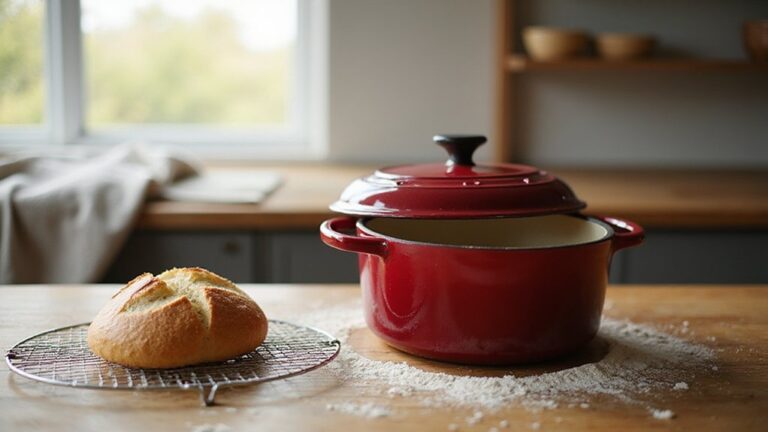
Your essential mixing tools include a large bowl for fermenting, a wooden spoon or dough whisk for combining ingredients, and plastic wrap to cover your dough. While a Dutch oven traditionally bakes no-knead bread, you can adapt your equipment to achieve excellent results with alternative methods. Baking inside a preheated Dutch oven effectively creates a crispy crust and enhances the bread’s overall texture.

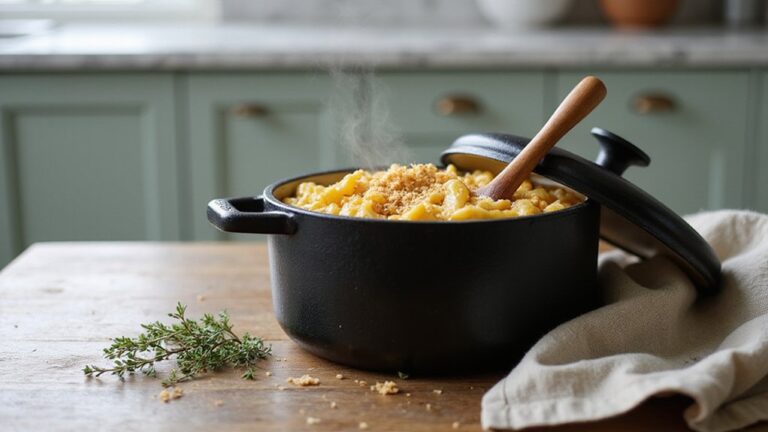
IDEAL FOR FAMILY MEALS - Perfectly sized for families of 3–5 people, this 5.5QT Dutch oven handles everything from hearty soups and stews to one-pot dinners, pasta dishes, and Sunday pot roasts. Spacious enough for a whole chicken yet practical for everyday cooking, it delivers the ideal balance between daily family meals and weekend entertaining. Also well-sized for artisan bread bakers who want one pot for both family dinners and sourdough baking.


Mixing and Preparing Your Dough
Because no-knead bread relies on time rather than mechanical work, the mixing stage is straightforward and forgiving. You’ll combine flour, salt, and yeast in a large bowl, whisking thoroughly for even distribution. Pour lukewarm water (70°F to 100°F) into your dry ingredients all at once, then stir until no flour remains visible. The Dutch oven’s ability to infuse rich flavors makes it an ideal companion for cooking alongside your delicious bread, enhancing your dining experience.
Your mixing techniques should be minimal—just a few seconds of stirring suffices. The resulting dough consistency will be shaggy, sticky, and wet, which is exactly right. Don’t worry if it seems looser than traditional bread doughs; this texture’s essential for developing an open crumb structure. Remember, if you allow proper maintenance of your tools, it can enhance your baking experience.
If your dough appears too dry, add water one tablespoon at a time. Conversely, add flour incrementally if it’s too wet. Cover your bowl tightly and let it rest at room temperature for 12 to 18 hours.
Fermentation and Proofing Steps
Once your dough’s covered and set aside, the real magic happens during fermentation—a slow, patient process where time does the heavy lifting that kneading would normally provide. During bulk fermentation, which typically lasts 12 to 18 hours at room temperature, your dough develops strength as bubbles dot the surface and gluten proteins naturally align. You’ll perform stretch and fold sessions at the first, second, and third hours—eight folds each—to create that essential tight skin without manual kneading.
After shaping, you can cold-retard overnight in the refrigerator for enhanced flavor. Your final proofing takes about 2.5 hours at room temperature. The dough should increase one and one-half times in size. Use the poke test: an indentation should spring back slowly, signaling readiness for baking.
Baking Without a Dutch Oven
While a Dutch oven creates an excellent steamy environment for no-knead bread, you don’t need one to achieve a crispy, bakery-quality crust. Select baking surfaces like a preheated baking stone or sheet pan to support your loaf. To replicate the steam environment created by a Dutch oven, create steam by placing a metal pan filled with hot water on the oven’s bottom rack—this essential step mimics your Dutch oven’s moisture-trapping effect. Preheat your oven to 450°F for optimal oven spring and crust development. Before baking, gently shape your dough and score the top with a sharp knife to control expansion. Additionally, the Dutch oven’s superior heat retention allows for better baking outcomes when using alternate methods. Bake for 30–50 minutes depending on your loaf’s size, checking for a golden-brown crust and hollow sound when tapped. Cool completely before slicing for excellent texture.
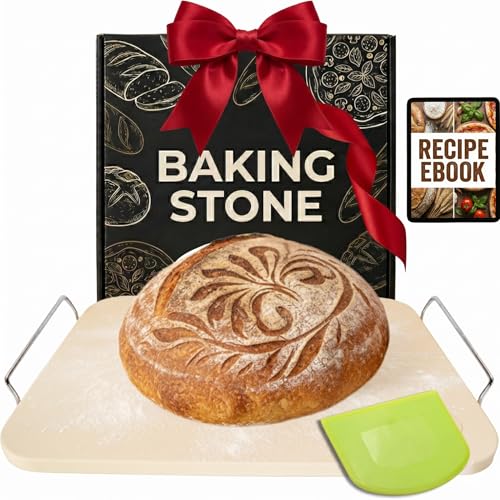
BAKE ARTISAN BREAD AT HOME: Elevate your baking with our premium bread baking stone. It transforms your home oven or BBQ into a professional-style bakery, perfect for creating crusty, delicious bread, and is versatile enough for baking pizzas, vegetables, and more.
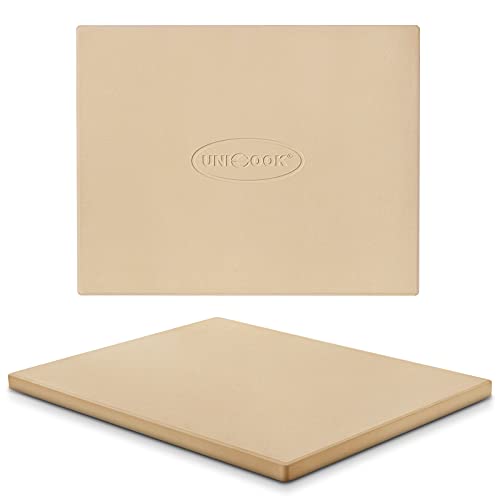
Rectangular Baking Stone: This baking stone measures 15" L x 12" W with 0.6" thickness and weighs about 6.8 lbs. The Unicook pizza stone is ideal for baking personal pizzas up to 11 inches in diameter. For 12-inch or larger pizzas, please check our larger models. For charcoal kettle grill, please check our round stone models. Important: Please ensure a minimum of 1-2 inches of clearance on ALL sides inside your oven or grill for proper fit and airflow

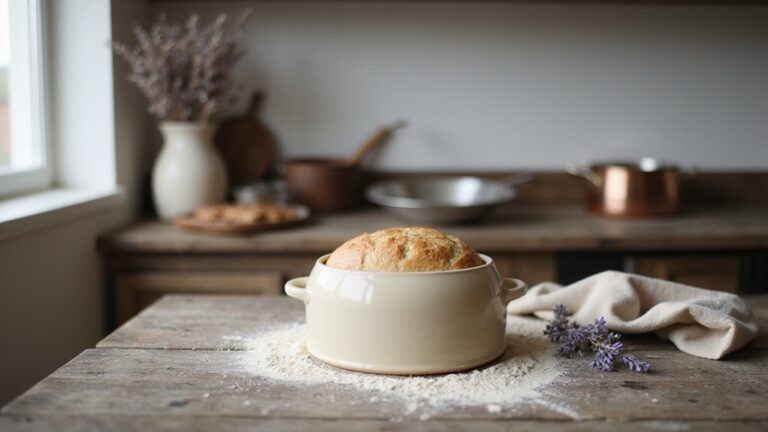
🍓【Professional baker】You can bake professional Italian bread with Superstone Covered Baker.The unglazed interior pulls moisture from the dough, producing a bread with a crackly crust and light interior crumb just like breads from your favorite artisan bakery!
Creative Flavor Variations and Customizations
The beauty of no-knead bread lies in its versatility—you can transform your basic dough into countless flavor profiles by incorporating ingredients during the final stretch or before baking. Experiment with savory herb and garlic combinations like rosemary with kalamata olives, or try cheese and vegetable infusions such as parmesan with sun-dried tomatoes. For texture contrasts, sprinkle sesame and poppy seeds on top before baking. Consider nutty and sweet variations using walnuts paired with dried cherries, or cranberry-pecan blends for seasonal variations. Ingredient swaps let you customize further—swap conventional cheese for vegan alternatives, or add gourmet toppings like pepperoni and mozzarella for pizza-inspired bread. These unique infusions elevate your homemade loaf to artisan quality.

Ready in 1 hour & everything you need is right in the box!

Signature Artisan Bread: Bake the perfect buttery bread with a fluffy, soft texture and fill your home with the delicious aroma of our best-loved homemade bread

CERTIFIED AUTHENTIC MADE/PRODUCED BY AMERICAN INDIANS. The Intertribal Argricultral Council has gifted us the seal that we are a certified product made by a Native American company. We take pride in what we do and proud of our Indigenous heritage.