You can blacken fish without cast iron by using stainless steel, carbon steel, or electric griddles with proper technique adjustments. Preheat your pan to 400–425°F, coat your fillets generously with seasoning blend containing paprika, garlic powder, and cayenne, then sear them without moving them for crust development. Monitor heat carefully to prevent scorching, flip once, and cook for 4–7 minutes total. The right cookware and heat management replicate that authentic blackened flavor perfectly.
Alternative Cookware Options
While cast iron remains the traditional choice for blackening fish, you’ve got several effective alternatives that can deliver excellent results. Your cookware preferences will depend on what equipment you already own and your comfort level with maintenance.
Stainless steel skillets require careful preheating and temperature monitoring but can achieve the necessary high heat. To ensure safety, it is wise to choose pans with a smooth bottom to avoid damaging surfaces like glass cooktops. Carbon steel pans heat quickly and develop seasoning like cast iron, making them lightweight alternatives. Electric griddles offer precise temperature control and can cook multiple fillets simultaneously, though they may produce less intense searing than cast iron. Additionally, remember to maintain the skillet’s natural non-stick properties through proper cleaning methods to enhance your cooking experience.
Avoid non-stick skillets entirely—their coatings degrade at blackening temperatures. Grill pans and outdoor grills effectively replicate charring with direct high heat. Evaluate these alternative pans based on your kitchen setup and desired cooking results.
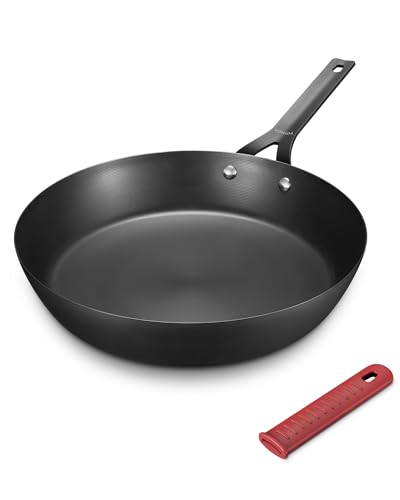
【Pre-Seasoned & Ready to Use】This carbon steel pan arrives pre-seasoned with 100% natural oil, forming an inherent easy-release surface that enhances with each use. As a...
Key Technique Adjustments for Non-Cast Iron Pans
Since non-cast iron cookware doesn’t retain heat as effectively as its cast iron counterpart, you’ll need to adjust your approach to achieve proper blackening. Medium heat settings work better than the extreme temperatures cast iron tolerates, requiring consistent monitoring throughout cooking. It’s important to ensure your oven’s true temperature is accurate, as checking your oven’s temperature can significantly impact your cooking results.
Oil considerations are critical—use neutral oils or olive oil and apply generously to both sides before cooking. This prevents sticking and guarantees proper crust formation. Preheating your pan adequately creates the foundation for success.
Non-stick advantages shine here: you can cook individual fillets without overcrowding, monitor each piece closely, and reduce flaking concerns. Handle your spatula gently to preserve the coating’s integrity. Cook fish fillets 5 to 7 minutes per side, adjusting for thickness. Pat thawed fish dry beforehand to maximize crust development. Additionally, remember that cast iron skillets are best for various cooking tasks but can struggle with acidic foods.

HEALTHY NONSTICK COATING - Switzerland ILAG nonstick surface, free of intentionally added PFOA, PFOS, lead, cadmium and other unhealthy materials, safe & healthy.

Revolutionary Carbon Nonstick Technology: No coatings or chemical layers—naturally nonstick surface for effortless release and easy cleanup
Suitable Seasoning Blends
Once you’ve mastered your pan technique and heat management, the seasoning blend becomes your next opportunity to elevate the dish. You’ll find that traditional blackened fish relies on core ingredients: garlic powder, onion powder, paprika, and cayenne pepper, combined with dried herbs like thyme and oregano. When establishing your seasoning ratios, aim for 1–2 tablespoons each of paprika and garlic powder, balancing these with cayenne pepper ranging from ½ to 1 tablespoon depending on your heat preference. Your flavor balance improves when you use ½–1 teaspoon of dried herbs and 1–2 teaspoons of salt. You can customize homemade blends to your taste or use store-bought versions interchangeably. Consider adding black pepper, smoked salt, or fennel seed for enhanced complexity. Additionally, the incorporation of hearty recipes like a breakfast casserole can be a great way to complement your blackened fish meal.

Signature Cajun Flavor: Crafted by Chef Paul Prudhomme, this seasoning delivers the bold, smoky, and slightly spicy flavors of Louisiana-style cooking; Whether pan-searing fish, grilling chicken, or preparing a seafood boil, this blackened seasoning creates a rich, flavorful crust for a true Southern - style meal.

Signature Cajun Flavor: Crafted by Chef Paul Prudhomme, this seasoning delivers the bold, smoky, and slightly spicy flavors of Louisiana-style cooking. Whether pan-searing fish, grilling chicken, or preparing a seafood boil, this blackened seasoning creates a rich, flavorful crust for a true Southern-style meal
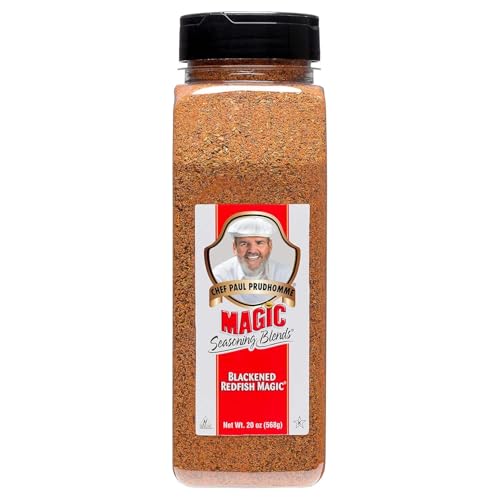
Signature Cajun Flavor: Crafted by Chef Paul Prudhomme, this seasoning delivers the bold, smoky, and slightly spicy flavors of Louisiana-style cooking; Whether pan-searing fish, grilling chicken, or preparing a seafood boil, this blackened seasoning creates a rich, flavorful crust for a true Southern-style meal
Cooking Process Steps
Coat your fish fillets generously with the seasoning blend you’ve prepared, ensuring both sides are evenly covered. Place your preheated skillet or grill over high heat, then add oil or butter just before cooking. Carefully position your fillets presentation side down, spacing them apart to prevent steaming. Don’t move the fish during initial searing—let it develop that essential blackened crust for 2–4 minutes.
Using a spatula or fish turner, flip your fillets once to blacken the second side for another 2–3 minutes. These cooking techniques for blackened fish require minimal movement and maximum heat to achieve ideal results. Your total cooking time typically ranges from 4–7 minutes, depending on fillet thickness. Check doneness by testing flakiness or verifying an internal temperature of 140–145°F. Remove your blackened fish from heat immediately to prevent overcooking.

Signature Cajun Flavor: Crafted by Chef Paul Prudhomme, this seasoning delivers the bold, smoky, and slightly spicy flavors of Louisiana-style cooking; Whether pan-searing fish, grilling chicken, or preparing a seafood boil, this blackened seasoning creates a rich, flavorful crust for a true Southern-style meal

2.5 Ounce Bottle

Authentic Creole Flavor, Seafood Seasoning: A bold blend of traditional Creole spices including paprika, garlic, onion, and herbs for a smoky, and savory taste
Heat Management Tips
Successful blackening relies heavily on maintaining proper heat throughout your cooking process. You’ll want to target a pan temperature between 400°F and 425°F, which you can verify using an infrared thermometer or visual cues like slight smoke wisps. Proper cast iron skillet care is essential to ensure the skillet maintains the right temperature and prevents food from sticking.
Your choice of pan greatly impacts heat retention. Cast iron and carbon steel excel at retaining and distributing heat evenly, while stainless steel requires more attention. If you’re using a less heat-retentive option, lower your burner slightly to prevent scorching.
For smoke control, start with high heat to sear, then reduce to medium-high if butter begins burning excessively. If your fish cooks too quickly externally but remains raw inside, lower the heat and finish cooking in your oven. Monitor your pan’s response constantly and adjust accordingly. Remember, steam generation is essential for achieving optimal cooking results, so consider using a pan with a lid or placing a water-filled tray in the oven if you can.

Collectible Cast Iron Skillet: Celebrate America’s 250th Anniversary with this special skillet; featuring lyrics and imagery from "America the Beautiful," the skillet is designed for cooking, gifting, and collecting

Versatile Cast Iron Skillet: Reach for this cast iron skillet to sear a filet mignon, pan-fry schnitzel, test new ingredients, and more

Thoughtfully Designed Cast-Iron Skillet: This 12-inch iron skillet showcases ergonomic handles, spatula-friendly sidewalls, and generous pour spouts