You’ll verify your meat thermometer’s accuracy using two proven methods: the ice point method, which uses a 32°F ice slurry, and the boiling water test, which relies on your local boiling point. Submerge the probe 2.5 inches deep, allow stabilization, then record readings. For dial thermometers, adjust the calibration nut to align with the reference temperature. Digital models may display offsets requiring documentation. Recalibrate monthly or after cleaning for food safety compliance. Understanding the adjustments specific to your thermometer type guarantees reliable cooking temperatures.
Understanding Meat Thermometer Calibration
Because meat thermometers guide critical cooking decisions that affect both food safety and quality, you’ll need to understand calibration—the process of verifying that your thermometer’s readings align with established temperature standards. Calibration importance stems from the USDA Food Safety Inspection Service’s requirement that only properly calibrated thermometers can accurately verify safe cooking temperatures. Without proper calibration, you risk undercooking meat, which creates health hazards, or overcooking it, which compromises texture and quality.
Thermometer accuracy directly influences your food safety outcomes. You’ll calibrate against recognized reference points, typically the freezing point of water at 32°F or the boiling point at 212°F. Regular calibration guarantees your thermometer maintains accuracy within ±2°F, meeting established food safety standards. Frequent use demands more frequent accuracy checks to confirm reliable readings consistently.

Instant Read Meat Thermometer | Our instant read thermometer features a temperature probe and advanced, highly accurate technology with a 1-2 second response time. Our instant read food thermometer comes pre-calibrated with instructions and a meat temperature chart, plus a recalibration feature if needed.

【8X Faster + 4X More Precise】: Upgraded with an industrial-leading professional thermocouple sensor, Themomonster meat thermometer digital with NIST certified ±0.5℉ precision provides you the accurate temperature of your food in just 0.5 Seconds.

【Fast & Accurate】Our meat thermometer digital delivers accurate readings within ±1°F in just 1–2 seconds, with a wide temperature range of -58°F to 572°F (-50°C to 300°C). No more waiting over the heat - know your food's exact temperature instantly.
The Ice Point Method Explained
When you’re verifying meat thermometer accuracy, the ice point method offers a straightforward, reliable calibration approach that doesn’t vary with altitude or atmospheric pressure. This method exploits the stable freezing point of water at 32°F (0°C), providing a consistent reference standard.
Begin with proper ice slurry preparation using crushed ice and distilled water, stirring thoroughly to guarantee temperature uniformity. For thermometer immersion, submerge your probe at least 2.5 inches deep into the mixture, avoiding contact with container sides. Allow several minutes for stabilization while continuing to stir. Additionally, some modern thermometers include ambient temperature sensors, enhancing the overall cooking experience by providing more detailed temperature data.
Your thermometer should read exactly 32°F. If it doesn’t, adjust using manufacturer-provided calibration mechanisms—either a calibration nut or digital button. Verify adjustment accuracy by retesting immediately. Regular calibration, ideally every six months, maintains measurement reliability in food safety applications. Additionally, confirming your thermometer’s accuracy can ensure reliable cooking for temperature-sensitive foods, effectively enhancing your culinary results.

[Ultra-Fast and Highly Accurate] - With a precision sensor, this Digital meat thermometer reads temperature in 3 seconds and is accurate within 1 °F . Supporting Celsius and Fahrenheit display from -58°F to 572°F (-50°C to 300°C).
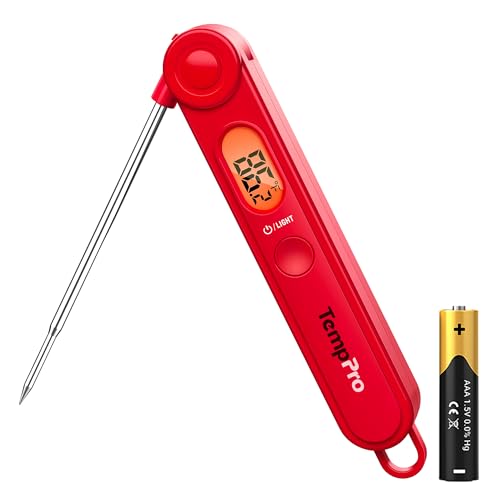
【Easy to Use】Easily release the meat probe at the push of a button, and control the backlight or power with another button. With TempPro, cooking becomes a seamless, stress-free experience

FAST & ACCURATE INSTANT READ: Get temperature readings in just 2-3 seconds with ±1°F accuracy. Whether you're grilling steaks, roasting turkey, smoking brisket, or baking bread, this digital meat thermometer helps you monitor food temperature quickly and confidently
The Boiling Water Test Procedure
While the ice point method provides altitude-independent calibration, the boiling water test offers an alternative verification approach that you’ll find practical for regular maintenance checks. You’ll first need to determine your local boiling point using altitude charts or calculators, as water temperature varies considerably with atmospheric pressure. Fill a wide, shallow pot with four inches of water and bring it to a vigorous rolling boil. Submerge your thermometer probe at least two inches deep, avoiding contact with the pot’s sides or bottom. After thirty seconds, record the reading once it stabilizes. If your thermometer’s boiling point reading doesn’t match the calculated local boiling point, adjust the calibration nut while the probe remains submerged. It’s important to remember that proper calibration involves comparing the readings against fixed physical reference points such as the boiling or ice point of water. Verify calibration regularly before cooking to confirm food safety.
Adjusting Dial Thermometers
Once you’ve confirmed your thermometer reads inaccurately in ice water, you’ll need to locate the calibration nut beneath the dial head to make adjustments. Using appropriate calibration tools like a wrench or pliers, grip the nut securely while allowing the dial to rotate independently around the stationary stem. Turn the dial face until the pointer aligns precisely with the 32°F mark. Keep the nut fixed during this process—only the dial moves. Many dial thermometer techniques require careful tool handling to avoid damaging internal mechanisms. After adjustment, retest your thermometer in the ice bath to verify accuracy. Repeat the adjustment cycle if necessary until readings consistently display 32°F, confirming successful calibration restoration.

NSF APPROVED FOR FOOD SAFETY: This professional-grade analog thermometer meets NSF certification standards, making it a trusted tool for home cooks, food service professionals, and anyone who needs reliable internal food temperature readings.

PRECISE CALIBRATION: Ensure accurate temperature readings with this precise thermometer calibration tool, a must-have for professional and home use.

Trusted Accuracy: Delivers dependable readings from 120°F–220°F with a responsive analog dial gauge, helping ensure meats, baked goods & hot dishes reach proper internal temperature.
Managing Digital Thermometer Offsets
Unlike dial thermometers that you can physically adjust, digital thermometers often exhibit offsets—consistent discrepancies between the actual temperature and the displayed reading—that you’ll need to identify and manage to confirm cooking safety and food quality.
If your thermometer lacks a calibration button, perform offset identification using ice-point or boiling-point tests. Record the difference between the thermometer’s reading and the known reference temperature. Then apply this offset correction by adding or subtracting the measured degrees from all subsequent temperature readings.
For accuracy maintenance, establish a regular testing schedule before critical cooking sessions. Replace units showing offsets exceeding ±2°F (±1°C), as these become unreliable despite manual adjustments. Document offset values over time to detect drift patterns and confirm your thermometer remains dependable.

【Fast & Accurate】Our meat thermometer digital delivers accurate readings within ±1°F in just 1–2 seconds, with a wide temperature range of -58°F to 572°F (-50°C to 300°C). No more waiting over the heat - know your food's exact temperature instantly.

Completely Waterproof: IPX6 waterproof rating means you can wash this cooking thermometer under running water without fear. This food thermometer for cooking ensures cleanup is ultra-fast

Fast and Accurate Reading: Kitchen thermometer for cooking features a 1 second readout speed and high accuracy of +/-0.9 degrees Fahrenheit, ensuring you receive the most delicious results every time
Establishing a Calibration Schedule
Establishing a regular calibration schedule is essential to maintaining thermometer accuracy and ensuring food safety standards are consistently met. You’ll determine your calibration intervals based on usage frequency and environment. For professional kitchens, you should calibrate daily or per shift, while home cooks can maintain monthly or quarterly schedules. Your thermometer’s exposure to temperature variations demands careful attention—units measuring wide temperature ranges benefit from more frequent calibration. You must also recalibrate after storage periods, cleaning, and whenever you notice inconsistent readings. Document all calibration dates and adjustments in clear logs for accountability and regulatory compliance. Consult your manufacturer’s instructions for specific procedures, and assign trained personnel to oversee calibration within your food safety management system.
Documenting Your Calibration Results
Proper documentation of your calibration results creates an auditable trail that proves your thermometer’s accuracy and demonstrates compliance with food safety regulations. You’ll record the calibration date, thermometer ID, reference temperature, actual reading, and your initials on a standardized log sheet. This systematic approach establishes the calibration importance by providing evidence during health inspections and audits.
You must document every calibration, including daily checks or post-adjustment verifications. Maintain chronological records with clear columns for easy tracking and quick reference. Store your logs in a secure, accessible location.
For record retention, you’ll keep calibration documentation for at least one year or longer, depending on local regulations. Periodically review these logs to identify performance trends, helping you determine when replacement becomes necessary.
Common Calibration Mistakes to Avoid
While maintaining accurate documentation demonstrates your commitment to food safety compliance, you’ll also need to recognize and avoid the calibration errors that undermine even the best record-keeping practices. You must use both ice bath and boiling water calibration techniques to verify thermometer accuracy across temperature ranges. Don’t rush your readings—allow one to two minutes for stabilization before recording measurements. Confirm your probe doesn’t contact the container bottom during testing, as this produces false readings unrelated to actual performance. You’ll maintain consistent calibration schedules to prevent drift from repeated use and environmental factors. Finally, position your sensing area properly within the calibration medium to achieve reliable baseline measurements that reflect true thermometer accuracy.
When to Replace Your Thermometer
Even with diligent calibration and maintenance, your meat thermometer won’t last forever. You’ll recognize replacement signs through persistent inaccurate readings despite recalibration efforts, physical damage like bent probes or corrosion, and frequent error messages. Inconsistent temperature displays during cooking indicate sensor degradation.
Understanding longevity factors helps you anticipate replacement timing. Average quality thermometers last 2 to 5 years with regular use. However, exposure to high heat, moisture, and harsh cooking environments accelerates wear. Professional kitchen use demands more frequent replacement than occasional grilling.
Your usage patterns greatly impact durability. Daily use, frequent drops, and harsh chemical cleaning degrade performance faster. When calibration no longer restores accuracy or your probe shows visible wear, replacement becomes necessary. Check manufacturer guidelines—many offer replacement probes that extend your thermometer’s serviceable life cost-effectively.

Check Your Model Number - DON'T BUY if your model number is NOT LISTED - Durable and Accurate Probes. Grilling thermometer features food grade stainless steel probe with step-down tip design to get temperature more precisely and quickly, features a 4 to 10 second readout speed

Durable & Safe Materials: With food-grade 304 stainless steel, it can be used safely in the environment below 572°F/300°C.

One temperature probe and four color-coated sleeves included