Wondering if your Le Creuset Dutch oven is safe to use in the oven? The answer depends on the specific parts, especially the knobs and lids.
Most models can handle high temperatures, but certain knobs and glass lids have limits you’ll want to watch out for.
Keep reading to learn how to ensure your Dutch oven stays in top shape during oven use.
Is Your Le Creuset Really Oven-Safe? 3 Key Factors
Your Le Creuset is safe for oven use up to 500°F only if three key factors are met: the material of your lid knob, the handle design, and the lid’s seal. First, check your lid knob’s material. Classic black phenolic plastic knobs only withstand temperatures up to 390°F; exposing them to higher heat will cause warping or smoking. For full 500°F safety, you need a metal knob made of stainless steel, copper, or gold. Second, examine your handle design. Handles must protrude at least 1.25 inches with a 0.75-inch opening to ensure you can grip them securely. Loop or ledge handles are unsafe for oven use because they can trap heat or make handling difficult. Unlike infrared thermometers, which are less reliable for measuring the internal temperature of liquids like candy syrups, a digital probe thermometer is recommended for accurately verifying your oven’s internal temperature when baking bread in a Dutch oven. Third, confirm your lid’s seal is tight. A proper seal locks in moisture for braising or bread baking but also requires robust handles. Weak handles or an ill-fitting lid increase the risk of component failure under high heat. To ensure the seal remains effective, regularly clean the gasket and wipe the lid rim free of food debris to prevent compromised seals. Always verify these factors before preheating to ensure your Dutch oven’s safety and longevity, just as seasoning oil is applied to restored cast iron to prevent flash rust after cleaning.
Maximum Temperature Limits: By Component and Lid Type
Your Dutch oven’s safety in high temperatures depends largely on its lid and handle type. Phenolic knob lids are limited to 200°C (390°F), with some Signature ranges reaching only 250°C (480°F). Stainless steel knobs are more heat-tolerant, handling up to 260°C (500°F), but glass lids restrict heat to 220°C (425°F). Integral cast iron handle units are the safest choice, capable of withstanding temperatures up to 350°C (660°F). Stoneware lids also perform well at 260°C (500°F). If you frequently cook at higher temperatures, consider replacing your lid with one featuring a heat-resistant handle or knob. Remember, seasoning a phenolic knob won’t prevent it from melting, so always verify your lid’s temperature rating before increasing oven heat.

✔ WIDE APPLICATION - Compatible with Le Creuset, Aldi, Lodge, and heavy dutch oven. In addition,our knob is suitable for all lids with 6 mm screw holes.

【Airtight Lid Locks In Freshness & Flavor】Experience the magic of this Dutch oven with lid, precision-engineered to create a tight seal. It locks in moisture and essential nutrients, delivering richer flavor and incredibly tender, juicy results in every dish—from slow-braised meats to hearty soups. Achieve a perfect, crispy crust on your artisan loaves—it's the ultimate Dutch oven for bread baking. The interior self-basting dots continuously redistribute condensation, ensuring your food stays perfectly moist, never dry or mushy

🔥 A Camp Cooking must-have: Lid Stand+ Lid Lifter+ Heat Resistant Gloves+Scissor Tongs, widely used for BBQ and campfire cooking; Enjoy your camping party with the best suitable tools!
Why Your Knob Type Dictates the Max Oven Temperature
Your Le Creuset Dutch oven’s maximum oven temperature depends on the knob type, and recognizing which one you have is essential for safe cooking. Classic phenolic knobs, which feature an engraved logo, have a maximum heat threshold of 390°F. Signature phenolic knobs, without the logo, can safely handle up to 480°F. Going beyond these limits risks warping, smoking, or melting the resin material. For precise temperature control similar to sous vide egg cooking, metal knobs offer a higher heat tolerance. This process is similar to how seasoning a cast iron skillet with a high smoke point oil builds a durable, non-stick surface that withstands high heat. Switching to a metal knob—such as stainless steel, copper, or gold—raises your oven temperature cap to 500°F, aligning with the Dutch oven’s own maximum. You can replace knobs yourself to extend your oven’s heat tolerance. Using a digital smart probe thermometer allows you to monitor the core temperature of the meat in real time, ensuring you never exceed the knob’s safe limit. Keep in mind that even with a metal knob, using a glass lid limits your oven temperature to 390°F, so checking your knob’s appearance and material before increasing the heat is crucial.
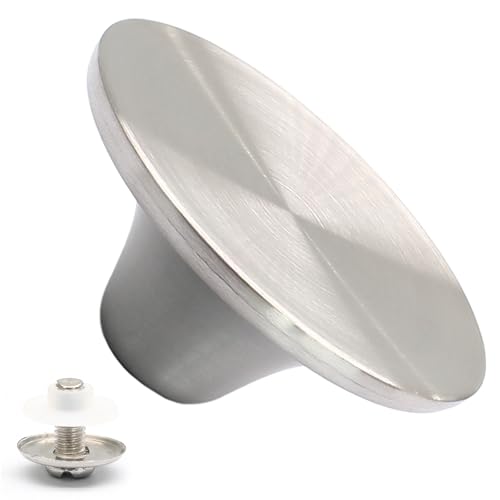
Package Included: 1 x Pot Lid Knob Replacement for Dutch Oven, 1 x Screw, 1 x Rubber Gasket, 1 x Metal Gasket.

● | WIDE APPLICATION | - The pot lid knob is suitable for various types cookware lids, such as kettle, oil pot, frying pan, kitchen pot lids, compatible with Le Creuset, Aldi, Lodge and other enameled dutch oven.

Premium Stainless Steel & Durable Construction: Crafted from food-grade, thickened stainless steel, this replacement knob is built for exceptional durability and strength. It remains intact and safe for oven use even if the enameled lid cracks, ensuring long-lasting performance.
When You Must Remove the Knob for High-Heat Baking
You’ll need to remove the classic phenolic knob before any high-heat baking that exceeds 390°F, such as sourdough bread baked at 500°F. Exceeding this temperature can cause the knob to smoke, warp, or even shatter because it lacks the necessary heat tolerance. The Signature phenolic knob, with its higher temperature tolerance up to 480°F, still requires removal above that threshold to prevent damage. Phenolic plastic, a heatproof material, becomes brittle over time, making replacement common when knobs age. For high-heat cooking, similar to the braising techniques used for tender Dutch oven short ribs, the knob must still be removed to avoid damage.
To remove the knob, use a small screwdriver to loosen the screw underneath. Finish removing it by hand to avoid cracking the enamel. After removal, seal the hole with foil or dough to prevent debris from entering. Always wear high-heat oven mitts when handling the hot lid, as it becomes tricky to grip safely. Let the pot cool completely before reattaching the knob. For a permanent solution, consider swapping in a metal knob designed for high temperatures. This approach mirrors the same principle used in preservation methods for long-term food storage, where removing residual oxygen extends freshness.

Universal Compatibility: Designed to fit a wide range of cookware, these knobs are compatible with Le Creuset, Aldi, Lodge, and other enameled cast-iron Dutch ovens. The 5mm screw hole ensures a perfect fit for most pot lids, allowing you to easily upgrade or replace handles on various types of cookware, from Dutch ovens to casserole dishes and more

Universal Compatibility: Designed to fit a wide range of cookware, these knobs compatible with Le Creuset, Staub, Aldi, Lodge, and other enameled cast-iron Dutch ovens. The 5mm screw hole ensures a perfect fit for most pot lids, allowing you to easily upgrade or replace handles on various types of cookware, from Dutch ovens to casserole dishes and more

Universal Compatibility: Designed to fit a wide range of cookware, these knobs are compatible with Le Creuset, Aldi, Lodge, and other enameled cast-iron Dutch ovens. The 5mm screw hole ensures a perfect fit for most pot lids, allowing you to easily upgrade or replace handles on various types of cookware, from Dutch ovens to casserole dishes and more
Baking Bread at 500°F: Temperature Safety Tips for Your Dutch Oven
Your Le Creuset Dutch oven can handle baking bread at 500°F, but you need to be cautious about the knobs and lids. The classic black phenolic knob melts at 390°F, so it’s not suitable for such high temperatures. Signature knobs can withstand up to 480°F, but it’s safer to swap them out for a metal knob or remove the knob completely before baking at 500°F. Glass lids cap at just 425°F, so avoid using them during high-heat baking. When using your Dutch oven for techniques like no-knead bread, preheat the oven gradually to prevent thermal shock. Always place the pot on a rack instead of directly on the oven floor to ensure even heat distribution and protect your cookware. When handling the hot lid, wear dry heat-resistant mitts, especially if you’ve removed the knob, to stay safe from burns.

𝐔𝐍𝐋𝐎𝐂𝐊 𝟓𝟎𝟎°𝐅+ 𝐇𝐈𝐆𝐇-𝐇𝐄𝐀𝐓 𝐁𝐀𝐊𝐈𝐍𝐆 : Essential for sourdough enthusiasts. Unlike standard phenolic knobs that may melt, this metal replacement knob is 100% oven-safe. Safely bake bread or roast chickens at high temperatures without fear of cracking or damage.

Quality Enameled Dutch Oven: The Lodge Essential Enamel Cast Iron Dutch Oven gives you all the benefits of cast iron cooking, great heat retention and durability, without fear of rust; it's also PFAS free

Crafted from high-quality stainless steel, this stainless pot lid handle replacement offers long-lasting strength, rust resistance, and easy cleaning. The polished finish keeps cookware looking modern while providing reliable daily performance in busy kitchens.
Can You Use a Le Creuset Dutch Oven Under the Broiler?
Le Creuset Dutch ovens are not suitable for use under the broiler. The deep shape and thick enamel trap intense heat, which can damage the coating. Even if you’re cautious, exposing a Dutch oven to the direct, high temperatures of a broiler risks enamel cracking or discoloration. Le Creuset Dutch ovens are made of enamel cast iron, which is magnetic and safe for electric and gas stove tops but not for the intense direct heat of a broiler. Instead, opt for cookware that’s specifically designed to handle broiler conditions. A shallow Le Creuset fry pan or stainless steel cookware are better options because they can withstand higher temperatures. If you really need to use your Dutch oven under the broiler, you must replace the standard knob with a metal one and keep the temperature below 500°F. However, better safe than sorry—stainless steel or cast iron pans are safer choices for broiling since they resist high heat without enamel damage. Save your Dutch oven for tasks like braising and roasting, and reserve broiling for cookware built for that purpose.
3 Common High-Heat Mistakes That Damage Enamel and Knobs
The three most common high-heat mistakes that damage your Le Creuset Dutch oven’s enamel and knob are thermal shock from rapid temperature changes, using excessive high heat, and empty preheating without moisture. Thermal shock occurs when you suddenly expose a hot pot to cold water or add cold ingredients. This rapid shift causes cracks in the enamel, weakening its durability. To prevent this, allow the pot to cool slightly before cleaning or adding cold liquids. Excessively high heat, on the other hand, leads to burnt food buildup and damage to the finish. In most cooking situations, medium or low heat is sufficient and better for maintaining the pot’s condition. Finally, preheating the oven empty without any moisture or fat increases the risk of cracking from thermal stress during heating. Always add oil, butter, or food before turning it on.
Handling the knob improperly also contributes to damage. Knobs that aren’t metal are typically not oven-safe and can warp or crack under high heat. Check whether the handle is insulated or metal before using the oven function. Using metal utensils can scratch the enamel surface and create weak spots that may chip over time. Avoid these mistakes, and your Dutch oven will last longer, maintaining its appearance and performance.
Where to Find Your Model’s Exact Oven-Safe Rating
To find your Le Creuset Dutch oven’s exact oven-safe rating, start by examining the knob since it determines the maximum temperature the pot can handle. Classic black phenolic knobs with the C-shaped logo are safe up to 390°F. Signature black knobs without the logo can withstand temperatures up to 480°F. Metal knobs—copper, gold, or stainless steel—are safe up to 500°F, allowing the full potential of the pot. To optimize heat tolerance, you can replace a lower-heat knob with a metal one. Remember to unscrew the knob before baking at temperatures above its limit to prevent damage. If the label is missing, consult the official product page or your purchase receipt to verify the exact specifications. Don’t rely on guesswork; the safe oven temperature rating is either on the knob or documented with your purchase.

Safe at any oven temperature

Medium (2 in.) fits the following: Round Dutch Oven: 2 qt., 3.5 qt. Oval Dutch Oven: 2.75 qt., 3.5 qt. Signature Saucepan: 2.25 qt., 3.25 qt.
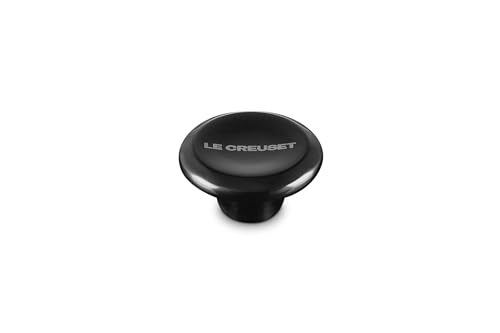
Large (2.25 in.) fits the following: Round Dutch Oven: 4.5 qt., 5.5 qt., 7.25 qt., 9 qt., 13.25 qt. Oval Dutch Oven: 5 qt., 6.75 qt., 8 qt., 9.5 qt., 15.5 qt. Braiser: 2.25 qt., 3.5 qt., 5 qt. Wok: 5 qt.