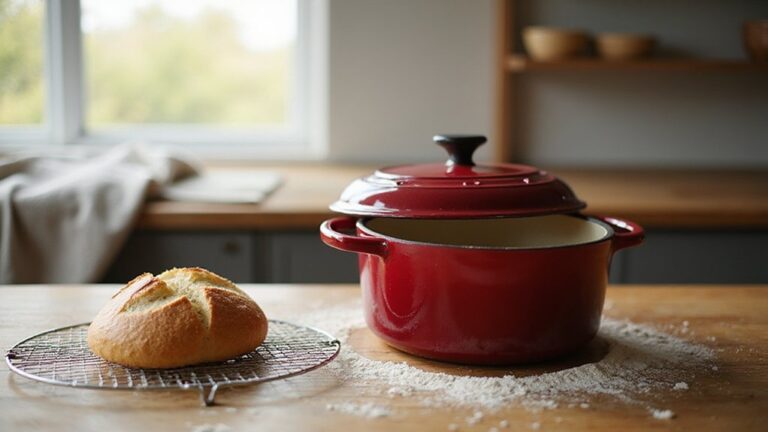
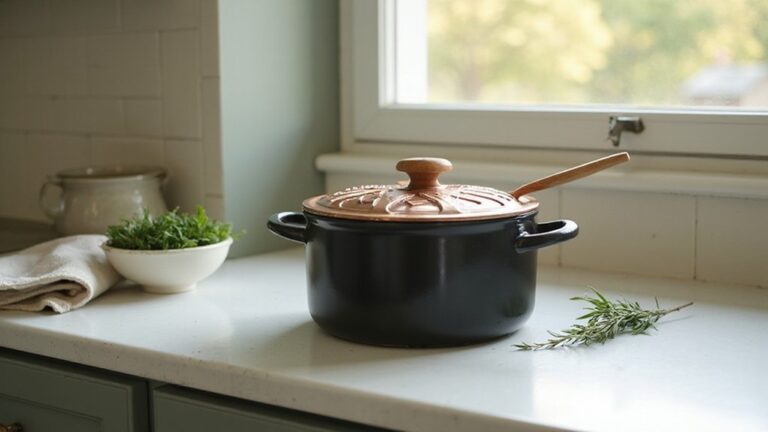
You don’t strictly need a Dutch oven for sourdough, but it dramatically simplifies the process. Dutch ovens automatically trap steam, which delays crust formation and maximizes oven spring—expansion reaching up to 30% in the first ten minutes. Without one, you’ll manually manage moisture through sprays and trays, risking inconsistent results. While alternatives like cast iron skillets work, they won’t create the same ideal steam environment. Understanding the full scope of your options will help you determine what suits your baking goals.
The Science Behind Steam in Sourdough Baking
When you understand how steam transforms your dough during baking, you’ll grasp why a Dutch oven has become essential for home sourdough bakers. Steam’s moisture impact directly delays crust formation, keeping your dough surface flexible during vital oven spring. This extended flexibility maximizes volume expansion, producing lighter, more open crumbs. Moreover, using a Dutch oven allows for superior heat retention, which enhances the steaming effect.
Without adequate steam, premature crust hardening restricts expansion, yielding denser loaves. The condensation on your dough surface prevents early drying, allowing continued rise. Additionally, steam facilitates starch gelatinization, creating that characteristic glossy, brittle shell. Once you vent the steam after 15-20 minutes, your crust firms up and browns through the Maillard reaction, developing complex flavor and the satisfying shatter when cut. Understanding this science explains why Dutch ovens prove invaluable, as they trap steam and create the ideal environment for a crusty loaf.
How Dutch Ovens Create the Perfect Baking Environment
Because Dutch ovens trap steam while distributing heat evenly, they create an environment where your sourdough can reach its full potential. The baking chamber design features cast iron walls that maintain consistent temperatures, preventing heat fluctuations that compromise results. Charcoal placement is crucial for producing a crispy crust and thorough bake, ensuring your dough expands fully during the critical early baking stages because the sealed interior keeps the exterior supple and moist. This delayed crust hardening allows maximum oven spring and volume development. Dutch oven benefits include superior heat conductivity that produces deeper, more consistent browning while the trapped moisture creates that coveted shiny, professional-looking finish. You’ll achieve reproducible results without supplementary equipment like water trays or spray bottles. The enclosed method eliminates uneven cooking from direct oven exposure, delivering reliable sourdough quality with every bake. Additionally, using a Dutch oven can enhance the texture and flavor of baked goods, similar to how a Dutch oven peach cobbler benefits from its unique cooking environment.

𝐃𝐨𝐦𝐞 𝐃𝐞𝐬𝐢𝐠𝐧: Perfect for Crusty Sourdough The AHJ pre-seasoned Dutch oven is ideal for sourdough baking. When used with the lid in the oven, it locks in steam—ensuring condensation drips down the lid walls without soggying the bread—for an ultra-crisp crust and soft, fluffy interior. The 5-quart large capacity easily accommodates big sourdough loaves, perfect for sharing with the whole family.

Even Heat Distribution Retention: This Umite Chef Dutch oven Made with heavy-duty enameled cast iron, ensures even heat distribution for perfect searing and slow cooking, locking in flavors. thickened walls lock in heat for slow braising, searing, and baking. Unlike thin pots that scorch food, this professional-grade Enameled cast iron potSuperior heat retention after preheating (allow 5-7 mins for even distribution). CRITICAL: Always cool naturally for 45+ mins before cleaning. Thermal shock (hot-to-cold contact) cracks enamel. USE TIP: Preheat 2-3 mins on medium-low only

【ALL YOU NEED】Complete set includes 5QT bread oven cast iron with frying pan lid,bread proofing basket, bread sling, stainless steel scraper, cleaning brush, bowl scraper, wooden-handled dough whisk, bread lame, silicone oil brush,silicone spatula. Sourdough starter kit with pre-seasoned cast iron dutch oven is ready to use out of the box!
Understanding Oven Spring and Crust Development
The magic of sourdough baking truly unfolds during those first critical minutes in the oven, when your dough undergoes a dramatic transformation called oven spring. During this 10-minute window, your loaf expands up to 30% as yeast activity and gas production accelerate before crust formation sets in.
Steam proves essential here. It keeps your loaf’s surface pliable for 15-20 minutes, allowing free expansion without premature hardening. Without adequate moisture, your crust forms too quickly, restricting spring potential and creating dense crumb structure. A key factor in achieving this optimal texture is using bone-in, skin-on chicken thighs, which retain moisture and flavor, making your baking experience even richer.
A Dutch oven excels at trapping steam automatically, creating the ideal environment for optimal crust development. Combined with strategic scoring that directs expansion predictably, you’ll achieve uniform rise, beautiful ear formation, and the light, airy interior that defines exceptional sourdough. Additionally, using alternative cooking methods can still yield impressive results while adapting to different baking environments.
Ideal Dutch Oven Sizes and Features for Sourdough
Now that you understand how steam transforms your dough during those critical first minutes, you’ll want to select a Dutch oven that reliably delivers that environment while accommodating your specific recipe. A 5-quart round Dutch oven represents the gold standard for baking performance across most sourdough recipes. This size variation provides ideal heat distribution and steam retention while accommodating 500g flour-weight doughs comfortably.
For larger recipes using 750g to 1kg flour, you’ll need a 6 to 7-quart vessel to prevent excessive horizontal spreading. The Dutch oven’s interior diameter directly influences loaf shapes and oven spring intensity. Round cast-iron models with tight-fitting lids and brass handles perform exceptionally well, although they require seasoning to create a nonstick surface. Consider maintaining multiple sizes if you regularly experiment with different loaf shapes, as each size variation maximizes distinct baking outcomes. Additionally, using a self-contained steam chamber will significantly enhance the crust quality of your sourdough.

PFAS-FREE & NON-TOXIC COOKWARE: ATTENTION: If your manual mentions "enamel" or "low-medium heat only", it is incorrect. This is 100% pure cast iron cookware! Not Enamel-Coated: Safe for High-Heat Cooking! Metal utensils OK (avoid sharp edges) Every Umite Chef cast iron pot has been burned with 100% natural, food-grade vegetable oils—absolutely zero PFAS, PFOA, PTFE, synthetic coatings, or toxic chemicals. Our seasoning naturally builds with use, developing a superior non-stick surface over time while ensuring oven-to-table safety
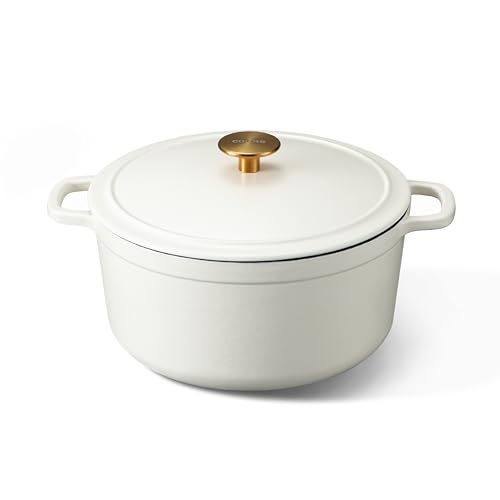
Superior Even Heat Control: One-piece thick cast iron delivers uniform heat with zero hot spots and excellent heat retention, ideal for searing, braising and crusty bread baking. Preheat on medium-low heat; cool naturally before washing to prevent enamel cracking.

Floral Gift Set Design: Classic enamel Dutch oven with elegant floral print, functional & decorative. Complete set: pot, lid, cotton potholder, oven mitts & matching gift box, ideal for gifting.
Step-by-Step Temperature and Timing Guidelines
Mastering temperature and timing transforms your sourdough from promising dough into a perfectly baked loaf, and you’ll need to follow three critical phases: preheating your oven and Dutch oven, baking covered to develop oven spring through steam retention, and finishing revealed to achieve crust color and structure.
You’ll preheat your oven for 30–60 minutes at 450°F (232°C), using an oven thermometer for accuracy. It is important to note that oven-safe probes can help monitor internal temperatures without opening the cooking vessel. Load your dough into the preheated Dutch oven and bake covered for 20–45 minutes, trapping steam that promotes rise. Then remove the lid and bake exposed for 15–25 minutes until your loaf achieves golden-brown color.
To ensure proper steam retention, it’s crucial that your Dutch oven preheating reflects the longer duration needed to reach the correct temperature. Monitor internal temperatures, targeting 208–212°F (98–100°C) for doneness. Finally, cool your loaf on a wire rack for 1–2 hours, allowing the crumb to set properly before slicing.
Baking Without a Dutch Oven: Viable Alternatives
Baking Without a Dutch Oven: Viable Alternatives
While a Dutch oven remains the gold standard for sourdough baking, you don’t need one to achieve excellent results—several household items can effectively trap steam and develop that coveted oven spring. Alternative baking vessels include enamel roasters, CorningWare, loaf pans, Pyrex, cast iron skillets, and baking steels. Each option provides distinct advantages: loaf pans are affordable and accessible, glass dishes offer transparency for monitoring, and cast iron skillets guarantee even heat distribution. Using steam tools is crucial to mimic the ideal environment for sourdough. Your steam tools range from boiling water poured into preheated pans to ice cubes placed near dough. Rolled-up towels saturated with boiling water also generate effective steam. The key is selecting an oven-safe container that traps moisture while withstanding high temperatures, guaranteeing your sourdough develops proper crust and crumb structure.

2-in-1 Versatile Cookware Design: The Lodge Cast Iron Double Dutch Oven is a Dutch oven and dual-handle skillet in one smart design, expanding your options for searing, baking, frying, and more

Rustic Cast Iron Bread Oven: The 6 qt Bread Oven is your ticket to bread-baking success. With a capacity of 6 quarts, this Cast Iron Bread Oven with Lid is designed for baking bread. The base of this Sourdough Dutch Oven with Cloche Lid is shallow, you don’t worry about burning yourself when transferring dough into your preheated pot

Pre-seasoned 2-in-1 cast iron dutch oven: The 2-In-1 cast iron dutch oven pot with skillet lid has been burned with vegetable oil,(no synthetic coatings or chemicals). The shallow skillet that can be used as a lid
Comparing Results: Dutch Oven vs. Open Baking Methods
Because Dutch ovens create a self-contained steam environment without requiring external moisture management, they consistently deliver superior results compared to open baking methods in home kitchens.
When you bake with open methods, you’ll face significant Dutch oven benefits that become immediately apparent. You must manually monitor steam injection or maintain boiling water trays throughout your bake—tasks that demand constant attention. Dutch ovens eliminate these variables entirely. In contrast, using a cast iron Dutch oven allows for optimal heat retention and steam creation.
Open baking challenges include inconsistent crust development and unpredictable oven spring. You’ll struggle to achieve the caramelization and crispness that Dutch ovens produce naturally. Additionally, open baking requires precise temperature management and careful rack positioning to avoid uneven browning.
Your Dutch oven’s cast iron retains substantial heat, ensuring even caramelization while the trapped moisture prevents premature crust formation. This passive system delivers professional-quality results without technical complexity, making it the superior choice for home sourdough bakers. Furthermore, maintaining the custom seasoning layer on your Dutch oven can enhance its performance over time.

BREAD BAKER'S DUTCH OVEN, 500°F OVEN-SAFE, SOURDOUGH-READY – one of the highest ratings in its class – delivering the sustained heat that sourdough, artisan bread, and pizza dough demand. Thick cast-iron walls trap and circulate heat like a brick oven, producing bakery-quality crusts at home. The tight-sealing lid features raised self-basting nodes that continuously recirculate steam: a perfect moisture chamber, every single bake.

【10QT CAMPING DUTCH OVEN】 The Velaze 10 Quart camping dutch oven is made of cast iron with a high-quality design and excellent thermal conductivity and heat retention. The flanged lid holds hot coals and inverts for use as a griddle. The extra stand support allows the oven to sit perfectly over the table.

【CAST IRON DUTCH OVEN】 Velaze enamel cast iron dutch oven pot with lid is solid and durable, can be used for multiple cooking methods such a cooking, baking, stewing etc. Large capacity dutch oven is great for beginners or pros and almost meet all the needs of family gatherings. Please always use oven gloves or a pot rack when handling the pot. The handle will be very hot!
Essential Preparation and Safety Tips for Dutch Oven Use
Now that you understand the advantages Dutch ovens provide, you’ll want to know how to use them safely and effectively. Invest in high-temperature oven gloves rated for extreme heat—they’re essential safety equipment when handling your hot vessel. Practice burn prevention by always removing the Dutch oven lid with insulated protection and positioning it on a trivet during dough insertion.
Preheat your Dutch oven to 450°F (232°C), then reduce to 425°F (218°C) if the bottom crust burns excessively. Insulate the bottom with aluminum foil or a baking sheet to prevent scorching. Use parchment paper or a bread sling to lower your cold, scored dough into the preheated pot, minimizing direct contact with the intensely heated cast iron surface. Additionally, ensure all ingredients are at the right temperature prior to sealing in flavor and moisture. Replace the lid immediately to maintain your steam environment, as Dutch ovens excel at tasks like baking and slow cooking, making them a versatile tool for various cooking needs.
Maintenance and Multi-Purpose Use of Cast Iron Vessels
Your Dutch oven’s longevity and performance depend on proper maintenance practices that protect its seasoning and prevent rust formation. After each use, you’ll wash it with warm water and mild soap, then dry it thoroughly with a cloth or paper towel. Apply a thin oil layer to maintain seasoning and protect against rust. For cast iron longevity, you’ll store your Dutch oven in a dry environment, avoiding stacking with other cookware to prevent damage. Beyond sourdough baking, you’ll uncover multi-purpose cooking applications including braising, roasting, and frying. These maintenance techniques guarantee your vessel remains versatile and functional for generations. Proper storage solutions—such as keeping it in warm, moisture-free conditions—maximize durability and cooking performance across countless culinary applications. Additionally, regular maintenance, including applying a light coat of oil after cleaning, enhances your cookware’s durability. A well-maintained cast iron piece can deliver superior sear and flavor, making it ideal for many cooking styles.

YOUR NEW GO-TO SEASONING SPRAY: The Lodge Seasoning Spray is the perfect seasoning spray to maintain your cast iron cookware. It is made of 100% canola oil - no additives or propellants, to protect your cookware and enhance its finish.

RESTORE & PROTECT YOUR CAST IRON: Keep skillets, Dutch ovens, griddles, grill grates, and carbon steel cookware in peak condition with our premium cast iron skillets seasoning oil. Builds a durable protective layer that helps prevent rust, preserves the classic black patina, and maintains naturally nonstick cooking performance.

PREMIUM CAST IRON CONDITIONING & SEASONING OIL | Made with FOOD grade, solvent-less, refined coconut oil that is safe for food contact and cast iron surfaces. The result is a premium product that does not go rancid.
Making Your Decision: Is a Dutch Oven Right for You?
Understanding whether a Dutch oven aligns with your sourdough baking goals requires weighing its substantial advantages against your specific circumstances and preferences.
Your decision hinges on balancing cost considerations with desired outcomes. Dutch ovens demand significant upfront investment but deliver professional-quality results consistently. If you’re prioritizing ease and reliability, you’ll appreciate how the vessel eliminates manual steam management and guarantees ideal oven spring every bake. Additionally, a Dutch oven can help create a flavorful crust similar to what is achieved using cast iron techniques. For consistent baking success, a 5.5-quart capacity Dutch oven is often recommended for home bakers aiming for versatility and quality.
Conversely, open baking methods suit your situation if you’re budget-conscious and willing to invest time mastering steam techniques. You’ll sacrifice convenience but avoid equipment costs while still achieving comparable results with proper technique.
Assess your personal baking preferences honestly. Do you value simplicity and consistency, or do you enjoy technical experimentation? Your answer determines whether a Dutch oven represents essential equipment or unnecessary expense.