You’ll fix most FoodSaver problems by addressing three core issues: bag sealing failures, liquid damage, and gasket wear. Clean your gasket and seal strip regularly with warm soapy water, ensuring four inches of headspace before sealing. Pre-freeze liquid-rich foods to protect your pump. Wait twenty seconds between cycles to prevent overheating. Replace worn gaskets annually and empty your drip tray immediately after sealing moist foods. These systematic maintenance steps’ll keep your sealer functioning effectively, though there’s considerably more you should know about maximizing performance.
Bag Not Sealing Properly
When your FoodSaver vacuum sealer won’t create a proper seal, you’re likely dealing with one of several common culprits. Start your troubleshooting steps by examining the gasket for accumulated food debris or visible wear. Clean it thoroughly with rubbing alcohol or replace it if you’ve used the machine frequently over a year. Additionally, using a FoodSaver vacuum sealer can greatly enhance your meal prep efficiency, much like the versatility of Dutch ovens allows for a wide range of cooking techniques and recipes.
Next, inspect your bag preparation. You’ll need a minimum four-inch clearance at the opening for effective sealing. If you’re reusing bags, test with new ones to eliminate bag defects as a potential cause. Check the seal strip for misalignment, debris, or damage. Small particles on the heating element create holes that prevent vacuum maintenance. Finally, confirm you’re using FoodSaver-brand bags exclusively, as generic alternatives lack proper design specifications for your machine. It’s crucial to remember that utilizing specifically designed vacuum sealer bags ensures they can withstand the sealing process and maintain an airtight environment.

Made in USA: Proudly manufactured in the United States

Easy Use Design: No scissors required for these bags. Just align to seal and tear to open.

Multilayer Design: Ensures an airtight seal, extending freshness and locking in flavors.
Excess Liquid and Freezing Solutions
Because liquid’s viscosity directly affects your vacuum sealer’s performance, you’ll need to understand how different foods interact with your machine’s pump system. Thin liquids risk liquid flooding into your vacuum pump, causing damage and incomplete seals.
To prevent this, employ freezing techniques before sealing. Pre-freeze liquid-based foods until they reach a slushy state, which prevents liquids from being drawn into the pump during the sealing cycle. Freeze marinades and soups in flat, thin layers for quick freezing. Vacuum sealing not only helps maintain food texture but also extends shelf life by inhibiting bacterial growth when done correctly.
When sealing, position bags upright and maintain four inches of headspace at the top. If liquid contacts the seal area, wipe it clean before proceeding. Consider using your sealer’s liquid mode setting, which reduces vacuum power and minimizes liquid draw. After sealing liquid-rich foods, clean the drip tray and gaskets thoroughly to maintain peak performance. Additionally, using a lid or cover during sous vide cooking can help prevent evaporation and improve sealing efficiency.
Food Debris and Gasket Cleaning
While liquid management prevents pump damage, food particles pose an equally serious threat to your sealer’s performance. Debris accumulation around the sealing area creates gaps that compromise sealing integrity and cause air leaks.
You should inspect your gasket and vacuum channel regularly for residue buildup. If your model features a removable gasket, pull it out carefully and clean it thoroughly with warm soapy water. Air-dry it for 24 hours before reinserting by pressing into the channel and tapping around the perimeter.
For non-removable gaskets, gently wipe them with a damp sponge. Additionally, empty and clean your drip tray frequently using warm soapy water or your dishwasher’s top rack. This preventive maintenance restores peak sealing performance and extends your machine’s lifespan.

NOTICE: Before purchasing, please confirm that your model is listed below, or in the product images to save your time. The size of the vacuum gaskets is approximately 13.13 inch length x 1.25 inch width x 0.3 inch thickness, but if your model is not listed we recommend you ask a question before buying.

Warm tips: Before purchasing, please confirm that your model is listed below, or in the product images to save your time. The size of the vacuum gaskets is approximately 13.13 inch length x 1.25 inch width x 0.3 inch thickness, but if your model is not listed we recommend you ask a question before buying

COMPATIBILITY: Replacement gasket fits all V2200, V2400, V2800 and V3200 Series. For models with 2 gaskets, please replace both gaskets at the same time for optimal results
Wrinkles in the Bag During Sealing
Uneven pressure on the vacuum bag’s sealing area creates wrinkles that weaken seal strength and compromise food preservation. You’ll encounter wrinkle causes stemming from improper bag positioning, insufficient flattening before sealing, or airbag malfunction. Overfilling bags or allowing contents to shift toward the opening prevents flat positioning during the sealing process.
To maintain seal quality, smooth and stretch your bag completely before insertion. Inspect your machine’s airbag for damage and replace worn components. Use high-quality vacuum bags designed to resist wrinkling, and distribute contents evenly while avoiding overfilling.
If wrinkles appear, open the seal, reposition the bag flat, and reseal. Clean your sealing strip and heating element to remove debris that interferes with consistent pressure application.

5-pack of Large size vacuum storage compression bags for storing off-season clothes, towels, linens, and more

ECONOMICAL & & TIME SAVING: Total 150 count Bonsenkitchen 20 Gallon 11" x 16"+ 80 Quart 8" x 12"+ 50 Pint 6" x 10" vacuum sealer bags are different sizes of packaging, meet your different usage needs. Vacuum bags are pre-cut and ready-to-use, saving you time whenever you’re preserving leftovers, preparing make-ahead meals, and portioning bulk items in the freezer.Just pull out and use, no need to cut, no need to seal one side before putting food in

Package includes XXL (47×35") and Jumbo (39×27") vacuum storage bags—among the largest available for comforters, clothes, blankets, pillows, and plush toys
Overheating and Cooling Issues
Your FoodSaver vacuum sealer relies on precise heat management to function properly, and overheating represents one of the most common performance failures you’ll encounter. When you seal continuously without breaks, heat accumulates in the sealing strip, triggering the red seal LED warning.
The overheating effects include damaged sealing strips, warped components, and inconsistent vacuum strength that compromises your food preservation. To prevent this, implement effective cooling techniques by waiting 20 seconds between sealing cycles. After heavy use, allow 20 minutes of complete cooldown before resuming operation.
Unlatch the lid between uses to decompress gaskets and maintain airflow. Clean your drip tray regularly and inspect heating strips for debris buildup. Replace worn gaskets and sealing strips promptly to restore proper cooling efficiency and extend your device’s lifespan.
Vacuum Pump Running but No Air Evacuation
One of the most frustrating scenarios you’ll encounter is when the vacuum pump cycles normally but doesn’t remove air from the bag. This typically stems from improper vacuum channel alignment or faulty bag insertion techniques.
First, verify that you’ve fully inserted the bag into the vacuum channel rather than simply resting it on top. The open end must curve downward inside the drip tray for proper alignment. Adjust the bag position if air evacuation doesn’t begin after starting the cycle.
Next, inspect the vacuum channel and gasket for blockages. Meat juice, liquids, or food particles obstruct airflow. Clean the drip tray thoroughly and remove debris from the channel. If contamination remains, remove and clean the gasket completely before reinserting it properly.
Finally, check the bag itself for wrinkles along the sealing strip that block the vacuum channel. Proper vacuum sealing can help slow microbial growth and maintain the freshness of your food.
Air Re-Entering the Bag After Sealing
After you’ve successfully vacuum-sealed a bag, revealing that air has re-entered defeats the purpose of food preservation and indicates an underlying mechanical or procedural issue. Several factors compromise seal integrity. Wrinkles along the seal create pathways for air re-entry; gentle stretching and proper bag positioning with the curl side down prevent this. Food debris and moisture on seal edges disrupt the heat-sealed bond, so wipe the interior top surface before resealing. Sharp food items puncture bags during vacuuming—cushion them with paper towels. Visual seal inspection techniques identify wrinkles and punctures immediately after sealing. Additionally, contaminated gaskets reduce sealing effectiveness. Regular gasket cleaning and inspection maintain proper vacuum channel function, ensuring effective air leakage prevention and reliable food preservation.
Drip Tray Full LED Flashing and Liquid Accumulation
The drip tray’s full LED indicator flashes when moisture or liquid accumulates in the collection chamber, signaling that you’ve reached the tray’s capacity. This occurs because liquids extract from moist foods during the vacuum-sealing process, and condensation forms from released gases and steam. Proper maintenance ensures effective food preservation and prevents unexpected sealing interruptions.
You’ll need to remove and empty the tray immediately, as excess liquid can damage internal electronics and halt your sealing operations. Clean the tray thoroughly and dry it completely before reinserting it.
For effective drip tray maintenance and liquid prevention, freeze liquid-rich foods before sealing and inspect bags for wrinkles or damage. Monitor the tray regularly after multiple sealing sessions, especially when processing moist foods. Clean moisture sensors routinely to prevent false warnings and guarantee peak machine performance. Additionally, remember that vacuum sealing can significantly extend shelf life of meats when done correctly.
Problems With Gaskets and Sealing Components
Gaskets and sealing components represent critical parts of your vacuum sealer’s performance, and they’re among the most common culprits behind sealing failures. Gasket wear occurs when foam or rubber materials degrade, causing cracks and loss of elasticity that compromise your machine’s vacuum seal integrity. Additionally, using specialized Ziploc vacuum bags can help maintain vacuum performance, as they are designed to work with vacuum sealers effectively.
For effective gasket maintenance, you’ll need to inspect regularly for visible deterioration and clean debris buildup with a damp sponge or rubbing alcohol. If your model has removable gaskets, extract them carefully, clean thoroughly, and allow 24 hours drying time before reinsertion.
Damaged gaskets permit air leakage during vacuum cycles, substantially weakening seal strength. Replace worn gaskets annually or as needed by pulling them straight from their channel and pressing replacements evenly into place, ensuring snug corner seating without distortion. Remember, just like seasoning a cast iron pan helps prevent rust and improve cooking performance, maintaining your vacuum sealers’ gaskets is essential for optimal operation.

√ Compatibility of Vacuum Sealer Replacement Parts: The vacuum foam sealer parts only compatible with vacuum sealer machine geryon food saver E2900/E2901 series
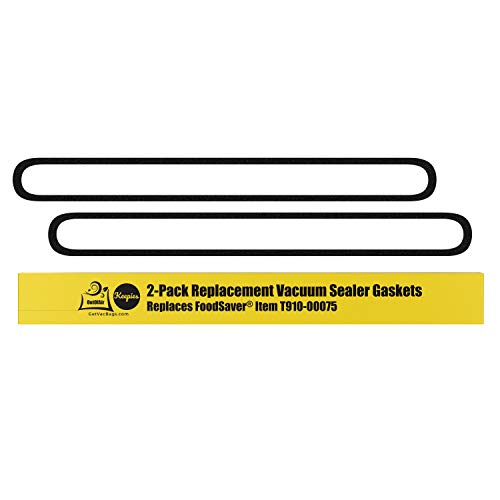
NOTICE: Before purchasing, please confirm that your model is listed below, or in the product images to save your time. The size of the vacuum gaskets is approximately 13.13 inch length x 1.25 inch width x 0.3 inch thickness, but if your model is not listed we recommend you ask a question before buying.

To save your time:Before purchasing, please pay attention to confirm whether your model is listed in the description below or the dimensions in the product pictures, the outer diameter size of the vacuum gasket is approximately 13.2 inches long x 1.25 inches wide x 0.25 inches thick,PTFE Tape 0.55 in x 33 Feet.
Maintenance Tips to Prevent Future Issues
While replacing worn gaskets addresses immediate sealing problems, you’ll find that consistent maintenance prevents most issues from developing in the first place. Conduct routine inspections of gaskets and sealing strips for cracks, wear, or debris buildup that impairs performance. Clean drip trays frequently to prevent liquid accumulation that damages internal components. Store your sealer with the latch in the open position to avoid gasket compression and deformation. Keep the appliance in a dry, dust-free environment and disconnect power before extended storage to prevent mold growth. Allow sufficient time between seals for gasket decompression, preventing overheating. Check vacuum pump operation for unusual sounds indicating blockages. Replace damaged parts promptly. This methodical approach maintains seal quality and extends your FoodSaver’s lifespan markedly.

Super Value Complete Set: Get a complete maintenance solution with this 8-set kit (16 pieces total). Each set includes 1 foam gasket and 1 heat seal bar strip, providing all necessary parts for a full repair of both vacuum and sealing functions

Wide Compatibility: Fits most Foodsaver vacuum sealer models, including FM2000, FM2010, FM2100, FM2110, FM2400, FM2435, FM3600, FM3620, FM3900, FM3920, FM3940, FM3941, FM3945, GM2050, GM2150, VS0150, VS0160, VS2110, VS2120, VS3000, VS3110, VS3130, VS3170, VS3180, VS3182

This is a brand new, OEM-quality replacement gasket set, replacing FoodSaver part number T910-00075. Engineered to the exact specifications of the original foam gaskets, it ensures a perfect fit and an airtight seal every time.