You shouldn’t season cast iron with butter because it breaks down at just 300–350°F, well below the 375°F+ temperatures needed for oil polymerization. Butter’s milk solids burn and create sticky, uneven residue that’s prone to rancidity and flaking. You’ll want to use high smoke point oils like avocado, grapeseed, or canola instead. Understanding why polymerization matters and which oils work best reveals the full picture of proper seasoning.
Why Butter’s Low Smoke Point Makes It Unsuitable for Cast Iron
Because butter breaks down at temperatures between 300–350°F (150–175°C), it can’t withstand the heat required for proper cast iron seasoning. When you heat butter beyond its smoke point, milk solids burn and create sticky, uneven residue rather than a durable polymerized layer. This fundamentally compromises your seasoning effectiveness. One major advantage of cast iron skillets is their ability to retain heat consistently, which is essential for creating the high temperatures needed for effective seasoning.
High-smoke-point oils like grapeseed and vegetable oil polymerize at temperatures exceeding 400°F (204°C), forming hard, non-stick surfaces. Butter’s properties—particularly its low smoke point and milk solids content—prevent this chemical transformation. Instead, you’ll develop patchy, flaky seasoning prone to rancidity.
Burnt butter also produces acrid flavors that transfer to future meals. You’re effectively sabotaging your cast iron’s performance by choosing an incompatible fat. Additionally, using high-smoke-point oils can enhance your cooking experience in various dishes, such as sous vide ribeye steak.

Mild and Easy: Grapeseed Oil is at its best in stir-fries and sautés; it doesn't overwhelm other ingredients and lets fresh flavors shine. When grilling or frying, it is a must-have in the pantry.

100% GRAPESEED OIL BULK SIZE: Expertly crafted by The Olive Oil People using wine grape seeds imported from France

Healthy High Heat Oil: Expeller-pressed from fresh avocados and protected in our iconic light-blocking tin, this smooth, neutral oil preserves freshness and flavor. Fire up the grill, sear the perfect steak, or master a golden, crispy fry — all without losing the natural taste of your ingredients. With a high smoke point and everyday versatility, Sear & Sizzle should be every kitchen’s secret weapon.
Understanding Oil Polymerization and High-Temperature Requirements
To build a durable seasoning layer, you need to understand what’s actually happening when oil transforms under heat. During polymerization, oil molecules link together to form long chains when you heat them above their smoke point. This chemical process releases free radicals that cross-link oil molecules, creating a hard, bonded coating on cast iron.
You’ll need temperatures exceeding 375°F (190°C) to initiate proper polymerization. Lower temperatures produce incomplete polymerization, leaving you with a weak, sticky layer. The polymerization process depends critically on oil characteristics—specifically, polyunsaturated fat content. For example, beef tallow’s high smoke point makes it an excellent option for seasoning as it can withstand high heat without burning. Drying oils like flaxseed generate extensive cross-linking networks, producing superior seasoning. Each heating cycle builds additional polymer layers, progressively filling microscopic surface imperfections and strengthening your cast iron’s protective coating. Additionally, using eco-friendly alternatives such as reusable silicone bags can enhance your cooking sustainability while maintaining food safety.
Recommended Oil Alternatives With Higher Smoke Points
Now that you understand polymerization’s chemical requirements, selecting the right oil becomes essential for achieving durable seasoning. You’ll find several oil types excel at high temperatures. Avocado oil leads with a 520°F smoke point, offering exceptional stability during seasoning. Grapeseed oil reaches 420°F, providing smooth finishes without residue. Canola oil hits 400°F, making it commercially preferred for pre-seasoning. Solid shortening reaches 450°F, allowing easier application than liquids. Furthermore, properly seasoning your skillet before use creates a natural, healthy, and long-lasting non-stick surface. Your smoke comparison reveals that avocado oil surpasses alternatives, reducing burning risks. Flaxseed oil, though lower in smoke point, creates exceptionally hard finishes through superior polymerization. Each option serves specific needs—you’ll choose based on durability priorities, application preferences, and availability in your kitchen. Additionally, using specialized thermometers can help you monitor temperatures accurately when applying oil during the seasoning process.

America's #1 Avocado Oil for Cooking — Every batch of Chosen Foods avocado oil is independently tested to confirm 100% pure avocado oil with no fillers or seed oil blends. Our purity standard was verified by UC Davis as one of only two avocado oil brands to pass their rigorous quality test. This bottle delivers the clean, neutral taste and consistent high-heat performance that has made Chosen Foods the avocado oil of choice for home cooks, professional chefs, and clean-eating households across the United States.

GREAT FOR COOKING: Our refined avocado oil is the perfect all-purpose cooking oil. It is great for fried dishes, and it makes a nice base for a homemade salad dressing when cold

USDA Organic Avocado Oil for Cooking — Made with 100% pure organic avocados and naturally refined for a clean, neutral taste with no chemical solvents and no fillers. This bottle of USDA Organic certified avocado oil for cooking is built for everyday clean cooking in any kitchen. From America's #1 Avocado Oil brand, now in a certified organic format that meets the same purity standard you already trust — but with traceable organic sourcing from farm to bottle for clean-label kitchens.
Common Seasoning Mistakes to Avoid
Selecting the right oil sets the foundation for successful seasoning, yet even excellent oil choices won’t compensate for poor application techniques. You’ll encounter several common pitfalls that undermine your efforts. Applying excessive oil creates sticky, gummy surfaces instead of durable finishes—thin, even coats baked at 400-450°F polymerize properly. Inadequate heat or insufficient baking time yields soft seasoning that won’t withstand cooking. You must clean your pan thoroughly before seasoning, removing factory residues and rust that prevent proper bonding. After seasoning, avoid harsh soaps and excessive moisture, which strip your layers. Thorough drying helps ensure your seasoning remains intact. These seasoning tips directly address why many attempts fail. By recognizing these common pitfalls, you’ll develop resilient, long-lasting seasoning that enhances your cast iron’s performance. Additionally, using proper storage practices helps maintain the quality of your seasoned cookware for years.

Mild and Easy: Grapeseed Oil is at its best in stir-fries and sautés; it doesn't overwhelm other ingredients and lets fresh flavors shine. Great for everyday use, high heat cooking, and for DIY beauty applications

Very High Smoke Point: Features a smoke point of 450-500F, making it suitable for high-temperature seasoning and maintenance of cast iron cookware
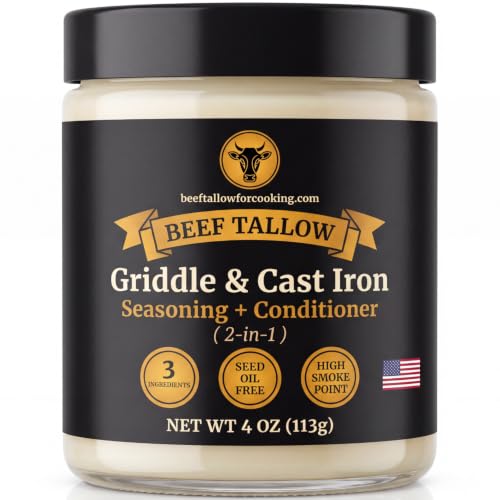
THE SEED OIL FREE FORMULA — Golden Render is the world's first seed oil free, tallow-based griddle seasoning & cast iron conditioner. While others use soy, shortening, grapeseed, sunflower or canola, we use just 3 clean ingredients: beef tallow, avocado oil & beeswax.
Proper Technique for Long-Term Cast Iron Maintenance
Maintaining your cast iron’s seasoning requires three essential practices: immediate cleaning, thorough drying, and strategic oil application after every use. You’ll wash with warm water and a soft brush, avoiding prolonged soaking that invites rust. Additionally, using heavy-bottomed cookware helps in achieving a flavorful crust when preparing other dishes like blackened chicken. Next, you’ll dry completely—either with a lint-free towel or brief stovetop heating—to eliminate moisture from crevices and handles. This step prevents rust formation, the primary degradation culprit. Finally, you’ll apply a thin oil layer using a paper towel, wiping away excess to avoid stickiness. Consistent oil application preserves cast iron benefits including non-stick properties and rust resistance. Cooking with cast iron requires mindful attention to ensure your pan remains protected and seasoned for decades. You’ll store in dry, well-ventilated spaces, checking periodically for moisture or discoloration. These techniques guarantee your pan remains protected and seasoned for decades.