You shouldn’t reuse metal canning lids for vacuum sealing. The heat-activated sealing compound undergoes irreversible changes during initial use, compromising its ability to create an airtight seal. Once softened and hardened, the compound won’t conform properly to jar rims again, creating gaps that allow bacteria infiltration. Experts and manufacturers universally recommend single-use lids for food safety. Reusable silicone gasket systems designed specifically for vacuum sealing offer a safer, eco-friendly alternative. Understanding why this matters requires examining the mechanics of each sealing method.
How Canning Lid Sealing Compounds Work
When you heat a jar during canning, the sealing compound underneath the lid—typically composed of heat-activated materials like modified vinyl, silicone-based compounds, or plastisol—softens and allows trapped air to escape, creating the vacuum that preserves your food.
Understanding compound activation is essential to grasping sealing mechanics. As the heated compound softens, it fills microscopic irregularities on the jar rim, ensuring no air leaks occur. The compound’s flexibility during heating, balanced with proper viscosity and adhesion, enables effective heat transfer and timely activation.
When you remove the jar from heat, the softened compound hardens as temperatures drop, conforming tightly to the rim and forming an airtight seal. This irreversible transformation creates the barrier that maintains sterility and excludes microorganisms, making reuse problematic since the compound undergoes permanent chemical and physical changes during the initial sealing process.
Why Single-Use Lids Are Recommended by Experts
Because the sealing compound undergoes irreversible physical changes during initial heating, canning experts universally recommend single-use lids to maintain food safety. You’ll find that major manufacturers and regulatory agencies explicitly specify lids are designed for one-time use only.
When you reuse lids, you compromise lid integrity considerably. The indented sealing compound can’t conform properly to your jar’s rim on subsequent uses, creating gaps that allow bacteria and pathogens to infiltrate your preserved food. Expert advice consistently emphasizes this critical vulnerability.
Extension services and food safety organizations worldwide advise against reusing metal canning lids due to increased seal failure rates. You risk spoilage and potential foodborne illness from contaminated food that may show no visible signs of danger. Following expert recommendations by using new lids guarantees compliance with established safety standards for home canning.
The Difference Between Vacuum Sealing and Traditional Canning
While both vacuum sealing and traditional canning preserve food by reducing spoilage, they operate through fundamentally different mechanisms and serve distinct purposes. Vacuum sealing advantages include maintaining original texture and nutrient content while requiring minimal equipment. However, vacuum sealed food demands refrigeration or freezing and won’t prevent botulism in low-acid foods.
Traditional canning, conversely, uses heat to sterilize food and create shelf-stable products lasting years at room temperature. Yet canning limitations include altered food texture from heat processing and longer processing times. Vacuum sealing takes 20-60 seconds, while canning requires temperature-specific processing. You’ll achieve -0.6 to -0.9 bar pressure with vacuum sealing, whereas canning requires specialized high-temperature rated jars and pressure canners for low-acid foods. Choose based on your storage needs and timeline.
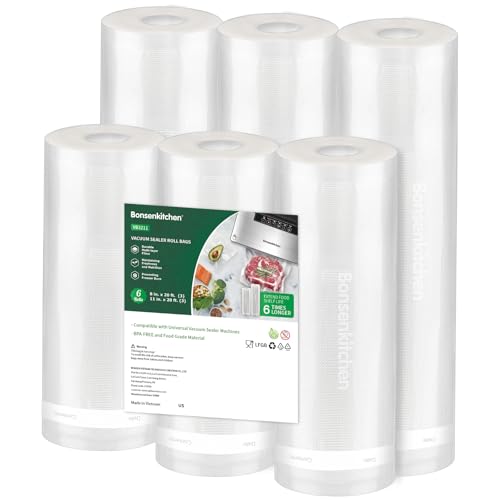
BPA FREE: Bonsenkitchen vacuum food sealer roll bags can be microwaved, frozen, re-used, washed, boiled and dishwasher safe. Allows you to precisely control your cooking temperature to achieve perfect results. You can cook sous vide in Bonsenkitchen bags by placing them in water at any temperature up to 230°F/110°C

【BPA FREE】Bonsenkitchen vacuum food sealer roll bags can be microwaved, frozen, re-used, washed, boiled and dishwasher safe. Allows you to precisely control your cooking temperature to achieve perfect results. You can cook sous vide in Bonsenkitchen bags by placing them in water at any temperature up to 230°F/110°C

ECONOMICAL & & TIME SAVING: Total 150 count Bonsenkitchen 20 Gallon 11" x 16"+ 80 Quart 8" x 12"+ 50 Pint 6" x 10" vacuum sealer bags are different sizes of packaging, meet your different usage needs. Vacuum bags are pre-cut and ready-to-use, saving you time whenever you’re preserving leftovers, preparing make-ahead meals, and portioning bulk items in the freezer.Just pull out and use, no need to cut, no need to seal one side before putting food in
What Happens When You Reuse Metal Canning Lids
Unlike vacuum sealing, which you can repeat indefinitely on the same bag, traditional canning presents a critical reusability question with metal lids that directly impacts food safety. When you reuse canning lids, the sealing compound softens during initial heating, then hardens permanently. This process creates an indentation that reduces material thickness for subsequent attempts, compromising sealing effectiveness.
You’ll notice the rubber gasket loses flexibility and elasticity over time, diminishing its ability to form airtight seals. The compound’s degradation continues regardless of storage conditions, affecting lid longevity considerably. Manufacturers recommend using lids within five years of manufacture for ideal performance.
You shouldn’t reuse lids because failed vacuum seals allow oxygen and bacteria to enter jars, creating dangerous conditions for botulism development in low-acid foods.

North Mountain Supply Regular Mouth Metal Safety Button Lid with Plastisol Liner - Continuous Thread - Pack of 12

12 sets of lids and bands,it cannot be used with a regular mouth jars

Quantity: each set contains 30 packs mason jar lids 70mm / 2.8 inches in diameter, 16 mm / 0.6 inches in height; These mason jar lids are only suitable for standard mud pots, but not for other types of wide-mouth bottles
Reusable Lid Systems as a Safer Alternative
Given the safety limitations of reused metal canning lids, reusable lid systems offer a technically superior alternative for home food preservation. You’ll benefit from reusable materials engineered specifically for repeated use, including BPA-free plastic and stainless steel construction. These systems feature silicone gaskets that maintain sealing integrity across hundreds of cycles without degradation—unlike traditional rubber gaskets that deteriorate quickly.
Lid durability remains exceptional with properly maintained reusable lids. Stainless steel variants resist bending and warping that compromises single-use metal lids. You’ll experience consistent vacuum seals across repeated applications without metal fatigue or integrity loss. Additionally, ensuring food safety by reaching safe internal temperatures is crucial when preserving food to prevent spoilage and maintain quality.
You’ll also eliminate waste entirely. These systems work seamlessly with electric and manual vacuum sealing equipment, including FoodSaver and Mason Genie systems. They’re dishwasher safe and available in standard and wide-mouth sizes through specialty retailers.

FITS REGULAR MOUTH LIDS: 10 Reusable platinum silicone seals. Regular mouth mason jars are 2 3/8" internal diameter. These *regular mouth* sealing rings are seals are 70mm (2.75") outside diameter, 50mm (2") inside diameter, and 2.6mm (.1") thick.

Effortless Seal: Our adaptable Silicone Lids fit various containers, simplifying food storage and eliminating the search for matching lids.
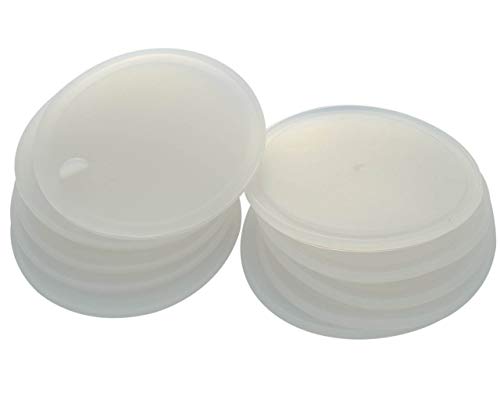
FITS WIDE MOUTH LIDS: 10 Reusable Platinum Silicone Discs Make *Wide Mouth* (3" internal diameter and 3.3mm thickness) Ball plastic storage caps, Mason Jar Lifestyle stainless steel storage lids, and some other lids both leak proof and food safe! Not for canning.
Food Safety Risks and Potential Consequences
The decision to reuse metal canning lids exposes you to serious food safety hazards that can result in foodborne illness or spoilage. When you reuse lids, the deformed plastisol band can’t create hermetic seals, allowing pathogens like Clostridium botulinum and Listeria monocytogenes to infiltrate your jars. These anaerobic bacteria thrive in oxygen-depleted environments and produce dangerous toxins without heat treatment to destroy them.
Spoilage microorganisms and contaminants penetrate compromised seals, causing off-flavors, strange textures, and potentially life-threatening infections. You risk consuming contaminated food that appears normal but harbors deadly pathogens. The consequences extend beyond illness—failed seals accelerate oxidation and flavor degradation, rendering your preserved foods unsuitable for consumption while creating unsafe conditions ideal for toxin production.
Best Practices for Handling and Inspecting Used Lids
While reusing canning lids can help reduce waste, you’ll need to implement rigorous inspection and handling protocols to mitigate the food safety risks outlined previously. Begin with thorough lid inspection, examining each lid for dents, warping, rust, and sealing compound damage. Discard any compromised lids immediately.
For lid cleaning, wash gently by hand using non-abrasive methods to preserve the sealing compound. Rinse thoroughly to eliminate soap residue, then dry completely before storage. Use protective opener tools when removing lids to prevent deformation.
Before sealing, verify compatibility with your jar type and vacuum sealing system. Test-fit lids to confirm flush, stable seating without gaps. Monitor sealed jars immediately and ongoing for seal integrity. If seals fail, discard the lid permanently.
When Reusing Lids Might Be Acceptable
When might you safely reuse canning lids without compromising food safety? You can reuse lids for short term storage of non perishable items like grains, flour, and dehydrated foods in airtight jars. Reusing lids works acceptably for vacuum sealing jars containing homemade snacks or pantry staples you’ll consume quickly. You may also repurpose lids for sous vide cooking applications where long-term shelf stability isn’t required.
However, you shouldn’t reuse lids for perishable foods, acidic items, or anything requiring extended storage. The seal’s integrity diminishes with each use, increasing failure risk. You must inspect lids carefully for damage, worn sealing compound, or heat exposure before reusing them. Clean thoroughly to prevent contamination. For applications demanding reliable preservation, invest in new lids or reusable alternatives with replaceable gaskets instead.

UNIVERSAL COMPATIBILITY: Seals rings outer diameter is about 3.75 inches,the inner diameter is approx 2.75 inches, Designed to fit most standard wide mouth Mason jar lids,The silicone sealing rings stretch slightly to fit well

12 WIDE MOUTH STORAGE MASON JAR LIDS: 316 stainless steel lids with silicone gaskets (total 24 pieces). Fits wide mouth Kerr / Ball Mason jars with 3 3⁄8" outer diameter of glass jars.

Refillable pump dispenser--good workmanship brings you comfortable use experience, it also can help you ,replacement pumps