You can safely store vacuum-sealed meat for 1–2 weeks in your refrigerator or 12–36 months in your freezer, depending on the meat type. Whole cuts like beef last longest at 24–36 months frozen, while ground meat spans only about one year. After thawing, you’ve got 1–4 days depending on the cut. Maintaining temperatures below 4°C and inspecting seal integrity promotes ideal preservation. Understanding specific guidelines for your meat type will help you maximize storage duration.
General Shelf Life of Vacuum Sealed Meat
When you vacuum seal meat properly, you’ll find it lasts considerably longer than conventionally packaged products because the removal of oxygen dramatically slows oxidation and bacterial proliferation. Vacuum sealing benefits extend across different meat types: whole cuts remain fresh for 2–3 weeks in refrigeration, while ground meat lasts 1–2 weeks due to its larger surface area. In freezer storage at 0°F or below, you can maintain quality for 2–3 years. Poultry and fish typically last 1–2 weeks refrigerated when vacuum sealed. Cooked meats remain safe up to two weeks under vacuum seal in your fridge. Understanding meat spoilage indicators—off odors, discoloration, sliminess, and gas bubbles—helps you identify when sealed packages have deteriorated, regardless of apparent freshness.
Shelf Life by Meat Type in Frozen Storage
Because different meat types exhibit varying rates of oxidation and quality degradation during freezer storage, understanding type-specific timelines helps you maximize your vacuum-sealed inventory. Beef maintains quality for 24-36 months when vacuum-sealed, making it ideal for long-term freezing. Poultry matches beef’s longevity at 24-36 months, though its delicate structure benefits greatly from vacuum protection against freezer burn. Pork performs well at 12-24 months, while lamb requires slightly shorter storage windows of 12 months. Ground meat presents the shortest shelf life at approximately one year. These timelines assume consistent sub-zero temperatures and proper sealing. Your choice of cooking methods and meat marination strategies can further optimize texture and flavor retention once you thaw and prepare your frozen reserves.

VACUUM SEALER BAGS ROLLS: 8"x20' 3rolls+11"x20' 3rolls, XinBaoLong Food Saver Bags Rolls, Commercial Grade, Heavy Duty, BPA Free for Vac Storage, Kitchen Gadgets, Kitchen Accessories

Compatible with All Desktop Vacuum Sealers: These vacuum sealer bags are designed to work with all traditional desktop vacuum sealer machines. Simple to operate and convenient to use. (Note: These bags do not feature an air valve and are not compatible with handheld vacuum sealers.)

Universal Design: Compatible with All 'Clamp Style' Vacuum Sealer Machines
Shelf Life by Meat Type After Thawing
Once you’ve thawed your vacuum-sealed meat in the refrigerator, you’re working against a much shorter timeline than frozen storage allows. Ground meats, poultry, and fish remain safe for 1 to 2 days post-thawing. Beef, pork, lamb, and veal cuts extend to 3 to 4 days. Vacuum-sealed sous vide cooked meat holds safely for approximately one week at 37°F, offering extended refrigeration compared to raw products. It’s important to remember that vacuum-sealed meat’s quality can diminish if improperly sealed, leading to potential spoilage more quickly. Additionally, vacuum sealing can help maintain flavors and nutrients, ensuring you enjoy your meals to the fullest.
Your thawing methods greatly impact safety windows. Thawing directly from freezer to refrigerator maintains identical holding times as freshly refrigerated meat. Never thaw at room temperature, as this accelerates pathogenic bacterial development. Temperature proves critical—refrigerators near 32°F considerably extend shelf life beyond standard estimates. Monitor your actual storage temperature rather than relying solely on thermostat settings, since cumulative time in the 40°F to 140°F danger zone shouldn’t exceed four hours maximum.

VACUUM AND PRESERVE MODE: Turn the top valve on these FoodSaver containers to "Vacuum" and connect your handheld sealer (sold separately) for an airtight seal that locks in freshness to keep foods fresh longer in the fridge, freezer, or pantry

MULTIPURPOSE, REUSABLE BAGS: These BPA-free, multilayer FoodSaver vacuum seal bags are durable and easy to hand-wash; also safe to use in the microwave, for sous vide cooking, and for freezer storage

Package Includes: 9 Pieces food containers set includes 9 containers and 9 lids, and 1 manual vacuum pump, includes(27 oz/2pcs, 49 oz/2pcs, 67 oz/2pcs, 94 oz/2pcs, 287 oz/1pcs); Different sizes can hold different foods to meet your different needs
Quality Considerations and Optimal Storage Conditions
The success of your vacuum-sealed meat storage hinges critically on two foundational elements: the quality of meat you’re sealing and the conditions you’re maintaining it in. Your quality assessment begins with evaluating pH levels—meat below 5.8 resists spoilage better than meat above 6.0, since lactic acid bacteria inhibit undesirable microbial growth. High E. coli counts exceeding 100 per gram signal temperature abuse or contamination. Delicious Buttermilk Cornbread can even be a delightful accompaniment to meals featuring vacuum-sealed meat.
Storage temperature directly controls microbial growth rates. You must maintain temperatures below 4°C (39°F), with 0°C (32°F) or lower ideal for long-term storage. E. coli cannot proliferate below 7°C, making consistent cold chain management essential. Additionally, inspect vacuum seals for integrity—leaks compromise your barrier against microbial contamination and oxygen ingress, accelerating spoilage considerably. It’s also important to note that preventing spoilage can be bolstered by maintaining proper storage practices, similar to caring for a cast iron skillet.
Best Practices for Vacuum Sealing and Freezing Meat
Mastering vacuum sealing fundamentals creates a critical barrier against oxidation and bacterial proliferation that’d otherwise compromise your meat’s quality during extended storage. You’ll achieve ideal results by pre-freezing moist cuts for 1-2 hours before sealing, preventing texture compression and juice expulsion. Apply paper towels to absorb excess surface moisture, then portion meat into meal-sized packages separated by parchment paper for convenient thawing. Cleaning with gentle methods like wiping away any surface moisture can further enhance the vacuum sealing process.
Maintain one-inch headspace in bags to guarantee proper seal formation. Your vacuum sealing techniques directly impact preservation efficacy—chamber vacuum sealers minimize liquid loss through gentler pressure application compared to standard machines. Additionally, vacuum sealing helps extend shelf life significantly, allowing your meat to stay fresh much longer than using conventional methods.
After sealing, implement FIFO organization and date labeling using permanent markers. These meat preservation methods, combined with regular equipment maintenance and sealing strip replacement, maximize freezer storage duration while preventing water contamination and freezer burn.

80kpa Suction Power - Updated vacuum sealer uses a DC motor pump with electromagnetic perm and pure copper core to enhance its suction power. It sucks all air out tightly to preserve your meat and vegetables for 10 times longer or more to prevent oxidation.

Made in USA: Proudly manufactured in the United States
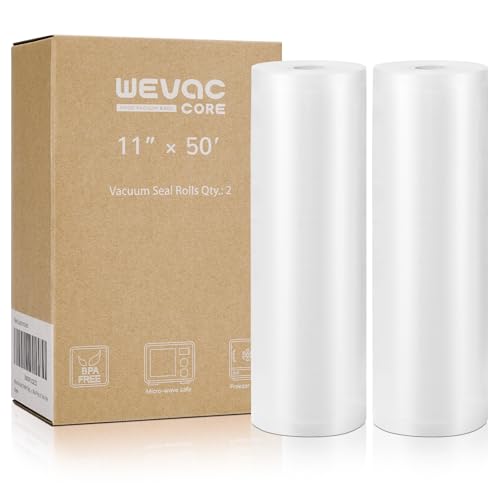
HEAVY DUTY AND PUNCTURE PREVENTION - 2 pack of 11 inch by 50 feet rolls with embossed channels to increase suction, keep fresh without freezer burn or dehydration