You can’t safely can food with a vacuum sealer alone—it removes air without generating the heat needed to destroy anaerobic pathogens like *Clostridium botulinum*. Vacuum sealing works best for refrigerated or frozen items like meats, poultry, and blanched vegetables when you maintain temperatures at 40°F or below. For shelf-stable preservation, you’ll need traditional canning with proper heat processing: boiling water for high-acid foods or pressure canning for low-acid varieties. Understanding the critical differences between these methods reveals how to safely extend your food’s freshness.
Understanding Vacuum Sealing vs. Traditional Canning
While both vacuum sealing and traditional canning preserve food, they’re fundamentally different processes that’ll suit different needs depending on your priorities. Vacuum sealing removes air to slow oxidation and microbial growth, though it doesn’t sterilize food—you’ll need refrigeration or freezing for safety. Traditional canning uses heat sterilization to kill microorganisms, creating shelf-stable food without refrigeration for years.
Vacuum advantages include faster processing, better nutrient retention, and preserved texture and flavor. However, canning disadvantages include labor intensity and altered food quality from heat exposure. Conversely, canning offers superior long-term storage and pathogen destruction that vacuum sealing alone cannot guarantee. Notably, vacuum sealed meat can maintain best quality for 2 to 3 years in the freezer when properly stored. Additionally, vacuum-sealed foods can stay fresh up to five times longer than food stored by conventional methods when safely managed. Your choice depends on whether you prioritize speed and quality or extended shelf life without refrigeration.

💰REDUCE WASTE AND SAVE MONEY: Chef Preserve vacuum seals your food in less than 5 seconds, extends freshness, and pays for itself after just a few uses.
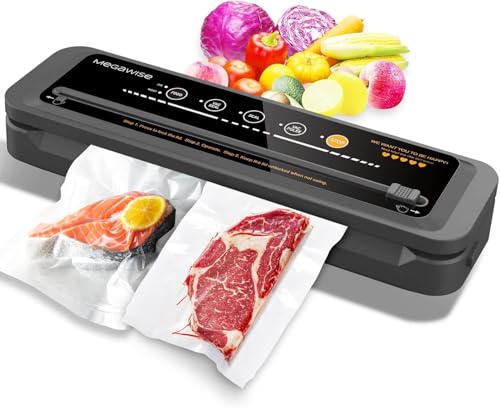
80kPa Suction Power: Updated 2025 vacuum sealer uses a DC motor pump with electromagnetics and pure copper for enhanced suction power. It sucks all air out tightly to preserve your meat and vegetables for 10 times longer or more to prevent oxidation and keep things fresh. Updated version solved many issues found from previous version

𝟗𝟓𝐤𝐏𝐚 𝐃𝐮𝐚𝐥-𝐏𝐮𝐦𝐩 𝐏𝐨𝐰𝐞𝐫: 125W high power with a dual-pump system delivers up to 95kPa of professional-grade suction for fast sealing in 8–18 seconds—up to 50% faster than standard vacuum sealers. Ideal for meal prep, sous vide cooking, bulk storage.
Food Safety Risks and Anaerobic Pathogens
Because vacuum sealing removes oxygen from food packaging, it creates an ideal environment for anaerobic pathogens—particularly *Clostridium botulinum*—to survive and proliferate without the competition from aerobic spoilage bacteria that’d normally signal food deterioration through odor or discoloration. You won’t detect pathogen growth through conventional spoilage indicators, making contaminated food appear safe while harboring deadly toxins. Anaerobic risks escalate with improper temperature control; some *C. botulinum* strains thrive at refrigeration temperatures, especially in vacuum-sealed fish. Pathogen growth accelerates rapidly when you store vacuum-sealed foods unrefrigerated or allow temperature abuse during transport. Excess moisture inside sealed bags further promotes anaerobic bacterial proliferation. Vacuum sealing alone cannot sterilize food or eliminate existing bacteria—refrigeration at 38–40°F remains essential for safely controlling anaerobic pathogen growth in perishable items.
Proper Mason Jar Selection and Preparation
Selecting the right mason jar is fundamental to successful vacuum sealing, and you’ll want to prioritize Ball brand tempered glass jars for their superior durability and consistent quality. Tempered glass resists pressure changes during the sealing process, directly protecting jar integrity.
Before sealing, inspect each jar thoroughly for scratches, chips, or blemishes that compromise structural integrity and increase implosion risk under vacuum pressure. Only perfect-condition jars proceed to sealing.
Your mouth style selection depends on your equipment. Wide-mouth jars fit comfortably inside canister-style chambers, while regular-mouth quart jars may prove too tall for standard chambers. Match your jar dimensions to your vacuum sealer model.
Position lids without secured screw bands inside the chamber, ensuring no contact with the chamber lid. After sealing completes, secure the band to lock everything in place. Additionally, ensure you are using specifically designed vacuum sealer bags for optimal sealing performance.

【Suitable for two types of Mason jars】The electric Mason jar vacuum sealer contains two sizes of mouth seals for your daily use. To get the standard mouth seal jar, simply insert the red arrow on the standard mouth seal converter, align it with the unlock symbol on the main unit and then insert it inside the silicone ring in the wide mouth seal area and tighten it clockwise, at this point the arrow is aligned with the lock symbol, which indicates a successful installation.

【𝗘𝗹𝗲𝗰𝘁𝗿𝗶𝗰 𝗠𝗮𝘀𝗼𝗻 𝗝𝗮𝗿 𝗩𝗮𝗰𝘂𝘂𝗺 𝗦𝗲𝗮𝗹𝗲𝗿 𝘄𝗶𝘁𝗵 𝗟𝗘𝗗 𝗗𝗶𝘀𝗽𝗹𝗮𝘆】Upgrade your food storage routine with this electric mason jar vacuum sealer. Featuring powerful suction performance, it efficiently removes air from jars to create a secure vacuum seal. The built-in LED display shows sealing progress, battery status, and charging information, making every sealing task simple and convenient.

Meeting the Needs of Every Family -Our jar vacuum sealer for mason jars contains an electric vacuum seal machine, suitable for two sizes of mason tube bottle top. Five wide-mouth and five regular-can cups for mason jars. One USB cable, bottle cap opener, and user guide. Attach a label sticker to record the date and name of food storage.
Heat Processing Requirements for Safe Preservation
Although vacuum sealing creates an excellent barrier against oxygen and moisture, it doesn’t generate the heat necessary for safe food preservation. You must understand that proper heat processing destroys molds, yeasts, bacteria, and enzymes that cause spoilage.
For high-acid foods like jams and pickles, you’ll use boiling water processing at 212°F. Low-acid foods such as meats and vegetables require pressure canning at temperatures between 240-250°F. You’ll adjust internal canner pressures based on altitude to guarantee safety.
Vacuum sealing alone cannot replicate the thermal processing required for shelf-stable storage. Filling jars with hot food and vacuum sealing doesn’t constitute safe heat processing. You must follow tested recipes and adhere to specific processing durations for your food type and altitude.

The only method recommended safe by the US Department of Agriculture for canning vegetables, meats, poultry, and seafood

Durable Aluminum Construction: Discover the power of our pressure canner, designed to provide a long-lasting and reliable performance, even heating, and easy maintenance, making it the perfect tool to master the art of home canning

Achieving and Maintaining Reliable Seals
While vacuum sealing creates an effective oxygen barrier, you won’t achieve reliable preservation unless you understand the critical factors that determine seal integrity and longevity. Standard red gasket materials compress permanently under vacuum pressure, failing to rebound for subsequent sealing cycles. You’ll find that silicone gasket lids provide superior reusability across multiple applications. Additionally, using proper canning jars like Mason jars ensures that the heat resistance and sealing surface design contribute to successful sealing outcomes. Lid thickness directly correlates with reliability—thicker construction prevents deformation during vacuum application. You must inspect jars before sealing, eliminating scratches and chips that compromise structural integrity. After sealing, turn your chamber vacuum sealer’s dial to OPEN before removing jars to prevent seal compromise. Proper gasket material selection and maintenance protocols guarantee your vacuum-sealed jars maintain consistent seal integrity throughout storage. For best results, ensure that your jar lids are free of defects, as this directly impacts your vacuum seal’s effectiveness.

Dimension - Replacement silicone cover seal inner diameter about 5.8cm/2.28inches, outer diameter about 6.5cm/2.56inches, thickness about0.25mm/0.01 inch. It is suitable for two sizes 16oz or 20oz.

Dimension - Replacement silicone cover seal inner diameter about 7cm/3inches, outer diameter about 8cm/3.1inches, thickness about 0.4cm/0.2inches. It is suitable for two sizes 40oz.

Dimension - Replacement silicone cover seal inner diameter about 5.8cm/2.28inches, outer diameter about 6.5cm/2.56inches, thickness about 2.5mm/0.1 inch. It is suitable for two sizes 16oz or 20oz.
Best Practices for Extending Food Freshness
To maximize the benefits of your vacuum sealer, you’ll need to carefully select foods that respond well to this preservation method and maintain strict storage protocols. For meal prep, you’ll want to focus on meats, poultry, fish, and blanched vegetables, which retain quality for extended periods. Hard cheeses can last 4–8 months refrigerated when sealed properly. Store perishables immediately at or below 40°F (4°C) for refrigeration or 0°F (-18°C) for freezing. Frozen vacuum-sealed foods typically last 2 to 3 years on average, significantly extending your food storage capacity. Always blanch vegetables before sealing to preserve color, texture, and nutrients. Thaw frozen items only in the refrigerator. These practices prevent freezer burn and oxidation while maintaining nutritional integrity and taste. Additionally, vacuum sealing can extend shelf life by removing oxygen, further enhancing food preservation.

VACUUM SEALER BAGS ROLLS: 8"x20' 3rolls+11"x20' 3rolls, XinBaoLong Food Saver Bags Rolls, Commercial Grade, Heavy Duty, BPA Free for Vac Storage, Kitchen Gadgets, Kitchen Accessories
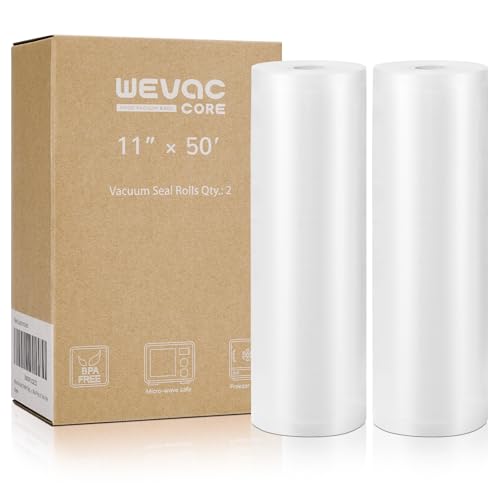
HEAVY DUTY AND PUNCTURE PREVENTION - 2 pack of 11 inch by 50 feet rolls with embossed channels to increase suction, keep fresh without freezer burn or dehydration

HEAVY DUTY AND PUNCTURE PREVENTION - 2 pack of 8 inch by 50 feet rolls with embossed channels to increase suction, keep fresh without freezer burn or dehydration