You’ll safely cook your turkey by combining multiple doneness checks: follow weight-based timing guidelines (10-12 minutes per pound at 325°F for unstuffed birds), then verify doneness through physical tests. Press the thickest thigh meat—it should feel firm, not soft. Wiggle the drumstick; it’ll move freely when cooked. Pierce the thigh and confirm juices run clear. Examine the skin for deep golden-brown color throughout. When you’ve confirmed all these signals align, you’ve nailed it—though mastering the complete safety protocol reveals even more confidence-building techniques.
Visual and Sensory Indicators to Estimate Turkey Doneness
When you’re roasting a turkey, you’ll naturally look and listen for signs of doneness—the deep golden skin, the loose joints, the rich aroma wafting through your kitchen. These visual cues and sensory perceptions offer helpful guidance, but they’re insufficient alone for food safety.
You’ll notice the skin develops a deep golden-brown color and the legs wiggle freely at the joints. The meat pulls away from bones, and juices run clear when pierced. Through touch, you’ll feel the breast meat firm yet the thigh tender when pressed. The aroma intensifies with pronounced herb and spice notes.
However, these indicators can deceive you. Pink juices don’t always mean undercooked turkey, especially in younger birds. Skin colors develop before internal safety is reached. Brined turkeys appear done visually before reaching safe temperatures. Relying solely on sensory methods risks foodborne illness.

Instant Read Food Thermometer | Our instant read thermometer features a temperature probe and advanced, highly accurate technology with 1-2 seconds response time; Instructions, meat temperature chart, comes pre-calibrated for your convenience, and recalibrating feature if needed.
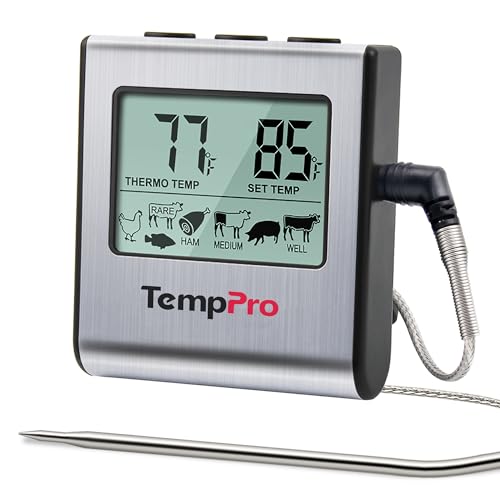
Cook mode with USDA preset temperature settings: TempPro cooking thermometer ideal for meat, oven, smoker or stove top; Programmable alert with preset temperatures for specific foods recommended by USDA; All of the preset temps can be reset to your desired tastes

Ultra Fast & Accurate Reading - Biison professional digital thermometer with 3s fast response time measure food temperature From -58°F to 572°F (the accuracy of ±2°F),applicable from ice water to oil Temp
Timing and Weight-Based Cooking Guidelines
While sensory cues can’t guarantee food safety, weight-based cooking times offer you a reliable foundation for planning your turkey preparation. You’ll find that unstuffed turkeys require approximately 10 to 12 minutes per pound at 325°F, while stuffed varieties need 15 to 17 minutes per pound.
These weight guidelines scale across different turkey sizes. A 12 to 16 pound unstuffed turkey needs 2 to 2.25 hours, whereas the same weight stuffed requires 2.5 to 2.75 hours. For turkey parts, drumsticks weighing 1.5 to 3 pounds require 1.5 to 1.75 hours with added broth.
Boneless turkey breasts between 3 to 5 pounds need 1.75 to 2.25 hours. Following these cooking times paired with visual inspection guarantees safe, properly cooked poultry every time.
Physical Tests and Techniques to Assess Doneness
Beyond relying solely on cooking times, you can employ several physical assessment methods to confirm your turkey’s doneness. Examine the skin appearance for a deep golden-brown color throughout. Perform tactile assessment by pressing the thickest thigh meat—it should feel firm, not soft or springy. Test movement flexibility by wiggling the drumstick; it’ll move freely when fully cooked. Observe visual indicators like clear juices running from the thigh when pierced. Conduct texture evaluation of the meat’s firmness across different sections. These hands-on techniques, combined with timing guidelines, provide reliable confirmation. While physical tests offer helpful guidance, remember they’re less precise than thermometers. Use multiple methods together for maximum confidence in your turkey’s safety and quality.

Temperature Range: 140° to 190°F / 60° to 87°C. Probe Length: 4.75-inches Dial Diameter: 2.375-inches

【Ultra-Fast & Precision Accurate】This meat thermometer digital delivers accurate readings within ±1°F/±1°C in just 1–2 seconds, with a wide temperature range of -58°F to 572°F (-50°C to 300°C). No more waiting over the heat - know your food's exact temperature instantly.

Fast & Accurate: Get precise readings in just 1 second with ±0.9°F accuracy. NSF Certified for trusted food safety, this digital food thermometer features a 4.3 inches food-grade stainless steel meat probe, perfect for grilling, frying, baking, making candy and more
Understanding Internal Color and Juice Clarity
Visual cues—the golden-brown skin, the color of the meat, the clarity of the juices—can deceive you. You shouldn’t rely on color misconceptions that persist about turkey doneness. Pink meat doesn’t guarantee undercooking; natural pigments and chemical reactions produce rosy hues even in fully cooked poultry. Brining and smoking intensify this effect.
Juice variability complicates matters further. You might find clear juices in undercooked turkey or pink juices in safely cooked bird. Myoglobin retention, nitrite presence from brining, and pH levels all influence juice appearance. You can’t trust visual indicators alone. Golden exteriors mask undercooked interiors. Clear juices don’t confirm safety. These unreliable methods have led countless cooks astray. You need a dependable method beyond appearance.

【8X Faster + 4X More Precise】: Upgraded with an industrial-leading professional thermocouple sensor, Themomonster meat thermometer digital with NIST certified ±0.5℉ precision provides you the accurate temperature of your food in just 0.5 Seconds.

No More Guesswork During Your Chill Cooking Time - professional digital thermometer devotes every beginner to becoming a prof! A good helper both in outdoor BBQ and Home party, It is the best gift for cooking enthusiasm and the useful kitchen gadget for festival meals

【Strong Magnet & Kitchen Gadget】A handy food thermometer for cooking with a clear LCD and powerful magnet. Sticks securely to fridges, smokers, or ovens for instant access and space-saving storage.
Food Safety Considerations Without a Thermometer
Since you can’t depend on color and appearance to determine doneness, you’ll need to master the fundamentals of safe handling and cooking practices instead. Your food handling approach must prioritize preventing bacterial contamination throughout preparation and cooking. Maintain strict hygiene practices by washing your hands, utensils, and surfaces thoroughly after contacting raw turkey or its juices. Use separate cutting boards and utensils exclusively for raw poultry to eliminate cross-contamination risks. Never leave your turkey unrefrigerated for extended periods before cooking, as this invites bacterial growth in the danger zone. Trim and season immediately after removing it from refrigeration, then cook without delay. Remember, proper cooking ensures the correct internal temperature to guarantee it is safe to eat. These foundational practices compensate for your lack of a thermometer by minimizing foodborne illness risks through careful, deliberate handling.
Cross-Checking Multiple Doneness Signals
How can you confidently determine your turkey’s doneness without a thermometer? You’ll rely on sensory assessment across multiple indicators. Start with visual checks: golden-brown skin, opaque white breast meat, and clear juices. Move to tactile evaluation—the leg joint should wiggle freely, and breast meat should feel firm but not rigid.
Next, perform juice evaluation at several locations. Pierce the thickest thigh and breast areas; clear or slightly pink juices confirm doneness, while red or bloody juices indicate undercooking. It’s essential to ensure that you check the internal temperature has reached 165°F (74°C) to guarantee safety.
Finally, observe carving behavior. Meat should separate easily without excessive tearing, reveal uniform color throughout, and show no pink areas. By cross-checking visual, tactile, aromatic, and juice indicators simultaneously, you’ll achieve reliable, safe results without guesswork. Additionally, remember to let your turkey rest for a few minutes after cooking, as this helps confirm its doneness and retain chicken juices uniformly throughout.
Resting and Carryover Cooking Effects
After you remove your turkey from the oven, the cooking process doesn’t immediately stop—heat continues flowing from the hot outer layers toward the cooler interior, a phenomenon called carryover cooking. Your turkey will experience an 8 to 14°F temperature increase during the resting period, so remove it when the thickest thigh reaches approximately 165°F.
Let your turkey rest for 30 to 45 minutes loosely tented with foil. This resting period fulfills two critical objectives: carryover cooking brings the interior to safe serving temperature throughout, and muscle fibers relax, allowing juices to redistribute. When you cut into your turkey immediately, the constricted fibers force juices onto your plate. Proper resting guarantees tender, moist meat and safer food handling without requiring constant thermometer monitoring. Additionally, using oven-safe probe thermometers can provide consistent temperature readings, making it easier to ensure your turkey is cooked safely.
Tips for Cooking Stuffed Turkey Safely
Cooking a stuffed turkey demands careful attention to timing and temperature because the stuffing itself poses unique food safety challenges. You’ll need to focus on proper stuffing preparation and ingredient safety to prevent bacterial growth.
Start by keeping wet and dry ingredients separate and refrigerated until you’re ready to stuff. Never prepare stuffing the night before—combine ingredients only when you’re about to place the turkey in the oven. Use pasteurized eggs and verify any meat or seafood components are fully cooked beforehand.
Stuff loosely, using approximately 3/4 cup per pound, then roast at 325°F minimum. The stuffing’s center must reach 165°F for safety—confirm this with visual cues like clear juices and easily pulled leg joints. Additionally, the USDA-recommended safe serving temperature emphasizes that temperature should be monitored to effectively kill harmful bacteria. If the turkey finishes cooking before the stuffing reaches temperature, transfer the stuffing to a casserole dish and continue cooking separately.