You can safely cook chicken by checking visual and tactile cues. Slice chicken at its thickest point—it’s done when you see uniform white color and clear juices throughout. The meat should feel firm and slightly bouncy, never rubbery or pink. Pan-fry at 350-375°F with a golden-brown exterior, ensuring even heat distribution. Always prevent cross-contamination by using separate cutting boards and sanitizing surfaces. These reliable techniques eliminate harmful pathogens as effectively as temperature monitoring, though understanding the nuances of each method reveals deeper strategies for consistent results.
Understanding the Safe Temperature for Chicken
Why does temperature matter so much when you’re cooking chicken? Because you’re fighting invisible bacteria that can cause serious foodborne illness. The USDA establishes 165°F (74°C) as the safe cooking benchmark for all poultry—whether you’re preparing breasts, thighs, wings, or ground chicken. At this internal temperature, harmful pathogens like Salmonella and Campylobacter die instantly, regardless of your cooking method.
This guideline isn’t arbitrary; it’s rooted in extensive scientific research and accounts for potential thermometer inaccuracies in home kitchens. While lower temperatures can work safely under specific time-temperature conditions, achieving those requires specialized equipment like sous vide machines and precise temperature control that most home cooks can’t maintain reliably. For practical purposes, reaching 165°F represents your most straightforward path to safe chicken every time.

Completely Waterproof: IPX6 waterproof rating means you can wash this cooking thermometer under running water without fear. This food thermometer for cooking ensures cleanup is ultra-fast

IMPROVES QUALITY AND CONSISTENCY: By accurately gauging and indicating when a food item has reached its optimum internal temperature, any cook can be assured that their meal has been cooked properly each and every time

Oven and grill safe for leave-in use while cooking
Visual Signs of Properly Cooked Chicken
While a meat thermometer remains your most reliable tool, you can’t always have one handy—and that’s where visual cues become invaluable. You’ll rely on two primary assessment methods: color assessment and texture indicators.
For color assessment, slice your chicken at its thickest point horizontally. Properly cooked chicken displays uniform white or opaque coloration throughout—any translucent pink flesh signals undercooked meat requiring additional cooking. Pierce the thickest part with a fork; clear juices indicate doneness, while pink or cloudy juices mean it’s not ready. It’s essential to remember that chicken is safely cooked when it reaches an internal temperature of 165°F (74°C), which you can confirm visually when the outside begins to brown. Utilizing methods like vacuum sealing can also help ensure that chicken retains moisture and flavor during storage.
Regarding texture indicators, properly cooked chicken feels firm and slightly bounces back when pressed. Undercooked meat feels rubbery, while overcooked chicken appears dry and stringy. Golden-brown exterior combined with white interior meat confirms thorough cooking across all cuts.
Tactile Methods to Test for Doneness
When you don’t have a thermometer available, you can use tactile testing—the touch method—to assess chicken doneness by comparing the meat’s firmness to your own hand. Press the chicken gently with your finger; properly cooked chicken feels firm but not hard and springs back slightly. However, tactile testing has significant limitations. It’s subjective, requires considerable experience, and doesn’t guarantee safe cooking. Chicken must reach 165°F (73°C) internally to eliminate harmful bacteria like Salmonella and Campylobacter. Oven-safe probe thermometers are designed to provide continuous temperature monitoring, making them ideal for ensuring that chicken is cooked properly. Tactile testing proves unreliable for thin pieces, ground chicken, or stuffed poultry. While experienced cooks may develop tactile memory through repetition, food safety experts strongly recommend using a meat thermometer for accurate results, especially when safe cooking is your priority. Cooking chicken to 165 degrees Fahrenheit ensures safety and effectively eliminates harmful bacteria.
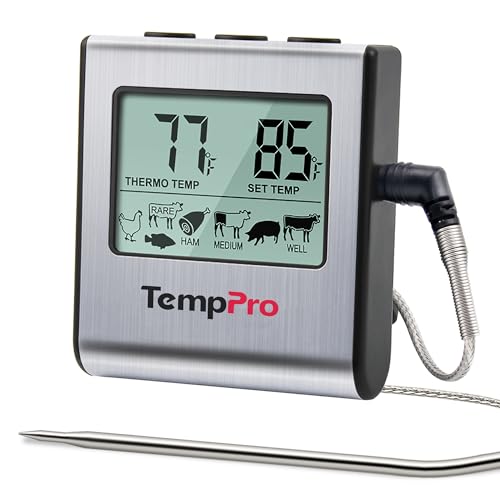
Cook mode with USDA preset temperature settings: TempPro cooking thermometer ideal for meat, oven, smoker or stove top; Programmable alert with preset temperatures for specific foods recommended by USDA; All of the preset temps can be reset to your desired tastes

BBQ HI/LOW temp range alarm: Set your desired food temp and HI/LOW temp range for your grill or smoker to know when to add more fuel smoker thermometer will flash and beep to remind you if the temperature ever goes out your set range; HI/LOW temp range alarm is specifically designed for usage with smokers, grills and BBQs

Temperature Range: 140° to 190°F / 60° to 87°C. Probe Length: 4.75-inches Dial Diameter: 2.375-inches
Pan-Frying Chicken Without a Thermometer
Pan-frying offers you a practical cooking method when you can’t rely on a thermometer, though you’ll need to master several techniques to guarantee your chicken reaches safe temperatures. Heat oil to 350-375°F by testing with a wooden spoon or bread cube—it should brown immediately. Generously season your chicken with salt, pepper, and spices before cooking for ideal flavor penetration. Avoid overcrowding your pan; this maintains steady oil temperature and prevents steaming. Monitor visual cues closely: look for deep golden-brown surfaces and clear juices rather than pink ones. The chicken should firm up and spring back when touched. Reduce heat if browning occurs too quickly, as this prevents undercooked interiors while maintaining proper crust development. It’s important to remember that using any high-temperature cooking method requires careful attention to safety hazards to avoid accidents in the kitchen.
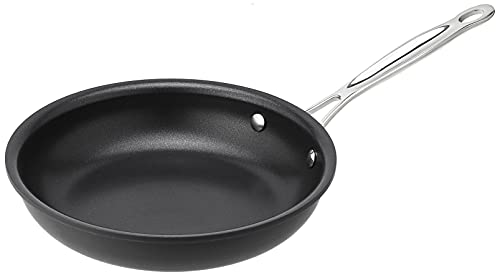
Hard anodized exterior for even heat distribution

A Kitchen Essential for Daily Use: Designed for versatility, this 10-inch omelette and fry pan is perfect for flipping fluffy omelettes, searing proteins, and everyday cooking needs in any kitchen.
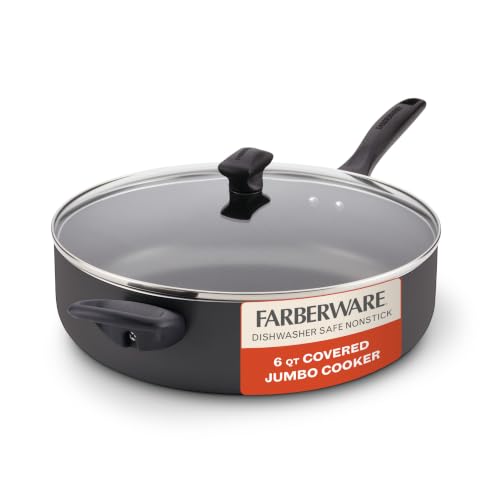
DURABLE, DISHWASHER SAFE COOKING PAN: This dishwasher safe nonstick jumbo cooker features heavy-duty construction that heats fast and evenly
Grilling Techniques for Safe Chicken
Grilling chicken safely requires you to master three essential elements: proper temperature control, strategic heat zones, and accurate doneness assessment. You’ll establish a two-zone fire—direct heat for searing and indirect heat for thorough cooking—preventing charring while ensuring internal safety.
Your grilling methods depend on cut thickness. Sear boneless breasts 2-3 minutes per side over direct heat, then finish on indirect heat for 10-15 minutes. Bone-in thighs need 30-45 minutes total, while whole chickens require 60-90 minutes entirely on indirect heat.
Enhance safety and flavor using chicken marinades with acid components like buttermilk or vinegar, which tenderize meat and lock in moisture. You’ll recognize doneness when juices run clear from the thickest part and the surface turns opaque white or golden brown. Additionally, optimal texture can be achieved by using bone-in, skin-on chicken for grilling methods. Rest your chicken five minutes before serving to redistribute juices thoroughly.

BBQ / Grill pit thermometer, safe and environmentally friendly.

𝐏𝐞𝐫𝐟𝐞𝐜𝐭𝐥𝐲 𝐂𝐨𝐨𝐤𝐞𝐝 𝐌𝐞𝐚𝐭 𝐄𝐯𝐞𝐫𝐲 𝐓𝐢𝐦𝐞: Cosori wireless meat thermometer features dual probes for precise temperature measurement, preventing undercooking or overcooking. By monitoring both the internal and ambient temperatures, it ensures consistent, reliable results, helping you achieve perfectly cooked meat every time

Fast & Accurate: Get precise readings in just 1 second with ±0.9°F accuracy. NSF Certified for trusted food safety, this digital food thermometer features a 4.3 inches food-grade stainless steel meat probe, perfect for grilling, frying, baking, making candy and more
Air Frying for Even Cooking Results
Air frying delivers consistently even cooking results by circulating hot air at high velocity around your chicken, eliminating the cold spots that plague traditional ovens. You’ll achieve excellent outcomes by preheating to 375-400°F, which enhances skin crispiness and thorough cooking. The technique of even heat transfer is crucial for achieving perfect doneness across all cuts.
Follow specific cooking times based on your chicken cut: boneless breasts need 10-20 minutes, bone-in thighs require 25-30 minutes, and whole chickens take 60-75 minutes. Halfway through cooking times, flip your chicken to promote even heat distribution.
Proper preparation guarantees success. Pat your chicken dry, apply a light oil coating, and space pieces evenly in the basket to maintain consistent airflow. Avoid overcrowding, which compromises air circulation. Smaller, uniform-sized pieces cook more evenly, reducing variability in cooking times and guaranteeing thorough doneness throughout. Additionally, using a little butter or oil can enhance flavor and improve non-stick properties.

STAINLESS STEEL AIR FRYER BASKET: This air fryer basket for oven cooking features a stainless steel mesh design that promotes hot air circulation around food. The sturdy wire construction helps support fries, chicken wings, and vegetables. The matching tray catches drips and crumbs for more convenient cooking.

Large Size for Family or Entertaining: OPENICE air fryer basket for oven measuring 15.3x11.0 Inch means you can cook more food at once, saving you time and energy. Whether you're feeding a family or entertaining guests, this oven crisper tray and pan set can handle it all.

𝘼𝙞𝙧 𝙁𝙧𝙮𝙚𝙧 𝙐𝙥𝙜𝙧𝙖𝙙𝙚: Innovative TurboBlaze Technology delivers a powerful 3600 rpm fan speed and temperatures up to 450℉, achieving crispy, juicy results every time
Preventing Cross-Contamination in Your Kitchen
While air frying delivers perfectly cooked chicken, you’ll only guarantee truly safe meals by preventing cross-contamination throughout your kitchen. Start by designating separate cutting boards for raw poultry and produce—color-coded boards make this easier. Never let raw chicken contact ready-to-eat foods, utensils, or surfaces. Store raw chicken below other foods in your refrigerator to prevent drippings from contaminating items below. Kitchen hygiene demands you wash your hands, utensils, and countertops thoroughly with hot soapy water after handling raw poultry. Use separate plates for raw and cooked chicken. These cross contact prevention strategies aren’t optional—they’re essential safeguards against foodborne pathogens. By maintaining strict separation between raw and cooked foods, you eliminate the primary pathway for bacterial transmission in your kitchen.
Keeping Your Cooked Chicken Safe
Once you’ve properly handled raw poultry and prevented cross-contamination, your focus shifts to protecting that safely cooked chicken from bacterial regrowth. You’ll need to refrigerate cooked chicken within two hours—or one hour if it’s above 90°F—in shallow, airtight containers that promote rapid cooling. For leftover storage, you can safely keep chicken refrigerated for two to three days at 40°F or below. When you’re ready to eat it, reheat to 165°F internal temperature, stirring or rotating to eliminate cold spots. Never reheat more than once. Before consuming, check for off odors, sliminess, or discoloration. If anything seems suspicious, discard it. Freezing extends safety indefinitely, maintaining best quality within two to six months. It’s important to ensure that the food is sealed correctly to avoid contamination during storage and reheating. Label containers with dates to track consumption timelines. Additionally, drying completely and oiling your cast iron skillet after cooking can prevent flavor transfer from other dishes and keep the skillet in optimal condition.
Techniques for Retaining Moisture and Flavor
After you’ve safely handled and cooked your chicken, maintaining its juiciness and flavor becomes your next priority. Baking techniques at moderate temperatures—around 350°F—excel at moisture retention compared to high-heat methods. Place your chicken in the oven as it preheats for gradual, even cooking that prevents drying. Consistent oven temperature prevents the moisture loss that fluctuating heat causes. Additionally, using methods like proper skillet seasoning can enhance the moisture retention in other cooking applications.
After cooking, you’ll rest your chicken for at least five minutes. This essential step allows juices to redistribute throughout the meat, locking in flavors and markedly reducing juice loss during cutting. The residual heat continues gentle cooking while your meat’s structure settles, improving overall moisture retention. Additionally, using techniques like maintaining consistent temperature can further enhance your chicken’s flavor profile.
These straightforward techniques guarantee you’ll serve flavorful, juicy chicken every time.