You’ll find that iPhone-compatible infrared thermometers like the ThermoPro TP25W and MEATER Pro XL deliver wireless surface temperature monitoring up to 500 feet via Bluetooth. They’re ideal for tracking hot oil, griddles, and cast iron with precision to 0.1°C. Look for models with customizable emissivity settings, real-time thermal visualization, and programmable alarm thresholds. While they measure surface temperatures only, their non-invasive scanning and backlit displays maximize cooking efficiency. Understanding the variance between infrared and probe readings—averaging 1.1°C—helps you select the right tool for your specific applications.
How Infrared Thermometers Work for Cooking
Infrared thermometers detect temperature by reading black body radiation emitted from objects in the infrared spectrum through optical sensors. You’ll measure light energy to determine brightness levels and obtain surface temperature readings by pointing the device at your target and pressing a button. No laser beam is involved despite the gun-like appearance.
For cooking accuracy, you’ll achieve precision to the tenth of a degree on compatible surfaces. However, remember that infrared thermometers provide only surface readings, not internal temperatures. Your temperature measuring capabilities work well for monitoring hot oil, cast iron skillets, chocolate, and griddle surfaces. Accurate surface readings are essential for effective cooking and can be influenced by the type of surface being measured. Emissivity settings typically range from 0.95 to 0.97, though adjustable options exist for different surface types, ensuring reliable measurements when your target exceeds 32°F. Proper use is essential for reliability, as environmental factors can influence the accuracy of your temperature readings.

𝐕𝐞𝐫𝐬𝐚𝐭𝐢𝐥𝐞 𝐓𝐨𝐨𝐥𝐬: Infrared technology allows you to measure various objects at home and outdoors; Use it for 𝒎𝒆𝒂𝒕, 𝑫𝑰𝒀 𝒄𝒂𝒏𝒅𝒚, 𝒐𝒗𝒆𝒏𝒔, 𝒈𝒓𝒊𝒍𝒍𝒊𝒏𝒈, 𝒇𝒐𝒐𝒅, 𝒄𝒐𝒐𝒌𝒊𝒏𝒈, 𝒂𝒖𝒕𝒐𝒎𝒐𝒕𝒊𝒗𝒆 𝒖𝒔𝒆, 𝑨/𝑪, 𝒓𝒆𝒇𝒓𝒊𝒈𝒆𝒓𝒂𝒕𝒐𝒓𝒔, etc.

【Highly Accurate & Adjusts to Any Surface】Designed with the latest thermopile sensor technology, the infrared laser thermometer gun is accurate to +/-1.5%; Improve this pizza oven thermometer gun measurements by adjusting the emissivity from 0.1–1.0 to match the surface material being measured

【Ultimate Versatility for Kitchen, Garage & House】Ideal for a multitude of tasks! Check pizza oven or griddle heat for perfect cooking, monitor HVAC system vents, or safely diagnose automotive repair issues like overheating engine parts, all with our infrared thermometer gun
Top Iphone-Compatible Models to Consider
Several standout options’ve emerged in the iPhone-compatible thermometer market, each offering distinct advantages depending on your cooking needs. The ThermoPro TP25W delivers Bluetooth connectivity enabling wireless monitoring up to 500 feet away, ideal for outdoor grilling. For dual functionality, the ThermoPro TP420W combines infrared technology with probe capabilities, providing extensive temperature data through your iPhone. The MEATER Pro XL distinguishes itself with Wi-Fi integration alongside Bluetooth, offering extended remote monitoring possibilities. Meanwhile, the Taylor Dual Digital Folding Cooking Thermometer balances affordability with infrared and probe modes via Bluetooth connectivity. The ThermoPro TP19W rounds out excellent choices for wireless grilling applications. Each model utilizes Bluetooth 4.0 or higher, ensuring stable iPhone connections and seamless app integration for real-time temperature tracking during your cooking sessions. It is important to ensure the thermometer’s accuracy through periodic checks, as even high-quality devices can deviate from the desired temperature. Additionally, confirming that the thermometer is oven-safe is crucial to avoid damage during cooking at high temperatures.

【2-in-1 Infrared & Probe Thermometer】Perfect for home chefs, grilling enthusiasts and DIY hobbyists who demand professional control; Use the IR sensor for safely checking pan, oven, or grill surface temps, and the meat probe for perfectly cooked meats, candy, or frying oil

6 Sensors for Precise Cooking: The meat thermometer probe features 5 internal sensors and 1 ambient sensor to monitor both food and cooking temperatures. With ±1°F internal accuracy, you can cook steak, chicken, brisket, and more with confidence.

More Stable Than Bluetooth: Our advanced RF technology ensures a stronger, more reliable connection than Bluetooth. This smoker thermometer provides the freedom to move around without losing connection! Monitor your BBQ from up to 1,000 feet away!
Essential Features for Smartphone Integration
Once you’ve selected an iPhone-compatible thermometer model, understanding how it communicates with your device becomes essential to maximizing its potential. Bluetooth connectivity forms the foundation of seamless integration, enabling real-time data transfer and remote monitoring directly to your smartphone. Prioritize devices supporting both iOS and Android platforms for flexibility across multiple ecosystems.
Mobile app functions determine your practical usability. Look for apps offering customizable emissivity settings, temperature unit conversion, and programmable alarm thresholds—features critical for precise cooking temperature management. Real-time thermal visualization helps you identify hot spots and uneven heating patterns. Advanced measurement capabilities including point, line, and area analysis provide granular control over food preparation monitoring. Verify that your chosen thermometer supports continuous firmware updates and data export options like CSV formatting for thorough cooking documentation.
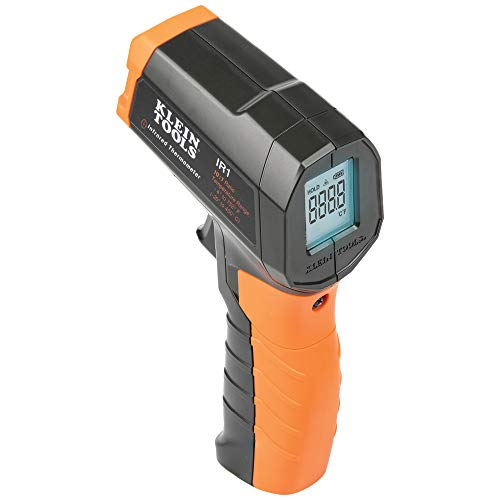
PRECISE TEMPERATURE MEASUREMENT: Optical resolution (distance-to-spot) of 10:1 ensures accurate temperature readings from a distance
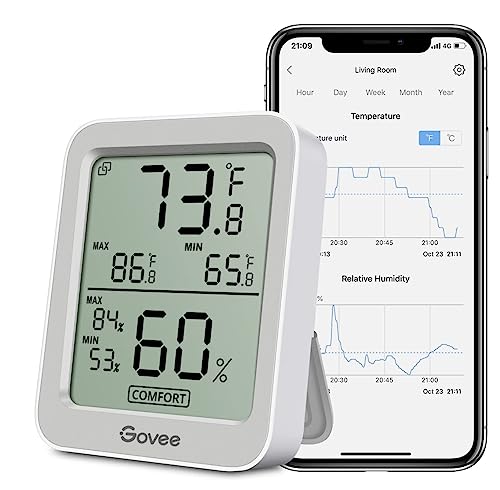
Easy to Connect: Simply download the Govee Home app, search for and select H5075, and pair it successfully within minutes. With a 164ft/50m Bluetooth range, you'll be notified of any air changes immediately.
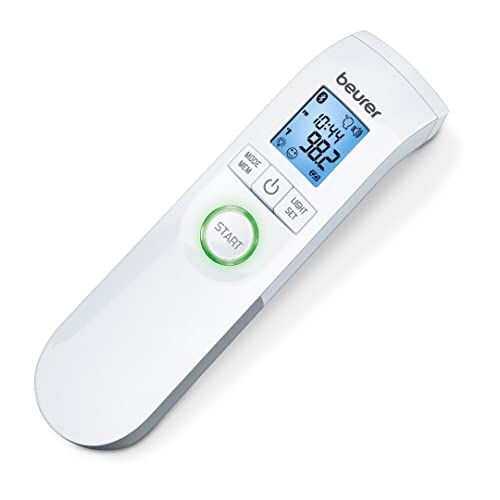
NO TOUCH INFRARED THERMOMETER: The Beurer FT95 Digital Thermometer measures temperature from a distance of 0.8in to 1.12in. No need to wake your sleeping child to take their temperature. A large, LED backlight display allows you to read measurements in the dark.
Accuracy and Performance Benchmarks
Because they measure surface rather than internal temperature, infrared thermometers can’t directly replace probe thermometers—yet they’ll consistently outperform them in specific culinary contexts. Your measurement precision depends heavily on understanding optical range and surface properties. Matte surfaces like cast iron deliver reliable readings, while reflective or wet surfaces introduce significant errors. You’ll find IRTs excel for hot oil temperature monitoring during frying, where probe insertion proves impractical. Research shows average variance between IRT and probe readings reaches 1.1°C with 6.54°C standard deviation in held foods. Additionally, deep fry thermometers are specifically designed to endure the conditions in which IRTs are used, further enhancing cooking precision. You’ll need to verify surface temperature readings against probe measurements for each food type to confirm they correlate with safe internal temperatures. This verification guarantees your iPhone-integrated thermometer provides actionable cooking data. Furthermore, infrared thermometers are effective for identifying overheating or hotspots in food preparation areas to ensure safety during cooking.
Design Elements That Enhance Usability
The most effective infrared thermometers balance ergonomic refinement with intuitive functionality, ensuring you’ll operate them comfortably during extended cooking sessions. Lightweight construction and contoured grips reduce hand fatigue, while optimized trigger placement enables one-handed activation—critical for managing multiple dishes simultaneously.
User friendly interfaces featuring backlit LCD displays deliver rapid temperature readings without straining your vision in dim kitchen environments. Large, clear digits paired with intuitive designs minimize your learning curve, allowing immediate proficiency. Color-coded temperature alerts provide real-time feedback, while Celsius/Fahrenheit toggles accommodate your preferences.
Compact dimensions facilitate convenient storage alongside your iPhone, maintaining kitchen accessibility. Balanced weight distribution enhances aiming precision, delivering consistent measurements essential for perfecting your culinary results without operational complexity. Additionally, understanding how to properly measure surface temperatures significantly contributes to achieving accurate readings, ensuring that you can monitor your cooking effectively.
Comparing Price Points and Value Propositions
While ergonomic refinement and intuitive interfaces guarantee comfortable operation, your actual purchase decision ultimately hinges on balancing performance capabilities against cost. Your price comparison should account for three distinct tiers: entry-level models ($19.99–$29.99) deliver basic instant-read functionality suitable for casual cooking; mid-tier options ($30–$60) add waterproof construction and faster response times; premium devices ($100–$299) provide advanced specifications like dual measurement modes and superior distance-to-spot ratios.
Your feature analysis reveals that Bluetooth connectivity and smartphone integration typically command $50–$100 premiums, justifying investment only if you value remote monitoring and data logging. Brand reputation and accessories create 20–50% price variations among comparable models. Select entry-level devices for occasional use, mid-range thermometers for frequent cooking, and high-end instruments only when professional-grade accuracy proves essential.

Temperature measurement range:-50℃-500℃ (-58℉-932℉)Display resolution: 0.1 ℃ or 0.1 ℉

Precision Measurement & Wide Range: Experience professional-grade accuracy with this infrared thermometer gun, featuring a broad temperature range from -50°C to 1600°C (-58°F to 2912°F). Ideal for industrial, culinary, HVAC, and home use, it delivers quick readings with an accuracy of ±2% or ±2°C, ensuring reliable results every time

𝐖𝐢𝐝𝐞 𝐓𝐞𝐦𝐩𝐞𝐫𝐚𝐭𝐮𝐫𝐞 𝐑𝐚𝐧𝐠𝐞: Measure a temperature range from -58°–1130°𝙁 / -50°–610°𝘾 𝙖𝙣𝙙 𝙜𝙚𝙩 𝙮𝙤𝙪𝙧 𝙧𝙚𝙨𝙪𝙡𝙩 𝙞𝙣 0.5 𝙨𝙚𝙘𝙤𝙣𝙙𝙨; The display will also show the max temperature of the surface you’re measuring. Perfect heat gun for measuring.
Making the Right Choice for Your Cooking Needs
Selecting the right infrared thermometer depends on matching your device’s technical specifications to your specific cooking applications. If you’re monitoring surface temperatures on grills, pans, or hot-holding equipment, a standard model with preset 0.95–0.97 emissivity settings delivers adequate accuracy. However, if you frequently measure shiny surfaces like oil or polished metal, prioritize models offering manual emissivity adjustment to eliminate 5–10°C temperature reading errors.
Consider your accuracy requirements: ±2°C precision below 100°C suits most food-safety compliance checks during receiving and storage. For extreme temperatures, expect reduced accuracy. Assess your workflow—rapid, non-invasive scanning demands a laser-targeted design with backlit displays. Furthermore, ensure you calibrate your device regularly to maintain accuracy in your measurements. Ultimately, align your thermometer’s distance-to-spot ratio and feature set with your kitchen’s operational demands, ensuring reliable temperature readings across varying food types and surfaces.

【LIGHTNING-FAST & ACCURATE】Get instant readings in just 0.5s with ±1% accuracy. The 12:1 distance-to-spot ratio lets this laser temperature gun safely measure hot surfaces from 14 inches away—no need to get close to heat or danger.

【CAL Function for Stable Reading】 Features exclusive one-button calibration technology to maintain measurement consistency for objects over time, effectively countering the reading drift often seen in standard thermometers. Our advanced sensor delivers dependable data for your projects.

Adjustable Emissivity 0.1-0.99 for All Materials: Built-in customizable emissivity from 0.1 to 0.99 (default 0.95), matched with full material emissivity reference chart, delivers accurate readings for metal, wood, plastic, food, ice and more polished/shiny surfaces.