

You’ll need probe covers whenever you’re using a thermometer in clinical, multi-patient, or food safety environments. They’re essential barriers that prevent cross-contamination and pathogen transmission between measurements, greatly reducing microbial load on sensors. Proper covers maintain thermal conductivity while ensuring accurate readings and regulatory compliance. They’re particularly critical in high-turnover settings, intensive care units, and during infectious disease outbreaks. Understanding their correct application and storage maximizes both hygiene and measurement precision.
Understanding the Purpose of Probe Covers
When you use a thermometer probe repeatedly across multiple patients or samples, a disposable cover becomes essential for maintaining hygiene and measurement accuracy. Probe covers serve multiple critical functions in clinical and food safety environments. They create a physical barrier that prevents biological fluids and contaminants from reaching your thermometer’s sensor, reducing pathogen transmission risks and supporting infection control protocols. The probe cover design directly influences measurement integrity—properly fitted covers maintain thermal conductivity while minimizing air gaps that could distort readings. Quality probe cover materials preserve sensor contact and prevent moisture interference, ensuring consistent temperature accuracy across multiple uses. By understanding these purposes, you’ll recognize why probe covers aren’t optional conveniences but necessary components of safe, reliable temperature measurement practices.

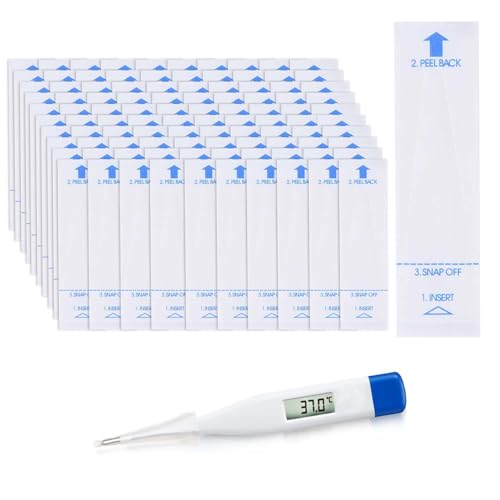
Material: These oral thermometer sleeves are made of durable wax paper and film. There is no need to worry about damage while maintaining the accuracy of temperature readings.

Boncare Thermometer Covers Disposable - 100 pcs Probe Covers for Digital Thermometers, Can be used for Oral, Rectally or Underarm
How Probe Covers Prevent Cross-Contamination
Probe covers physically isolate your thermometer’s sensor from direct contact with potentially contaminated surfaces, effectively breaking the chain of pathogen transmission between patients or food samples. These barriers prevent bacteria, viruses, and other microbes from transferring between individuals or surfaces during temperature checks.
When you use disposable probe cover materials, you reduce microbial load on the probe considerably. Each fresh cover creates a sterile interface, eliminating the need for time-consuming disinfection between measurements. This approach proves particularly valuable in high-volume settings where rapid sequential temperature measurements are necessary.

Disposable Thermometer Covers: Disposable probe covers designed for convenient, everyday use with household digital thermometers

Braun ThermoScan Lens Filters are Braun thermometer covers designed to protect the thermometer’s lens, keeping it clean and safe from obstructions that could affect the accuracy of readings and help prevent cross-contamination

Material: These thermometer probe covers are made of durable wax paper. Don't worry about damage or the accuracy of temperature readings
When Probe Covers Are Essential in Healthcare Settings
Healthcare environments demand probe covers for multiple critical reasons that directly impact patient safety, regulatory compliance, and operational efficiency. You’ll find probe cover regulations particularly stringent in multi-patient settings, intensive care units, and facilities serving immunocompromised populations. Their probe cover effectiveness becomes evident during routine crucial sign checks, invasive temperature measurements, and infection outbreaks requiring heightened control protocols.
You should prioritize probe covers in high-turnover settings where thorough cleaning between patients isn’t feasible. They’re indispensable during pandemics or when treating vulnerable populations like neonates and elderly patients. The regulatory landscape, shaped by CDC guidelines and infection control policies, mandates their use to prevent healthcare-associated infections and guarantee audit readiness.
You’ll recognize that implementing probe covers reduces cross-contamination risks, protects equipment longevity, and streamlines your clinical workflows considerably.

Thermometer Probe Covers: Universal and Disposable Probe Cover Box for Digital Thermometer for Accurate Sanitary Oral, Rectal and Underarm Digital and Glass Thermometers Reading

1. Compatible For all Digital Ear Thermometer Models: Comportable for all common ear thermometer models including 7 Serie IRT 6520, 3 series IRT3030, IRT3020, IRT4020, IRT4520, IRT6020 and so on.
Using Probe Covers in Multi-User Environments
Because clinical environments involve rapid patient turnover and multiple staff members handling shared equipment, disposable probe covers become essential for preventing cross-contamination and maintaining hygiene standards. You’ll find that covers dramatically reduce healthcare-associated infections by creating a physical barrier between patients and thermometer probes. In multi-user implications, covers allow quick equipment turnover without lengthy sterilization procedures, enhancing operational efficiency. You can maintain consistent hygiene standards across numerous interactions by simply replacing covers between patients. The secure fit guarantees accurate temperature readings while protecting both patients and staff from pathogen exposure. You’ll benefit from simplified compliance with infection control protocols, as covers are readily available and easy to apply. This straightforward approach supports your facility’s infection prevention goals while streamlining workflow in demanding clinical settings.

Compatible Fit: Compatible with select Vicks digital thermometers; the slim sleeve follows the probe shape without blocking the display or controls.

A 10-second rigid tip digital thermometer which can be used for oral, rectal, or underarm use

Fits all SureTemp Thermometers by Welch Allyn
Maintaining Accuracy With Proper Probe Cover Application
While infection control remains paramount in multi-user clinical environments, you’ll find that maintaining measurement accuracy requires equally rigorous attention to proper probe cover application. You must use manufacturer-specific probe cover types calibrated to your thermometer model, as generic alternatives introduce errors up to 4°C. Apply covers consistently to guarantee their transmissivity aligns with device algorithms designed for accurate temperature calculation. You’ll achieve accuracy assurance by replacing covers for each measurement rather than reusing them, which compromises both hygiene and precision. Clean probe lenses with 70% isopropyl alcohol before applying fresh covers, preventing residue buildup that distorts readings. Proper application techniques and certified probe cover types work together to maintain the measurement integrity your clinical decisions depend upon.
Enhancing Patient Safety and Comfort
When you apply disposable probe covers during each temperature measurement, you’re establishing a critical barrier that prevents pathogenic transmission between patients. This practice directly enhances patient safety by minimizing contamination risks from residual bacteria or viruses that could survive standard cleaning procedures.
Regarding comfort enhancement, probe covers feature smooth, non-irritating materials that reduce discomfort during measurement. You’ll notice that patients—particularly children and elderly individuals—perceive sterile covers as evidence of rigorous hygiene standards, which builds patient trust in your clinical care. This perception alleviates measurement-related anxiety and improves compliance with temperature checks.
Your consistent use of probe covers demonstrates professionalism and commitment to infection prevention protocols, strengthening the therapeutic relationship while simultaneously safeguarding vulnerable populations from healthcare-associated infections.
Alternatives to Probe Covers: Disinfection Methods
Although disposable probe covers offer considerable infection prevention benefits, you can maintain thermometer hygiene through rigorous disinfection protocols that eliminate the need for single-use covers. Chemical disinfection using 70% ethyl alcohol, hydrogen peroxide, or FDA-approved high-level disinfectants effectively eliminates pathogens when you follow manufacturer soaking times and concentrations precisely. You’ll rinse and dry probes thoroughly afterward to remove residual chemicals.
Automated systems streamline this process considerably. Automated probe reprocessors deliver standardized high-level disinfection with controlled exposure, while GUS Disinfection Soak Stations allow you to disinfect multiple probes simultaneously while minimizing vapor exposure. Both approaches require pre-cleaning with enzymatic cleaners to remove biofilm and debris, ensuring disinfection effectiveness. You’ll protect staff through proper ventilation and personal protective equipment during all disinfection procedures.
Selecting and Storing Quality Probe Covers
If chemical disinfection protocols don’t align with your clinical workflow, disposable probe covers offer a more streamlined alternative that you’ll want to evaluate carefully for your practice. When selecting covers, verify they meet quality standards like HCPCS code A4649 compliance and confirm compatibility with your thermometer brand. Assess material options—polyethylene for budget-conscious settings, polyurethane for flexibility, or latex if allergies aren’t a concern.
For storage techniques, maintain covers in clean, dry environments away from contamination sources. Utilize organized dispensers or tubes for convenient single-cover access and inventory tracking. Check expiration dates regularly and rotate stock appropriately. Proper storage preserves barrier integrity and guarantees functional reliability when you need them clinically.


BOX OF 100 – 100 disposable probe covers (sheaths) for digital stick thermometers; one fresh cover for every reading.


