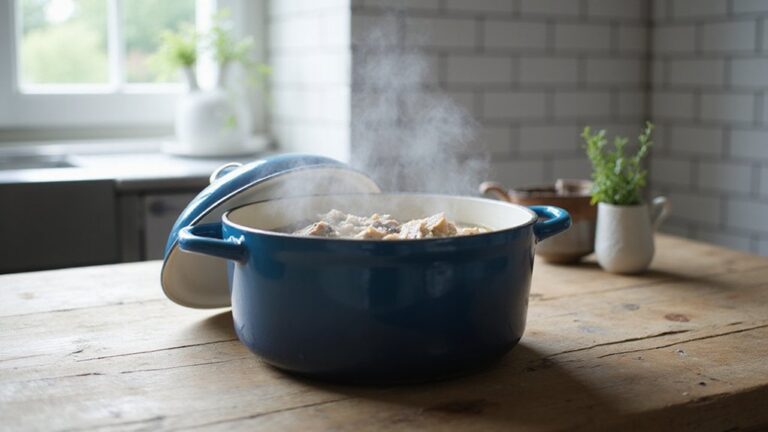
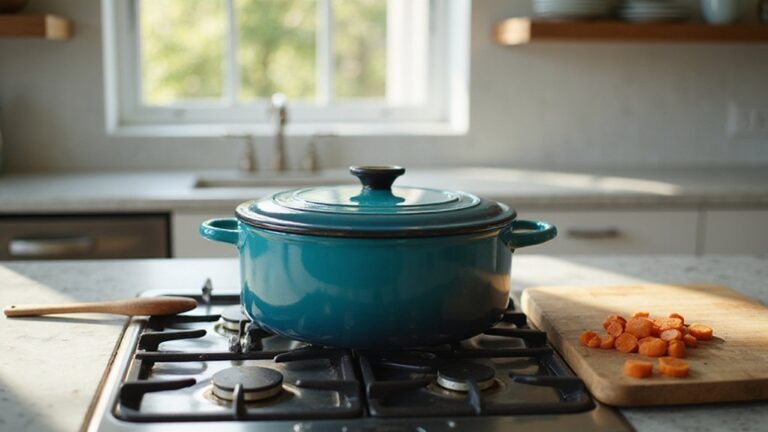
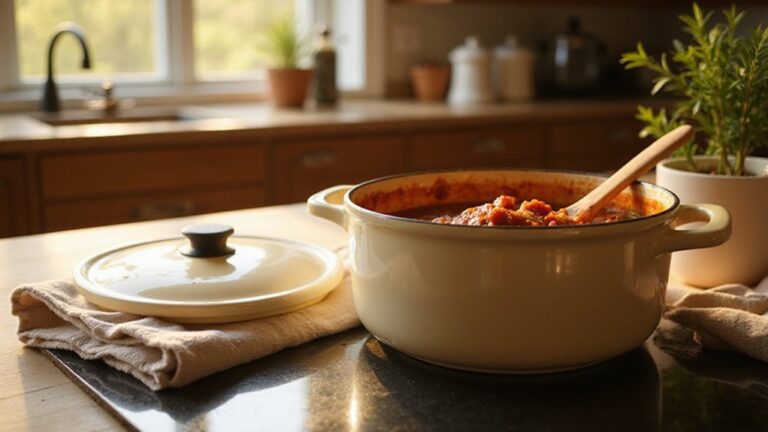
You’ll transform Thanksgiving dinner with Dutch oven cooking that delivers perfectly roasted turkey, tender braised meats, and golden rolls—all in one vessel. The even heat distribution and tight-fitting lid trap moisture, ensuring succulent results that traditional cookware can’t match. You can prepare main courses, vibrant side dishes, and crusty breads simultaneously. Master the searing and roasting techniques to achieve crispy skin and rich crusts. Uncover how preheating, proper temperature management, and strategic lid removal create restaurant-quality dishes that’ll impress your guests.
Main Course Dutch Oven Recipes for Thanksgiving
Because a Dutch oven distributes heat evenly while its tight-fitting lid traps moisture, you’ll find it’s the ideal vessel for transforming Thanksgiving’s most demanding dishes into tender, flavorful centerpieces. You can roast a trussed turkey or explore turkey variations like braised breasts and thighs for efficient cooking. Consider one pot meals such as beef pot roast with root vegetables, chicken braised with herbs, or cider-braised meat paired with crispy potatoes. You’ll also uncover creative options like mushroom zucchini lentil ragu lasagna for vegetarian guests or chicken chili verde for alternative preferences. The Dutch oven’s versatility allows you to sear proteins first, then slow-cook with aromatic vegetables layered throughout, creating complex flavors while simplifying your Thanksgiving preparation and cleanup. Additionally, incorporating proper moisture control in your cooking techniques, similar to how vacuum sealing controls moisture in seed storage, can enhance the quality of your dishes. Remember to preheat your Dutch oven for optimal heat retention to ensure even cooking results.

【10QT CAMPING DUTCH OVEN】 The Velaze 10 Quart camping dutch oven is made of cast iron with a high-quality design and excellent thermal conductivity and heat retention. The flanged lid holds hot coals and inverts for use as a griddle. The extra stand support allows the oven to sit perfectly over the table.

Even Heat Distribution Retention: This Umite Chef Dutch oven Made with heavy-duty enameled cast iron, ensures even heat distribution for perfect searing and slow cooking, locking in flavors. thickened walls lock in heat for slow braising, searing, and baking. Unlike thin pots that scorch food, this professional-grade Enameled cast iron potSuperior heat retention after preheating (allow 5-7 mins for even distribution). CRITICAL: Always cool naturally for 45+ mins before cleaning. Thermal shock (hot-to-cold contact) cracks enamel. USE TIP: Preheat 2-3 mins on medium-low only

PRE-SEASONED CAST IRON: 7-quart heavy-duty dutch oven pot with lid and dual side handles for easy lifting and maneuvering
Side Dishes Using a Dutch Oven
While your main course takes center stage, don’t overlook the supporting cast of sides that’ll round out your Thanksgiving spread. Dutch ovens excel at delivering creative side dishes that elevate your table. You’ll find roasted vegetable pairings like honeynut squash with whipped ricotta or balsamic Brussels sprouts offering stunning visual appeal. Starchy options such as potato gratins and wild rice pilaf with roasted sweet potatoes provide hearty substance. Pasta casseroles and gnocchi in mushroom cream sauce deliver comforting sophistication. For adventurous cooks, parsnip and carrot gratins or stuffed acorn squash showcase innovative combinations. The beauty of Dutch oven cooking lies in its versatility—you can prepare many sides ahead, then finish them simultaneously, ensuring everything arrives hot and perfectly cooked. Additionally, the superior heat retention of Dutch ovens ensures that your side dishes stay warm and nutrients are preserved, making it an ideal choice for Thanksgiving. A Dutch oven’s one-pot meal capability allows for unique flavor combinations and ease of preparation, making it an ideal choice for Thanksgiving.


【Cook with Love & Style】This heart-shaped enameled cast iron Dutch oven transforms everyday cooking into a cozy, joyful experience. The elegant pink finish and romantic design make it more than cookware — it’s a charming kitchen centerpiece perfect for baking, serving, and creating memorable meals.
Bread and Rolls Prepared in Dutch Ovens
When you bake dinner rolls in a Dutch oven, you’re harnessing one of the kitchen’s most transformative cooking vessels—trapping steam that transforms simple dough into pillowy rolls with crispy, buttery bottoms and tender, golden interiors. You’ll combine warm milk, butter, and honey with 2 teaspoons instant yeast per 3 cups flour, along with 1 1/4 teaspoon salt. During dough fermentation, you’ll allow the mixture to rise until doubled, typically 1-2 hours. Using a meat thermometer to check the internal temperature can help ensure your rolls are baked to perfection without overdoing them. Coat your Dutch oven’s bottom with melted butter, arrange buttered dough balls so they touch, and let them rise again for 20-40 minutes. Brush on egg wash, sprinkle flaky sea salt, then bake at 400°F for 25-30 minutes. Yeast variations like garlic powder or fresh thyme elevate your rolls’ flavor profile beautifully. Using a Dutch oven for baking ensures that you create the perfect environment for a crusty, bakery-style loaf, enhancing your rolls’ texture and flavor.

The Ultimate 9-in-1 Pro Bread Baking Kit – From Beginner to Artisan. This complete set is engineered for perfect homemade bread, covering the entire workflow: a 5QT Enameled Cast Iron Sourdough Bread Oven (with lid), 10inch Rattan Proofing Banneton, Stainless Steel Dough Scraper, Bread Sling, Dough Whisk, Bread Scoring Lame, Cleaning Brush, and Heat-Resistant Gloves. No need for extra purchases. Ideal for sourdough, no-knead, rustic bread, and even meatloaf.
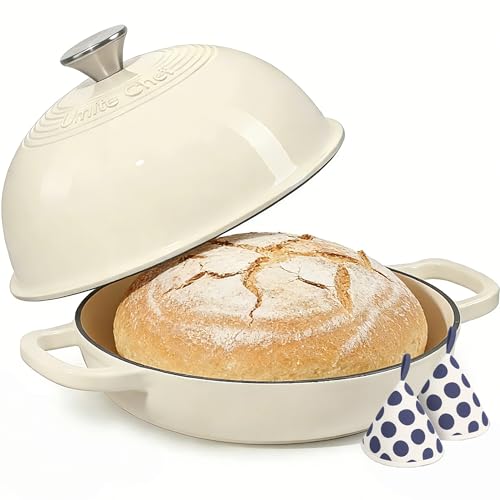
Achieve Professional Artisan Bread at Home - Expertly designed for bread baking, this 6 qt cast iron bread oven creates the ideal steam baking environment. Crafted from high-quality cast iron, it ensures superior heat retention for a crispy, golden crust and impressive oven spring—just like a bakery. The domed cloche lid traps moisture perfectly, guaranteeing delectable results every time

Dutch Oven Baking for Thanksgiving Desserts
As your Dutch oven shifts from savory sides to sweet finales, you’ll reveal it’s equally masterful at producing show-stopping desserts. Dutch Oven Dessert Innovations transform simple ingredients into memorable treats—think apple cakes with warm spices, dump cakes combining boxed mixes with canned fillings, and cobblers crowned with biscuit dough.
Festive Baking Techniques guarantee consistent results through even heat distribution and strategic coal placement around your oven’s top and bottom. You’ll appreciate how preheating maintains steady temperatures for 25-45 minute baking times. Gradually preheating your skillet helps ensure even cooking, which is essential for achieving the best dessert texture. Pressing batter evenly over fillings and using cold butter chunks creates perfectly textured crusts. Additionally, trying different savory broth variations can add unique flavors to your desserts, making them even more appealing.
Your dessert options range from elegant mini-cocotte cookies to generous fruit-forward creations. Each delivers Thanksgiving sophistication while accommodating dietary preferences through ingredient substitutions, making Dutch oven baking an indispensable holiday skill.

【Well-Designed Individual Servings】The package includes a set of 4 mini casserole dishes with lids, each with a maximum liquid capacity of 12 oz. These dishes are perfect for single servings, helping to manage portion sizes and avoid food waste. They are especially useful for those on specific diets or meal plans, allowing precise control over portion sizes.

Glossy Porcelain Glaze: Pumpkin serving bowl is full-color high-gloss porcelain glaze made by high-temperature firing through several procedures

AUTHENTIC BAKING EXPERIENCE - Dive into the art of breadmaking by baking your own bread the traditional way with a Banneton Basket and a cast iron bread pan - comes with great bread recipes
Benefits of Using Dutch Ovens for Thanksgiving
Dutch ovens deliver remarkable advantages that make them indispensable for Thanksgiving cooking, extending well beyond their dessert-making prowess. You’ll appreciate their superior heat retention, which maintains consistent temperatures throughout your meal preparation. The cast iron construction guarantees even cooking without scorching, while tight-fitting lids trap moisture retention that keeps your turkey juicy and vegetables tender. You’ll notice improved food quality as steam circulates internally, developing deeper flavors in your dishes. These versatile vessels enable one pot meals, streamlining your cooking process and reducing prep time considerably. In fact, for many home cooks, a 5.5-quart capacity is an ideal size for versatile Thanksgiving cooking applications. Their sturdy construction withstands high oven temperatures up to 550°F, offering flexibility across multiple recipes. Easy cleanup becomes reality with enameled interiors that resist sticking, and proper seasoning creates naturally nonstick surfaces. You’re investing in cookware that’ll serve your family for generations. Additionally, the Dutch oven’s ability to function as both a sautée pan and slow cooker makes it optimal for those lengthy Thanksgiving recipes that require slow simmering and flavor development.

IDEAL FOR FAMILY MEALS - Perfectly sized for families of 3–5 people, this 5.5QT Dutch oven handles everything from hearty soups and stews to one-pot dinners, pasta dishes, and Sunday pot roasts. Spacious enough for a whole chicken yet practical for everyday cooking, it delivers the ideal balance between daily family meals and weekend entertaining. Also well-sized for artisan bread bakers who want one pot for both family dinners and sourdough baking.

Quality Enameled Dutch Oven: The Lodge Essential Enamel Cast Iron Dutch Oven gives you all the benefits of cast iron cooking, great heat retention and durability, without fear of rust; it's also PFAS free

【BAKERY-STYLE SOURDOUGH AT HOME】Crafted from premium enameled cast iron, this 5.5QT Dutch oven delivers exceptional heat retention and even heat distribution for bakery-style sourdough bread with crispy crust and airy interior. The heavy lid helps trap steam during baking, supporting better oven spring and more consistent artisan bread results at home.
Cooking Tips and Techniques for Dutch Oven Thanksgiving Recipes
Five key techniques’ll transform your Dutch oven turkey into a centerpiece that’ll impress your guests and deliver exceptional flavor. Start with strategic ingredient selection, choosing a turkey that fits your Dutch oven with proper clearance. Mastering seasoning techniques involves layering herbs and aromatics both inside and outside the bird for depth.
Pat your turkey dry and bring it to room temperature before roasting. Create a flavorful base by arranging onions, rosemary, sage, and thyme on the Dutch oven bottom. Season the cavity generously, then stuff it with quartered apples and onions for moisture. Pour heated stock around—never over—the turkey to preserve your seasoning work. To further enhance flavor, consider searing your turkey in the Dutch oven first to develop a rich crust before adding the stock.
Roast covered initially, then reveal for crispy skin. Monitor internal temperature at 165°F, rotating your Dutch oven periodically for even browning. To ensure a rich and savory flavor throughout your dish, consider using a rich gravy made from the pan drippings to enhance the overall meal experience.
Preparing Your Dutch Oven for Holiday Cooking
Before you tackle your Thanksgiving menu, you’ll need to verify your Dutch oven‘s in prime condition to deliver the exceptional results your holiday spread demands. Master proven seasoning techniques by applying thin, even coats of high-flashpoint oils like grapeseed or rapeseed, then baking at 400-500°F for two hours. Repeat this process three times before your first use. It’s essential to gradually heat your Dutch oven to prevent damage, starting on low to medium heat before moving to higher temperatures. Your Dutch oven can cook one-pot meals with ease, making it an incredible asset for your Thanksgiving feast.
Establish solid cleaning practices by washing with hot water and a stiff brush—skip soap to preserve your seasoning. Dry thoroughly immediately after washing to prevent rust formation. Store your Dutch oven in a breathable fabric bag with paper towels inside to absorb moisture.
These preparation steps verify your Dutch oven performs flawlessly, delivering perfectly cooked roasts, stews, and baked goods that’ll impress your guests.
Troubleshooting Common Dutch Oven Cooking Issues
Even with meticulous preparation and seasoning, you’ll occasionally encounter cooking challenges that can compromise your holiday meal. Burnt food often results from inadequate heat management—your primary troubleshooting focus.
If you notice scorching, reduce your heat immediately and guarantee sufficient oil or liquid coats the pot’s surface. Steam escaping around your lid signals either excessive heat or poor seating; re-seat it properly and lower your temperature accordingly. Properly maintaining your Dutch oven’s seasoning layer is essential for preventing food from sticking and burning.
Avoid preheating empty Dutch ovens, which risk thermal shock and cracking. Start cooking on medium-low heat, increasing gradually only if necessary. Stir gently with wooden utensils, and don’t overcrowd your pot, which prevents even browning and burning.
Monitor your cooking progress constantly, adjusting your heat source as needed. Additionally, be mindful of the emissivity of materials used in your cooking, as it can affect how accurately you measure temperatures with an infrared thermometer. Remove your lid during the final phase to evaporate excess moisture and prevent watery dishes.