

You can measure your dog’s temperature in seconds using an infrared thermometer, offering quick, non-invasive screening. However, less than 33% of readings fall within ±0.5°C accuracy compared to rectal standards. Infrared measurements depend heavily on operator technique, calibration, and environmental conditions—particularly ambient temperature and humidity levels. For clinical decisions involving anesthesia or fever management, you’ll need rectal verification or alternative methods to confirm borderline or questionable results, as understanding proper implementation techniques reveals markedly better outcomes.
How Infrared Thermometers Work
Infrared thermometers work by detecting thermal radiation that all objects emit when their atoms are in motion. You’ll find that this detection technology relies on infrared principles where a lens focuses thermal energy onto a thermopile—a sensor containing thermocouples arranged in series or parallel. When infrared radiation strikes the thermopile’s surface, it’s absorbed and converted into heat, which then generates electrical voltage proportional to the incident energy. Your thermometer’s internal circuitry measures this voltage and applies calibrated algorithms to convert it into temperature readings. The system compensates for ambient temperature to guarantee accuracy. Because thermal radiation behaves similarly to visible light—it can be absorbed, focused, and reflected—infrared thermometers effectively measure temperature without physical contact, delivering results within seconds.

** For DOGS only ** Inaccurate readings will not occur if 1) the probe is placed directly on the skin rather than the fur 2) Wipe and clean the sensor before each use. 3) Used in a room of Approx 25°C / 77°F and avoid in cold environments.

Non-Contact Infrared Sensing – Adopts advanced infrared induction technology, quickly and safely measure pet body temperature without touching ears, reduce pet stress and avoid discomfort for dogs and cats.

How to Use – Put the thermometer close to pet's ear and remove the hair to make sure the measurement is correct. Non-contact infrared is easy to measure pet's ear temperature.
Accuracy Issues With Infrared Technology
While infrared thermometers offer the convenience of non-contact temperature measurement, their practical application in veterinary medicine reveals considerable reliability concerns. You’ll find that less than 33% of readings fall within ±0.5°C of rectal temperatures—a threshold critical for accurate clinical decisions. These devices frequently fail to match the ±0.2°C accuracy standard of clinical thermometers due to inherent variability.
Your measurement outcomes depend heavily on operator technique and calibration accuracy. Proper device positioning, user training, and adherence to manufacturer protocols considerably influence reading consistency. Environmental factors like ambient temperature and measurement site selection further complicate reliability in real-world settings. Infrared thermometers are primarily effective for measuring surface temperature and should not be solely depended upon for accurate internal diagnostics.
You shouldn’t rely on infrared thermometers as definitive diagnostic tools. Instead, consider them preliminary screening instruments pending validation against rectal measurements.
Clinical Study Results
To establish whether infrared thermometry could serve as a viable alternative to rectal measurement, researchers’ve designed multiple prospective and observational studies incorporating sample sizes ranging from 6 to 300 dogs. Results demonstrate strong thermometer effectiveness when you measure auricular temperatures, yielding correlations of r = 0.833 compared to rectal standards. Ocular measurements showed moderate correlation (r = 0.661–0.674), while temporal sites proved less reliable. You’ll find that accuracy improves during exercise-induced hyperthermia, though ear measurements consistently outperform eye readings for canine health monitoring. Multicenter protocols standardized measurements in triplicate after acclimation periods, recording ambient temperature and animal signalment as confounders. These findings establish auricular infrared thermometry’s clinical viability for temperature trend monitoring, though systematic underestimation persists, particularly in sedentary animals.
Comparison With Rectal Thermometers
Because rectal thermometry remains the gold standard for evaluating core body temperature in dogs, you’ll need to understand how alternative measurement sites compare to this reference standard. You’ll find that peripheral measurements show substantial disparities: digit surface temperatures run 7.50°C lower, axillary readings differ by 4.32°C, and snout surfaces measure 6.59°C below rectal values. Eye temperature measurements underestimate rectal readings with notable bias. These measurement limitations necessitate adjustment factors when using alternatives. However, infrared advantages include reduced stress response (1.89-2.48/5 versus 3.06/5 for rectal contact) and shorter handling times. You’ll recognize that while non-contact infrared methods offer practical benefits for animal tolerance, their accuracy trade-offs require careful consideration in clinical settings.

COMFORTABLE FOR YOUR PET - The thermometer can be used for pets and is designed to be comfortable with a flexible tip, making it soft and gentle to use.

Non-Contact Infrared Ear Thermometer for Pets – Safely measure your pet’s body temperature without physical contact, minimizing stress for your furry friend and eliminating cross-infection risks or unpleasant odors common with rectal thermometers. Fast, accurate, and gentle—perfect for routine health monitoring.

Stress‑Free Pet Thermometer for Cats & Dogs.Fast accurate readings for home pet health check.Comfortable replacement for traditional rectal thermometer
Veterinary Ear Thermometers as an Alternative
How can you obtain reliable temperature readings without subjecting your patient to the stress and invasiveness of rectal thermometry? Veterinary ear thermometers offer a practical solution. These devices deliver rapid, non-invasive measurements in seconds, markedly reducing animal stress and injury risk compared to rectal probes.
Ear thermometer benefits include accessibility for uncooperative or anorectal-diseased patients. Studies demonstrate strong correlation with rectal readings—typically within 0.5°C discrepancy, with 78% of measurements within 1°C of core body temperature.
Proper measurement techniques are critical for accuracy. You’ll need correct probe placement, mild restraint, and appropriate probe angle. Using veterinary-specific models rather than human thermometers enhances reliability. However, acknowledge limitations: readings may underestimate hypo- or hyperthermic patients, and abnormal ear anatomy can compromise results. When clinical concern exists, confirm findings with rectal thermometry.

【Mindpet-med Pet Infrared Ear Thermometer Long Probe Design】 For pet ear canals, we innovated a long probe design to measure pets with deeper ear canals for best results. It measures infrared heat waves emitted from the area around the eardrum. These Pet Thermometers are suitable for household pets cats, dogs rabbits, livestock, cows, sheep, pigs, horses, etc.【1-Second Measurement】Rapidly measure your dog's ear temperature in 1 second, accurately within 0.2C/0.4F.
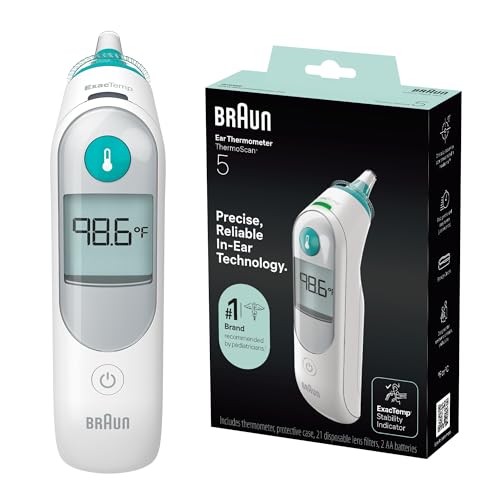
Braun Ear Thermometer: This digital thermometer for adults and kids comes with 2 AA batteries and a lens cap; for accuracy, keep the lens clean & free from obstructions; 21 Braun Lens Caps included, so it's ready for the entire family

【mindpet-med Pet Infrared Ear Thermometer Long Probe Design】 For pet ear canals, we innovated a long probe design to measure pets with deeper ear canals for best results. It measures infrared heat waves emitted from the area around the eardrum. These Pet Thermometers are suitable for household pets cats, dogs rabbits, livestock, cows, sheep, pigs, horses, etc.【1-Second Measurement】Rapidly measure your dog's ear temperature in 1 second, accurate within 0.2C/0.4F.
Best Placement Locations for Readings
Since ear thermometry’s accuracy depends on proper technique, infrared thermometers offer an alternative by targeting specific anatomical sites that balance accessibility with temperature reliability. Gum readings achieve the highest sensitivity and specificity—up to 90% and 78.6% respectively—because gums reflect core temperature more accurately than external skin. Inguinal readings provide moderate correlation to rectal temperatures, making them practical for screening purposes. Eye readings offer convenience but show moderate accuracy, useful as supplementary measurements. Digit readings from paw pads register lower than core temperature and suffer from environmental interference. Snout readings are fast but demonstrate lower correlation due to respiratory and moisture influences. You’ll find gum readings most reliable for clinical decisions, while other sites serve monitoring or preliminary assessment roles depending on your specific needs.
Environmental Factors Affecting Measurements
While gum readings provide the most reliable temperature data, environmental conditions can significantly compromise infrared thermometry accuracy regardless of measurement site. You must control ambient temperature and relative humidity levels, as measurements become unreliable outside the 0°C to 40°C range or when humidity exceeds 85%. Environmental influences create significant challenges: high humidity impairs your dog’s thermoregulation, producing artificially elevated readings, while cold-humid conditions cause sensor condensation and altered blood flow patterns. Temperature fluctuations between extreme conditions require equilibration periods before you obtain reliable measurements. You’ll achieve ideal accuracy by documenting both temperature and humidity simultaneously, establishing baseline conditions matching standard environmental chambers at 22°C with 60% relative humidity. Wind speed and rapid environmental shifts further complicate measurement reliability, necessitating careful environmental assessment during infrared thermometry.
When to Verify With Rectal Temperature
When should you confirm infrared thermometry results with rectal temperature measurement? You’ll want rectal verification whenever IR readings fall near fever thresholds (around 39.2°C/102.6°F), since ear measurements consistently underestimate core temperature by 0.1–0.6°C. Pursue rectal confirmation if your dog shows clinical illness signs but IR readings seem borderline or contradictory to observed symptoms. Critical situations—including anesthesia monitoring, emergency assessments, or urgent fever management—demand rectal thermometry’s superior temperature accuracy and reliability. Additionally, rectal verification becomes essential when anorectal disease, shock states, or environmental factors compromise IR measurement validity. Studies consistently demonstrate wide limits of agreement between IR and rectal readings, making rectal verification the gold standard for definitive core temperature assessment when clinical decisions depend on precise measurements.

【8-Second Fast Reading】Stop the struggle with squirmy pets! Get accurate results in just 8 seconds. Our advanced sensor delivers professional-grade precision faster than standard thermometers

Safe Thermometers for Adults and Babies: Boncare thermometer comes with a soft silicone tip and a reliable stainless - steel probe. It's designed for oral, rectal, or axillary use, making it suitable for infants, children, adults, and dogs. It offers great convenience and ensures safety for you and your family.
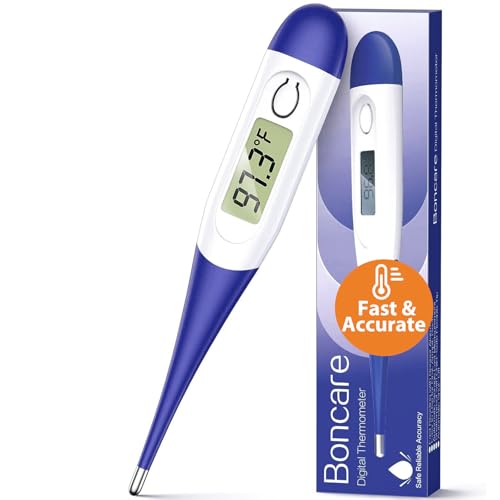
Safe Thermometers for Adults and Babies: Boncare thermometer comes with a soft silicone tip and a reliable stainless - steel probe. It's designed for oral, rectal, or axillary use, making it suitable for infants, children, adults, and dogs. It offers great convenience and ensures safety for you and your family.
Recommendations for Dog Temperature Monitoring
Because infrared thermometry presents inherent limitations in accuracy and reliability, you’ll want to adopt a strategic, multi-method approach to dog temperature monitoring that matches the clinical context and your dog’s individual needs. Combine IR screening with rectal confirmation for definitive diagnosis. Leverage infrared advantages—minimal stress and non-invasiveness—when monitoring anxious or painful dogs during recovery. Establish individual baselines comparing IR and rectal readings to understand your dog’s normal deviations. Use ear thermometers as a less invasive alternative when rectal measurement proves impractical. Consider wearable temperature sensors for continuous, passive monitoring during extended observation periods. Take multiple IR readings from consistent anatomical sites, averaging results to enhance reliability. This layered approach optimizes accuracy while prioritizing your dog’s comfort and safety across varying clinical scenarios. Additionally, infrared thermometers are valuable in identifying signs of overheating or other temperature-related issues in dogs, particularly during medical settings. The laser thermometers used in this context can provide instant readings, making them useful tools for health assessments.
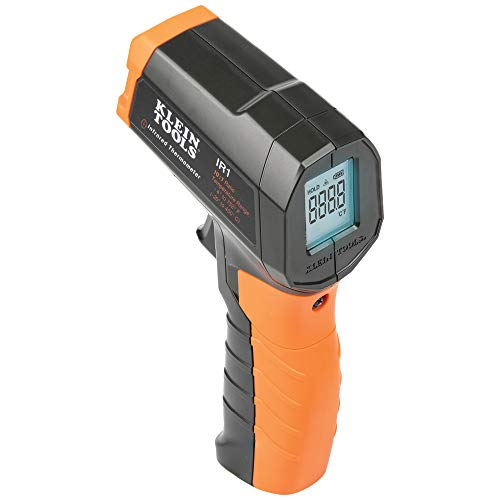
PRECISE TEMPERATURE MEASUREMENT: Optical resolution (distance-to-spot) of 10:1 ensures accurate temperature readings from a distance

【Ultimate Versatility for Kitchen, Garage & House】Ideal for a multitude of tasks! Check pizza oven or griddle heat for perfect cooking, monitor HVAC system vents, or safely diagnose automotive repair issues like overheating engine parts, all with our infrared thermometer gun
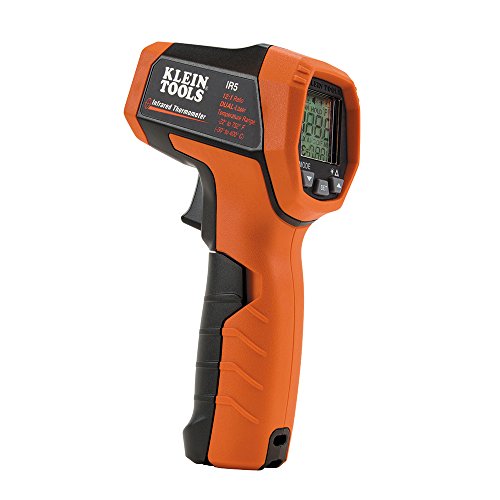
PRECISE TEMPERATURE MEASUREMENT: Optical Resolution (Distance-to-spot) of 12:1 ensures accurate temperature readings from a distance


