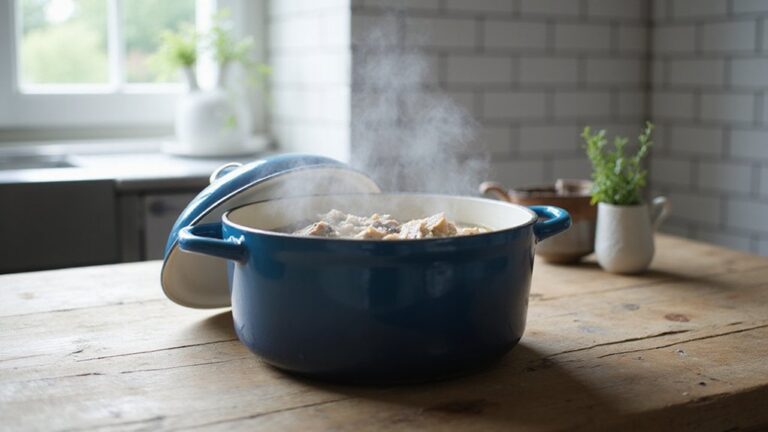
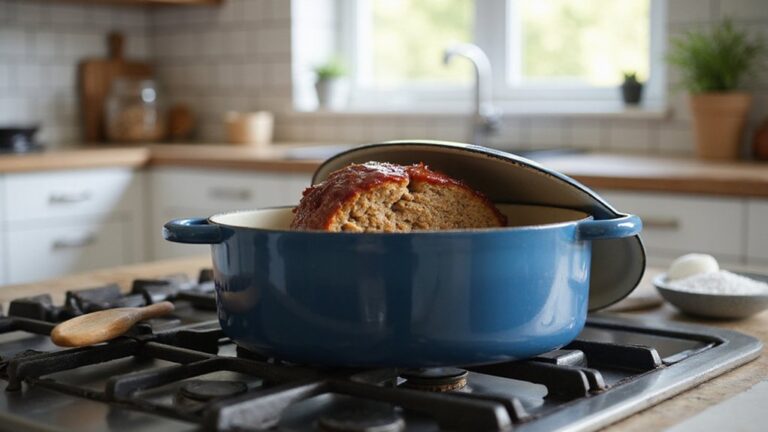
You’ll master artisan Dutch oven sourdough without starter by combining high-hydration dough, cold fermentation, and steam-trapping techniques. Start with flour, water, and salt—mix, rest 30–60 minutes, then fold every 30 minutes during bulk fermentation at 21–27°C. Transfer to the refrigerator for 3–10 days for enhanced flavor and texture. Shape your dough, score it, then bake in a preheated Dutch oven at 450–500°F with the lid on for 20–30 minutes. You’ll uncover the specific temperatures and timing that transform basic ingredients into café-quality bread.
Basic Ingredients and Substitutions
The foundation of Dutch oven sourdough rests on four essential components: all-purpose flour provides structure and gluten development, water activates fermentation and binds ingredients, salt regulates rise speed while strengthening gluten networks, and sourdough starter supplies natural leavening and characteristic tang.
You’ll find flexibility within these fundamentals. For flour types, you can substitute bread flour 1:1 for enhanced chewiness, or incorporate whole wheat flour up to 50% for heartier texture. Rye flour works effectively at 20% for added complexity. Additionally, the Dutch oven’s versatility allows it to be used for other types of baking, showcasing its multifaceted nature in your kitchen.
Your liquid choices extend beyond water—filtered water remains ideal, yet you can use milk for softer crumb or buttermilk for increased tang. For gluten alternatives, crucial wheat gluten boosts rise when using whole grains.
You can enhance flavor with herbs, cheese, or seeds integrated directly into your dough. Cooking with cast iron cookware not only allows for better heat retention but also improves the crust’s texture, giving your sourdough a delightful finish.

Even Heat Distribution Retention: This Umite Chef Dutch oven Made with heavy-duty enameled cast iron, ensures even heat distribution for perfect searing and slow cooking, locking in flavors. thickened walls lock in heat for slow braising, searing, and baking. Unlike thin pots that scorch food, this professional-grade Enameled cast iron potSuperior heat retention after preheating (allow 5-7 mins for even distribution). CRITICAL: Always cool naturally for 45+ mins before cleaning. Thermal shock (hot-to-cold contact) cracks enamel. USE TIP: Preheat 2-3 mins on medium-low only

BREAD BAKER'S DUTCH OVEN, 500°F OVEN-SAFE, SOURDOUGH-READY – one of the highest ratings in its class – delivering the sustained heat that sourdough, artisan bread, and pizza dough demand. Thick cast-iron walls trap and circulate heat like a brick oven, producing bakery-quality crusts at home. The tight-sealing lid features raised self-basting nodes that continuously recirculate steam: a perfect moisture chamber, every single bake.

PFAS-FREE & NON-TOXIC COOKWARE: ATTENTION: If your manual mentions "enamel" or "low-medium heat only", it is incorrect. This is 100% pure cast iron cookware! Not Enamel-Coated: Safe for High-Heat Cooking! Metal utensils OK (avoid sharp edges) Every Umite Chef cast iron pot has been burned with 100% natural, food-grade vegetable oils—absolutely zero PFAS, PFOA, PTFE, synthetic coatings, or toxic chemicals. Our seasoning naturally builds with use, developing a superior non-stick surface over time while ensuring oven-to-table safety
High Hydration Dough Preparation Method
Success with high-hydration sourdough hinges on mastering the autolyse stage, where you’ll combine flour and water in a large bowl to form a shaggy dough, then let it rest for 30-60 minutes at room temperature. This hydration benefits your dough by initiating natural gluten structure development without mechanical intervention. Notably, using cast iron cookware can enhance your baking experience, helping achieve better heat retention and crust formation.
After autolyse completion, you’ll incorporate your active starter using wet hands, dimpling it into the dough rather than mixing into dry ingredients. Sprinkle salt over the surface before completing your 5-minute hand mixing integration.
Throughout bulk fermentation, you’ll perform coil folds every 30 minutes across three to four sets. Lift dough edges with wet hands, tucking underneath to build surface tension. Rotate your bowl quarter turns between repetitions. This folding technique strengthens gluten structure essential for high-hydration mixtures, maintaining dough integrity during the 4-8 hour fermentation window at 21-27°C. Additionally, to ensure a crusty bread, consider techniques to create steam environment in your baking process, which are crucial for achieving that artisan crust.

【10QT CAMPING DUTCH OVEN】 The Velaze 10 Quart camping dutch oven is made of cast iron with a high-quality design and excellent thermal conductivity and heat retention. The flanged lid holds hot coals and inverts for use as a griddle. The extra stand support allows the oven to sit perfectly over the table.

𝐃𝐨𝐦𝐞 𝐃𝐞𝐬𝐢𝐠𝐧: Perfect for Crusty Sourdough The AHJ pre-seasoned Dutch oven is ideal for sourdough baking. When used with the lid in the oven, it locks in steam—ensuring condensation drips down the lid walls without soggying the bread—for an ultra-crisp crust and soft, fluffy interior. The 5-quart large capacity easily accommodates big sourdough loaves, perfect for sharing with the whole family.

【CAST IRON DUTCH OVEN】 Velaze enamel cast iron dutch oven pot with lid is solid and durable, can be used for multiple cooking methods such a cooking, baking, stewing etc. Large capacity dutch oven is great for beginners or pros and almost meet all the needs of family gatherings. Please always use oven gloves or a pot rack when handling the pot. The handle will be very hot!
Extended Cold Fermentation Process
After you’ve completed your bulk fermentation with coil folds, you’ll transfer your dough to the refrigerator for an extended cold fermentation that’ll dramatically reshape both flavor and structure. At 3-4°C, yeast dormancy slows rising while bacterial microbial activity persists, producing acetic acid that develops characteristic sourness and complex nuttiness. Enzymatic breakdown continues gradually, softening gluten and improving digestibility while enhancing mineral bioavailability through phytic acid degradation.
You’ll maintain dough quality for up to 10 days, eliminating over-proofing risks in warm climates. Cold fermentation reduces gluten content, potentially aiding those with sensitivities, while lowering the bread’s glycemic index. This technique also improves your crust’s blistering and crumb texture through prolonged enzymatic transformation, delivering superior results without intensive daily monitoring. Additionally, understanding emissivity settings can help ensure that if you’re using an infrared thermometer to gauge your baking temperatures, you’re achieving the most accurate results possible.
Dough Shaping and Scoring Techniques
Once your dough’s emerged from extended cold fermentation, you’ll shift to shaping—a critical phase where you’ll transform a relaxed, extensible mass into a taut, surface-tension-laden boule that’ll expand evenly in your Dutch oven. Begin dough folding by stretching the left side toward center, then repeat on the opposite side to distribute tension evenly. Progress to bottom-to-top folds, then flip using your bench knife and rest five to ten minutes for gluten relaxation. This process is essential because creating tension ensures that the dough rises effectively in the Dutch oven.
Create surface tension through minimal flour application via a flour shaker, or use a water-dampened work surface if needed. Execute circular cupping motions with floured hands, tucking dough under itself in repetitive patterns. Finally, place your shaped boule seam-side up into a floured banneton for final proofing. For an added treat on your camping trip, consider pairing your freshly baked bread with delicious Dutch oven desserts that can elevate your outdoor experience.
Dutch Oven Baking Technique and Temperature Management
Your Dutch oven‘s thermal mass becomes your primary tool for creating the steam environment and even heat distribution that sourdough demands. Begin dutch oven preparation by preheating for 45–60 minutes at 450–500°F (232–260°C), placing it in the oven as soon as heating starts. This guarantees ideal heat retention and maximizes oven spring. Notably, a 3-quart Dutch oven can also be effective for baking bread with proper adjustments to recipe sizes.
For temperature control, bake your dough 20–30 minutes at 450–500°F with the lid on, trapping steam that keeps the loaf surface pliable. Remove the lid and reduce heat to 410–475°F for 10–25 minutes, allowing the crust to brown and set. Monitor your loaf’s internal temperature, targeting 206–212°F at the center. If your bottom crust burns, reduce oven temperature or place a baking sheet beneath the Dutch oven to moderate bottom heat exposure. Incorporating a moist cake-like topping from a similar cooking approach can help inspire your techniques with sourdough.
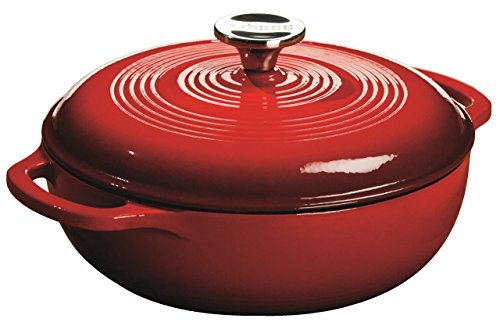
YOUR GO-TO DUTCH OVEN: A flawless pairing of form and function that doesn't quit. The Lodge Dutch Oven not only makes your kitchen look good but is an enameled cast iron classic great for preparing and serving memorable meals. Broil, braise, bake or roast your favorite meals in the oven up to 500 Degree F.

A KITCHEN NECESSITY: Our COMMERCIAL CHEF 3.4-quart cast iron Dutch oven is a must-have for kitchen novices and culinary experts alike. This thick cast iron cooking pot with lid insulates heat so that your meals will be well-cooked.

Crock Pot Artisan Round Enameled Cast Iron Dutch Oven, 3-Quart, Pistachio Green w/Lid
Results and Bread Characteristics
The rewards of Dutch oven baking reveal themselves the moment you extract your loaf—a mahogany crust with deep, even browning that crackles as it cools, signaling proper steam integration and crust development. Your dough fermentation timeline directly influences this crust color; extended bulk fermentation and overnight proofing intensify both tanginess and visual depth. Additionally, measuring internal temperature accurately is essential for ensuring perfect doneness, though it’s often overlooked with surface readings from certain thermometers.
Inside, you’ll uncover a soft crumb with well-distributed air pockets rivaling traditional kneaded methods. The sourdough’s natural acids preserve moisture, keeping your bread tender for days. Medium hydration around 67-68% balances tenderness with structure, yielding manageable shaping without compromising openness. Notably, this technique is similar to Dutch oven bread, which also benefits from a steamy environment to enhance crust quality.
The loaf’s rounded shape demonstrates excellent oven spring, supported by your bulk fermentation folding work. You’ve created a crunchy, golden exterior protecting a moist, complex-flavored interior—results that validate the no-knead approach‘s effectiveness.