You’ll transform your Le Creuset Dutch oven into a powerhouse for restaurant-quality chicken. Start with proper prep—pat your bird dry, season generously, and layer vegetables beneath for even heat distribution. Master the technique of covering initially for steam, then revealing for crispy skin. Roast at 375°F using the 20-minutes-per-pound formula, targeting 165°F internal temperature. From pot roast chicken to coconut-braised variations, you’ve got endless possibilities to explore further.
Popular Chicken Recipes for Le Creuset Dutch Oven
Whether you’re cooking for an intimate dinner or a gathering of guests, Le Creuset Dutch ovens deliver the heat retention and precise cooking control that transform simple chicken dishes into restaurant-quality meals. You’ll unveil versatile cooking techniques that showcase your culinary skills. The Pot Roast Chicken demonstrates hands-off entertaining, while the Fig and Goat Cheese Stuffed Chicken impresses with sophisticated presentation. For refined palates, the Lemon and Olive Chicken combines saffron and olives over one hour, allowing deep flavor absorption, resulting in incredibly tender, juicy meat. The Braised Chicken with Creamy Mushroom Sauce uses bone-in thighs for maximum richness. The Dutch Oven Whole Roast Chicken features herb marinades with rosemary, thyme, garlic, and lemon zest, delivering moist interiors with crispy skin. Each recipe leverages your Dutch oven’s superior construction for exceptional results, which makes them perfect for easy, one-pot meals that are ideal for outdoor cooking.

Designed from premium heavy-duty cotton canvas

Product Content: You will receive 12 pieces of dutch oven lid protective clips, durable and with sufficient quantity to meet your needs of usage and replacement.

More convenient to clean: The mitts are easy to clean and dishwasher safe
Key Cooking Techniques for Dutch Oven Chicken
To elevate your Dutch oven chicken from ordinary to exceptional, you’ll need to master several foundational techniques that work together to deliver tender, flavorful results.
Your cooking methodology begins with proper preparation: remove giblets, pat the chicken dry, and loosen the skin to create pockets for seasoning. This foundation enables deeper flavor infusion throughout the meat. A good technique is to season the chicken thoroughly with spices such as garlic powder to enhance the overall flavor profile.
Layer vegetables like onions and carrots at the Dutch oven’s bottom to absorb pan juices while distributing heat evenly. Add broth or wine for moisture and richness, which also helps create a flavorful cooking liquid for added depth.
Cover your Dutch oven initially to retain steam and speed cooking, then reveal during the final 15-30 minutes for golden, crispy skin. This strategic timing prevents drying while achieving textural contrast. It’s important to monitor the cooking process to ensure the chicken reaches a safe internal temperature.
Finally, rest your chicken for 10-15 minutes before carving. This essential step allows juices to redistribute, ensuring moist, succulent meat throughout. Additionally, cooking methods like slow baking can enhance the overall flavor profile, making for an even more delightful meal.

Features a blend of natural flavors and seasonings, including garlic and rosemary

CALIFORNIO = BRIGHT, BALANCED, ANYTIME: Simple, savory, and lightly herbacious with garlic and onion, this all-purpose blend gives a lift to almost everything including grilled chicken, salmon, skirt steak, taco fillings, and roasted veg without overpowering.

Usage: Apply olive oil or oil of choice to meat or vegetable, then sprinkle all sides with Chicken Dust before grilling.
Temperature and Timing Guidelines
Now that you’ve mastered the foundational techniques for preparing and cooking Dutch oven chicken, nailing the right temperature and timing will make the difference between a mediocre result and a showstopper.
Your ideal temperatures range from 325°F to 425°F, depending on your desired outcome. Start covered at 375°F for gentle, even cooking, then reveal during the final 15-30 minutes at higher heat to crisp the skin. Always ensure you are using a proper thermometer type to avoid any safety issues while monitoring the temperature.
Roasting times follow a simple formula: roughly 20 minutes per pound at 425°F. For a 5-pound bird, expect 75 minutes covered plus 30 minutes revealed. Always check doneness with a meat thermometer, targeting 165°F in the thickest thigh portion. Rest your chicken for 10-15 minutes before carving to redistribute juices and guarantee maximum tenderness. Ensure your cooking environment is well-ventilated, just as refilling a butane torch requires precaution to prevent issues with the cooking process.

Instant Read Food Thermometer | Our instant read thermometer features a temperature probe and advanced, highly accurate technology with 1-2 seconds response time; Instructions, meat temperature chart, comes pre-calibrated for your convenience, and recalibrating feature if needed.

Temperature Range: 140° to 190°F / 60° to 87°C. Probe Length: 4.75-inches Dial Diameter: 2.375-inches

Oven and grill safe for leave-in use while cooking
Flavoring and Ingredient Pairings
What truly elevates Dutch oven chicken from simple to extraordinary is the thoughtful layering of flavors that transform your dish into something memorable. Your herb combinations—thyme, rosemary, and parsley—bring aromatic complexity that complements chicken’s mild profile. Citrus techniques, particularly lemon juice and zest, add bright acidity while absorbing into the meat during slow cooking. Vacuum sealing can also enhance meal prep by allowing you to marinate chicken in these flavorful mixtures ahead of time. Spice blends like cumin, coriander, and paprika create warm, earthy foundations for Moroccan-inspired dishes. Strategic vegetable pairings—root vegetables, pearl onions, mushrooms—absorb rendered juices and build depth. Sauce varieties, from chermoula to cream-based options with white wine, deepen overall richness. Finally, your garlic usage, whether whole cloves or sautéed with aromatics, mellows into caramelized sweetness that subtly enhances every element without overpowering the dish. Proper seasoning techniques help ensure that the flavors meld beautifully in your cast iron Dutch oven.

WYOMING = WILD MEAT WHISPERER: Crafted to complement richer proteins, this balanced herb-garlic-pepper profile tames gaminess while amplifying natural sweetness in venison, elk, bison, upland birds, trout, and salmon—without heavy sweetness or harsh heat.

1.2 Ounce Bottle

OUR BEST HERBS & SPICES: Awaken your senses with a curated collection of more than 70 herbs, spices, seasonings, and extracts. Discover our finest flavors from the McCormick Gourmet Collection
Equipment and Preparation Essentials
The right equipment and meticulous preparation set the foundation for Dutch oven chicken that’s consistently excellent. You’ll want Le Creuset’s enameled cast iron for superior heat retention and even distribution. Pat your chicken dry thoroughly—this step guarantees better browning and crispier skin. Consider chicken marination or applying herbed butter under and over the skin to lock in moisture and enhance flavor complexity. Let your bird rest at room temperature before cooking for even results throughout. For Dutch oven maintenance, use only wooden or silicone utensils to prevent scratching the enamel finish. The enameled interior protects against acidic ingredients like wine and tomatoes, preserving both flavor and your pot’s longevity. Additionally, properly seasoning your cast iron cookware can further ensure excellent cooking results. To achieve optimal flavor and texture, be sure to follow the preheating technique before placing the chicken in the pot. These essentials assure superior outcomes every time.

Even Heat Distribution Retention: This Umite Chef Dutch oven Made with heavy-duty enameled cast iron, ensures even heat distribution for perfect searing and slow cooking, locking in flavors. thickened walls lock in heat for slow braising, searing, and baking. Unlike thin pots that scorch food, this professional-grade Enameled cast iron potSuperior heat retention after preheating (allow 5-7 mins for even distribution). CRITICAL: Always cool naturally for 45+ mins before cleaning. Thermal shock (hot-to-cold contact) cracks enamel. USE TIP: Preheat 2-3 mins on medium-low only

Even Heat Distribution Retention: This Dutch oven Made with heavy-duty enameled cast iron, ensures even heat distribution for perfect searing and slow cooking, locking in flavors. thickened walls lock in heat for slow braising, searing, and baking. Unlike thin pots that scorch food, this professional-grade Enameled cast iron pot maintains steady temperatures
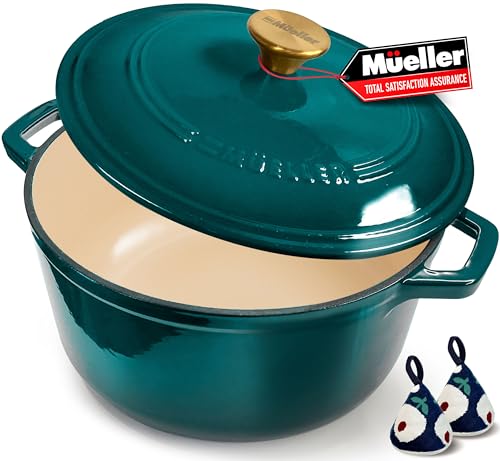
BREAD BAKER'S DUTCH OVEN, 500°F OVEN-SAFE, SOURDOUGH-READY – one of the highest ratings in its class – delivering the sustained heat that sourdough, artisan bread, and pizza dough demand. Thick cast-iron walls trap and circulate heat like a brick oven, producing bakery-quality crusts at home. The tight-sealing lid features raised self-basting nodes that continuously recirculate steam: a perfect moisture chamber, every single bake.
Fig and Goat Cheese Stuffed Chicken Breast
Once you’ve mastered the foundational Dutch oven techniques, you’re ready to elevate your chicken repertoire with fig and goat cheese stuffed breasts—a dish that combines elegant simplicity with sophisticated flavor. You’ll create a pocket in each breast, then fill it with a mixture of creamy goat cheese, chopped dried figs, fresh thyme, and rosemary. Wrapping the stuffed chicken in prosciutto secures the filling while adding savory richness. Sear your breasts to develop a golden crust, then bake at 375°F for 20-30 minutes until the internal temperature reaches 165°F. Brush fig jam across the top during cooking for a glossy finish and enhanced moisture. The result is an impressive, restaurant-quality dish that’s surprisingly simple to execute in your Dutch oven.
Pot Roast Chicken With Root Vegetables
Building on your Dutch oven mastery, you’ll find that pot roast chicken with root vegetables represents the ultimate one-pot meal—a rustic, forgiving dish that feeds a crowd while requiring minimal hands-on work. Your roasting techniques involve preheating your Dutch oven to 375°F, then nestling a seasoned whole chicken atop chunked carrots, potatoes, onions, and parsnips. This vegetable combination creates a flavorful base that catches rendered fat and develops caramelization. You’ll coat everything with butter and herbs—thyme and rosemary work beautifully—then cover and roast for roughly two hours until the chicken reaches 165°F internally. The final revealed phase browns the skin while vegetables soften. Serve this complete meal straight from your Dutch oven, garnished with fresh parsley and lemon. Incorporating a well-marbled cut of meat can enhance the flavors and overall tenderness of the chicken through a flavorful base, making the dish even more satisfying and savory when complemented with hearty chicken stew in mind.
Lemon and Olive Chicken With Saffron
While pot roast chicken celebrates straightforward rusticity, lemon and olive chicken with saffron transports you to Mediterranean kitchens where complex spice blends and brined ingredients create sophisticated depth. You’ll marinate chicken pieces for at least four hours with crushed garlic, ginger, and cumin, rubbing the mixture beneath the skin for complete flavor penetration. Saffron threads, turmeric, and cinnamon build warmth in your braising liquid, while approximately 1.5 cups of green olives provide essential olive brine balance against preserved lemon tartness. Your lemon infusion techniques involve adding thin-sliced preserved lemon rind during the final fifteen minutes, preserving its delicate citrus notes. Serve over basmati rice or buttery quinoa pilaf, finishing with fresh lemon juice and za’atar for textural contrast and brightness.
Whole Chicken Poached in Coconut Broth
Where the Mediterranean’s brined sophistication gave way to aromatic intensity, Southeast Asian poaching techniques embrace the gentle extraction of flavor through time and temperature. You’ll build your coconut broth by frying an aromatic paste of ginger, garlic, and chilies in your Dutch oven, then submerge your whole chicken for 40–45 minutes of gentle simmering. This poaching technique keeps meat tender while infusing it with fragrant complexity from kaffir lime leaves, lemongrass, and star anise. After removing the chicken to rest, you’ll reduce the broth with coconut milk and fish sauce for another 30 minutes, intensifying every note. It’s important to handle vacuum-sealed items correctly and safely to preserve the quality of the ingredients when incorporating them into your recipes. Strain, adjust seasoning with lime juice, then serve shredded chicken in bowls topped with cilantro oil and fresh herbs—a complete meal in under two hours. Just like caring for a cast iron skillet, ensuring the right moisture levels in your poaching process is crucial for achieving the best flavor and texture.
Braised Chicken With Creamy Mushroom Sauce
If you’ve mastered the delicate balance of poaching, you’re ready for the deeper, more assertive flavors that braising delivers. You’ll sear bone-in chicken thighs until their skin turns golden, then braise them in a white wine and stock base until tender. The magic happens when you build your sauce: simmer the cooking liquid with heavy cream and butter, incorporating sautéed mushroom types like Baby Bella and portabellini for earthiness and umami depth. Explore sauce variations by adding Dijon mustard or lemon zest to cut through richness. Fresh thyme and sage brighten the velvety sauce, which you’ll ladle generously over your chicken. Serve over mashed potatoes or crusty bread to capture every luxurious drop. Adding comforting elements such as roasted vegetables or crusty bread alongside your dish can enhance the overall dining experience.