You’ll achieve accurate oven temperature readings by understanding how your infrared thermometer detects thermal radiation and setting the correct emissivity value for your oven’s material. Position the thermometer perpendicular to surfaces, maintain consistent distance, and systematically measure multiple zones to map heat distribution. Avoid relying solely on your oven’s built-in thermostat. Calibrate against known temperatures and allow adequate preheating time before measuring. Combining infrared readings with probe thermometers ensures professional-quality cooking results. The nuances of proper technique and zone identification reveal why this dual-method approach greatly enhances consistency.
Understanding Infrared Thermometer Basics
Infrared thermometers work by detecting the thermal radiation that every object above absolute zero constantly emits. You’ll find that this technology relies on fundamental infrared principles: a lens system focuses the radiation onto a detector, typically a thermopile, which converts IR energy into electrical signals. These signals are then digitally processed to display accurate temperature readings. Additionally, the non-contact measurement capability of infrared thermometers allows users to gauge temperatures without physical interaction.
Understanding thermometer functionality requires knowing that the detected signal corresponds to the fourth power of absolute temperature, following blackbody radiation principles. You should recognize that your thermometer measures surface temperature only—it can’t penetrate glass or opaque materials. The device accounts for reflected ambient radiation and its own thermal output to enhance precision, making it ideal for measuring oven surfaces quickly and safely without contact. Additionally, it’s important to note that infrared thermometers primarily measure surface temperatures rather than the actual air temperature, which is crucial for accurate cooking results.

𝐕𝐞𝐫𝐬𝐚𝐭𝐢𝐥𝐞 𝐓𝐨𝐨𝐥𝐬: Infrared technology allows you to measure various objects at home and outdoors; Use it for 𝒎𝒆𝒂𝒕, 𝑫𝑰𝒀 𝒄𝒂𝒏𝒅𝒚, 𝒐𝒗𝒆𝒏𝒔, 𝒈𝒓𝒊𝒍𝒍𝒊𝒏𝒈, 𝒇𝒐𝒐𝒅, 𝒄𝒐𝒐𝒌𝒊𝒏𝒈, 𝒂𝒖𝒕𝒐𝒎𝒐𝒕𝒊𝒗𝒆 𝒖𝒔𝒆, 𝑨/𝑪, 𝒓𝒆𝒇𝒓𝒊𝒈𝒆𝒓𝒂𝒕𝒐𝒓𝒔, etc.

【Highly Accurate & Adjusts to Any Surface】Designed with the latest thermopile sensor technology, the infrared laser thermometer gun is accurate to +/-1.5%; Improve this pizza oven thermometer gun measurements by adjusting the emissivity from 0.1–1.0 to match the surface material being measured

Wide Temperature Range: Measures temperatures from -58℉ to 1112℉ (-50℃ to 600℃), making it perfect for a variety of applications, including cooking, pool maintenance, oven temperature checks, and candy making
Importance of Correct Emissivity Settings
Since every surface emits infrared radiation differently, you’ll find that emissivity—the ratio of radiation a material emits compared to an ideal blackbody—fundamentally determines your thermometer’s accuracy. Without proper emissivity adjustments, you’ll get erratic readings that misrepresent actual oven temperatures. Reflective surfaces like polished metal racks pose particular challenges; they reflect ambient radiation and require lower emissivity values around 0.07 rather than the standard 0.95 preset. Small deviations compound measurement errors greatly. For instance, setting emissivity at 0.95 instead of the true 0.90 produces strikingly different readings. You must calibrate your infrared thermometer against known temperatures using contact sensors or reference materials to establish accurate emissivity settings for your specific oven surfaces.

【CAL Function for Stable Reading】 Features exclusive one-button calibration technology to maintain measurement consistency for objects over time, effectively countering the reading drift often seen in standard thermometers. Our advanced sensor delivers dependable data for your projects.

【LIGHTNING-FAST & ACCURATE】Get instant readings in just 0.5s with ±1% accuracy. The 12:1 distance-to-spot ratio lets this laser temperature gun safely measure hot surfaces from 14 inches away—no need to get close to heat or danger.

PRECISION MEASUREMENTS FOR COOKING: Know how hot your cooking surfaces are before you start cooking. Good for pizza ovens, griddles, ovens, pans and more. The digital infrared thermometer gun for cooking offers an emissivity range from 0.1 to 1.0, ensuring precise temperature readings across diverse surfaces and conditions. For optimal accuracy, maintain a 14-inch distance from the target object with the temperature thermal gun.
Proper Measurement Techniques for Oven Surfaces
While emissivity settings establish the foundation for accurate temperature readings, you’ll find that proper measurement technique itself determines whether you’ll actually achieve those calibrated results in practice. Start with meticulous surface preparation—clean away soot and grease that distort readings, then apply cooking oil to shiny metal surfaces to boost emissivity. Position your thermometer perpendicular to the target surface at a 90° angle; avoid steep angles exceeding 70° that reduce effective emissive area and introduce reflection errors. Hold the device steady and maintain consistent distance within your thermometer’s specified range. For polished metals, use ceramic or cast iron surrogate plates instead. Allow adequate preheating time for thermal equilibrium, as infrared thermometers are effective in detecting temperature variations, crucial for achieving the desired cooking results. These methodical techniques guarantee your emissivity adjustments translate into genuinely reliable oven temperature measurements, as infrared thermometers are effective for measuring surface temperature.

FOR MOMENTS THAT BRING US TOGETHER: The kitchen is a place for love and connection. Neighbors welcome newcomers with hot pies, mothers send a taste of home to distant loved ones, and friends gather to enjoy meals, creating new memories and reminiscing over old ones. Our kitchenware cradles not just food, but the love, care, and memories that come with each shared meal. Each Sweese plates extends an invitation to connection, shared moments, and ultimately to love.

Main Benefit: a 9.1-inch white ceramic baking dish that brings everyday baking and serving into one simple piece, helping you move from oven to table with less fuss and a cleaner presentation

Premium Ceramic Construction: Crafted from natural clay and fired at high temperatures of 1280 degrees Celsius, these white porcelain dinner plates offer exceptional durability and strength for long-lasting everyday use in your kitchen or restaurant
Identifying Hot and Cold Zones Inside Your Oven
Your oven’s interior doesn’t maintain uniform temperatures—instead, it functions as a metal box that generates predictable heat gradients based on element proximity and air circulation patterns. You’ll realize that corners create the most extreme hot spots by combining multiple heat sources, while center locations remain coolest and most consistent. Top areas exceed set temperatures considerably due to upper heating elements, whereas side walls radiate concentrated heat intensifying near outer surfaces.
You can identify these zones using your infrared thermometer by systematically measuring multiple locations during preheating. Scan the top rack, bottom rack, center, and all four corners. Once you’ve mapped your oven’s temperature distribution, adjust oven positioning accordingly—placing items requiring even browning in center zones and those needing extra browning in identified hot spots. This strategic placement compensates for heat circulation irregularities.

Temperature measurement range:-50℃-500℃ (-58℉-932℉)Display resolution: 0.1 ℃ or 0.1 ℉

【2-in-1 Infrared & Probe Thermometer】Perfect for home chefs, grilling enthusiasts and DIY hobbyists who demand professional control; Use the IR sensor for safely checking pan, oven, or grill surface temps, and the meat probe for perfectly cooked meats, candy, or frying oil

【Ultimate Versatility for Kitchen, Garage & House】Ideal for a multitude of tasks! Check pizza oven or griddle heat for perfect cooking, monitor HVAC system vents, or safely diagnose automotive repair issues like overheating engine parts, all with our infrared thermometer gun
Interpreting and Calibrating Your Oven Readings
Once you’ve mapped your oven’s temperature zones, you’ll need to interpret what your infrared thermometer actually measures—surface temperature rather than the air temperature your oven’s built-in dial reports. This distinction directly affects your oven performance assessment. Take multiple readings across different surfaces to establish baseline temperature stability. Document results before calibration, then adjust your oven’s settings accordingly. For analog ovens, turn calibration screws in small 1/8-turn increments; for digital models, access calibration mode via your control panel to enter temperature offsets within ±35°F. Retest after each adjustment to verify accuracy. Natural variations of ±15°F are acceptable, but significant discrepancies warrant recalibration or professional service. Your documentation becomes essential for tracking improvements and identifying persistent anomalies affecting cooking consistency.
Common Mistakes to Avoid When Using Infrared Thermometers
Even with proper oven mapping and calibration complete, you’ll find that how you use your infrared thermometer determines whether you get reliable data or misleading readings. Avoid common misconceptions about your device’s capabilities. The laser pointer guides aiming only—it doesn’t measure temperature. You’re capturing surface readings exclusively, not internal heat distribution. Additionally, be aware that ambient temperature can impact your thermometer’s accuracy if not accounted for properly.
Temperature variations across oven surfaces demand strategic targeting. Always aim at the thickest, center portion of your measurement area, avoiding reflective spots that distort emissivity. Maintain proper distance-to-spot ratios per manufacturer specifications; measuring too close or far skews results considerably.
Don’t check temperatures immediately after heat exposure. Allow brief stabilization periods so surface temperatures reflect accurate cooking states. Finally, calibrate regularly using ice bath tests. These practices eliminate guesswork and guarantee precise oven temperature assessment. Remember that infrared thermometers are limited to surface temperature measurements, which can impact their effectiveness in certain cooking situations.
Combining Infrared and Probe Thermometers for Best Results
While infrared thermometers excel at capturing surface temperatures, they can’t measure the internal heat that determines whether your food is safely cooked. You’ll achieve superior cooking accuracy by combining infrared and probe thermometers for thorough temperature monitoring.
Start by using your infrared thermometer to verify oven surface and rack temperatures after preheating. Then insert a probe thermometer into your food’s center to track internal doneness. Compare both readings—if they diverge greatly, adjust your oven settings accordingly. This is particularly important for items like candy syrups, where internal temperature measurement ensures the desired cooking stage is reached.
This dual-method approach detects hot spots, monitors browning progression, and confirms food reaches required safety temperatures like 165°F for poultry. Additionally, you can enhance accuracy by ensuring the thermometer is held perpendicular to the target surface for precise temperature measurements. You’ll eliminate guesswork, reduce undercooked or overcooked results, and guarantee consistent, professional-quality outcomes in your kitchen.
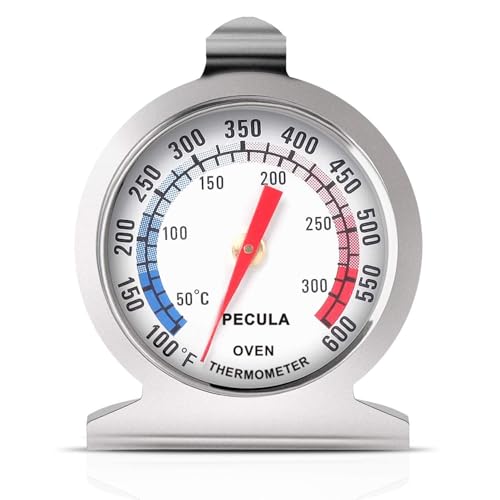
Clear Dial Display: PECULA's analog oven thermometer delivers precise, instant readings from 50–300°C / 100–600°F. Its dial features clear dual-zone blue and red indicators for at-a-glance temperature monitoring—perfect for ovens, grills, smokers, and deep fryers, ensuring you master every bake, roast, or fry.

More Valuable 2-in-1 Set:Include a temp gun and instant read thermometer; The laser thermometer with range from -58 to 1022 °F supports food prepare, auto maintenance, home repairs, while the cooking thermometer ranging from -58~572 °F gets internal temps for BBQ, grill, smoker, deep-frying and candy making
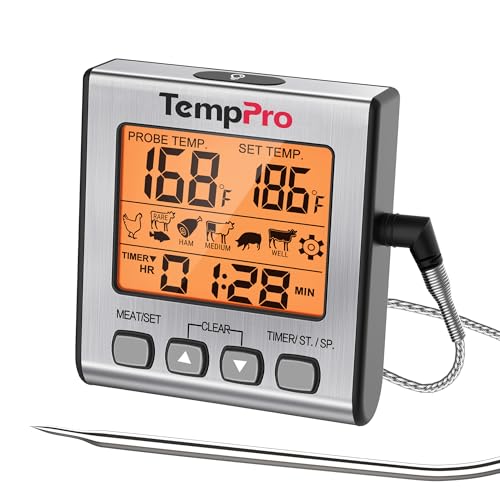
Precision Cooking, Perfect Results: Never overcook again! This digital meat thermometer features a food-safe probe with ±1.8°F accuracy and a 40" heat-resistant cable, continuously monitoring your BBQ, oven, or smoker from 14°F to 572°F for perfectly cooked meals every time