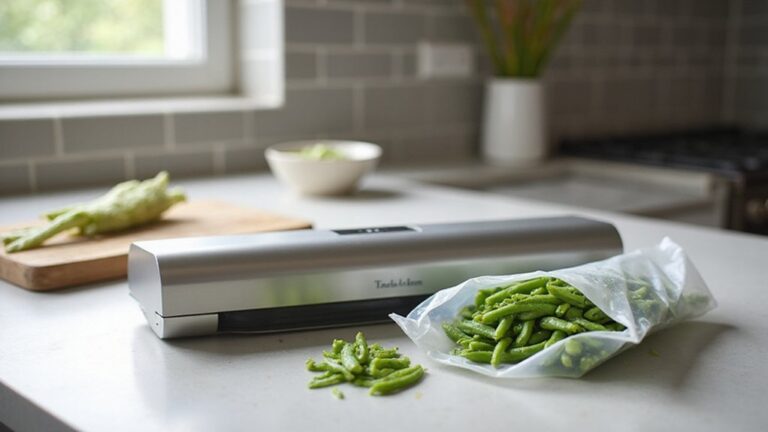
You’ll dramatically extend your camping meals’ shelf life by vacuum sealing, which stops oxidation and creates an anaerobic environment that slows bacterial growth. Fresh meat lasts roughly ten days refrigerated, while frozen vacuum-sealed foods stay viable for two to three years. You’ll compress food by up to fifty percent, maximizing cooler space and reducing waste considerably. Proper labeling and color-coding streamline meal identification. Master the technique to access substantial savings and camping efficiency.
Why Vacuum Sealing Works for Camping Meals
When you remove oxygen from food storage, you’re stopping oxidation before it degrades flavor, aroma, and texture. Vacuum sealing creates an airtight barrier that preserves your meal variety throughout your camping trip, whether you’re packing dehydrated meals, freeze-dried proteins, or fresh provisions. This method can extend shelf life up to five times longer than conventional storage techniques, allowing you to enjoy fresher meals on your adventure.
You’ll maintain flavor retention considerably longer than traditional storage methods. The sealed environment prevents moisture loss and protects against freezer burn, ensuring your food stays palatable for extended periods without refrigeration. Additionally, you’re shielding your meals from bacteria, mold, and pests—critical concerns in remote locations. The airtight seal keeps contaminants out while preventing odors from cross-contaminating adjacent food items. This protective mechanism means you can confidently store diverse foods together without compromising safety or quality, making vacuum sealing an indispensable technique for camping expeditions. Proper vacuum sealing is essential to ensure even cooking and maintain flavor and food safety throughout your trip.

Compatible with All Desktop Vacuum Sealers: These vacuum sealer bags are designed to work with all traditional desktop vacuum sealer machines. Simple to operate and convenient to use. (Note: These bags do not feature an air valve and are not compatible with handheld vacuum sealers.)
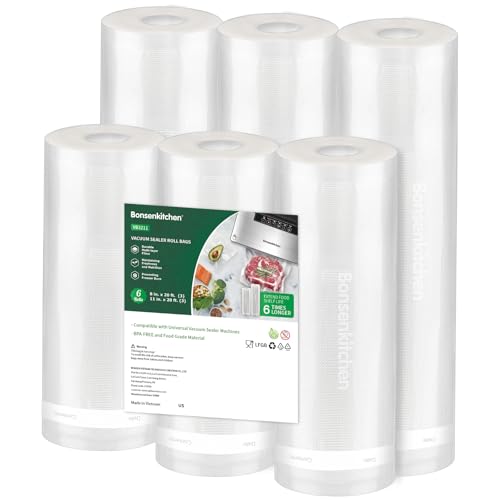
BPA FREE: Bonsenkitchen vacuum food sealer roll bags can be microwaved, frozen, re-used, washed, boiled and dishwasher safe. Allows you to precisely control your cooking temperature to achieve perfect results. You can cook sous vide in Bonsenkitchen bags by placing them in water at any temperature up to 230°F/110°C

Universal Design: Compatible with All 'Clamp Style' Vacuum Sealer Machines
How Vacuum Sealing Extends Food Shelf Life
Because vacuum sealing removes oxygen from your food storage, you’re creating an anaerobic environment that greatly slows microbial growth and chemical degradation. This oxygen removal extends your shelf life considerably—up to 3 to 5 times longer than traditional storage methods.
Fresh meat achieves approximately 10 days of refrigerated shelf life when vacuum-sealed, while cooked seafood gains roughly 6 additional days at 4°C. Beef primals maintain quality for 35 to 45 days, potentially reaching 70 to 80 days under ideal conditions. Fermented sausages persist for up to 120 days. Vacuum-sealed foods can last 2 to 3 years when frozen, making them ideal for long camping trips. Additionally, vacuum sealing prevents freezer burn, which is a common issue when storing food in traditional packaging.
Without oxygen, lipid oxidation slows greatly, spoilage indicators like total volatile base nitrogen remain lower, and flavor compounds stay stable. You’re preserving nutritional value and texture while eliminating the need for chemical preservatives or high-temperature processing.
Maximizing Cooler and Storage Space
Now that you’ve extended your food’s shelf life through vacuum sealing, you’ll want to maximize the physical space where you’re storing it. Vacuum-sealed bags compress food by up to 50%, greatly improving space efficiency in your cooler. You’ll stack flat bags vertically and horizontally, utilizing every corner and gap that loose containers would waste. This organized storage approach lets you fit considerably more meals without upgrading to a larger cooler.
Pre-portioned, sealed meals eliminate bulky containers entirely. Nesting bags together and layering them strategically creates additional capacity while keeping your cooler lightweight and portable. Clear labeling on each bag enables quick identification without unpacking, streamlining meal retrieval during your trip. Color-coding by day or meal type further enhances organization, ensuring you access items efficiently and maintain cooler cleanliness throughout your camping adventure. Additionally, vacuum sealing provides the benefit of protecting against freezer burn, which ensures your meals remain fresh and flavorful for longer periods. Furthermore, using vacuum sealing techniques helps to preserve flavors and nutrients, making each meal as enjoyable as possible during your outdoor experience.

ECONOMICAL & & TIME SAVING: Total 150 count Bonsenkitchen 20 Gallon 11" x 16"+ 80 Quart 8" x 12"+ 50 Pint 6" x 10" vacuum sealer bags are different sizes of packaging, meet your different usage needs. Vacuum bags are pre-cut and ready-to-use, saving you time whenever you’re preserving leftovers, preparing make-ahead meals, and portioning bulk items in the freezer.Just pull out and use, no need to cut, no need to seal one side before putting food in

VACUUM SEALER BAGS ROLLS: 8"x20' 3rolls+11"x20' 3rolls, XinBaoLong Food Saver Bags Rolls, Commercial Grade, Heavy Duty, BPA Free for Vac Storage, Kitchen Gadgets, Kitchen Accessories

Made in USA: Proudly manufactured in the United States
The Financial Benefits of Reducing Food Waste
By vacuum sealing your camping meals, you’re not just preserving food—you’re directly impacting your household finances. The average American family loses about $1,500 annually due to uneaten food, representing considerable economic savings potential through waste reduction. Vacuum sealing allows raw chicken to last 1 to 2 weeks in the refrigerator, significantly increasing your meal options while camping.
Vacuum sealing extends shelf life greatly, preventing spoilage and premature disposal. You’ll purchase only necessary amounts, avoiding overbuying that drains your budget. Proper food storage and meal planning diminish costs associated with discarded items.
This preservation method translates to measurable household savings. By reducing food waste, you lower your overall food expenditure while maximizing your camping investment. Better inventory management and storage techniques create direct financial benefits, making vacuum-sealed meals a practical economic strategy for budget-conscious campers. Additionally, vacuum sealing helps prevent freezer burn, ensuring that food retains its quality and taste for longer periods.
Preparing Meals at Home for Camp Cooking
While vacuum sealing preserves your food, strategic meal preparation at home is what transforms camping from a logistics nightmare into an enjoyable experience. You’ll maximize meal variety by pre-cooking proteins like chicken and ground beef, storing them in vacuum-sealed bags that maintain flavor preservation during transport. Pre-cutting vegetables and fruits into airtight containers eliminates campsite prep work, allowing you to focus on cooking rather than chopping. You can assemble one-pot meals and foil packets before departure, vacuum-sealing complete ingredients for straightforward reheating. Vacuum sealing green beans provides a quick and easy method to prepare veggies without blanching, allowing you to pack fresh flavors into your camp meals. Pre-mixing dry baking ingredients and utilizing pre-cooked grains further streamline your camp kitchen operations. This methodical approach reduces stress, prevents ingredient omissions, and guarantees you’re prepared for every meal without scrambling at the campsite. Additionally, vacuum-sealed meals can remain safe and of good quality for up to 6–7 days in the refrigerator, providing peace of mind during your camping trip.

【BPA FREE】Bonsenkitchen food sealer bags can be microwaved, frozen, re-used, washed, boiled and dishwasher safe. Allows you to precisely control your cooking temperature to achieve perfect results. You can cook sous vide in Bonsenkitchen bags by placing them in water at any temperature up to 195°F/90°C.

Effortless and Precise Cutting: The 11-inch x 150-feet vacuum sealer rolls include a cutter for maximum convenience. Simply mount the cutter onto the box, pull a portion of the roll through the top opening, and easily customize the size you need. This can ensure smooth, even and straight cuts, significantly faster and more accurate than using scissors, making the process simpler and saving your time.
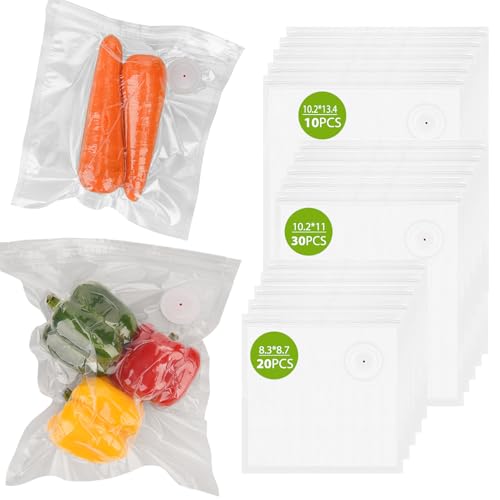
60PCS Vaccum Sealer Bag---20PCS( 8.3*8.7inches),30PCS (10.2*11 inches), 10PCS (10.2*13.4 inches). Total 60pcs Reusable Vaccum sealing bags, Lock freshness, 5X Extend storage time.
Choosing the Right Vacuum Sealing Equipment
Once you’ve planned your meals and prepped your ingredients at home, selecting the right vacuum sealer becomes your next priority—it’s the tool that’ll determine whether your carefully prepared food stays fresh throughout your camping trip.
Chamber sealers deliver superior sealing power and handle liquids effectively, though they’re bulkier and costlier. External sealers offer compact, budget-friendly alternatives ideal for dry foods but struggle with marinades. Portable options with USB charging or car power adapters enhance off-grid flexibility. However, keep in mind that a standard vacuum cleaner is not designed for vacuum sealing food packages properly, which can compromise food safety.
Evaluate sealing power, noise levels, and cleaning ease for your specific needs. Consider multi-function settings for versatile meal types. User convenience features like automatic sealing modes and indicator lights streamline preparation. Assess replacement bag costs and warranty coverage for long-term cost efficiency. Match equipment capability to your camping duration and meal complexity. Additionally, note that while pre-freezing liquids can simplify the vacuum sealing process, it might not be necessary for all types of ingredients.

[Easy Compression] Say goodbye to manual pumping! Our electric vacuum pump for storage bags quickly compresses clothes, bedding, and other fabric items with one-touch operation – no effort required.

Rechargeable cordless travel pump – 1500mAh battery offers up to 90 compressions per charge. USB charging via laptop/power bank ensures global compatibility

Airline-Friendly USB Travel Pump: Battery-free design fully compliant with flight carry-on standards. Plug-and-play continuous operation tailored for suitcase and carry-on travel packing. Perfect match for all travel-sized compression storage bags
Step-by-Step Guide to Vacuum Sealing Your Meals
Now that you’ve selected your vacuum sealer, mastering the sealing process itself guarantees your camping meals maintain ideal freshness and quality throughout your trip. Begin by cooling your food completely, then flatten it within the bag, leaving 3 inches of space at the top. Verify the bag’s open end sits properly in the sealer chamber for consistent contact. Activate the touch control to initiate automatic air extraction and sealing. The machine door popping open signals completion. For meal portioning, consider double sealing the bag’s top for extended storage protection. Apply clear labels above the seal with contents and dates for efficient inventory tracking. These sealing techniques prevent freezer burn and spoilage, keeping your camping provisions fresh and organized. Additionally, ensure that you use ample oil or butter when preparing meals to enhance flavor and prevent sticking, particularly when cooking, like blackened fish. Remember that vacuum sealing also helps preserve flavor and nutrients, making it an excellent choice for your camping meals.

Outdoor-Tough & Critter-Proof: Made from upgraded heavy-duty polyester oxford cloth, these storage bags are built to withstand the elements. They are fully waterproof, UV-resistant, and puncture/chew-resistant, keeping your gear safe from outdoor storage hazards, rodents, and pets. Ideal for camping and seasonal use

15-pack of assorted size vacuum storage compression bags for storing off-season clothes, towels, linens, and more

【Vacuum Compression Bag and Air Pump】There is a vacuum compression bag inside the largest compartment of the travel backpack, you can put the clothes into the vacuum bag, tighten the zipper, open the one-way exhaust valve, and use the air pump to compress the volume of fluffy clothes and pack more things. Please note that the zipper used in the vacuum bag requires more force to pull, this is to ensure that the vacuum airtight, not zipper damage is not smooth.
Common Mistakes to Avoid When Vacuum Sealing
Even experienced campers can undermine their vacuum-sealing efforts by overlooking critical mistakes that compromise food safety and storage longevity. The common pitfalls you’ll encounter start with sealing hot food, which causes liquids to bubble over and promotes bacterial growth through condensation. Overfilling bags prevents proper seals and increases leak risk—maintain 1–3 inches of headspace. Properly sealing can significantly extend shelf life when combined with oxygen absorbers to eliminate residual oxygen. You’ll also want to avoid soft cheeses and high-moisture foods that spoil quickly in sealed environments. Sharp bones and dried goods puncture standard bags; use thicker materials or protective wrapping instead. Finally, improper preparation undermines everything: scrub produce, remove excess fat, and dry foods before vacuum sealing. These mistakes directly impact your camping meals’ safety and shelf life. Additionally, consider using freezer-safe Ziploc bags combined with proper techniques to enhance your food preservation when vacuum sealing.
Storage Best Practices for Sealed Camping Meals
Proper storage conditions determine whether your vacuum-sealed meals remain safe and palatable throughout your camping season. You’ll maximize food safety by storing sealed meals in cool, dark environments like pantries or basements, which minimize light exposure and temperature fluctuations. Refrigeration extends shelf life to 20 days, while freezer storage dramatically increases longevity to months or years for properly sealed items. Implement a robust meal organization system using clear labeling with contents and expiration dates on every bag. Distance-to-spot ratio is also a concept to consider, ensuring that you store items properly to avoid damaging seals. Color-coded labels help you distinguish between different meal types and dietary requirements, enabling quick identification during trips. Store bags flat after freezing, then stack them upright like books to optimize space. Place paper towels beneath items to prevent sharp particles from puncturing linings during transport, maintaining seal integrity and food safety. Using vacuum seal bags provides added benefits such as protection from moisture and potential contamination during your camping adventures.