You’ll preserve your food’s nutritional integrity by mastering three freeze-drying stages: freezing, primary drying, and secondary drying. Select a chamber sealer for ideal moisture handling, then vacuum-seal your prepared food in Mylar bags with oxygen absorbers to remove over 95% of water content. Maintain storage below 50°F with humidity under 10%. This combination eliminates oxygen that causes spoilage, extending shelf life up to 30 years. Understanding each component’s role reveals how to achieve superior preservation results.
Understanding the Freeze Drying Process and Its Benefits
Sublimation—the transformation of ice directly into vapor without passing through a liquid phase—forms the foundation of freeze drying. You’ll appreciate how this three-stage process (freezing, primary drying, and secondary drying) operates at low temperatures under vacuum to preserve your food’s nutritional integrity.
The freeze drying advantages you’ll gain are substantial. You’re removing over 95% of water content while maintaining heat-sensitive nutrients, vitamins, and antioxidants that conventional dehydration methods destroy. The sublimation process halts chemical, enzymatic, and microbial activity, extending shelf life dramatically without refrigeration.
Your freeze-dried foods retain their original shape, texture, flavor, and aroma upon rehydration. The rigid, porous structure drastically reduces weight, lowering transportation and storage costs. When properly sealed, your foods remain microbiologically stable for years.
Essential Equipment: Choosing the Right Vacuum Sealer
Three primary vacuum sealer types dominate the freeze-drying market, each offering distinct advantages for your preservation needs. External sealers provide affordability and convenience for dry or low-moisture foods, though they struggle with liquid-rich items. Chamber sealers excel at sealing moist foods by containing liquids within an isolated chamber, preventing machine damage; they also help to extend shelf life through effective air removal. Handheld models offer portability for small portions but sacrifice power.
When selecting equipment, prioritize powerful vacuum strength to remove maximum air and prevent oxidation. You’ll benefit from moisture-handling modes that protect fragile freeze-dried items from crushing. Pulse functions enable gentler vacuuming, while accessory ports expand your storage options beyond bags. Consider durability, ease of cleaning, and bag compatibility. Chamber sealers require more space but deliver superior results for moisture-heavy products, making them particularly useful for preserving hearty meals like beef stew.
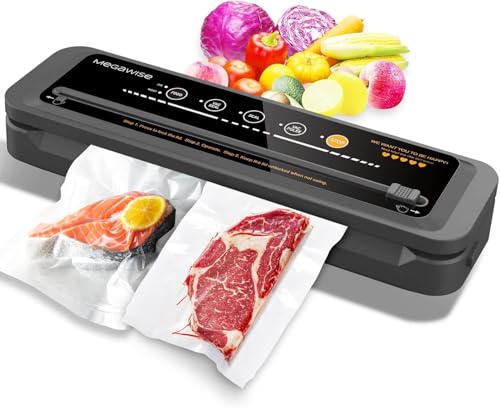
80kPa Suction Power: Updated 2025 vacuum sealer uses a DC motor pump with electromagnetics and pure copper for enhanced suction power. It sucks all air out tightly to preserve your meat and vegetables for 10 times longer or more to prevent oxidation and keep things fresh. Updated version solved many issues found from previous version

【10-in-1 Precision Sealing】Expertly preserve food from dry to moist or delicate with multiple sealing modes. External vacuum ports seal jars and containers beyond standard bags. Built-in bag storage and cutter streamline operation for fast, neat results—ideal for sous vide and meal prep.
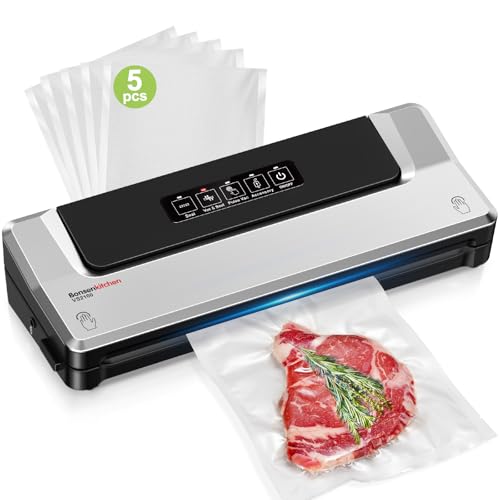
4 Modes : 'Vac & Seal' - one-touch automatic vacuum and seal, perfect for food that does not deform easily, such as meat, nuts, and vegetables; 'Pulse Vac' - manually control the vacuum process, suitable for soft food or moist food, such as bread or food with soup; 'Seal' - only seal, for potato chip bags; 'Accessory' - designed for vacuuming jars or sous vide bags
Preparing Your Food for Freeze Drying and Sealing
Proper preparation is fundamental to achieving high-quality freeze-dried results, and you’ll want to start by thoroughly washing all produce under cold running water to remove dirt and contaminants. Avoid soaking, as waterlogging extends drying time. Use a clean brush for rough-surfaced items and remove any bruised areas.
For piece sizing, cut food into uniform pieces no thicker than ¾ inch. Smaller, consistently-sized pieces dry faster and rehydrate more easily. Spread them in single layers on trays without stacking.
Consider pre-treatment methods like blanching vegetables to improve rehydration and preserve color. Beans and grains require cooking beforehand. Finally, pre-freeze your prepared food for at least 24 hours before freeze drying. This maintains structure and prevents pieces from sticking together.
Step-by-Step Guide to Vacuum Sealing Freeze Dried Food
Once you’ve completed the freeze-drying process, you’ll need to seal your food promptly to preserve its quality and extend its shelf life. You can employ three primary sealing techniques depending on your equipment availability.
For electric vacuum sealers with jar attachments, you’ll center the lid, secure the adapter, and evacuate air for 15–120 seconds. With bags, you’ll position the open end flush against the sealing bar and extend the nozzle for maximum vacuum efficiency. This method is effective as it significantly slows microbial growth and prevents spoilage.
If you lack electric equipment, hand pumps work effectively. Affix the vacuum lid attachment and manually pump until you observe resistance.
Regardless of your chosen method, verify the seal integrity immediately. Press the jar lid’s center—it shouldn’t flex. For bags, inspect for tight shrink-wrapping without air pockets. Add oxygen absorbers to complement vacuum efficiency and prevent spoilage. This process is essential as vacuum-sealed food can stay fresh up to five times longer than food stored using conventional methods.

Widely Compatible: Our jar vacuum sealer kit comes with 3 adapter interfaces. Compatible with foodsaver's VS and FM series models, NutriChef PKVS40BK vacuum sealer, etc.We also have a hose connector for vacuum sealers with a protruding external suction port (0.22in≤suction port diameter≥0.24in).

【Suitable for two types of Mason jars】The electric Mason jar vacuum sealer contains two sizes of mouth seals for your daily use. To get the standard mouth seal jar, simply insert the red arrow on the standard mouth seal converter, align it with the unlock symbol on the main unit and then insert it inside the silicone ring in the wide mouth seal area and tighten it clockwise, at this point the arrow is aligned with the lock symbol, which indicates a successful installation.

✅【Widely Compatibly】Our upgraded vacuum jar sealer kit with 3 different hose connectors compatible with all Foodsaver's models. The tip connector is compatible with FoodSavers VS and FM series, the round connector is fit for FoodSavers V and VAC series. We also have a round hose connector for vacuum sealers with an external vacuum suction port(0.22inch ≤ diameter ≤ 0.24inch), so it is also suitable for other brands of vacuum sealer. Note: Our jar sealer attachment do not fit the NESCO VS series, please check your model before purchasing.
Selecting Optimal Packaging Materials for Long-Term Storage
After you’ve sealed your freeze-dried food, the packaging materials you’ve chosen become your primary defense against oxygen infiltration, moisture absorption, and light exposure. Your packaging choices determine storage longevity and product quality. Mylar bags with aluminum foil composites create impenetrable barriers that block degradation accelerators effectively. You’ll want to pair these barrier materials with food-grade containers—five-gallon buckets or steel cans—which provide structural protection and additional oxygen barriers. Incorporate oxygen absorbers into your sealed containers to maintain below 0.1% oxygen levels, preventing spoilage. Store your packaged freeze-dried food in cool, dark, dry environments away from temperature fluctuations and pests. This methodical approach guarantees your freeze-dried products maintain nutritional integrity and shelf stability for years, maximizing your preservation investment.

【VALUE FOR MONEY ALL IN ONE】- Includes: 35 pcs large size 1 gallon mylar bags 10.2x13.8 inches, 45 pcs of medium size quart mylar bags 7.1x10.2 inches, 20 pcs small size 1/2 pint mylar bags 4.3x6.3 inches.Comes with 55pcs individually sealed 400cc oxygen absorbers and 100 labels, for better food storage and differentiation, reducing mishandling and waste

[SIZE & QUANTITY] . Pack of 30 mylar bags of 1 gallon for long term food storage - With 400cc oxygen absorbers (30) & Stickers (30) - Very thick 14,8 Mil layers made of PET & Mylar foil - Mylar bag of 10"x15" Inch

[SIZE & QUANTITY] 10 extra large 5 gallon mylar bags for food storage. Includes 2500 cc. oxygen absorbers + 10 labels. Made out of strong and thick PET & Aluminium foil. Perfect for pantry food like flour, sugar, rice, freeze dried, dehydrated foods.
The Critical Role of Oxygen Absorbers
While your high-barrier Mylar bags and sealed containers establish the physical foundation for long-term food preservation, oxygen absorbers provide the chemical mechanism that transforms your packaging into a truly protective environment. Iron powder within these absorbers reacts with oxygen molecules, reducing residual oxygen below 0.01% under ideal conditions. This oxygen absorber effectiveness creates anaerobic environments that halt oxidation breakdown of fats and sensitive compounds while preventing aerobic pathogen formation in dairy, nuts, and meat products. Benefits of anaerobic environments extend beyond microbial control—they eliminate insect survival conditions and preserve color, texture, and aroma by stopping volatile compound degradation. Select 700cc absorbers for gallon-size Mylar bags, allowing approximately 30 minutes for activation before sealing.

✅ 【Preminum Food Grade Oxygen Absorbers】: Our factory have 18 years experience in oxygen absorber, Also we have ISO9001 Certificate, All our oxygen absorbers are preminum food grade material and tested under strict food regulation, Very safe to be used with foods and pharmaceuticals storage.

✅ [Premium Food Grade Oxygen Absorber] Our factory has 18 years of experience in oxygen absorbers and has ISO 9001 certification, our oxygen absorbers are all made of high quality food grade materials and tested by strict food regulations, very safe For food and medicine storage.
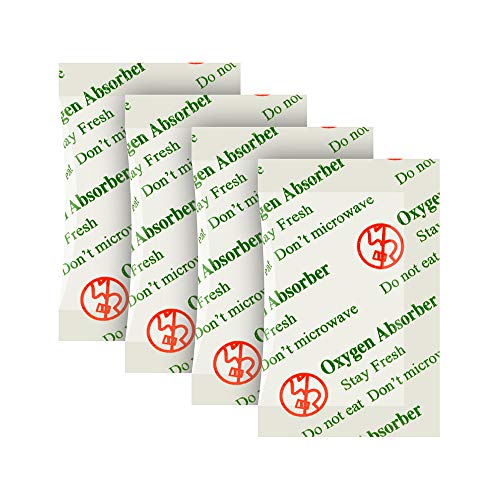
O2frepak Oxygen Absorbers Packets help Food extend shelf life
Managing Moisture and Liquids During the Sealing Process
Successfully sealing your freeze-dried food depends entirely on moisture control before and during the packaging process. You must verify that your freeze-dried products contain less than 2% moisture content immediately after the drying cycle completes. Check for visible ice crystals or condensation—both indicate incomplete preparation.
Before transferring food to containers, you’ll remove all residual moisture from your vacuum chamber using a final drying cycle with hard vacuum and heat. This liquid evaporation step prevents water from contaminating your products during sealing.
Your moisture management strategy should include allowing freeze-dried food to sit in jars for several days, permitting additional evaporation. Seal containers immediately after moisture verification to prevent reabsorption from ambient humidity. Use Mylar bags with oxygen absorbers for superior moisture barriers during long-term storage.

【5 Modes for Every Food Sealing Need: Wet, Dry, Jars & More】This upgraded vacuum sealer has 5 tailored modes. MOIST mode removes up to 15ml liquid from meat/fish for a tight seal; DRY mode for water-free foods; SEAL mode locks in original flavor; PULSE mode for precise suction control on soft, crispy foods; CANISTER mode for jars & sous vide bags to reduce oxidation.

【6-in-1 Includes Cutter Functions】Moist & Dry Modes - Maximize freshness for different types of food; Vac Seal- One touch operation; External VAC- for jars, canisters and wine preservation; Build in cutter- Easily customize bag size; Seal- Quick seal only; Stop- Cancel the current process at any time.
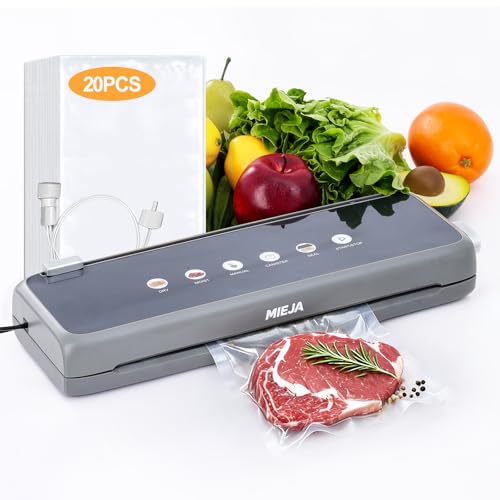
5-IN-1 SETTINGS FOR DIFFERENT FOODS: Select Dry, Moist, Pulse, External Vacuum or Seal Only to match everyday sealing tasks. Pulse mode gives you more control with delicate or moisture-rich foods, while Seal Only closes a cut bag without vacuuming.
Maximizing Shelf Life Through Proper Storage Conditions
Once you’ve sealed your freeze-dried food with precision, your next critical task involves controlling the storage environment to preserve quality for decades. You’ll want to maintain proper temperature below 60°F—ideally below 50°F—since higher temperatures drastically reduce shelf life. Humidity control is equally essential; keep levels at or below 10% to prevent moisture absorption and spoilage.
You must implement light protection by storing containers in dark locations away from UV exposure. Oxygen elimination remains paramount, so use Mylar bags with oxygen absorbers or vacuum-sealed jars. Position your storage in cool, dry basements or temperature-controlled pantries. Vacuum sealing can significantly extend shelf life by keeping food fresh in optimal conditions.
You’ll extend longevity considerably through stock rotation using the first-in-first-out principle. Once opened, consume contents within 6–12 months. These packaging techniques and environmental controls preserve nutritional integrity and flavor for up to 25–30 years.