

You shouldn’t use oven bags for sous vide cooking. They’re engineered for dry heat up to 400°F, not water immersion at precise temperatures. Oven bags lack the multi-layer construction and barrier properties that sous vide bags provide. Water pressure risks rupture, material degradation, and potential chemical leaching into your food. Plus, heat-resistant nylon doesn’t meet sous vide’s stringent airtight requirements. Instead, choose vacuum-sealed bags rated for water baths or explore reusable silicone alternatives. Understanding the critical differences between these bags reveals why selecting the right one matters.
Understanding Oven Bag Materials and Design
Foundation and composition—that’s where you’ll find the key to understanding oven bags’ functionality in the kitchen. You’re working with heat-resistant nylon that’s FDA-compliant for food contact, engineered to resist melting at elevated oven temperatures. This material durability stems from nylon’s flexible yet robust construction, often reinforced with additional layers for enhanced strength.
You’ll notice most bags feature bag transparency, allowing real-time visual monitoring of your food during cooking. The closed-end structure contains food and juices effectively, while zip-lock or twist-tie closures provide secure sealing. Manufacturers design these bags specifically for conventional oven use—they’ve tested them extensively to prevent bursting when used as directed. Understanding these design parameters matters because they directly determine safe usage applications and temperature limitations you must respect.
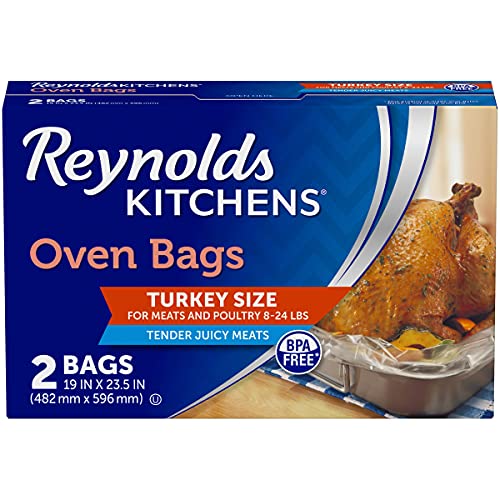
REYNOLDS TURKEY OVEN BAGS-This pack includes two, large Reynolds Kitchens Oven Bags, each measuring 19 x 23.5 inches

Complete 50-Piece Value Pack: Includes 50 pieces of oven roasting bags, precisely measuring 14.96 x 9.84 inches. The generous size provides ample room for preparing chicken, turkey, meats, and vegetables for your daily family meals without the need for repeated purchases

Made in the USA: These turkey bags are made in the USA using durable, food-safe materials for reliable oven cooking.
The Temperature Limits of Oven Bags
Now that you understand oven bags’ material composition and design features, you need to know their temperature boundaries—because these limits directly determine whether your cooking method will succeed safely. Manufacturers design oven bags for maximum temperatures of 400°F (204°C). Exceeding this threshold risks bag rupture, melting, and potential fire hazards. For oven bag safety, you’ll maintain cooking temperatures between 325°F and 400°F, depending on your recipe and cooking duration. Below 325°F, food lingers dangerously in the bacterial growth zone (40°F–140°F). You must position bags away from heating elements and oven walls to prevent premature degradation. Always use a meat thermometer to verify internal food temperatures reach safe levels—165°F for poultry, for example—rather than relying solely on oven temperature settings. Proper handling and awareness of cooking temperatures can ensure that your oven bags perform effectively without compromising safety.
What Makes Sous Vide Bags Different
While oven bags prioritize convenience for standard roasting, sous vide bags employ specialized engineering to handle prolonged water immersion and precise temperature control. You’ll notice that sous vide bags feature multi-layer constructions combining polyamide and polyethylene, calibrated specifically for vacuum sealing and heat resistance up to 90°C. The materials comparison reveals critical differences: sous vide bags use bioriented polyamide with polypropylene to prevent chemical migration, whereas oven bags lack this precision. Sealing techniques differ markedly too—sous vide bags incorporate embossed surfaces that optimize air removal efficiency during vacuum sealing, ensuring airtight integrity. Additionally, sous vide bags maintain superior barrier properties against oxygen re-entry, preserving organoleptic qualities throughout extended cooking cycles. Their reduced air permeability and food-safe compositions under sustained heat distinguish them fundamentally from general-purpose oven bags.
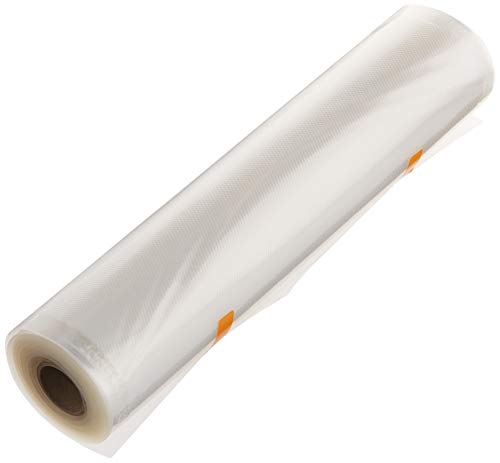
ROLL OUT: Including 2 rolls measuring 11" x19. 6' each, you have the ability to custom cut your bags to any length you wish. A perfect option for the cook who likes to keep their options open.
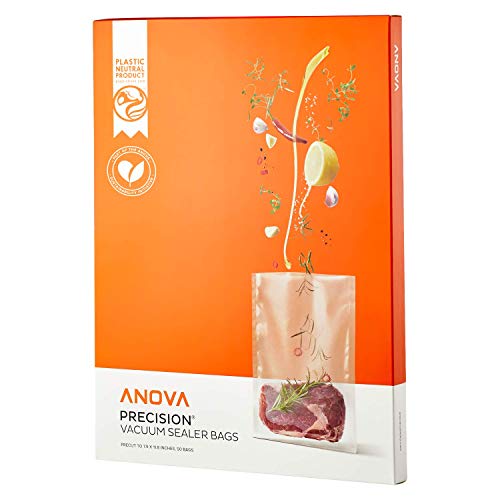
PRE-CUT FOR THE QUICKNESS: Including 50 8. 6″ x 11. 8″ bags with easy-tear tops, you can drop your food directly into your bag, seal it up, and get straight to cooking. A perfect option for the cook who likes to move quickly in the kitchen.

✔️【Wide Range of Use】Made of PE/PA food grade material, FIRAWER sous vide cooking bags are reusable up to 10 times, can keeps fresh for meat, seafood, vegetables, fruits, grains, nuts snacks and sandwiches, ect. Suitable for kitchen, camping, spring outing, travel and other scenes.
Why Water Immersion Changes Everything
When you submerge a vacuum-sealed bag in a temperature-controlled water bath, you’re fundamentally altering how heat transfers to your food—and this shift releases cooking capabilities impossible with traditional dry-heat methods. Water immersion enables uniform heat distribution from the bag’s exterior to its center, eliminating the thermal gradients that plague conventional cooking. Your cooking efficiency improves dramatically: immersion circulators maintain ±0.1°C accuracy, preventing overcooking while breaking down connective tissues through extended, gentle exposure. The sealed environment preserves moisture that’d otherwise evaporate in open-air methods, while preventing bacterial contamination. Tough muscle fibers soften without compromising protein structure or nutrient density. This thermodynamic advantage—water’s superior heat conductivity compared to air—fundamentally transforms texture development and flavor concentration in ways traditional ovens simply cannot achieve. Additionally, using a vacuum sealer enhances cooking results, especially in achieving better flavor retention during sous vide. Furthermore, understanding the accuracy of thermometers is crucial when monitoring food temperature to ensure it remains within the desired range without losing quality.
Risks of Using Oven Bags in Water Baths
Why should you reconsider reaching for standard oven bags when planning your sous vide cook? Oven bag durability suffers under prolonged water immersion, even at sous vide’s moderate temperatures. These bags are engineered for dry, high-heat environments—not underwater submersion. Water pressure stresses seams and closures not designed for vacuum integrity, risking bag rupture and food contamination. Temperature sensitivity compounds the problem; bags may deform or weaken when continuously submerged, especially if they contact heating elements directly. Vacuum sealing liquids can quickly become a messy challenge if not executed properly, highlighting the importance of using equipment designed for sous vide cooking. Water infiltration compromises your food’s safety by allowing bacterial contamination and uneven heat penetration. Additionally, bags designed for dry conditions can absorb water, causing material degradation and potential leakage during cooking. You’re fundamentally using equipment outside its intended application, considerably elevating failure risks. Proper maintenance, including avoiding dishwasher use, is crucial to preserving the integrity of your cooking equipment.
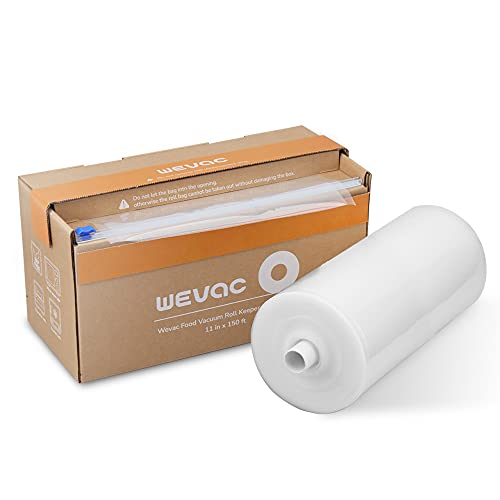
HEAVY DUTY AND PUNCTURE PREVENTION - 1 pack of 11 inch by 150 feet roll with embossed channels to increase suction, with a cutter box for cutting and storage, keep fresh without freezer burn or dehydration
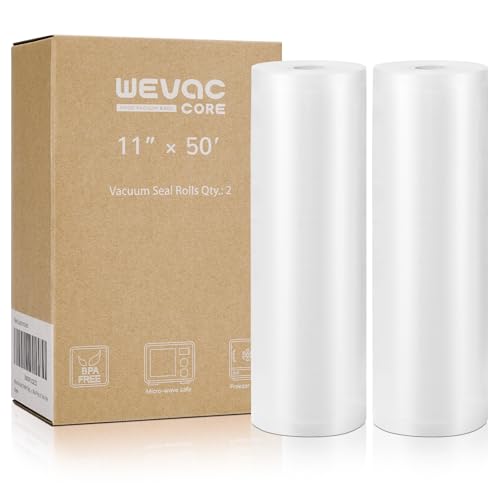
HEAVY DUTY AND PUNCTURE PREVENTION - 2 pack of 11 inch by 50 feet rolls with embossed channels to increase suction, keep fresh without freezer burn or dehydration

HEAVY DUTY AND PUNCTURE PREVENTION - 2 pack of 8 inch by 50 feet rolls with embossed channels to increase suction, keep fresh without freezer burn or dehydration
Chemical Leaching and Food Safety Concerns
Beyond structural failures, oven bags pose distinct chemical safety risks that distinguish them from purpose-built sous vide alternatives. Oven bags lack transparent ingredient disclosure, meaning you’re uncertain what additives or plasticizers you’re exposing your food to during cooking. While sous vide bags explicitly advertise BPA-free and phthalate-free formulations, oven bags don’t guarantee this protection.
Chemical migration increases considerably with heat and fatty foods. Though sous vide operates at moderate temperatures (130–140°F), oven bags may degrade unpredictably in water baths, releasing harmful compounds. Studies detect estrogenic activity and hormonal effects even in supposedly safe plastic bags, indicating unknown substitute chemicals pose risks.
You’re not just risking chemical leaching—microplastic particles shed into your food as polymers break down under heat, adding another contamination layer that purpose-designed bags substantially minimize.
Vacuum Sealing Requirements for Sous Vide
Since sous vide’s effectiveness depends entirely on maintaining an airtight seal throughout cooking, you’ll need proper vacuum sealing equipment and technique to prevent water infiltration and temperature fluctuations. You should choose vacuum sealing methods appropriate for your food type: chamber sealers excel with liquid-rich foods, while external sealers suit dry ingredients. You must leave adequate space between food and the bag opening to guarantee proper sealing. For moist foods, activate your sealer’s “Moist” setting to strengthen the seal. You’ll want to fold back the bag opening before filling to keep the sealing area clean. An airtight seal is non-negotiable—any breach compromises cooking consistency and food safety, allowing water penetration and preventing stable temperature maintenance throughout your sous vide process. Additionally, proper vacuum sealing can significantly improve the quality and longevity of your ingredients, helping to ensure better cooking results. It’s also important to note that using vacuum sealing techniques can extend food freshness and enhance overall meal prep efficiency.
The Consequences of Exceeding Temperature Ratings
While oven bags are designed for dry-heat roasting up to 400°F (200°C), they’ll fail catastrophically when exposed to the higher temperatures required for sous vide cooking. Sous vide typically operates between 131°F and 185°F (55°C to 85°C), but temperature risks escalate markedly if you exceed oven bag ratings.
When you expose oven bags to sustained heat beyond their specifications, plastic integrity degrades rapidly. The material softens, warps, and ruptures, compromising your food’s safety. Melting plastic leaches harmful chemicals directly into your cooking water and food. Additionally, bag failure introduces contamination from external water sources, risking foodborne illness. You’ll lose moisture retention and even face potential fire hazards if plastic contacts heating elements. Equipment damage and ruined meals result from exceeding these critical temperature thresholds.
Choosing the Right Bag for Your Cooking Method
Selecting the appropriate cooking vessel depends on understanding each bag’s thermal specifications and intended applications. You shouldn’t confuse oven bag advantages—moisture retention and simplified cleanup—with suitability for sous vide cooking. Common misconceptions suggest that heat-resistant nylon can withstand sous vide’s precise temperature control requirements, but you’d be mistaken. Oven bags are engineered for conventional ovens up to 400°F, not immersion cooking environments. You must recognize that sous vide demands specialized vacuum-sealed bags rated for water-bath temperatures between 130°F and 185°F. You can’t simply substitute oven bags because their material composition and manufacturing standards differ fundamentally. You’ll achieve excellent results by selecting bags specifically designed for your cooking method—oven bags for roasting, vacuum-seal bags for sous vide applications.

🔋 Cordless & Rechargeable for Anytime Use Enjoy powerful suction without cords! Our electric handheld vacuum sealer features a built-in rechargeable battery, making it perfect for home kitchens, camping trips, or meal prepping on the go.

【Upgraded Vacuum Pump】Our upgraded vacuum pump is designed to easily and cleanly suck out air, with no need to spend much time aligning the pump and valve.

Safe Alternatives to Plastic Bags for Sous Vide
Reusable silicone bags offer exceptional durability, withstanding sous vide temperatures without degradation while eliminating BPA and phthalates. They’re dishwasher-safe and nearly endlessly reusable, considerably lowering environmental impact despite requiring weights for submersion. Additionally, just like meat thermometers can be versatile in baking, silicone bags serve multiple culinary purposes beyond sous vide. They can help extend food freshness through vacuum sealing techniques, which significantly slows microbial growth and oxidation. Mason jars provide a plastic-free option for eggs, custards, and other foods, though they’re limited for larger items. Emerging material innovations in compostable bags using PLA or PHA show promise, though current heat resistance remains insufficient for extended cooking. You can reuse freezer bags three to five times when properly cleaned, reducing waste while maintaining structural integrity. These sustainable packing solutions collectively enable you to minimize plastic consumption without compromising sous vide precision.

1. Altinatives for Plastic Bags: Made with food-grade silicone which has very stable chemical properties. Not release chemical particles BPA & Phthalates and reduce the risk of microplastics exposure even in long time heating situation.
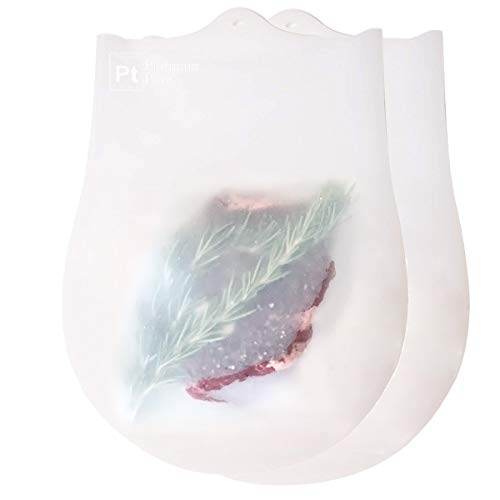
NOT ALL SILICONE IS CREATED EQUAL: 100% Platinum Pure LFGB silicone with No FILLERS – Surpasses minimums, the silicone in our sous vide bags is certified to the much more stringent European LFGB standards. Our platinum pure curing process ensures there are no by-products, BPA, BPS, PVC, or Phthalates. Our silicone bags are completely odorless and will not affect food odor or flavor.

【100% SILICONE - MICROPLASTIC FREE】Tired of disposable ziplock plastic bags? Switch to silicone! Made from 100% food-grade silicone, Annaklin reusable ziplock bags are free of PVC, lead, chlorine, phthalates, BPA, and microplastics. Non-toxic and odorless, they keep your family’s food safe and healthy. The perfect alternative to single-use plastic bags—help reduce waste and protect our planet


