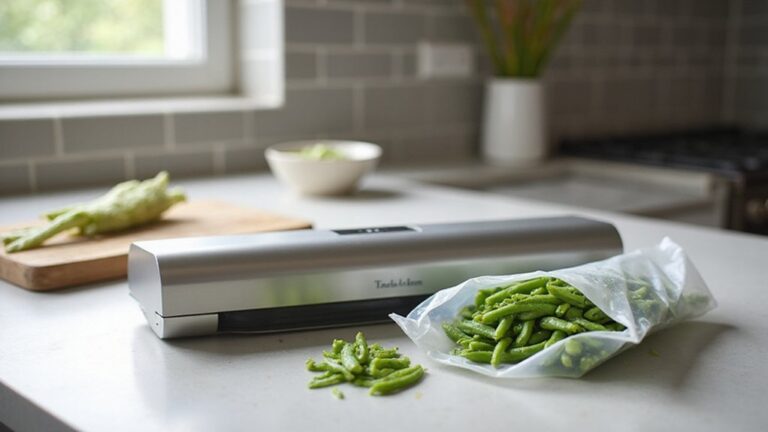
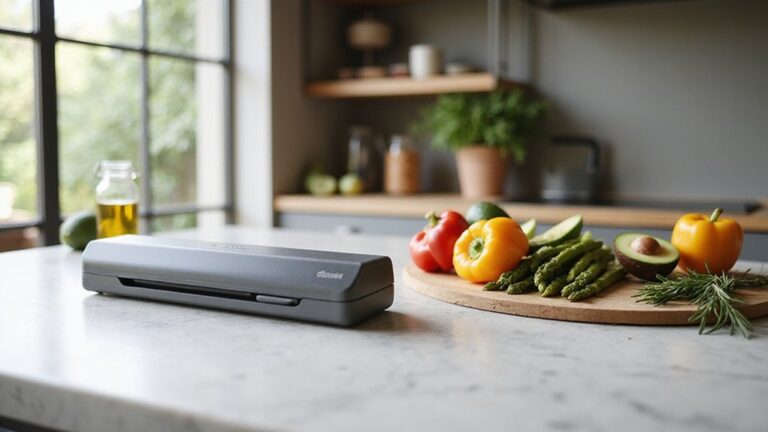
You can use certain Ziploc bags with vacuum sealers, though bag type matters considerably. Embossed Ziploc bags work well with suction machines because their textured surfaces allow proper air removal, while smooth bags don’t seal effectively with standard sealers. You’ll need compatible equipment—hand pumps, heat-seal machines, or chamber sealers all work differently with Ziploc products. For best results, freeze liquid-heavy foods first and inspect seals carefully before storage. Understanding the specific compatibility details will help you maximize your vacuum sealing success.
Compatibility With Vacuum Sealers
When you’re choosing between Ziploc vacuum bags and traditional heat-seal options, understanding their compatibility with different machine types becomes essential. Ziploc bag versatility shines through their dual-functionality design—you can use them with hand pump mechanisms or compatible heat-seal vacuum sealers like FoodSaver systems. This flexibility distinguishes them from specialized alternatives that work with only specific machine types.
Your vacuum sealer efficiency improves when you recognize that Ziploc bags feature a built-in flat plastic valve, eliminating heat-sealing requirements for basic operation. You’ll achieve compression within seconds using manual pumping, while also maintaining compatibility with standard heat-seal machines designed for ziplock bags. This adaptability means you’re not locked into purchasing proprietary bags for your existing equipment, giving you practical options that work across multiple vacuum sealing methods. Additionally, using Ziploc bags can still help extend shelf life by keeping food fresh and protected from spoilage. Utilizing vacuum sealing ensures a more even cooking process, enhancing results especially for sous vide enthusiasts.
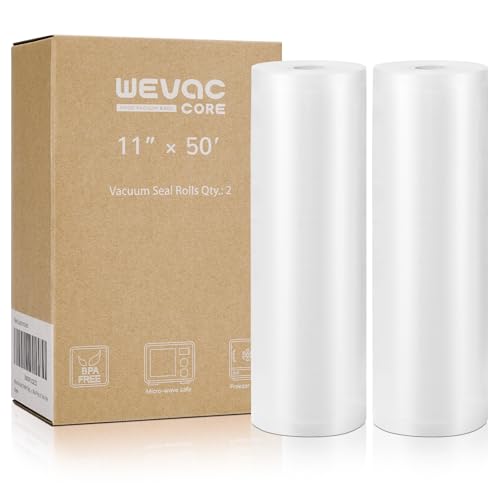
HEAVY DUTY AND PUNCTURE PREVENTION - 2 pack of 11 inch by 50 feet rolls with embossed channels to increase suction, keep fresh without freezer burn or dehydration

HEAVY DUTY AND PUNCTURE PREVENTION - 200 pack of 8 by 12 inch precut bags with embossed channels to increase suction, with a cutter box for cutting and storage, keep fresh without freezer burn or dehydration

HEAVY DUTY AND PUNCTURE PREVENTION - 150 pack of 6 by 10 inch and 8 by 12 inch precut bags with embossed channels to increase suction, 300 pack in total, with a box for storage, keep fresh without freezer burn or dehydration.
Types of Bags Suitable for Vacuum Sealing
Your vacuum sealing success depends on selecting the right bag type for your specific machine and storage needs. Embossed bags feature textured surfaces that efficiently extract air and work well with most domestic suction-type vacuum sealers. Their patterned design creates ideal channels for air removal and produces tighter seals.
Smooth bags, conversely, lack this texture and aren’t suitable for standard suction sealers—they won’t vacuum completely due to insufficient air pathways. You’ll find pre-cut bags convenient for standard storage, while roll bags offer custom sizing and reduce waste. For maximum flexibility, consider heavy-duty options with 3-mil to 5-mil ratings that provide superior puncture resistance for long-term storage. Additionally, using the right bags helps to extend food freshness by effectively slowing microbial growth and oxidation. Match your bag choice directly to your sealer type for best performance and food preservation.

HEAVY DUTY AND PUNCTURE PREVENTION - 8x12 pre-cut Quart bags with embossed channels increase suction, keep fresh without freezer burn or dehydration

Safe Materials and Versatile Cooking Options: BPA Free - Sous Vide - Boil in the bag - Microwave friendly **ALWAYS PUNCTURE BAG BEFORE USING IN THE MICROWAVE** - Made of Food Grade PA/PE - BPA and Phthalate Free

[BPA-Free & Versatile Usage] Made from food-grade, BPA-free materials that can withstand temperatures from -4°F to 212°F. Perfect for storing both raw and cooked foods, and suitable for use in freezers, refrigerators, sous-vide cooking, boiling, microwaving, and dishwashers.
Methods for Vacuum Sealing Ziploc Bags
Several effective techniques’ll help you achieve proper vacuum seals with Ziploc bags, each suited to different equipment and circumstances. For manual air removal, you can use hand-operated vacuum pumps designed specifically for Ziploc bags, inserting a straw to suction air manually, or employing the water displacement method by submerging the bag gradually, which is a smart way to seal the bags effectively. When using vacuum seal machines, position the open bag’s edge inside the chamber without pre-sealing, allowing the machine to extract air before heat-sealing. Make certain the sealing edges remain clean and dry to prevent failures. Your sealing techniques should include wiping moisture from edges beforehand and allowing sealed areas to cool briefly after heat application. Combining multiple methods—like using a hand pump followed by tape reinforcement—enhances seal durability and reduces future leakage. However, be aware that using a standard vacuum cleaner will not create proper vacuum seals for food storage.
Limitations and Risks
While Ziploc bags offer convenience for vacuum sealing, they come with notable technical constraints that you’ll need to understand before relying on them for food preservation. Seal quality remains compromised when you’re preserving liquid-heavy foods, since fluids rising to the sealing point prevent proper closure. You’ll also face bacterial growth risks in anaerobic environments, particularly with improperly cooked foods or incorrect storage temperatures. Clostridium botulinum bacteria thrives without oxygen and produces deadly toxins. You should avoid vacuum sealing raw onions, fresh mushrooms, and garlic due to botulinum concerns. Additionally, you’ll encounter plastic contamination issues as BPA chemicals leach into your food over extended storage periods. These limitations demand careful attention to food preparation, temperature control, and storage practices, as some methods of food preservation techniques require specific precautions to ensure safety. Using materials like cast iron skillets can help better achieve desired cooking results due to their superior heat retention and distribution.
Brand-Specific Information
Once you’ve decided to vacuum seal with Ziploc bags, understanding how different brands and models interact with various sealing methods becomes essential for achieving reliable results.
Ziploc bags operate through built-in flat plastic valves, enabling manual air removal without heat sealing. This design contrasts with FoodSaver’s thermal approach. When using heat-seal vacuum sealers beneath the zipper line, you’ll achieve additional leak resistance with Ziploc bag durability. However, recognize that Ziploc bags maintain less compatibility with moist foods than chamber vacuum sealers. Vegetables like green beans are particularly vulnerable due to their moisture content.
For extended storage, you’ll need to tape over the pump valve after vacuuming to prevent leaks. Ziploc bag safety remains assured through standard manufacturing practices, though their vacuum pressure rarely reaches levels measurable by professional gauges, unlike specialized alternatives. Additionally, vacuum sealing techniques extend food freshness significantly, helping to preserve flavors and nutrients over time.
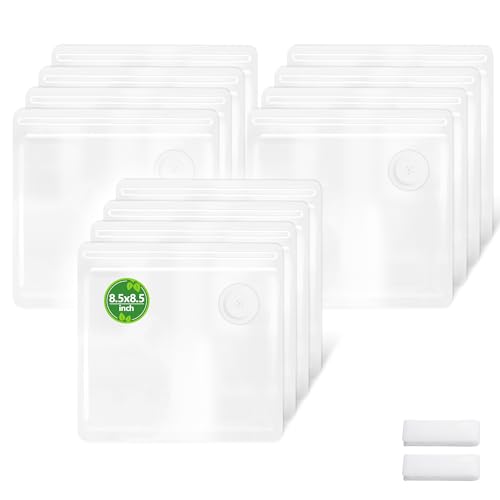
【Eco-Conscious & Cost-Effective Solution】 Crafted from BPA-free, food-grade materials, these bags are not only safe for your family but also reusable and easy to clean. The durable construction withstands multiple uses (wash, dry, and re-vacuum), significantly reducing your reliance on single-use plastic bags and disposable wraps. By minimizing food spoilage and allowing bulk-buy savings, this set pays for itself while supporting a greener, more sustainable kitchen lifestyle.

MULTIPURPOSE, REUSABLE BAGS: These BPA-free, multilayer FoodSaver vacuum seal bags are durable and easy to hand-wash; also safe to use in the microwave, for sous vide cooking, and for freezer storage
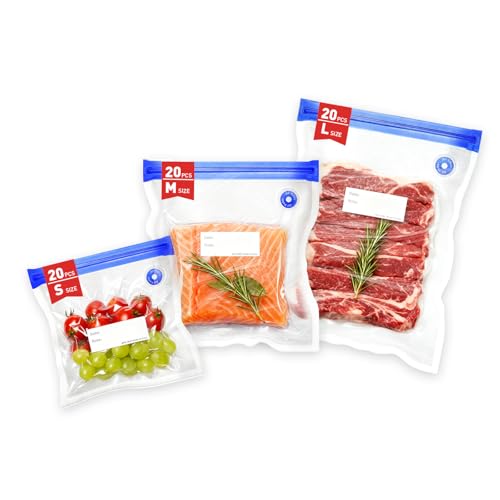
Includes 60 Pcs reusable vacuum bags in 3 practical sizes: 20 pcs S size 8.66"x8.27", 20 pcs M size 10.24"x11.02", and 20 pcs L size 10.24"x13.39". Perfect for organizing meat, veggies, snacks, grains, or leftovers.
Cost and Environmental Considerations
Beyond the technical performance differences between Ziploc bags and specialized vacuum sealer systems, the financial and environmental implications of your choice warrant careful examination. While Ziploc bags offer lower upfront costs, specialized vacuum sealer bags deliver superior cost efficiency through extended food preservation and reduced spoilage. You’ll find that investing in quality vacuum sealer bags pays dividends over time, particularly for bulk storage of meats and fish. Additionally, vacuum sealing significantly extends shelf life by removing oxygen, which helps to slow bacterial growth and prevent spoilage. For instance, using a vacuum sealer can preserve classic recipes and other foods long after they would normally spoil.
Regarding plastic waste, both options present environmental challenges since neither’s typically recyclable through standard municipal programs. However, you can greatly mitigate plastic waste by selecting reusable vacuum sealer bags with special valves. Washing and reusing these bags substantially decreases your environmental footprint compared to single-use alternatives, making them the more sustainable choice despite their premium pricing.

Package Contents: This set includes 40 vacuum zipper bags in four versatile sizes: 10 each of 8" x 8", 10" x 11", 12" x 13", and 12" x 19". Crafted from BPA-free materials, these bags are safe for food storage and suitable for use in microwaves, cabinets, refrigerators, freezers, and sous vide cooking. Designed for strength, the bags feature a smooth side (up to 3.15 mil thick) and a textured dotted side (up to 3.95 mil thick), providing sturdy protection against punctures from sharp items like bones.
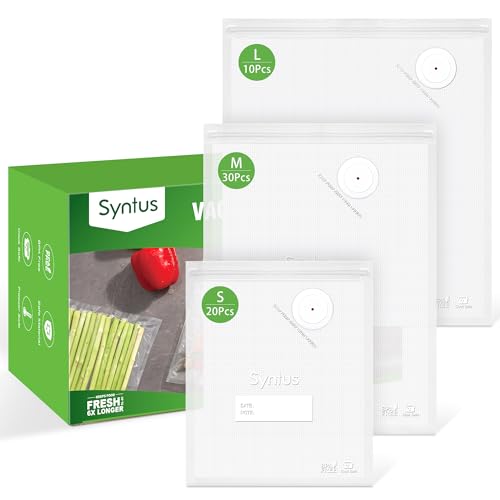
Package Contents: This set includes 60 vacuum zipper bags in three practical sizes: 20 pieces of 8" x 10", 30 pieces of 10" x 13.8", and 10 pieces of 11.8" x 13.8".Crafted from BPA-free materials, these bags are safe for food storage and suitable for use in microwaves, cabinets, refrigerators, freezers, and sous vide cooking. Designed for strength, the bags feature a smooth side (up to 3.15 mil thick) and a textured dotted side (up to 3.95 mil thick), providing sturdy protection against punctures from sharp items like bones.
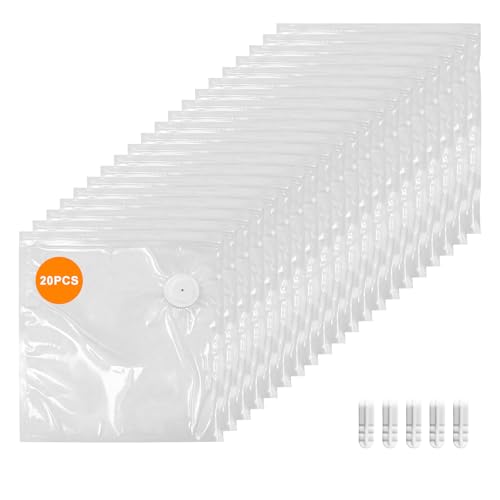
20-Bag Set: Includes twenty 8.5 x 8.5 in reusable vacuum zipper bags and five sealing clips for food storage
Best Practices for Long-Term Food Storage
To maximize food preservation and prevent spoilage, you’ll need to understand how different sealing methods and bag types affect storage longevity. Vacuum-sealed foods last 2-3 years in the freezer, while standard Ziploc bags offer only 6-12 months. This significant difference stems from superior moisture control and airtight sealing that vacuum sealers provide. Additionally, vacuum sealing can extend food shelf life by 3 to 5 times longer compared to traditional methods. For ideal food quality, use heat-seal vacuum bags designed for long-term storage rather than regular Ziploc bags. When combined with oxygen absorbers, vacuum sealing not only enhances food protection but also prevents spoilage from various factors. If you’re storing liquids, freeze contents beforehand or invest in chamber vacuum sealers to prevent seal failure. Properly sealed vacuum bags maintain texture and flavor substantially better than Ziploc alternatives over extended periods. Inspect seals regularly for integrity, and consider reusable FoodSaver bags if you’re preserving food frequently, ensuring thorough cleaning between uses to prevent contamination.