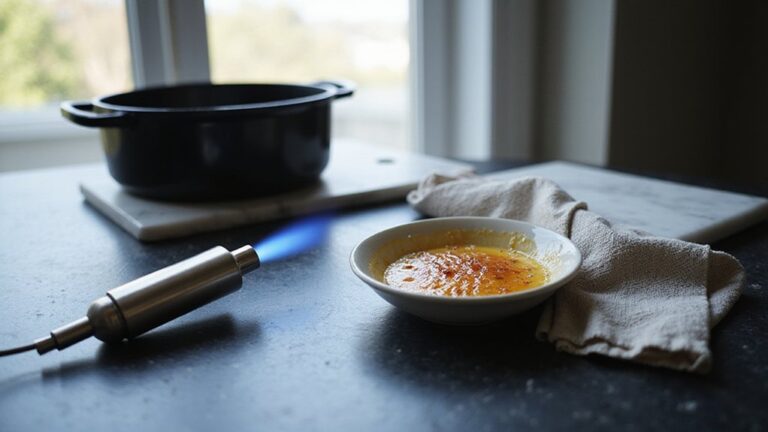
You’ll achieve superior searing results with propane torches, which generate approximately 2,000°F flames ideal for quick cooking tasks. Butane torches excel at precision work like caramelizing sugar, offering better control with longer, less intense flames. Propane requires regulator setup but delivers professional-grade heat and stability in cold conditions. Butane offers portable convenience with direct canister attachment. Your choice hinges on whether you’re prioritizing intense heat for searing or controlled precision for delicate techniques—and there’s much more to weigh when matching your cooking style to the right fuel type.
Storage Pressure and Temperature Considerations
When you’re choosing between butane and propane torches for cooking, understanding their storage pressure differences is fundamental to safe handling. Butane canisters operate at 220–250 kPa, allowing for lightweight, thin-walled construction ideal for kitchen storage. Propane tanks require substantially higher pressure—800–1,000 kPa—necessitating reinforced, thick-walled vessels for containment.
These pressure differences directly impact your storage safety. Butane’s lower pressure makes it safer for indoor environments, though you’ll need to maintain temperatures between 0°C and 49°C to prevent dangerous pressure buildup. Additionally, flame lighter regulations state that butane torches are prohibited on flights, highlighting safety concerns. Propane tolerates broader temperature ranges, functioning reliably down to -42°C. Notably, using the correct fuel type is essential not only for performance but also for avoiding safety hazards associated with leaks or combustion issues.
You’ll store butane canisters indoors away from heat sources, while propane tanks demand outdoor placement. Both fuels require upright positioning and well-ventilated areas to prevent gas accumulation and guarantee safe handling throughout storage.
Heat Intensity and Flame Strength Comparison
Because propane’s higher storage pressure generates considerably more forceful combustion, you’ll notice its flames burn hotter and faster than butane’s lower-intensity output. When you compare flame temperature comparison metrics, propane achieves superior thermal velocity—approximately 2,000°F versus butane’s lower thermal range. This difference stems from propane’s ideal fuel-to-air combustion ratio, producing shorter, more focused blue flames ideal for rapid searing.
Butane’s flame characteristics differ markedly; you’ll observe longer, less intense flames with nitrogen dilution that reduces overall heat delivery. However, heat transfer efficiency depends on more than BTU values alone. Propane’s faster flame velocity accelerates energy transfer to your food’s surface, enabling quicker caramelization and charring. Butane transfers heat slower but provides superior control for precision tasks. You’ll achieve ideal results by matching torch type to your specific culinary application. Additionally, when selecting a torch for cooking, consider that dedicated cooking torches are designed to provide more even heat distribution and better performance than general-purpose models.

Note: TANK AND PROPANE ADAPTER ISN’T INCLUDED. For first-time use, the recommended knob rotation range is 30° to 90°.

Note: FOR SAFE SHIPPING GAS ISN’T INCLUDED Do not use it vertically at 90°C to prevent sudden fuel overflow and large flames, which may pose safety hazards. Ideal for portable Gas Welding Kits or other propane applications

Note: Gas canister not included due to shipping rules. Ensure a tight connection before use. Turn knob 50–150° to ignite; avoid max power button to ignite. Adjust angle slightly if needed. Do not use at 90°. Detach canister after use and store separately.
Understanding Flame Color and Combustion Quality
How you interpret flame color directly reveals your torch’s combustion efficiency and fuel quality. When you observe a blue flame, you’re witnessing complete hydrocarbon combustion with ideal oxygen supply—the hallmark of efficient burning. You’ll notice minimal combustion residues accumulate on your cookware and food surfaces with blue flames, keeping your equipment cleaner longer.
If you see yellow or red flames instead, incomplete combustion is occurring, producing excessive soot and chemical pollutants. You should understand that butane generates less combustion residue than propane during standard operation, preserving your equipment’s condition. However, propane’s superior flame efficiency delivers faster caramelization results. Your fuel choice directly impacts flame efficiency and residue management—blue flames confirm you’re achieving precision cooking conditions suitable for professional torching techniques.
Kitchen Convenience and Refueling Accessibility
Your choice between butane and propane torches hinges considerably on storage conditions and refueling accessibility in your kitchen environment. Butane’s portability features make it ideal for compact kitchens lacking dedicated propane infrastructure. You’ll appreciate its user-friendly setup—simply attach the canister directly to the torch head and you’re ready to caramelize sugar or sear proteins immediately. Note that many kitchen torches do not come with butane, so you’ll need to ensure you have enough fuel before starting your culinary tasks.
Propane demands more initial preparation, requiring hose and regulator connections before operation. However, you’ll find propane refills readily available at hardware and grilling supply stores, reducing refueling frequency due to larger bottle volumes. Butane canisters demand individual purchases at higher per-unit costs, forcing you to refill more frequently. Consider your kitchen’s layout, storage capacity, and accessibility to fuel sources when selecting your torch system for peak culinary performance. Additionally, similar to how meat thermometers can be used for spot-checking food doneness, both butane and propane torches offer efficient thermal control for achieving culinary precision.
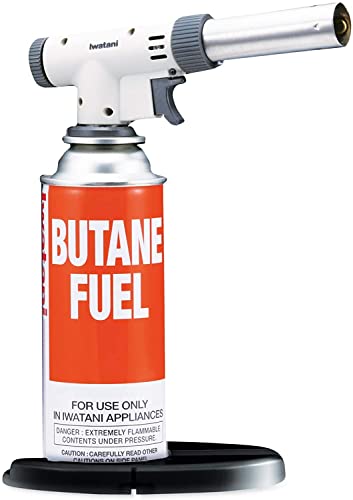
Iwatani top quality butane torch is backed by a 1-year manufacturer (butane not included)

PURE FLAVOR PRESERVATION – Experience ultra-pure, premium butane gas that keeps your food, cocktails, and cigars tasting authentic. Specially refined to eliminate unwanted odors and flavors, this culinary smoking fuel ensures every torch use delivers clean, untainted results for chefs and mixologists.

【Ultra-Refined Purity】TBTeek butane fuel undergoes triple filtration to remove 99.9% impurities, ensuring a clean burn for butane torch and kitchen blow torch devices. Prevents clogging, misfires, and residue buildup, extending the lifespan of your devices.
Real-World Performance Testing Results
While kitchen convenience and refueling accessibility shape your torch selection, actual cooking performance determines whether you’ll achieve professional results. Testing reveals propane torches deliver superior results for demanding tasks—they seared steaks in 14 seconds versus butane’s slower performance. You’ll notice propane maintains flame stability and cooking precision through consistent, even flames, while butane exhibits blotchy, dispersing flames that compromise accuracy during delicate work like brûléeing. Additionally, butane torches are particularly effective for caramelizing sugar on desserts, showcasing their versatility in sweet cooking tasks. For achieving a perfect caramelized top, it is crucial to thoroughly chill the custard before adding sugar.
Propane’s robust heat output excels in high-intensity applications, yet butane performs adequately for moderate-heat tasks like caramelizing sugar. You’ll consume butane faster when pushing temperatures higher since the fuel vaporizes at lower pressure. Burner design also affects results regardless of fuel type, so you shouldn’t assume all torches perform identically despite using the same gas.
Butane Torch Advantages for Home Cooking
Butane vs. Propane Torches for Cooking: Which Is Best?
Butane Torch Advantages for Home Cooking
Despite propane’s superior performance in high-heat applications, butane torches offer distinct advantages for home cooks who prioritize safety, convenience, and versatility. You’ll appreciate the built-in safety lock that prevents accidental ignition, while the hand shield design minimizes burn risks during operation. The flame control valve lets you adjust intensity precisely, reducing flare-ups when caramelizing crème brûlée or charring vegetables. You’ll find the compact, lightweight design perfect for kitchen storage—no bulky tanks required. Quick push-button ignition and easy refilling with standard canisters mean you’re ready immediately. The fuel gauge window prevents mid-task depletion. With flame temperatures reaching 2,370°F and consistent output, you can confidently tackle decorative crusts, toasted meringues, and browning gratins. For torch safety and practical home cooking, butane delivers reliable performance. Additionally, using a butane torch requires adherence to safety protocols to ensure optimal use and minimize risks. Notably, most professional butane torches include built-in automatic ignition systems to enhance convenience and safety during operation.
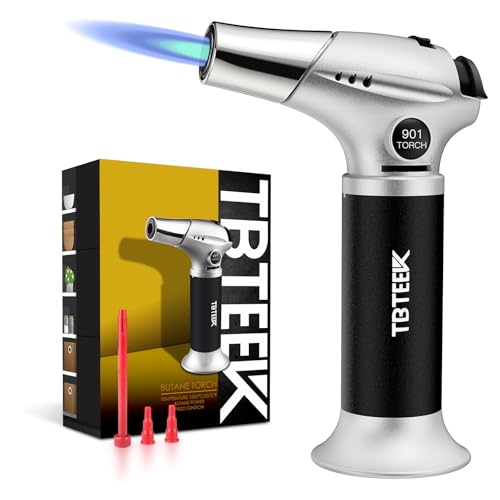
Safe and Sturdy Creme Brulee Torch: The safety lock could prevent accidental ignition. Also the ergonomic design provides comfort to your hand and keep away from the flame; the aluminum alloy material adopted makes it more resistant and sturdy, ensuring the longevity (Note: After each use, please turn the flame adjustment valve to the lowest level(OFF Position), and engaging the safety lock for indicent ignition)

Note: FOR SAFE SHIPPING BUTANE GAS ISN’T INCLUDED. Please strictly follow the inflation instructions in the manual for operation.

【Effortless One-Handed Operation】With the flame regulator and flame lock button easily in reach of your thumb, adjust and lock the flame with just one hand. Never again do you need to free up the other hand to assist.
Propane Torch Advantages for Professional Applications
When you’re orchestrating service in a high-volume kitchen, propane torches deliver the immediate heat control that separates precision cooking from inconsistent results. You’ll achieve uniform heat distribution across surfaces, preventing hotspots that compromise texture in roasted proteins and baked goods. The flame control adjustability lets you execute temperature-sensitive techniques—caramelizing, torching crème brûlée—with steady, repeatable output that electric alternatives can’t match. Additionally, propane’s suitability for oven safe applications makes it a versatile tool in the kitchen.
You’ll benefit from propane’s superior energy density, approximately 27 kilowatt hours per gallon, reducing daily operating costs while maintaining performance. Professional kitchens rely on propane’s reliability during power outages, ensuring uninterrupted service. The visible flame enables immediate shutoff, enhancing safety in demanding environments. Approximately 96% of professional chefs prefer propane for its controllability. Durable stainless steel components withstand rigorous use, delivering strong return on investment for commercial venues. Additionally, using specifically designed equipment can enhance the efficiency and safety of various culinary techniques.

Professional-Grade Culinary Torch: It evenly distributes the flame to create perfect sear marks in seconds, delivering professional-grade grilling results and professional-grade performance for both home and restaurant use.

Ideal for caramelizing creme brulee or roasting peppers

🔥【SAFETY FIRST】: Always check for gas leaks.For outdoor use only.This grill torch should be ignited with a small amount of gas. Slowly open the valve (no more than 1/8 turn). Point downward before lighting. Wear gloves at all times. Keep a fire extinguisher and water nearby. Remove the tank when not in use. If you encounter any issues with returns or any other concerns, please feel free to contact us anytime. We will provide you with a satisfactory solution. (Propane tank not included.)
Alternative Fuel Options and Heat Generation
Beyond propane’s established performance, you’ll encounter butane, MAPP gas, and acetylene as viable culinary torch fuels—each delivering distinct flame temperatures and combustion characteristics that fundamentally alter your searing speed and heat control. Butane reaches ~2,600°F, while MAPP gas climbs to ~5,300°F and acetylene peaks at ~6,300°F. This dramatic temperature variance directly impacts fuel performance and how quickly you caramelize surfaces.
Flame efficiency depends on achieving complete combustion—you’ll recognize an oxidizing flame by its dark blue, compact appearance. Butane torches often struggle here, producing yellow-tipped flames that signal incomplete combustion and unwanted off-flavors. Propane maintains superior flame efficiency at comparable temperatures. MAPP and acetylene excel in heat output but demand careful torch selection and ventilation protocols. Your choice hinges on balancing temperature requirements against practical flame efficiency and equipment compatibility. Additionally, understanding the importance of seasoning layers in cookware can enhance your overall culinary experience when using high-heat methods. Properly crafted culinary tools, including cast iron Dutch ovens, can withstand these extreme cooking conditions.
Selecting the Right Torch for Your Cooking Needs
How do you reconcile flame quality with practical constraints when choosing between butane and propane for your kitchen?
You’ll balance performance against convenience. Propane delivers superior heat intensity and consistent flame patterns for professional-quality browning, ideal if you’re searing steaks regularly. Butane offers straightforward canister replacement and compact storage, suiting occasional indoor use in temperature-controlled kitchens. Additionally, consider that using a torch provides precision similar to glazing a ham with an orange juice-based glaze, enhancing flavor in various dishes. A propane torch, such as the Bernzomatic TS8000, helps achieve the necessary temperatures for proper searing and flavor development.
Consider your climate. Propane maintains stable performance in cool environments; butane falters when stored cold. Evaluate torch maintenance tips—propane torches integrate permanently, requiring minimal upkeep, while butane canisters need periodic replacement.
Prioritize safety precautions regardless of fuel choice. Verify proper ventilation, maintain flame adjustment capability to achieve oxidizing blue flames, and store fuel appropriately. Your cooking frequency and available space ultimately determine whether propane’s reliability or butane’s convenience better serves your culinary needs.

Built-In Safety Lock for Uncompromised Protection:This propane torch is equipped with an convenient built-in safety lock—simply toggle the lock when the torch is not in use to completely prevent accidental ignition. Whether you’re storing it in a home cabinet, transporting it in a toolbox, or pausing mid-task, the safety lock eliminates risks of unintended flame activation, giving you peace of mind in every scenario
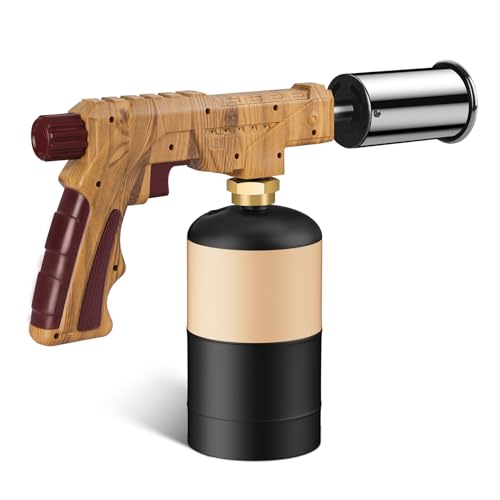
Safety Tip: After Use, be sure to remove the propane tank and store it.