Wondering whether to use a butane or propane torch for your dabbing? The choice mainly comes down to flavor preservation versus heating speed and reliability.
Butane offers a cleaner burn for better terpene retention, while propane heats faster and is more dependable in cold weather.
Keep reading to see which torch fits your style and sessions best.
Butane vs. Propane Torch for Dabs: Which One Should You Use?
Butane avoids nasty fuel impurities better than propane. Refined butane burns with a clean, blue flame that preserves your concentrate’s taste. Propane, on the other hand, contains ethyl mercaptan, a smelly additive that can ruin flavor. Its higher impurity content and sootier combustion leave behind residue, potentially clogging your equipment and compromising the purity of your dabs. For a pure, controlled experience that maintains flavor and protects your tools, opting for butane over propane is generally the better choice. This precision parallels how sous vide cooking uses specific temperature and timing to customize egg textures without fuel-related contamination. Similar to how digital probe thermometers provide accurate internal readings for candy syrups, choosing the right heat source is critical for achieving consistent results.

【Effortless One-Handed Operation】With the flame regulator and flame lock button easily in reach of your thumb, adjust and lock the flame with just one hand. Never again do you need to free up the other hand to assist.

【Effortless One-Hand Operation & Hands-Free Continuous Flame Mode】This premium butane lighter features an ergonomic grip and extended heat-resistant nozzle for one-handed ignition. Simply ignite the flame first, then press the lock button to activate continuous flame mode—freeing your hands for prolonged tasks like caramelizing desserts, soldering jewelry, or searing meats. No extra hands needed, making kitchen work and DIY projects more efficient and hassle-free.

[Portable Torch Lighter Gun] ravs cooking torch baking tools are made of quality metal material, which is more sturdy than plastic butane torches on the market. With an ergonomic design handle, the micro torch offers a great grip and and comfort. (Note: Pls use quality and pure refillable butane for torch refill)
Why Low-Temp Dabbing Preserves Terpenes (and Propane Doesn’t)
Low-temp dabbing preserves terpenes because they vaporize without burning within the range of 315 to 450°F. If you want to maintain flavor and purity, it’s crucial to keep your banger in that temperature window. After torching your nail red-hot, let it cool down for 30 to 60 seconds before dabbing. Rushing this process causes the temperature to spike above 600°F, instantly burning off those delicate terpenes. Propane torches heat your banger more quickly and intensely, making it tougher to stay within the optimal temp range. Without a careful cooldown, you’ll risk burning your concentrate, leaving behind black residue and harsh vapor instead of smooth, flavorful hits. Proper temperature control is essential for maximizing flavor preservation and avoiding scorch and waste.
Butane vs. Propane: Which Fuel Tastes Cleaner?
Both butane and propane can produce a clean taste when burned properly, but the main distinction lies in their combustion behavior. Butane torches are more prone to producing yellow-tipped flames if not adjusted correctly, which can introduce unwanted flavors. Maintaining a proper, fully oxidizing flame with butane requires careful tuning, otherwise, you might notice a harsher or more chemical undertone. Propane, on the other hand, tends to burn more stably, making it easier to achieve that clean, blue flame, though it often imparts a slightly smokier profile. Similar to restoring a cast iron skillet, where applying oil while the surface is still wet prevents flash rust from forming, addressing oxidation quickly on a banger helps preserve flavor clarity. Using a Dutch oven to cook chicken breast with vegetables and chicken stock can teach you how gentle, moist heat creates a clean, non-reactive environment that preserves natural flavors. For a similar effect, low cooking temperatures ensure that the banger heats evenly without causing hotspots that degrade flavor.
Residue buildup is a key factor for taste; many experienced dabbers believe butane leaves less deposit on the banger, resulting in less flavor contamination. Propane’s additives and quicker oxidation can accelerate residue formation, which may influence flavor over time. However, if you dial in the flame to be dark blue and fully oxidized, most users report no noticeable taste difference between the gases. Ultimately, your technique—such as flame adjustment and proper torch handling—has a bigger impact on taste clarity than the choice of fuel itself. The flame temperature is more crucial than total heat produced for achieving precise and clean heating.

2-Pack Total. Zippo Butane Fuel 75 ml each can. Made in USA

CLEAN BURN EVERY TIME – Ronson Butane Fuel provides a high-quality, odorless flame that burns clean and consistent. It reduces soot and smoke, making it ideal for lighting candles, kitchen torches, or daily-use lighters without leaving residue.

SUPERIOR PERFORMANCE: XIKAR Purofine Premium Butane Fuel is meticulously crafted to deliver unparalleled performance. Specially formulated for jet flame lighters, it ensures a consistent and powerful flame, making it ideal for lighting cigars.
Does Propane Heat Your Nail Faster? (Heating Speed Differences)
Propane heats your nail faster than other fuels because its flame reaches up to 3,600°F, about 1,000°F hotter than butane’s maximum. This higher temperature allows propane to transfer heat more quickly, significantly reducing your preheat time. Additionally, propane’s flame velocity is 40 cm/s, compared to butane’s 35 cm/s, providing an 8% increase in heating speed. Its combustion efficiency of 98.5% ensures consistent and rapid energy delivery, making the heating process more reliable. Propane’s denser molecular structure also enhances fuel efficiency, meaning you get more heat from less fuel. For heat absorption, propane’s intense heat penetrates deeper into quartz or titanium nails, warming thicker materials evenly and speeding up your dab readiness. These heating advantages are crucial because map gas and propane are more reliable across environments, making propane a better choice in cold conditions where butane underperforms below 15°C. To ensure accurate temperature readings when using an infrared thermometer on your nail, remember that high-emissivity surfaces are easier to measure accurately with a default setting of 0.95. This is similar to how a Dutch oven retains consistent heat for even cooking when using a stovetop method. Additionally, be aware that environmental factors such as ambient temperature and sweat can affect the accuracy of infrared thermometers, so measure your nail in a stable indoor setting for the most reliable result.

【RTTOOA'S PROPANE TORCH HEAD IS DISTINCTIVE】While other brands were still using traditional techniques, RTTOOA has completed three upgrades. 1. An ergonomic handle was adopted with a non-slip matte finish coating. This provides a more comfortable user experience. 2. The ignition system was improved, increasing the maximum power output from 8,000BTU to 10,000BTU. 3. An pressure regulator was built-in to ensure a 100% ignition success rate, and increase the stability of the flame. This significantly extends the product's lifespan

【High Intensity Propane Torch Head】Our Propane Torch produce super strong cyclone swirl flame, delivers up to 13000 BTU and heats-up over 3750℉ with ease for a variety of High-Heat applications.
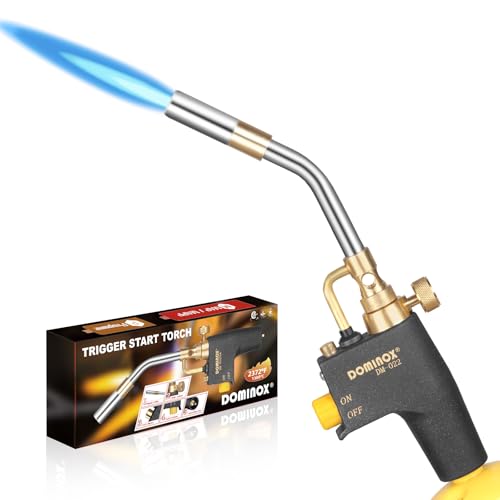
【Powerful Upgrade Propane Torch Head】DOMINOX propane torch head has been upgraded and optimized. 1. The surface of the propane torch handle adopts an anti slip frosted texture to optimize the user experience. 2. The ignition system has been upgraded, the welding torch head can ensure 100% successful ignition every time, improve fuel efficiency. 3. Our map gas torch head is equipped with a pressure regulator inside, you don't have to worry about using it upside down at all, turbo torch can be used upside down for up to 30 minutes.
Will Propane Damage Your Quartz Banger or Nail?
Propane can damage your quartz banger or nail if used improperly. Its high heat output pushes quartz into devitrification areas where the glass’s molecular structure changes, weakening it over time. Propane flames create hot spots that form microfractures, making the material more susceptible to cracks and breakage. You’ll often see black residue from propane’s dirty combustion on the outside of your quartz, which clouds its condition and requires more aggressive cleaning. This buildup can obscure damage and hide deterioration until it’s too late.
Safety is another concern; because propane heats so quickly and unevenly, it raises the risk of overheating your quartz beyond the safe 500–600°F range. Overheating accelerates wear and increases the chance of cracks, significantly shortening the life of your nail or banger. Plus, propane’s lack of temperature precision means you’re more likely to unintentionally damage your equipment during each session. All these factors mean that, while propane heats faster, it also causes your quartz to degrade more quickly, leading to more frequent replacements.
How to Avoid Damaging Your Banger (Heating Tips for Each Fuel)
Even heating is essential to avoid damaging your banger, regardless of the fuel you use. With butane, aim for about 20 to 40 seconds of heating, then allow a cool-down period of 30 to 60 seconds for low-temperature dabs. This ensures the quartz doesn’t experience thermal shock or develop cracks. When using propane, limit heating to 20 to 30 seconds and never let the quartz glow orange, which indicates excessive heat. Extend the cool-down to 60 to 90 seconds to further prevent damage. Always utilize the blue flame cone rather than the orange core for more precise heating, maintaining a consistent distance from the banger. Proper heat management like this helps preserve your banger’s integrity, no matter which fuel source you choose. For even greater control, consider adapting the slow-braising techniques used in Dutch oven cooking, which rely on gradual heat to prevent damage to the vessel. Using a consistent water bath temperature can also prevent thermal shock, similar to how a sous vide setup ensures stable heating for delicate materials.

✱Fuel Gauge and Safety Stopper - With a fuel gauge, a cooking torch help you better control the progress rate of making delicious food, and a broad base helps to prevent it from falling over. A detachable safety stopper can prevent accidental ignition. Professional Piezo Ignition Technology allows one-handed operation, making the operation of the torch easier and safer. A long nozzle can resist high temperatures, and extend the use time of the torch.

One-Handed Operation & Ergonomic Design: Featuring a single-handed operation design and a long-reach torch nozzle, the ergonomic design makes this lightweight torch easy to hold and ensures safe, time-saving cooking. It's the must-have helper for efficiently creating delicious meals in your own kitchen after a busy day. Makes cooking easier and safer.

Powerful DUAL Style Flame Torch: This butane torch lighter is available in both soft and hard fire modes! The hard fire mode concentrates the maximum flame for intense heat, while the soft-fire mode is better for saving butane gas. You are free to choose different flame patterns according to the situation
Which Torch Is Safer for Your Lungs and Your Home?
Both butane and propane produce no toxic byproducts when burned properly, making them relatively safe for inhaling dabs. However, inhaling unburned gas is hazardous because it displaces oxygen, which can lead to hypoxia, unconsciousness, or even sudden death from heart failure. To minimize risk, always torch your equipment near an open window with a fan pushing fumes outside, and never work in a sealed room. Store canisters upright, in a cool place away from sunlight to prevent leaks or explosions. Both fuels have a similar environmental impact because burning them releases CO2. If you smell gas at any point, stop immediately and ventilate the area to protect your lungs and your home.
Which Torch Works Best in Freezing Weather?
Propane works best in freezing weather. Its vaporization temperature is -44°F, meaning it remains gaseous and provides a steady flame even in extreme cold. In contrast, butane vaporizes only above 31°F; when temperatures drop below that, it liquefies and causes the torch to sputter out quickly. This makes propane much more reliable for cold-weather dabbing. However, butane can liquefy and lose pressure at its freezing point of -140°F, which is far lower than typical outdoor temperatures, so this is not a practical concern.
For safety, propane’s higher pressure—around 7.5 atmospheres—ensures a strong, consistent flow. However, you need to store tanks upright and away from heat sources to prevent accidents. Butane canisters, on the other hand, are more sensitive to cold. In low temperatures, their internal pressure drops, which can make them unpredictable or cause the torch to fail. Using propane eliminates these issues altogether. Overall, in freezing weather, propane is the clear choice for dependable dabbing.
Butane vs. Propane Torch: Which Is Actually Cheaper?
The upfront cost favors butane torches, with basic models priced around $30 compared to $75 for a propane setup. This makes butane the more affordable choice at the initial purchase stage. However, while propane tanks are usually cheaper per can, the lower initial price of butane setups makes them more accessible for casual users.
Fuel efficiency reverses the advantage. Butane torches burn slower, providing about 92% thermal transfer, which means you use less fuel each session. Propane torches, capable of reaching over 3,600°F, consume fuel much more quickly. As a result, propane tends to be more cost-effective only for high-volume, frequent heating needs. For light to moderate use, especially if your sessions are infrequent, butane remains the cheaper fuel option over the long run.

Anti-flare, brass-frame nozzle, for safety and flame control

For the safety reason, TBTeek butane torch lighter doesn't shipped with the butane tank.

Butane vs. Propane: The Final Verdict for Dabbers
Butane is the better choice for flavor-focused dabbers because it burns at a lower temperature, which helps preserve terpenes and prevents the harsh aftertaste that propane’s ethyl mercaptan additive can cause. Fuel purity is crucial; butane is refined to minimize impurities that could impact taste, whereas propane’s additive compromises your concentrate’s flavor profile. Additionally, butane offers superior heat control, enabling you to perform precise low-temperature dabs. This not only enhances flavor but also reduces the risk of thermal shock and chazzing in your quartz banger. In contrast, propane’s intense heat often exceeds what most setups require and can oxidize titanium components, shortening their lifespan. While propane may be your only reliable option in freezing environments—since butane won’t ignite below freezing—for indoor sessions, butane delivers a cleaner, safer, and tastier experience, making it the preferred fuel for flavor-conscious dabbers. For those who also use smart meat thermometers with ambient sensors, understanding the precise temperature of your cooking environment can further enhance the flavor preservation of your dabs by ensuring consistent low-temperature control.