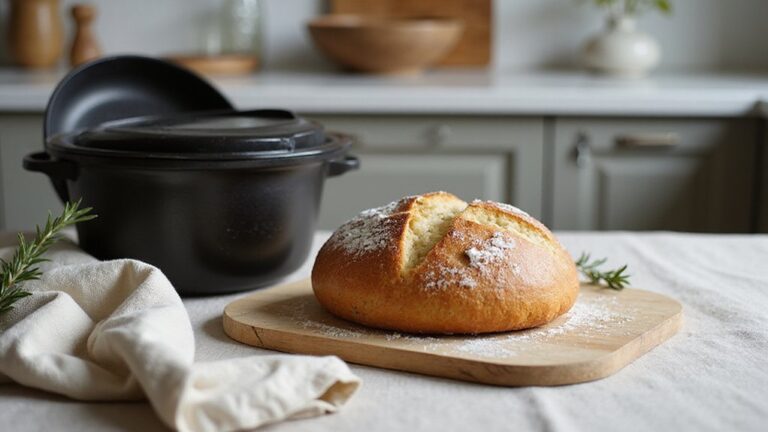
You’ll sear seasoned chicken breasts in a preheated cast iron Dutch oven until they develop a golden crust, then braise them in chicken broth with sautéed vegetables like potatoes, carrots, and onions. Maintain a gentle simmer at 180-200°F with the lid slightly cracked for 20-30 minutes until the internal temperature reaches 165°F. The moist, tender meat pairs perfectly with the rich pan sauce created from vegetable juices and broth. Uncover how each step transforms your stovetop into a restaurant kitchen.
Preparing and Seasoning Your Chicken Breasts
Before you season your chicken, you’ll want to start with proper preparation—pat your breasts dry thoroughly with paper towels to remove surface moisture, which guarantees the seasoning adheres properly and promotes browning in the Dutch oven. For uniform cooking, pound your breasts to even thickness.
Next, create your dry seasoning blend by mixing spices in a bowl first. Combine salt and paprika as your base, then add garlic powder, onion powder, and herbs like oregano or thyme. This foundation establishes your desired flavor profile. Apply approximately one tablespoon of seasoning per pound of chicken, pressing gently to assure adhesion.
Allow your seasoned chicken to rest for 15 minutes to two hours before cooking. Drizzle olive oil over the surface to help spices stick and enhance browning during Dutch oven cooking. Properly seasoning your chicken not only improves flavor but also contributes to building a resilient, non-stick layer on your cookware, enhancing overall cooking performance. Using cast iron skillets is also a safe choice, as they do not leach harmful chemicals during normal cooking.

All-Purpose Seasoning: Enhance your meals with Badia Complete Seasoning, a versatile spice blend perfect for meats, vegetables, soups, and more


Searing and Browning Techniques
Once your seasoned chicken‘s rested and you’ve got it prepped, you’re ready to sear—and this step’s where you’ll build that golden-brown crust that locks in flavor. Heat your cast iron Dutch oven to medium-high (375-400°F), then add neutral oil with a high smoke point. Let it shimmer for 1-2 minutes before placing dry chicken breasts in the pan. These searing techniques require patience: don’t move the chicken for 5-7 minutes on the first side until a bronze ring forms at the edges. Flip and sear the second side for 3-7 minutes. For browning tips, drizzle additional oil on chicken before searing and add cold butter after flipping to enhance flavor development. The meat’ll release easily when properly browned. Using a cast iron Dutch oven can also help with even heat transfer, ensuring that your chicken cooks uniformly and develops that desirable crust. Remember to preheat the pan properly to achieve best results before searing your chicken.
Building Your Cooking Liquid and Vegetables
Now that you’ve built that golden crust on your chicken, it’s time to create the braising environment that’ll keep it moist and flavorful. Start by arranging potatoes, carrots, and onions in a single layer on the Dutch oven’s bottom—these vegetables establish your flavor depth while distributing heat evenly. Pour ½ to 1 cup of chicken broth combined with butter or olive oil over them. This liquid ratio prevents drying without diluting flavors or extending cooking time excessively.
Your layering techniques matter: vegetables beneath the chicken allow them to absorb broth while releasing moisture upward. Season your liquid with paprika, garlic powder, salt, and pepper for foundational seasoning. The ingredient interactions between rendered chicken fat, vegetable juices, and aromatics create a rich sauce, while starchy potatoes provide natural thickening and enhance moisture retention throughout cooking. Additionally, bone-in, skin-on chicken thighs are recommended for optimal texture and flavor during this process. It’s essential to keep the distance-to-spot (D:S) ratio in mind when using a thermometer to check the temperature of your braising liquid to ensure accuracy.

One (1) 32 oz carton of Pacific Foods Organic Unsalted Chicken Bone Broth

Made in France using Emile Henry's proprietary Flame technology.

Chicken bone broth soup
Stovetop Simmering Process
Place your seared chicken breasts into the cold or room-temperature braising liquid you’ve prepared, then set the Dutch oven over medium-high heat until the liquid reaches a boil—this initial temperature gradient guarantees even cooking throughout the meat and prevents the exterior from toughening before the interior’s fully heated. Once boiling, immediately reduce heat to medium-low, maintaining a simmer temperature between 180°F and 200°F. Crack the lid slightly to release excess steam while retaining moisture. Your liquid choices—water, broth, or stock—fully submerge the chicken, promoting uniform heat distribution and creating a moist cooking environment. Monitor the simmer intensity by observing gentle, small bubbles rather than aggressive boiling. Adjust burner settings as needed throughout cooking to sustain consistent simmer temperature control without returning to a rolling boil. Additionally, it’s important to remember that the Dutch oven’s excellent heat retention helps create a perfect environment for cooking.

Even Heat Distribution Retention: This Umite Chef Dutch oven Made with heavy-duty enameled cast iron, ensures even heat distribution for perfect searing and slow cooking, locking in flavors. thickened walls lock in heat for slow braising, searing, and baking. Unlike thin pots that scorch food, this professional-grade Enameled cast iron potSuperior heat retention after preheating (allow 5-7 mins for even distribution). CRITICAL: Always cool naturally for 45+ mins before cleaning. Thermal shock (hot-to-cold contact) cracks enamel. USE TIP: Preheat 2-3 mins on medium-low only

Pre-seasoned 2-in-1 cast iron dutch oven: The 2-In-1 cast iron dutch oven pot with skillet lid has been burned with vegetable oil,(no synthetic coatings or chemicals). The shallow skillet that can be used as a lid

FEAST & BATCH COOKING - Designed for large families, holiday gatherings, and weekend meal prep, this 7QT Dutch oven comfortably serves 5–8 people. Its generous capacity easily handles family-size soups, large-batch stews, pot roasts, and whole chickens without overcrowding ingredients. Perfect for Thanksgiving recipes, holiday entertaining, and batch cooking with fewer rounds in the kitchen.
Checking Temperature and Serving
How do you know when your chicken breast has finished cooking? You’ll rely on temperature indicators and visual cues. Insert an instant-read thermometer into the thickest part of the breast, avoiding bone. Once it registers 165°F (74°C), your chicken’s safe to eat, as this temperature is critical to kill harmful bacteria. You’ll also notice the meat turns opaque with clear juices running when pierced.
After cooking, let your chicken rest for 5–10 minutes under loose foil. This resting period allows juices to redistribute, ensuring moisture retention. For serving suggestions, place your chicken on a heated plate and serve immediately above 140°F (60°C). Pair it with vegetables or sauce at similar temperatures. Refrigerate leftovers within two hours in airtight containers, and reheat to 165°F before consuming. Remember that using an oven-safe thermometer can help monitor the chicken’s temperature without needing to remove it from the pot.