You might wonder if you can refill a propane torch with butane, but it’s not recommended.
Propane torches are designed to handle higher pressure and specific fuel types, while butane operates at a much lower pressure.
Using the wrong fuel can lead to unsafe conditions or damage your torch.
Keep reading to understand why mixing fuels isn’t a safe idea and what you should do instead.
Can You Refill a Propane Torch With Butane? No, Here’s Why
Refilling a propane torch with butane is not possible and can be harmful. The main reason is fuel compatibility. Butane’s boiling point is around 31°F, meaning it stays a liquid in the reservoir under normal conditions. Propane, however, boils at -44°F, which allows it to vaporize easily and produce a consistent flame. Since butane remains liquid at typical operating temperatures, it won’t vaporize properly to sustain your torch’s combustion, resulting in weak or inconsistent flames. Even if you attempted to refill a propane torch with butane, the cartridge is not designed to handle the higher pressure of LPG, which is a significant safety hazard. Additionally, the valve design is not compatible. Propane torches use brass valves and O-rings specifically engineered for propane’s chemical properties. Butane’s different composition can damage these seals, causing leaks and clogs. Over time, this leads to increased wear and the risk of pressure spikes. For these reasons, it’s best to stick to the manufacturer’s recommended fuel. This is similar to how using a cast iron skillet preheated on the stovetop ensures even cooking and a crispy crust, as proper equipment is crucial for the intended result. Furthermore, butane’s cleaner burn helps preserve the delicate flavor profile of concentrates, unlike propane’s hotter flame. For accurate temperature measurement in cooking, using a digital probe thermometer provides reliable internal readings, just as using the correct fuel ensures safe torch performance. For safety and performance, don’t try to force a mismatched fuel into your torch.
Why Your Propane Torch Can’t Handle Butane (It’s the Pressure)
Your propane torch can’t handle butane because of the significant pressure difference. Propane operates at about 145 PSI at room temperature, whereas butane only produces around 35 PSI. That fourfold gap in pressure is fundamental. This pressure difference directly impacts how quickly heat transfers, as the flame temperature is more critical than total heat output for precision tasks. Similarly, maintaining your cast iron skillet’s performance relies on using kosher salt as a gentle abrasive for cleaning, rather than harsh chemicals that can damage the seasoning.
Propane’s high pressure creates the venturi effect needed for proper air and fuel mixing, which your torch depends on for a steady, strong flame. Butane’s lower pressure isn’t enough to generate this effect, resulting in a small, ineffective flame. Additionally, the nozzle design and air/fuel mixture are tailored specifically for propane. Without a regulator designed for higher pressure, using butane can cause insufficient flow, leading to poor combustion and potential overheating. The pressure mismatch isn’t just a minor detail—it’s a core reason your torch is engineered specifically for propane’s force, not the weaker output of butane.

✓ PROPANE BRASS ORIFICE FITTING SIZES - 3/8 flare M x 1/8 MNPT

Full Flow Soft Nose P.O.L. x .25 inch Female Pipe Thread

The Risks of Rupture, Leaks, and Flame Instability
Refilling a propane torch with butane significantly increases the risk of rupture, leaks, and flame instability. You are over-pressurizing a tank not designed to handle the pressures of different fuels, which can cause internal seals to blow out, O-rings to rupture, and the tank to fail catastrophically. Since the butane canister has not been tested for propane’s vapor pressure, you are risking structural failure. Leaks are common: valve components can become overstressed, seals can degrade from incompatible fuels, and fuel may escape persistently. The smell of butane indicates seal failure and a need to stop immediately. Flame instability often follows—clogged nozzles from impurities cause sputtering and weak ignition, while trapped air pockets from improper refilling lead to misfires. The impurities like oils and waxes in less-refined butane degrade the rubber seals, causing cracking and swelling that lead to dangerous gas leaks. Similar rust and old seasoning in cast iron must be removed thoroughly to avoid compromising the surface integrity. Always check for leaks before lighting; if you detect any, ventilate the area and retire the faulty unit to prevent the risk of explosion.
Stick to Pure Butane or Manufacturer-Approved Blends
Sticking to pure butane or manufacturer-approved blends is essential for your torch’s safe and reliable operation. These fuels are formulated to match your torch’s specific pressure requirements and valve design. Using alternative fuels like propane or MAP-Pro can cause immediate compatibility issues because they don’t provide the right pressure profile, leading to unstable flames or potential leaks. For example, butane’s efficiency drops below 15°C, making it unsuitable for cold climates, whereas MAP gas maintains performance across environments.
Always check your torch’s packaging or user manual to confirm which fuel types are approved. Ignoring this guidance might require you to use adapters, which can force nozzle mismatches and increase the risk of damaging your valve. Pure, refined butane ensures a steady flow, reduces nozzle clogs, and maintains optimal flame quality. Approved blends, when explicitly permitted, can also be used, but experimentation is risky and unnecessary.
Verifying the fuel type before purchase is a simple step that protects your equipment and keeps operation safe. Using the correct fuel not only prevents leaks and flame issues but also prolongs the lifespan of your torch. Always stick with what’s officially approved to guarantee clean, consistent performance.

✅ Premium Purity & Odorless: With 99.99% ultra-high purity, our butane fuel delivers a fine, clean, odorless flame, the ideal choice for gourmet cooking and outdoor lovers. Its clean-burning formula reduces residue buildup, extending the lifespan of your portable stove, torch head, and lighter.

PACKAGE CONTENT: 12 pack of 8oz butane fuel canisters

PREMIUM BUTANE GAS: Colibri butane is the cleanest available at 99.9994% purity. Produced to the exacting standards required by high-performance jet-flame lighters, resulting in fuel so pure it does not require repeated filter-ing, like other brands.
How to Refill a Propane Torch Safely
To refill a propane torch safely, start by turning the torch upside down so the fill valve is accessible. Use a tool to briefly press the fill valve, which helps purge out any old or contaminated gas. Continue releasing pressure until you hear no hissing sounds, as this step prevents mixing old fuel with the new, which can harm your torch’s performance. Additionally, ensure the torch is turned off and completely cool before starting the refill process to facilitate safer fueling. Unlike precise sous vide egg cooking, this process uses precise timing to avoid overfilling and dangerous pressure. Cast iron cookware demonstrates that heat retention is essential for even cooking and safety in many kitchen tasks. For best results, you should bring the torch to room temperature before starting, just as steaks perform better when reaching room temperature prior to searing.
Next, shake the butane canister for 10 to 15 seconds to ensure the fuel inside is well-mixed. Invert both the torch and the canister, then align the nozzle of the canister with the fill valve on the torch. Press down firmly and hold for 5 to 10 seconds, watching for fuel to escape from the top. If you notice liquid butane leaking outside the fill area, stop immediately to avoid overfilling and creating dangerous pressure buildup.
Allow the torch to sit and stabilize for 3 to 10 minutes before use. This waiting period lets any residual fuel settle. Finally, check for leaks by inspecting around the fill valve—if no fuel is escaping, your torch is ready for safe operation.
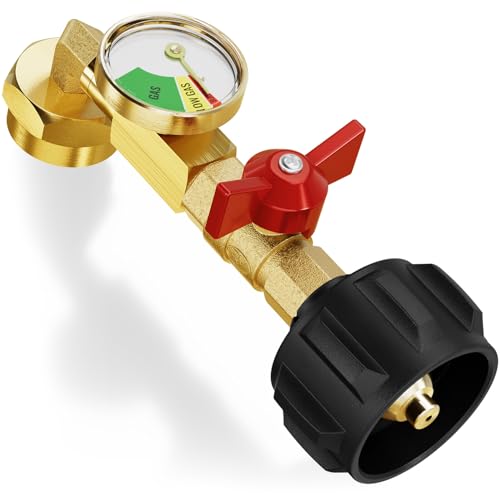
Effortless Refilling - The 90-degree elbow design facilitates smooth gas flow to smaller cylinders, allowing for easy attachment to large tanks and 16oz tanks, enabling refills in just one minute.

TOP QUALITY MATERIALS: Propane QCC1/Type1 Elbow Filling Adapters are built and tested to strict quality control standards, made of solid brass to ensure your safe leak-free operation and provide good weather resistance, safe and durable.

ITEMS INCLUDED – (2) Refillable EMPTY 1LB Propane Tanks, (2) Caps, and (2) Allen Keys - 2mm (5/64") in size