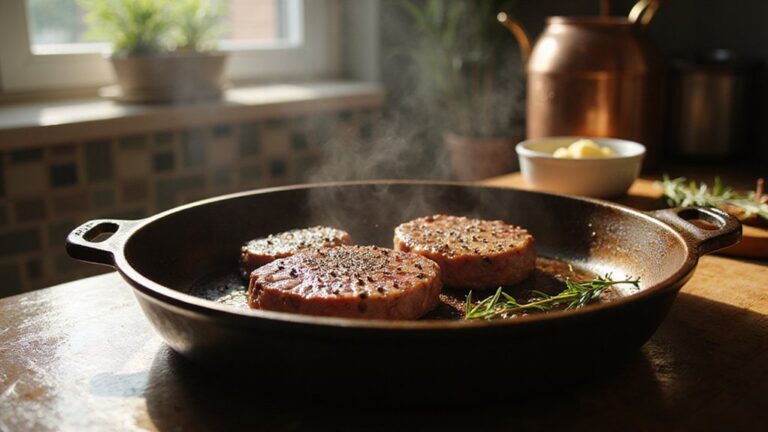
You’ll preheat your cast iron skillet on medium for two minutes, then add high smoke-point oil until it sizzles. Pour your cornbread batter—a balanced mix of cornmeal, all-purpose flour, baking powder, buttermilk, and melted butter—immediately reducing heat to prevent burning. The skillet’s superior thermal properties distribute heat evenly, creating crispy, caramelized edges while maintaining a tender crumb. Transfer to a 400°F oven until a toothpick yields one or two crumbs. Uncover how seasoning techniques and flavor variations elevate your results.
Why Cast Iron Is Perfect for Cornbread
When you preheat cast iron in the oven, you’re leveraging its exceptional thermal properties to create consistently baked cornbread from edge to center. Cast iron benefits include superior heat distribution that eliminates hot spots responsible for uneven baking or burning. This unique material is celebrated for its natural non-stick properties that improve over time with proper seasoning.
The material’s heat retention maintains ideal temperatures throughout the baking process, ensuring uniform rise and development. When your batter meets the preheated skillet’s hot surface, the sizzle creates signature crispy edges that seal in internal moisture, delivering textural contrast against the fluffy center. This combination of even heat conduction and edge searing produces results difficult to achieve in standard baking pans. The pan’s thermal mass sustains consistent cooking conditions, while its nonstick seasoning layer facilitates effortless removal while cornbread remains warm.
This culinary tool has been favored for generations, known for its superior heat distribution that can enhance cooking results in various recipes. Its versatility and durability make it an essential investment for any kitchen.

With divided compartments, this scone pan allows you to bake multiple loaves of bread at once, saving you time and effort in the kitchen. Create the most delicious chocolate fudge, cookies, cupcake, apple pie, brownies, muffins, and scones using this pre-seasoned cast iron baking pan

Homemade Favorites: The Lodge Seasoned Cast Iron Baker’s Skillet is designed for rolls, cobblers, breads, and everyday recipes fresh from the oven

6 IMPRESSION CORNSTICK PAN: Bake delicious, dunkable sides for soups and chilis.
Essential Ingredients You’ll Need
Because cast iron’s thermal properties demand a batter formulated with precision, you’ll need to master the balance of dry and wet components that distinguish exceptional stovetop cornbread from mediocre results.
Start with cornmeal types—yellow medium grind or white self-rising varieties form your foundation, paired with equal or lesser amounts of all-purpose flour for structural integrity. Incorporate baking powder as your primary leavening agent, typically 1–2 teaspoons per recipe, ensuring even rise and light crumb. Properly seasoning your cast iron skillet can enhance the non-stick properties and improve your cornbread’s cooking outcome.
Combine these with salt (½–1 tsp), sugar or honey (1–3 tbsp), and eggs for binding. Your wet ingredients—buttermilk or milk, vegetable oil (¼ cup), and melted butter—create the moisture and richness essential for tender texture. Adjust ratios based on your cornmeal’s absorption capacity to achieve ideal consistency for skillet cooking. Preheating the cast iron skillet until it’s hot is crucial for achieving the crispy, golden-brown edges that are characteristic of this type of cooking.

Built for the cook who keeps grandma secret cornbread recipe alive in a well seasoned skillet


Preparing Your Cast Iron Skillet
Three critical preparation steps—cleaning, seasoning, and preheating—determine whether your cast iron skillet‘ll produce evenly cooked cornbread with a golden crust.
Start by hand-washing your skillet with warm water and a scrub brush to remove food debris. For cast iron maintenance, dry thoroughly with paper towels to prevent rust formation. Apply a light oil coat to all surfaces, including the underside and handle.
Next, address skillet seasoning by preheating your oven to 200°F and heating the skillet upside down for twenty minutes. Gradually increase temperature to 400-500°F for one to two hours, allowing the oil to polymerize into a protective coating. Let it cool slowly inside the oven.
Finally, preheat your skillet on medium heat for two minutes on the stovetop. Add oil only when sufficiently hot—test by dropping butter to confirm it sizzles immediately, creating an ideal nonstick surface for cornbread.

TLC for your griddle cooktop: All you need to build a slick, easy-release surface that's protected from rust and easy to work with using Blackstone griddle seasoning and cast iron conditioner

YOUR NEW GO-TO SEASONING SPRAY: The Lodge Seasoning Spray is the perfect seasoning spray to maintain your cast iron cookware. It is made of 100% canola oil - no additives or propellants, to protect your cookware and enhance its finish.

RESTORE & PROTECT YOUR CAST IRON: Keep skillets, Dutch ovens, griddles, grill grates, and carbon steel cookware in peak condition with our premium cast iron skillets seasoning oil. Builds a durable protective layer that helps prevent rust, preserves the classic black patina, and maintains naturally nonstick cooking performance.
Mixing Your Cornbread Batter
You’ll want to combine your dry ingredients first—corn flour, all-purpose flour, baking soda, baking powder, sugar, and salt—in a large mixing bowl before introducing any wet components. Use a 1:1 ratio of corn flour to all-purpose flour for ideal texture and flavor balance.
Next, create a well in the center and add your beaten eggs, melted butter, and buttermilk. The buttermilk’s acidity reacts with baking soda, producing essential lift while tenderizing the crumb structure. It’s important to ensure your ingredients are at the same ambient temperature for optimal mixing results.
Your mixing techniques are critical here. Blend the batter until just combined—typically under one minute—using a spatula or wooden spoon with gentle motions. Overmixing develops gluten, resulting in tough, dense cornbread.
Your batter consistency should be thick yet pourable, with minor lumps indicating proper restraint. This approach guarantees tender, moist cornbread with excellent texture. Additionally, ensure your cast iron skillet is properly seasoned with oil to create a non-stick surface for the perfect cornbread.

CLASSIC MUFFIN MIX: Cornbread muffins are home-baked treats that are quick for families on the go

The secret to scratch-quality results—every time—is a custom blend of four Bob’s Red Mill premium flours expertly blended to create light, tender, moist baked goods

One 16 oz. box of Duncan Hines Dolly Parton's Sweet Cornbread & Muffin Mix
Stovetop Cooking Techniques
Now that your batter’s mixed to perfection, it’s time to shift focus to the stovetop method that’ll transform it into golden cornbread.
Preheat your cast iron skillet for several minutes on medium heat to guarantee uniform heat distribution. Once sufficiently heated, add high smoke point oil—grapeseed, vegetable, or lard work best—and observe when it sizzles freely, indicating readiness.
Pour your batter into the hot skillet and immediately reduce heat to prevent premature crust burning. Cast iron’s superior heat retention means lower settings often suffice compared to conventional pans. Different heat sources demand adjustments: electric stovetops require extended preheating, while gas burners offer immediate responsiveness.
Monitor cooking times carefully, avoiding sudden temperature fluctuations that cause uneven cooking. Maintain consistent, moderate temperatures throughout for ideal crust development without scorching.

100% GRAPESEED OIL BULK SIZE: Expertly crafted by The Olive Oil People using wine grape seeds imported from France

Achieving the Perfect Crust
Once you’ve mastered the stovetop fundamentals, the true test lies in executing the precise technique that transforms ordinary cornbread into a masterpiece with a golden, crispy exterior. Crust formation techniques depend on three critical variables: fat selection, batter consistency, and thermal management.
You’ll coat your preheated skillet with butter, lard, or tallow, ensuring complete coverage of both bottom and sides. Your batter should maintain ideal viscosity—thick yet pourable—to maximize the sizzle upon contact with hot fat. This immediate caramelization initiates rapid crust development. Remember that cast iron cookware can retain heat well, contributing to an even cook throughout the baking process.
Pour batter quickly and evenly into your 450°F skillet, then reduce heat to 375°F midway through baking. Perfecting texture requires avoiding overmixing, which compromises crispness. Additionally, the right choice of seasoning and aromatics can enhance the overall flavor profile of your cornbread. Your finished cornbread should achieve uniform golden-brown coloration throughout, yielding that coveted crispy exterior that distinguishes professional-quality cornbread.
Testing for Doneness
Determining when your cornbread’s reached ideal doneness requires precision—a critical step since carry-over cooking continues even after you’ve removed the skillet from heat. Insert a wooden toothpick into the center without touching the pan’s bottom; one or two clinging crumbs indicate doneness. Waiting for a completely clean toothpick results in overbaking.
For superior doneness indicators, use a thermometer probe inserted from the side, targeting 195°F to 200°F internally. This thermometer benefits approach delivers consistent, reliable results compared to visual assessment alone. Cast iron’s thermal mass intensifies residual heat, narrowing your testing window, so temperature verification becomes vital for preventing dry, crumbly texture. Searing the steak in a hot cast iron skillet also utilizes similar principles of heat distribution for optimal cooking results. Additionally, using soap can be helpful for cleaning your skillet after cooking, as it effectively removes stubborn food residue without damaging the seasoning protection of the cookware.
Combine both methods for thorough verification: initial toothpick check followed by thermometer confirmation guarantees accurate results every time.
Resting and Serving Your Cornbread
After removing your skillet from heat, you’ll want to let the cornbread rest in the pan for 10–15 minutes before attempting removal. This resting technique allows residual heat to complete cooking and stabilize the crumb structure, enhancing sliceability and preventing sticking. Additionally, using a natural cleaning technique can help maintain your cast iron skillet’s longevity.
During this period, you can loosely cover the cornbread to retain moisture without sealing it tightly, which risks sogginess. The heat helps loosen the edges, facilitating easier extraction.
After resting, invert the skillet onto a cooling rack to release the cornbread cleanly. Serve immediately while warm—heat intensifies butter and moisture perception. Top with a pat of melting butter for enhanced richness.
For serving suggestions, consider honey, whipped butter, or savory accompaniments. Baking at temperatures around 375–425°F helps achieve the perfect cornbread texture, so slice just before serving to preserve crumb integrity and prevent drying.
Popular Variations and Flavor Options
While your cornbread’s warm crumb structure provides the perfect foundation, you’ll find that customizing the base recipe opens up endless flavor possibilities. Sweet Savory blends balance 1–2 tablespoons of honey or brown sugar with sharp cheddar or jalapeños for complexity. Cheese Variations like cream cheese add moisture, while feta delivers briny tang. Herb Flavorings such as thyme or rosemary provide aromatic depth without overpowering the base. Meat Additions—crumbled bacon, diced ham, or chorizo—create heartier profiles. For a Spicy Kick, incorporate diced jalapeños or green chilies alongside cayenne pepper. Dessert Twists emerge when you fold in blueberries, chocolate chips, or dust with cinnamon and nutmeg. Each variation maintains proper ingredient ratios to preserve your skillet’s signature texture and rise.