You can make frittatas in stainless steel skillets, nonstick pans, baking dishes, or muffin tins without cast iron. Whisk eight eggs with cream, add cheese and pre-cooked vegetables, then cook using your preferred method: stove-to-oven, fully baked, or stovetop-only. Each cookware option delivers excellent results with proper heat management. The specific techniques and ingredient combinations you’ll employ depend on your chosen vessel and cooking approach.
Alternative Cookware Options for Making Frittatas
Because you’ll encounter various cookware in most kitchens, you’ve got several viable options for making frittatas beyond the traditional cast iron skillet. Stainless steel skillets work well with adequate oil and medium heat, though they require patience when releasing your frittata. Nonstick pans simplify flipping and need less oil, making them ideal for beginners. Regular frying pans with tight-fitting lids enable stovetop cooking by steaming the top without flipping. For oven-based cooking techniques, use oven-safe baking dishes that distribute heat evenly. Muffin tins offer convenient individual portions that bake quickly. Each alternative cookware option demands specific cooking techniques—from greasing requirements to temperature management—ensuring your frittata cooks evenly regardless of your chosen vessel. Select based on your cooking method preference. Additionally, creating a hot and humid environment similar to that used in sourdough baking can enhance the texture of your frittata. Remember that utilizing a durable finish can help to ensure better release during cooking, especially when using options like stainless steel.
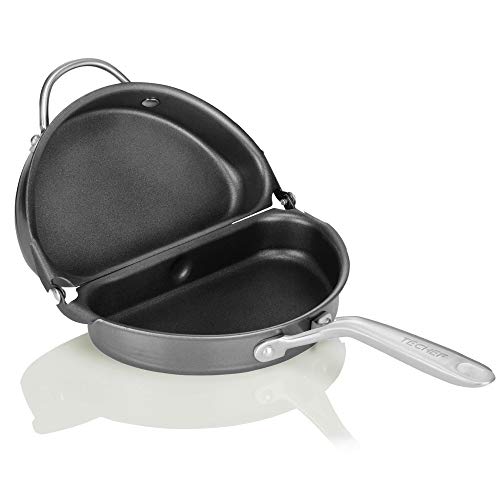
𝗕𝘂𝗶𝗹𝘁 𝗳𝗼𝗿 𝗣𝗲𝗿𝗳𝗼𝗿𝗺𝗮𝗻𝗰𝗲: Forged heavy-gauge aluminum (commercial-grade 3004) construction distributes heat evenly and prevents hot spots
Aluminum core construction heats quickly and evenly for perfect results every time. Use on the stovetop or in the oven up to 350°F.

Durable & Stylish Vitrified Steel – Made from high-quality vitrified steel, this frying pan offers exceptional hardness, resistance, and a bright-colored finish, ensuring long-lasting performance and a sleek look in any kitchen.
Essential Ingredients for a Perfect Frittata
The foundation of any successful frittata rests on understanding your ingredient ratios and quality choices. You’ll need eight large eggs whisked until blended, combined with one-third to one-half cup heavy cream or whole milk for richness. Add approximately one cup of shredded cheese—mozzarella, sharp cheddar, or crumbled feta each deliver distinct flavor profiles suited to your preferences.
You should pre-cook three to five cups of chopped vegetables like bell peppers, broccoli, mushrooms, or zucchini before incorporating them. Season with salt, black pepper, and red pepper flakes to taste. Fresh herb variations including basil, parsley, or dill enhance both appearance and depth.
Finally, you’ll need one to two tablespoons of butter or olive oil for greasing your cookware. These elements combine seamlessly, creating a cohesive, flavorful dish.
Stove-to-Oven Cooking Method
Once you’ve assembled your ingredients with the right ratios and quality choices, you’re ready to move into the cooking phase that transforms your mixture into a fluffy, set frittata. Start with stovetop techniques by preheating your oven-safe skillet over medium heat for 2–3 minutes, then add your egg mixture. Cook gently until edges set and lighten, typically 30 seconds to 5 minutes. Loosen edges with a spatula to prevent sticking. When the top’s nearly set but slightly wet, transfer your pan to a preheated 400°F oven—this standard oven temperature promotes puffiness without overbrowning. It’s important to ensure that the cookware’s temperature limit is not exceeded when using the oven. Bake 7–25 minutes depending on thickness, watching for puffed eggs and a jiggly center. Use two oven mitts for safe transfer, keeping the pan level throughout. To create a well-balanced dish, consider incorporating seasonal vegetables which can add both nutrition and flavor.

HEALTHY NONSTICK CERAMIC FRYING PAN: Cook without harmful chemicals. This PFAS-free, PTFE-free, PFOA-free, Lead & Cadmium-free frying pan ensures a safer, non-toxic cooking experience for you and your family. Metal utensils should not be used on ceramic cookware to prevent scratches

Health-Conscious, Certified Safe Coating - Features a premium ceramic nonstick surface that is PFOA-Free, PFOS-Free, and without harmful chemicals like lead and cadmium. Cook with confidence for you and your family.

Fully Baked Frittata Technique Using Baking Dishes
For a simpler, more hands-off approach than stovetop-to-oven cooking, you’ll want to prepare your frittata entirely in a baking dish. Start with proper baking dish preparation by lightly greasing your 9×13 inch casserole dish or 8-9 inch square pan with cooking spray, oil, or butter. Consider lining it with parchment paper for easy removal. The vacuum sealing technique can also help keep ingredients fresh before you start cooking.
Layer your pre-cooked vegetables and proteins in the dish, then pour your whisked egg and dairy mixture over them. Bake at 350°F to 400°F for 20-50 minutes until the internal temperature reaches 160°F. The frittata texture develops beautifully in the oven’s even heat, creating a tender, airy custard. This method is not only straightforward but can also be enhanced by using vacuum sealing techniques to store any leftovers, maximizing freshness and flavor. Allow 10-15 minutes cooling time before slicing to stabilize the texture and guarantee clean portions.

9x13 INCH: Includes (1) 9x13x2.75 inch glass baking dish with BPA-free plastic lid. This deep baking dish is essential to have in any kitchen as they are versatile in use from prepping to baking and storing.

Meet Your Daily Needs: DOWAN larger and deeper ceramic baking dish measures 15.6"L x 9.3"W x 3.1" H (including handle size)-135 OZ, sized perfectly for cooking lasagna, casseroles, chicken, roast, bread, pasta, beef, and more. Whether you're cooking a family dinner or serving food, this versatile casserole dish has got you covered.

NO WARP DURABILITY: This nonstick 9x13 cake pan features heavy-duty construction that resists warping and heats evenly to brown beautifully and help reduce hot spots
Stovetop-Only Frittata Cooking Without an Oven
An 8-to-10-inch nonstick or well-seasoned skillet becomes your essential vessel when you’re cooking a frittata entirely on the stovetop. After sautéing your fillings on medium heat, reduce the temperature to low or medium-low before pouring in your whisked egg mixture. To enhance the non-stick surface of your skillet, consider seasoning it further before use, especially if it’s not well-seasoned. Cover the pan immediately with a lid to trap steam and cook the top for 8-12 minutes until the eggs set completely. These stovetop techniques eliminate oven dependency, making frittata alternatives accessible regardless of your kitchen setup. Avoid stirring during cooking to develop a firm, sliceable texture. Check doneness by observing puffiness and gently shaking the pan—the center should remain slightly jiggly. Rest the frittata covered for 3-5 minutes, then slide it onto a cutting board for serving. Keep in mind that using a well-seasoned skillet is important to ensure even heating and prevent sticking.

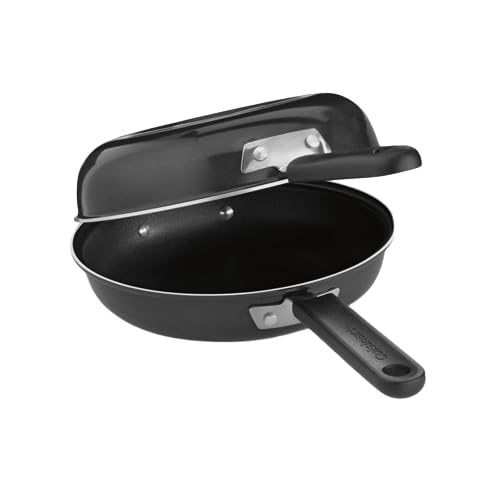
PREMIUM CAST ALUMINUM DUAL SKILLET: Heavy-duty, 10.2-inch double frying pan with a robust 5.5mm thick cast aluminum body. Ensures superior warp resistance and efficient, long-lasting cooking performance.

Durable & Stylish Vitrified Steel – Made from high-quality vitrified steel, this frying pan offers exceptional hardness, resistance, and a bright-colored finish, ensuring long-lasting performance and a sleek look in any kitchen.

Eco-friendly Classic Granite – Non-stick Granite Material, PFOS,PFOA free, our cookware ensures your daily cooking is always safer and healthier.
Vegetable and Protein Variations
Because frittatas adapt brilliantly to whatever ingredients you have on hand, you can customize yours with virtually any vegetable or protein.
For vegetable selection, you’ve got flexibility with year-round staples like onions, bell peppers, and spinach, or seasonal options such as asparagus in spring and kale in autumn. Remember that harder vegetables like carrots need fine chopping or steaming first. Combine varieties—zucchini, mushrooms, and peppers work well together—for texture and flavor diversity. Additionally, ensure that your cooking equipment maintains measurement accuracy to avoid undercooked or overcooked results.
Regarding protein choices, eggs form your base, typically four to ten per frittata. Boost protein by adding cottage cheese (½ to 1 cup), ground meats like turkey or beef (8 ounces or more), bacon, or cheese varieties such as cheddar or feta (¼ to ½ cup). Layer your proteins strategically: blend eggs with cottage cheese and cooked vegetables, then fold in cheese before finishing. This approach creates a balanced, filling dish with 13-15g protein per serving. Additionally, consider using a distance-to-spot ratio to ensure you’re cooking at the right temperature for optimal results.
Cheese and Herb Flavor Combinations
While vegetables and proteins form your frittata’s foundation, cheese and herbs elevate it into something memorable. You’ll achieve the best results by matching cheese pairing with your herb intensity level. Sharp cheeses like mature Cheddar and Parmesan withstand robust herb combinations without getting overpowered, making them perfect for oregano, thyme, and sage. Conversely, creamy cheeses like ricotta and goat cheese pair best with mild to moderate fresh herbs such as dill and chives. Feta’s saltiness balances Mediterranean herb mixtures effectively. For bold flavor presence, use 25 grams each of parsley, dill, and basil. Moderate applications of two tablespoons total work well for balanced profiles. Layer cheese throughout your egg mixture rather than just topping for prime flavor distribution and melting. This flavorful combination works particularly well when prepared in a versatile cooking vessel such as a Le Creuset Dutch Oven. Additionally, for a quick dessert option, consider incorporating Dutch Oven Peach Cobbler for a sweet finish to your meal.
Practical Tips for Success
Your frittata’s success hinges on mastering a few fundamental techniques that transform basic ingredients into a perfectly cooked dish. Start by heating oil gently on medium heat for five minutes to create an even cooking surface. Use a spatula to distribute your whisked egg mixture evenly across the pan with one to two minutes of gentle stirring. These frittata tips guarantee consistent results every time, as achieving the right temperature gradients is crucial for even cooking.
Monitor your cooking techniques carefully as the bottom sets. Release the frittata’s edges with your spatula before flipping, then slide it onto a plate and invert it back into the pan. For oven-safe skillets, use the broiler for two to three minutes when the top remains runny. Check for a golden-brown bottom and firmness to touch. Internal temperature should reach 160 degrees Fahrenheit for complete cooking. Additionally, using a cast iron skillet can enhance heat retention, providing a superior cooking experience for your frittata.

Mess free cooking: Make two fluffy omelets in just minutes without flipping mishaps or dirty frypans, giving you a faster and cleaner cooking experience.

【Non-Stick High-Quality Material】This double-sided flip pan is made from durable high-quality iron with upgraded water-based nonstick coating for easy food release and effortless cleanup. Non-toxic, healthier and truly non-stick.

HEALTHY CERAMIC SKILLET - Made of natural ceramic, free of PFOA, PTFE, PFAS, lead, and cadmium, ensuring safety and health. This skillet does not produce toxic fumes even when overheated, and no coating will come off into your food.
Serving and Storage Recommendations
Once your frittata emerges from the oven with a golden-brown finish, you’ll want to serve it while it’s still hot for peak flavor and texture. Let it cool slightly before slicing into wedges to help it set properly.
For portion control and meal planning, cut your 9-inch frittata into nine equal pieces. You can adjust slice sizes based on whether you’re serving appetizers or main courses. Garnish with fresh herbs like parsley or basil, then pair with light salads or crusty bread. Ensuring that you cook the frittata to the proper temperature is essential for meat safety and enjoyment.
Store cooled frittata in airtight containers at 40°F or below. Consume within 3-4 days for maximum safety. Freeze portions individually for up to two months. Reheat gently in a 325°F oven to preserve texture, avoiding the microwave when possible to prevent rubbery eggs.