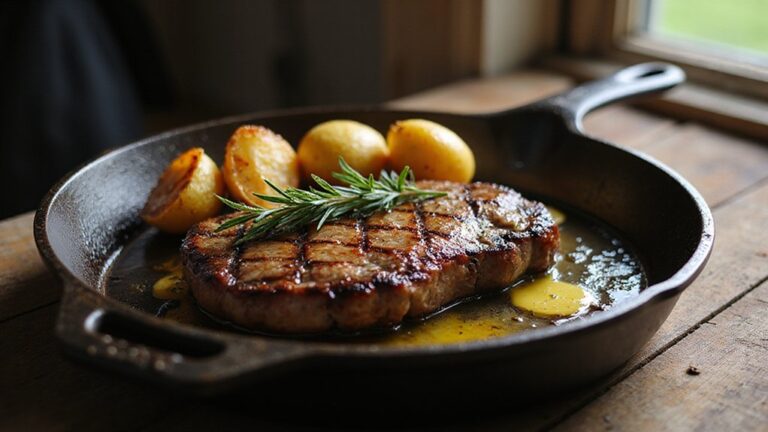
Yes, you can season cast iron with beef tallow, and it’s one of the best options available. Rendered from cattle suet, beef tallow contains 42–43% saturated fats that resist rancidity and provide a 400°F smoke point ideal for polymerization. Its low moisture content prevents rust while creating durable, visually superior patinas compared to other fats. You’ll apply thin layers through heating, building resilient non-stick surfaces that enhance your cooking experience. The specifics of proper application technique will reveal why this traditional method remains superior.
What Is Beef Tallow and Why It Works for Cast Iron
Rendered from suet around cattle kidneys and loins, beef tallow is pure fat that’s been melted and purified to remove impurities and moisture. You’ll find it contains 42–43% saturated fats and 50–52% monounsaturated fats, making it compositionally ideal for cast iron seasoning. Searing chicken in a cast iron skillet before roasting enhances the flavor and texture, similar to how beef tallow improves the seasoning process.
Beef tallow’s origins as a traditional seasoning agent stem from its exceptional stability. The dominant fatty acids—palmitic, stearic, and oleic—create a durable polymerized layer that resists oxidation and rancidity. Its waxy consistency at room temperature, combined with a melting point of 40–50°C, allows you to apply it smoothly while ensuring it solidifies into a protective coating.
You’ll appreciate beef tallow benefits like its low moisture content, which prevents rust, and its neutral flavor profile, which won’t transfer unwanted tastes to your food. These properties make it an effective, cost-efficient choice for cast iron maintenance. Additionally, applying a light layer of oil before storing the skillet can enhance its seasoning and prolong its lifespan.
The Science Behind Fat Polymerization and Seasoning
When you heat beef tallow above its smoke point, you’re triggering a fundamental chemical transformation that converts liquid fat into a hard, protective coating on your cast iron. This polymerization process involves free radicals—unstable molecules released during heating—that initiate crosslinking between fat molecules, forming resilient polymer chains. These chains create a tough, bonded film directly on the iron surface.
The oil molecular structure determines seasoning quality. Beef tallow, composed primarily of saturated fats, polymerizes effectively but produces a softer layer than polyunsaturated drying oils. However, tallow’s lower smoke point requires careful temperature management to avoid burning. Proper seasoning involves heating the oil to its smoke point so it bonds chemically with the cast iron, forming a durable protective layer. Additionally, maintaining the skillet’s proper cleaning routine is essential to ensure optimal seasoning performance.
Oxygen accelerates polymerization, while thin application layers prevent sticky residue. Multiple seasoning cycles build progressively stronger coatings, and slow cooling allows peak adhesion to your pan’s surface.
Step-by-Step Guide to Seasoning Your Cast Iron Skillet
Now that you understand how beef tallow’s molecular structure creates a durable seasoning layer through polymerization, it’s time to put that knowledge into practice. Start by thoroughly cleaning your skillet with warm soapy water and drying it completely. Next, apply a thin layer of beef tallow using oil application techniques—wipe on sparingly and buff away excess with a lint-free cloth to prevent sticky residue. Coat all surfaces including the interior, exterior, handle, and bottom.
Your seasoning techniques should involve heating the pan on medium stovetop heat until the tallow smokes slightly for 10-20 minutes, or use your oven at 450-500°F for approximately one hour. Regular maintenance helps preserve the seasoning, which is important for longevity. Allow the pan to cool naturally before wiping away any remaining residue. Repeat this cycle 2-3 times to build a resilient coating, as consistent seasoning techniques help develop the non-stick surface over time.
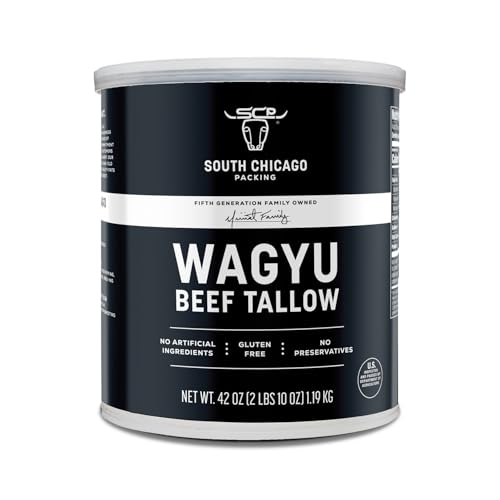
100% Pure Wagyu Beef Tallow: Made from premium, high-end Wagyu cattle, this single-ingredient cooking fat delivers exceptional flavor and performance with no fillers, additives, or blends

100% Pure Beef Tallow For Cooking - Single ingredient, butter-like consistency, no preservatives, clean cooking from Illinois pasture to plate. Non-GMO, food-grade, gluten-free tallow rendered nose-to-tail for more depth of flavor and less animal waste. Embrace ancestral cooking with fat that fuels and nourishes.

✅ 100% Grass-Fed & Grass-Finished — Crafted from cattle raised exclusively on open pastures, our organic beef tallow cooking is rendered from the highest quality fat—no grains, no shortcuts, just clean, nutrient-rich goodness
How Much Beef Tallow Should You Use
Getting the quantity right is essential to successful cast iron seasoning, and you’ll want to apply roughly 1 to 2 tablespoons of beef tallow for an average-sized skillet. You’ll achieve an even coating by spreading this amount across the entire cooking surface, including sides and handle areas. The critical step is wiping off excess tallow after application—this prevents sticky buildup during baking and guarantees proper polymerization. For maintenance seasoning between cooking sessions, you’ll need only a small amount, less than 1 tablespoon, applied as a thin smear. Multiple thin layers outperform one thick application, creating durable protection without gummy texture. It’s important to note that like lard, beef tallow can also create a hard, non-stick surface when properly used. Adjust beef tallow amounts slightly for larger pans to maintain complete coverage without pooling. This method helps in creating a natural, healthy, and long-lasting non-stick surface that improves with use and care.
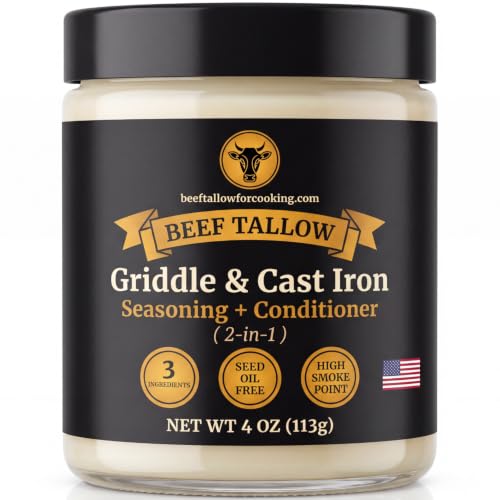
THE SEED OIL FREE FORMULA — Golden Render is the world's first seed oil free, tallow-based griddle seasoning & cast iron conditioner. While others use soy, shortening, grapeseed, sunflower or canola, we use just 3 clean ingredients: beef tallow, avocado oil & beeswax.

USDA INSPECTED & MADE IN USA - Produced in a USDA-inspected facility (EST. 1185) in the USA to ensure quality, safety, and consistency you can trust.
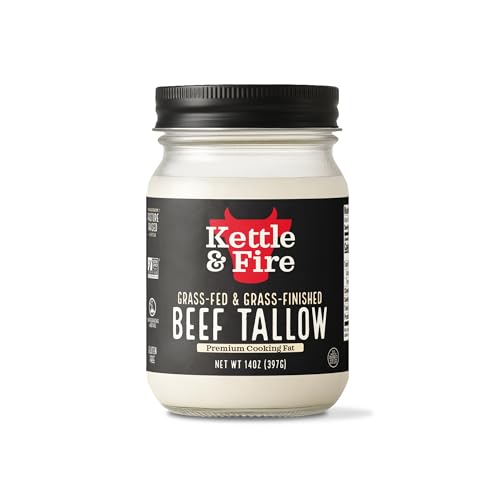
Sourced exclusively from grass-fed and grass-finished cattle, delivering a pure, premium cooking fat with a rich, clean flavor ideal for everyday cooking.
Temperature and Timing for Optimal Results
Once you’ve applied the proper amount of beef tallow and wiped away the excess, controlling the heat becomes your next priority to transform that thin coating into a durable seasoning layer. You’ll achieve the best results by maintaining temperature ranges between 450°F and 550°F in your oven. Your timing protocols should follow a standard 60-minute bake per layer, allowing full polymerization of the tallow onto cast iron’s surface. Additionally, be cautious when using cast iron on certain surfaces, as a smooth bottom can help prevent scratches. For gradual seasoning, start at 250°F–350°F, then raise to 500–550°F for an additional hour. After baking, let your pan cool gradually inside the oven to enhance layer adherence and prevent thermal shock. Proper seasoning also creates a resilient, non-stick layer that improves with use and protects against rust. Repeat this cycle 1–3 times for maximum durability and non-stick quality.
Building Multiple Layers for Superior Non-Stick Performance
While a single coat of beef tallow will provide basic protection, you’ll achieve superior non-stick performance and durability by building multiple thin layers through repeated seasoning cycles. At least six coats develop a hardwearing, non-stick base with visible sheen. Your layering techniques matter notably—apply beef tallow sparingly, then wipe away excess to guarantee uniform coverage that prevents pooling and flaking. Each baking cycle initiates polymerization, progressively hardening your coating. Bake upside down at or slightly above tallow’s smoke point, then cool gradually inside the oven to consolidate adhesion. These seasoning benefits compound over time: multiple thin layers create interlocking formations that bond chemically with iron, delivering a smooth black patina resistant to wear and dramatically improving food release compared to single-coat applications. Utilizing beef tallow in the seasoning process can enhance your cooking experience as it creates a more robust surface for preparing flavorful meals, resulting in an effective preheating method that is essential for achieving a superior sear.

Purely Delicious Wagyu Tallow: Elevate your culinary creations with our First Light Farms Wagyu Beef Tallow! Sourced from 100% grass-fed and finished Wagyu beef, this premium cooking oil offers a rich flavor and smooth texture, perfect for sautéing, frying, or baking.

100% Pure Single Ingredient: This product contains only rendered beef fat sourced exclusively from cattle in the USA. It is free from additives, preservatives, artificial fragrances, and fillers, providing a clean and authentic tallow experience.
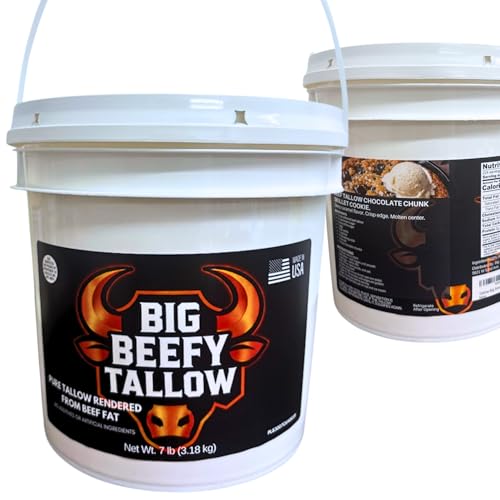
Beef Tallow vs. Other Oils and Fats
Beef tallow’s superiority as a seasoning medium becomes apparent when you compare its heat stability, polymerization efficiency, and chemical composition against common alternatives. You’ll find that tallow’s 400°F smoke point greatly outperforms butter and extra virgin olive oil, enabling proper polymerization without degradation. Unlike seed oils prone to oxidation and free radical formation, beef tallow resists rancidity due to its saturated fat composition. Its beef tallow benefits extend beyond seasoning—you can leverage it for cooking applications where high heat matters. The natural, additive-free profile eliminates industrial processing concerns present in vegetable oils. Lard ranks comparably, yet tallow forms more durable, visually superior patinas. You’re investing in a time-tested fat that delivers functional non-stick surfaces and authentic culinary compatibility with cast iron cooking. Additionally, cooking with cast iron can increase iron content in your food, providing extra health benefits for those in need of more iron. In addition to its seasoning capabilities, tallow contributes to cast iron’s longevity, making it an excellent choice for maintaining your cookware over time.

Traditional Cast Iron Care: Beef tallow, grapeseed oil, coconut oil, and beeswax come together in a solid conditioning blend made specifically for seasoning and maintaining cast iron cookware.

NATURAL INGREDIENTS: Made with a premium blend of beef tallow, beeswax, and castor oil for optimal cast iron seasoning and maintenance

Daily Care and Maintenance of Your Seasoned Skillet
Now that you’ve established a superior seasoning foundation with beef tallow, maintaining that hard-earned patina requires a disciplined daily care routine. Immediately after cooking, wash your skillet with warm water and gentle dish soap, then dry thoroughly with towels to prevent oxidation. For stuck-on food, simmer water for 3-5 minutes, then scrape gently once cooled. Remember to avoid cold water on hot steel, which prevents cracking and damage to your skillet. Avoid prolonged soaking, which compromises the seasoning layer. Apply a light oil coating post-cleaning for continued protection. Store your cookware in cool, dry conditions with parchment between stacked pieces. This routine cleaning protocol directly extends cookware longevity while preserving the beef tallow seasoning you’ve carefully built. The most important steps are drying completely and oiling after every cleaning to keep the skillet in optimal condition. Consistent maintenance sustains your investment’s performance and nonstick properties indefinitely.
Restoring and Refreshing Your Seasoning Over Time
Even with meticulous daily maintenance, your cast iron skillet‘ll eventually show signs of wear—rust spots, dull patches, or flaking seasoning—that require restoration. Rust is likely to develop when the protective seasoning layer is missing or damaged, leading to potential weakening of the pan over time.
Restore heavily compromised skillets by soaking them in a 2:1 hot water and distilled white vinegar solution for up to one hour, then scrubbing with steel wool to remove rust and old layers. Thoroughly wash with soap and hot water, then dry completely.
For rejuvenating seasoning frequency, apply a thin layer of beef tallow after each cooking session. Heat the oiled skillet until it reaches the smoking point to polymerize the fat. Repeat this process multiple times to build durable layers. Additionally, consider using a vinegar spray solution to tackle rust before resorting to more intensive methods.
These maintenance tips prevent rust development and strengthen your skillet’s non-stick surface, extending its lifespan considerably.

All-Purpose High-Heat Cooking Fat: 100% pure rendered Angus beef fat with a high smoke point for everyday searing, pan-frying, deep frying, roasting, sautéing, and crispy beef tallow French fries and hash browns.
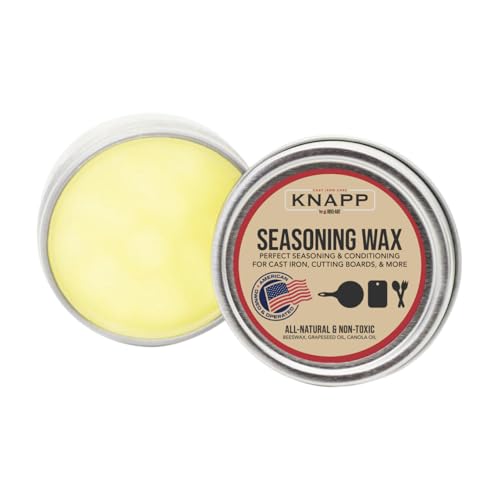
Perfect Seasoning and Conditioning: Cast Iron Seasoning Blend of Oil and Beeswax. Perfectly Seasons and Conditions Cast Iron Pans, Skillets, and Other Cookware. Our Formula Protects and Maintains Your Cast Iron Better Than Any Other Product on the Market.

BOLD STEAKHOUSE-STYLE FLAVOR: Bring rich, savory flavor to steak and vegetables with a Cast Iron Steak Seasoning featuring brown butter, herbs, garlic and onion for a distinctive steakhouse-inspired profile