

You’ll master consistent, restaurant-quality cooking results with a Le Creuset enameled cast iron skillet because its dense metal composition and superior heat retention eliminate temperature fluctuations that compromise home cooking. The smooth enamel coating prevents rust, requires no seasoning, and works seamlessly across all cooktop types. Preheat to medium heat, position food strategically, and you’ll achieve uniform browning without hot spots. The dual-handle system and curved sides enhance control and stirring ease. Uncover how proper maintenance and specific techniques release this skillet’s full potential across countless dishes.
Superior Heat Distribution and Retention
Cast iron’s thermal superiority stems from its dense metal composition, which absorbs and stores heat with exceptional efficiency. You’ll experience remarkable heat retention that maintains consistent cooking temperatures throughout your preparation, eliminating temperature fluctuations that compromise dish quality.
When you use your Le Creuset skillet, the enameled surface distributes heat uniformly across the entire cooking surface, preventing hot spots that cause uneven browning. This even heat distribution guarantees you’ll achieve consistent searing across all areas simultaneously. The metal’s lateral heat transfer capabilities mean you’re getting reliable cooking consistency from edges to center. Moreover, using your skillet for techniques like vacuum sealing rice ensures optimal freshness retention for ingredients, so you’re always prepared with quality options.
You’ll notice residual heat remains stable from stovetop to table, keeping your food warm during service. This superior thermal stability allows you to reduce temperature adjustments during extended cooking sessions, giving you precise control without rapid cooling between ingredient additions. However, for dishes involving cooking acidic foods, consider using stainless steel or enameled cast iron to avoid compromising the skillet’s seasoning.

Enhanced Cooking Experience: Carote enameled cast iron braiser boasts excellent heat conduction & retention. Its thick cast iron body and lid condensation lock food flavor. Ideal for searing, roasting and braising.

Moisture-Locking Lid: The Lodge Essential Enamel Braiser features a moisture-locking design ideal for broiling, braising, baking, or roasting
Enameled Cast Iron Construction Benefits
Beyond the thermal advantages you’ve already unearthed, the enameled construction of your Le Creuset skillet delivers protective benefits that fundamentally distinguish it from traditional cast iron cookware. The enamel coating seals the porous cast iron surface, preventing rust and corrosion from acidic ingredients and moisture exposure. You’ll appreciate that no seasoning maintenance is required—the smooth enamel interior provides natural non-stick properties while resisting staining and odor absorption.
Hand washing your cookware is vital for maintaining its pristine condition and durability. The multi-layer enamel offers exceptional durability, protecting the iron core from degradation during heavy use. Your skillet’s construction uses eco-friendly materials and handcrafted processes that guarantee longevity. Available in versatile color options, your Le Creuset skillet remains non-reactive with acidic foods, enabling confident cooking across diverse ingredients. Cooking with cast iron can also increase the iron content of food, offering added health benefits. Dishwasher-safe convenience further simplifies your kitchen routine, making enameled cast iron superior to raw alternatives.
Compatibility Across All Cooktop Types
Your Le Creuset enameled skillet delivers exceptional versatility across every cooktop type you’ll encounter in modern kitchens. For induction testing, you’ll confirm compatibility by locating the coil symbol on the base or using a magnet test—it’ll stick securely if compatible. On gas and electric cooktops, the skillet’s flat, heavy base guarantees stable contact and even heat distribution. With ceramic and glass cooktops, you’ll benefit from the smooth enamel finish that minimizes scratching; simply lift rather than drag the skillet to protect both surfaces. When using your skillet on glass cooktops, be aware that some manufacturers recommend avoiding cast iron to prevent potential damage.
Across all cooktop types, maintain low to medium heat settings to preserve your enamel coating and prevent sticking. Avoid rapid temperature fluctuations that could cause cracking. This approach maximizes your skillet’s longevity while delivering consistent cooking performance. Additionally, using the right thermometer type ensures accurate cooking temperatures for meat, enhancing your dish’s success.

Versatile Cooking Skillet: The Lodge Cast Iron Skillet is a multipurpose, everyday cooking pan that excels at searing, sautéing, baking, frying, and campfire meals

Secure Dual Assist Handle: The Lodge Seasoned Cast Iron Dual Handle Pan features dual assist handles for a secure grip when moving this cast iron skillet
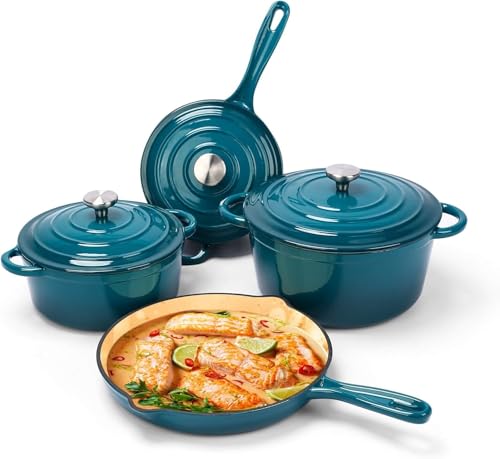
[Complete 7-Piece Set for Versatile Cooking] - This enameled cast iron cookware set includes a 4.8-quart large Dutch oven with lid, 2.8-quart small Dutch oven with lid, 2-quart sauce pan, and a 10.25-inch skillet. Perfect for a range of cooking techniques, from sautéing and grilling to slow cooking, roasting, and baking—an ideal gift choice for home chefs!
Mastering Even Cooking Performance
Now that you’ve confirmed your skillet’s compatibility with your cooktop, you’re ready to release its full potential through proper heat management. Preheat your skillet on medium heat for ideal thermal distribution before adding food. This foundational step guarantees uniform browning across the cooking surface without developing hotspots. Additionally, ensure your skillet is properly seasoned cast iron, as this creates a natural nonstick surface that enhances your cooking experience.
For even cooking tips, maintain consistent medium heat throughout your cooking process. The skillet’s enameled construction and thick cast iron base naturally retain and distribute heat evenly, so avoid excessive temperature adjustments. It’s also important to ensure that you preheat the pan as this is key to preventing food from sticking and achieving optimal cooking results.
Position food strategically across the wide cooking surface to maximize heat exposure. Use the sloped sides to facilitate stirring and flipping, promoting ingredient rotation for balanced cooking. This methodical approach ensures consistent golden-brown results whether you’re searing proteins or sautéing vegetables.

Cast iron contraction retains heat well. Interior does not alter flavors or absorb odors.

【Premium Enameled Cast Iron】Crafted from heavy-duty enameled cast iron,this 10 inch skillet offers superior durability, excellent heat retention, and even heat distribution. Ideal for long-lasting daily use, this frying pan is perfect for searing, sautéing, baking, grilling, and roasting a variety of dishes.

[Enameled Cast Iron Skillet Set] - Complete enameled cast iron frying pan set includes: 8" ceramic cast iron skillet (perfect for omelets) 9.5" enameled fry pan (ideal for stir-fry) 11.5" deep cast iron skillet (for family meals), Versatile cookware set replaces multiple kitchen pots
Cleaning and Maintenance Best Practices
Proper care after cooking directly determines your skillet’s longevity and performance. Allow your skillet to cool completely before cleaning to prevent thermal shock and enamel damage. Use warm water with mild dish soap and soft sponges for routine cleaning techniques. For stuck-on food, soak your skillet for 15–20 minutes, then simmer with baking soda for 8–10 minutes before gentle scrubbing. Additionally, for stubborn residue removal, a notched scraper can be effective without damaging the enamel.
Essential maintenance tips include drying your skillet thoroughly before storage to prevent moisture damage. Avoid metal sponges and abrasive cleaners that scratch enamel. Don’t scrub off the beneficial patina that naturally develops—it enhances cooking performance and food release. Cooking with some liquid or oil is also important to protect the enamel surface while using the skillet.
For stubborn stains, apply Bar Keeper’s Friend or baking soda paste sparingly on interior surfaces. Dishwashers aren’t recommended for long-term finish preservation. These cleaning techniques and maintenance tips protect your investment while optimizing your skillet’s performance.
Size and Capacity Options for Every Need
Le Creuset cast iron skillets come in four standard sizes—16 cm, 20 cm, 23 cm, and 26 cm—each designed to match specific cooking needs and serving requirements. You’ll find that the 16 cm model suits individual meals, while the 20 cm accommodates one to two people with moderate cooking portions. The 23 cm skillet handles family cooking with its 1.2-liter capacity, serving basic meal preparation efficiently. For entertaining, you’ll appreciate the 26 cm option, which reaches 1.5 liters and comfortably serves three to five people. Weight increases proportionally with skillet size, from 1.1 kg to 2.4 kg. Apply the one-liter-per-person guideline to determine your ideal skillet size, ensuring you select the right capacity for your household’s cooking frequency and entertaining needs. Additionally, you can kick up your outdoor cooking by trying out Dutch oven dessert recipes, which make excellent use of the cast iron cooking method. Additionally, caring for your skillet by cleaning with vinegar and baking soda can extend its lifespan and maintain its performance.

Enameled cast iron delivers superior heat distribution and retention; Ready to use, requires no seasoning

Enameled cast iron delivers superior heat distribution and retention

Enameled cast iron delivers superior heat distribution and retention
Essential Design Features for Optimal Cooking
While size and capacity determine which Le Creuset skillet fits your needs, the design features that follow determine how well it’ll perform. The dual-handle system—combining a main cast iron handle with an assist loop—gives you secure control when transferring between stovetop and oven. Side pour spouts eliminate messy dripping when you’re saucing or deglazing. The black satin enamel interior develops a natural patina, becoming virtually non-stick without seasoning requirements. Cooking with fats can further enhance the pan’s non-stick capabilities. Beyond functionality, you’ll appreciate the design aesthetics and color options available, allowing you to match your cookware to your kitchen. These thoughtful features work together, ensuring consistent heat distribution, durability, and ease of use across all your cooking techniques. Additionally, the importance of seasoning is still relevant, as it enhances the skillet’s reliability even with the enamel finish.

LARGE COOKING SURFACE: Ideal for big meals and gatherings, the 13.25-inch pan handles everything from grilled meats to family-sized one-pan dishes with ease.
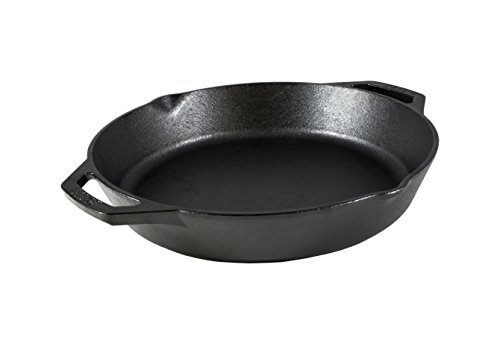
YOUR NEW GO-TO PAN: Lodge cast iron cookware is the perfect kitchen tool for beginners, home cooks and chefs. Cast iron can handle any kitchen cooktop, oven, grill, and open flame. Crafted in America with iron and oil, its naturally seasoned cooking surface creates an easy-release and improves with use.

Secure Dual Assist Handle: The Lodge Seasoned Cast Iron Dual Handle Pan features dual assist handles for a secure grip when moving this cast iron skillet
Baking Cornbread and Beyond
Once you’ve mastered the essential design features of your Le Creuset skillet, you’re ready to reveal its full potential through baking—starting with cornbread, a classic that showcases cast iron’s superior heat retention and crust-development capabilities. Preheat your 10-inch skillet between 375°F and 425°F, then melt butter inside before adding batter. This technique guarantees an instantly golden, crispy exterior while maintaining a moist interior. The method for stovetop cornbread involves using a heavy cast iron skillet to ensure even cooking and a crispy crust.
Explore cornbread variations by incorporating jalapeños, cheese, or corn kernels for flavor enhancements. Beyond cornbread, your Le Creuset skillet excels at skillet cakes, frittatas, and deep-dish pizzas—a comforting one-pot dinner that can also be made in a Dutch oven. Insert a toothpick in the center to verify doneness—it should emerge clean. Position your skillet on the middle or lower rack for prime browning. Avoid frequent door-opening to maintain consistent temperature and rise.
Safe Handling and Ergonomic Design
Because cast iron’s inherent weight can challenge even experienced cooks, your skillet’s ergonomic design becomes essential for safe and comfortable operation. Le Creuset’s oversized handles distribute weight evenly, reducing wrist and hand strain during prolonged cooking. The loop-style design accommodates four fingers or oven mitts, ensuring secure grip whether transferring from stovetop to oven or table.
Handle safety improves through strategic placement that maintains clearance from hot surfaces, minimizing burn risks. Heat-resistant phenolic knobs withstand temperatures up to 480°F, providing reliable grip stability. The ergonomic advantages extend to the skillet’s curved sides, which facilitate effortless stirring and flipping with ideal arm positioning. Additionally, regular cast iron skillets are often oven safe up to 500°F, allowing for versatile cooking options without compromising durability.
As the lightest weight cast iron per quart available, Le Creuset enhances control during frequent repositioning, reducing fatigue and accidental dropping risks while maintaining superior heat retention and durability.
Lifetime Durability and Warranty Protection
Le Creuset’s limited lifetime warranty stands as a cornerstone of the brand’s commitment to quality, protecting your cast iron skillet against manufacturing defects in materials and workmanship from the moment of purchase. Your product eligibility hinges on being the original retail consumer purchaser or receiving the item new and unused as a gift—coverage terminates if you sell or transfer ownership to another party.
The warranty exclusively covers normal household use and excludes damage from abuse, neglect, overheating, or improper care. You’ll need to contact Le Creuset’s customer service to initiate a claim and obtain an RMA number before shipping your cookware prepaid. Le Creuset typically processes claims within four to six weeks, replacing defective items with equivalent products at no charge while covering return shipping costs.


