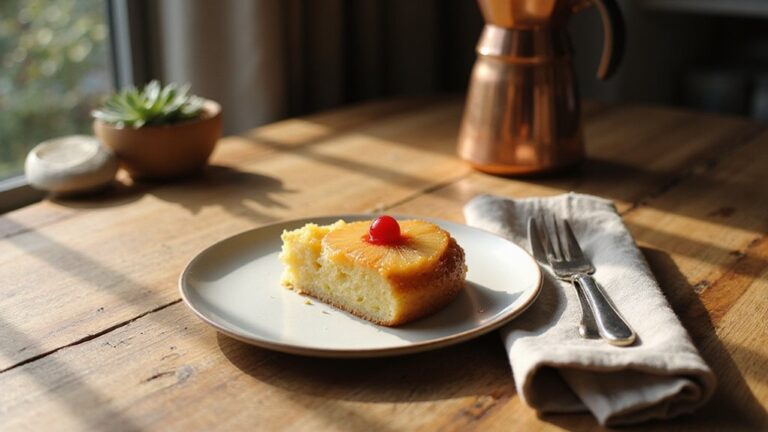
You’ll create a stunning cast iron skillet chicken pot pie by combining shredded rotisserie chicken with sautéed carrots, celery, and onions in a creamy roux base. Top your filling with store-bought or homemade pie crust, brush with egg wash, and bake at 400°F for 30-35 minutes until golden. The skillet’s superior heat retention guarantees even cooking and rustic presentation straight to your table. Uncover how strategic preparation techniques elevate this classic comfort dish.
Essential Ingredients for Your Cast Iron Skillet Pot Pie
Because a cast iron skillet pot pie relies on well-balanced components working in harmony, you’ll want to gather your ingredients before you begin cooking. Start with your essential protein: two to three cups of cooked, shredded chicken—rotisserie works perfectly for convenience. For core vegetables, prepare one cup carrots, half to one cup onions, half cup celery, and half to one cup peas. Your creamy elements include four to six tablespoons butter, one-third to one-half cup flour, one to one and three-quarter cups chicken broth, and half to one cup heavy cream. Apply seasoning tips with half to one teaspoon salt, quarter to half teaspoon black pepper, and quarter to two teaspoons dried thyme. Additionally, maintaining your skillet’s seasoning is vital for optimal cooking results, so be sure to follow proper cleaning and drying techniques. Finally, select your crust options: one or two store-bought or homemade pie crusts, plus one beaten egg for wash. Additionally, if your skillet is rusty, consider reviving your rusty cast iron skillet before starting to ensure an even cooking surface.

Durable Cast Iron Construction: Made from cast iron for long-lasting use and even heat distribution.

Homemade Favorites: The Lodge Seasoned Cast Iron Baker’s Skillet is designed for rolls, cobblers, breads, and everyday recipes fresh from the oven

Homemade Pie Tradition: The Lodge Seasoned Cast Iron Pie Pan is designed for homemade pies, baked desserts, and memorable meals around the table
Step-by-Step Preparation and Cooking Process
Now that you’ve assembled your ingredients, it’s time to transform them into a restaurant-quality pot pie. Begin by preheating your oven to 400°F and preparing your 10-inch cast iron skillet. Your preparation techniques should start with simmering chicken breasts or thighs in broth for 15–20 minutes, then shredding the cooked meat. Simultaneously, sauté carrots, celery, and onions in butter until softened, cooking mushrooms separately until golden.
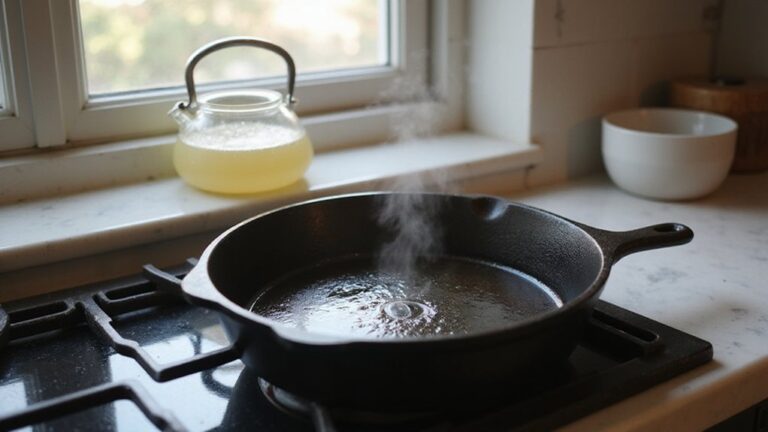
For the filling, create a roux by melting butter and whisking in flour, then gradually add chicken broth and half-and-half. Keep in mind that cast iron grill pans should have a smooth bottom to ensure safe use on glass top stoves. Simmer until the mixture thickens to soup-like consistency. Combine your cooked chicken, vegetables, and seasonings into the skillet. These cooking methods guarantee proper flavor development and texture throughout your dish. Remember to dry the skillet thoroughly to maintain its seasoning and prevent rust.

Superior Heat Retention: The Cast Iron Skillet distributes heat evenly across the surface for perfect cooking results. Ideal for searing, sautéing, frying, baking, and more.

SUPERIOR HEAT RETENTION FOR PERFECT SEARING – Heavy-duty 10-inch cast iron distributes heat evenly so steaks, vegetables and more cook consistently on stovetop, oven, grill or campfire.
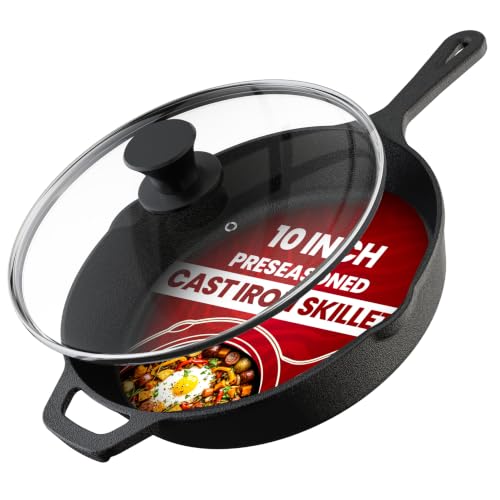
Cast Iron Pan – The Cast Iron Grill Pan comes with pre-seasoned quality, making it ready for use straight out of the box and preventing any rusting issue. Our cast iron pan set comes with unique handles for easy maneuvering and pouring.
Why Cast Iron Skillet Is the Perfect Choice
While many cookware options can bake a chicken pot pie, cast iron stands apart for its exceptional performance and unmatched versatility. You’ll appreciate cast iron’s superior heat retention, which maintains consistent temperatures throughout cooking and prevents cold spots in your filling. The pan’s versatile surfaces shift seamlessly from stovetop to oven, allowing you to sear ingredients, build your sauce, and bake without transferring to another vessel. Additionally, using Dutch oven cooking methods with your cast iron skillet can elevate your pot pie to new flavor heights.
Cast iron’s naturally seasoned, non-stick properties reduce sticking and simplify cleanup. You’ll invest wisely in cookware that lasts generations, resisting warping and degradation. Beyond functionality, you can serve your pot pie directly from the skillet, keeping it warm at the table while adding rustic appeal. Cast iron skillet chicken pot pie represents both culinary excellence and practical efficiency. Properly preheating your skillet enhances its non-stick properties, ensuring a perfect crust and golden filling every time.

Versatile Cooking Skillet: The Lodge Cast Iron Skillet is a multipurpose, everyday cooking pan that excels at searing, sautéing, baking, frying, and campfire meals

PREMIUM MATERIAL: This Cast iron dutch oven made of high-quality cast iron core, coated with food grade enamel coating; Durable and sturdy structure, the cast iron core achieves even heat distribution, maximizing the preservation of the original nutrition and taste of the food

Secure Dual Assist Handle: The Lodge Seasoned Cast Iron Dual Handle Pan features dual assist handles for a secure grip when moving this cast iron skillet
Seasoning and Flavor Profiles
The magic of cast iron skillet chicken pot pie lies in layered seasoning that builds complexity from the first sauté through the final garnish. You’ll start by establishing your foundation with thyme, poultry seasoning, and garlic powder as aromatics sauté in butter. This initial seasoning layer develops depth while onions, carrots, and celery caramelize. Your second layer arrives when you build the roux, incorporating these flavors into a cohesive base. When you add chicken broth, you introduce umami that anchors the entire dish. You’ll achieve ideal flavor balance by adjusting salt cautiously—poultry seasoning often contains it already. Additionally, keep in mind that extended cooking with acidic foods can negatively affect cast iron’s seasoning. Preheating your skillet before cooking is essential for achieving even heat distribution, ensuring your pot pie gets the perfect crust. Finally, you’ll finish with fresh parsley and sherry, adding brightness and complexity. This strategic seasoning approach guarantees you create a harmonious, professionally seasoned pot pie.
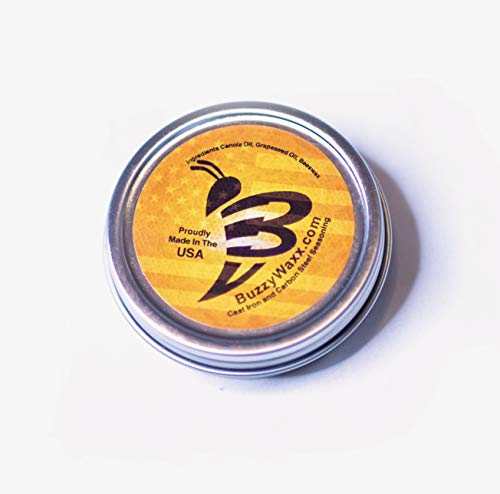
PREMIUM CAST IRON SEASONING WAX: BuzzyWaxx Original Blend is crafted from a harmonious blend of canola oil, grapeseed oil, and beeswax sourced from local North Carolina beekeepers. This food-safe, all-natural formula expertly seasons and conditions your cast iron skillets, carbon steel pans, Dutch ovens, and cookware — creating an unparalleled non-stick surface.

Use on cast iron skillets, dutch ovens, and carbon steel cookware to build seasoning and protect from rust

🌱 100% SEED-OIL FREE: Free from soy, grapeseed, canola, and sunflower oils.
Nutritional Benefits and Dietary Adjustments
Beyond crafting layers of flavor, you’ll want to contemplate how this cast iron skillet chicken pot pie nourishes your body and fits your dietary needs. You’re consuming approximately 397–636 calories per serving, with 16–31g of protein from lean chicken breast supporting muscle maintenance. The vegetable medley delivers nutrient density through beta-carotene, fiber, and vitamins C and K, establishing health balance between indulgence and nutrition. The versatility of a Dutch oven allows for comforting meals that can be both nutritious and satisfying, perfect for family gatherings or weeknight dinners. Additionally, using a Dutch oven can enhance heat distribution during cooking, ensuring your dish cooks evenly and perfectly.
You can adjust this dish strategically. Substitute half-and-half with low-fat milk to reduce saturated fat, or incorporate extra chicken for enhanced protein content. For low-carb goals, you’ll replace potatoes with non-starchy vegetables and utilize almond flour crusts. You’re also accommodating gluten-free, dairy-free, and vegetarian preferences through thoughtful ingredient swaps. Monitoring sodium levels by selecting low-sodium broth guarantees you’re maintaining cardiovascular health without sacrificing satisfaction.
Creative Variations and Customization Ideas
Since you’ve mastered the nutritional fundamentals, you’re ready to personalize your cast iron skillet chicken pot pie through strategic ingredient and technique modifications.
Explore filling swaps by substituting turkey for chicken or incorporating legumes like white beans to boost protein and fiber. Layer seasonal vegetables—sweet potatoes, mushrooms, or Brussels sprouts—for textural variety. Customize your sauce using cashew cream or coconut milk instead of traditional dairy, then infuse depth with garlic, Worcestershire sauce, or smoked paprika. Incorporating layering flavors can elevate the taste profile, similar to how Dutch oven recipes enhance chicken with various seasonings.
Elevate creative toppings by selecting puff pastry for flaky elegance, phyllo dough for crispness, or biscuit topping for rustic appeal. Top your crust with sesame seeds, poppy seeds, or coarse salt before baking. Consider blind-baking partially to prevent sogginess while preserving crust integrity through proper venting and steam release. Adding savory flavors to your filling can enhance the dish’s overall appeal, similar to how Dutch oven recipes combine chicken with flavorful seasonings.
Tips for Achieving the Perfect Golden Crust
Achieving a perfectly golden crust requires balancing temperature precision, moisture control, and cast iron-specific techniques. You’ll want to maintain your oven at 400–425°F, rotating your skillet halfway through the 30–35 minute bake to prevent uneven browning.
Control dough thickness by pounding edges thinner than the center, ensuring even baking across your crust. Parbake the crust for 10–12 minutes before adding filling, creating a protective barrier against sogginess. Brush an egg wash across the surface to enhance shine and golden coloration. Cooking the filling before adding it to the crust is also crucial for achieving even cooking without sogginess.
Chill your dough beforehand to minimize shrinkage and support ideal rise. Preheat your cast iron skillet to establish consistent heat transfer, promoting uniform bottom browning. Vent your crust with slits to release steam, and allow filling to cool slightly before assembly. These techniques work together to deliver the crisp, beautifully browned crust you’re seeking. Additionally, using the Lodge Dutch oven can elevate your cooking experience, offering great heat retention and versatility for various dishes.

PFAS-FREE & NON-TOXIC COOKWARE: ATTENTION: If your manual mentions "enamel" or "low-medium heat only", it is incorrect. This is 100% pure cast iron cookware! Not Enamel-Coated: Safe for High-Heat Cooking! Metal utensils OK (avoid sharp edges) Every Umite Chef cast iron pot has been burned with 100% natural, food-grade vegetable oils—absolutely zero PFAS, PFOA, PTFE, synthetic coatings, or toxic chemicals. Our seasoning naturally builds with use, developing a superior non-stick surface over time while ensuring oven-to-table safety

Pre-seasoned 2-in-1 cast iron dutch oven: The 2-In-1 cast iron dutch oven pot with skillet lid has been burned with vegetable oil,(no synthetic coatings or chemicals). The shallow skillet that can be used as a lid

PREMIUM MATERIAL: This Cast iron dutch oven made of high-quality cast iron core, coated with food grade enamel coating; Durable and sturdy structure, the cast iron core achieves even heat distribution, maximizing the preservation of the original nutrition and taste of the food
Serving and Storage Recommendations
Your cast iron skillet chicken pot pie deserves proper handling from oven to table. You’ll achieve the best serving results by resting the pie for 5 to 10 minutes after baking, allowing the filling to set and preventing burns. Serve immediately while the crust remains crispy, ensuring the internal temperature reaches 165°F for food safety. A well-cooked pie should have fall-apart tender filling, similar to the texture achieved in a pot roast.
For proper storage, you’ll want to cool the pie completely before covering it tightly with plastic wrap or foil. Refrigerate leftovers for up to 3 to 4 days, or freeze for 2 to 3 months. Label containers with dates for easy tracking.
When reheating, use a preheated 350°F oven for 20 to 30 minutes, covering with foil to prevent over-browning. Add broth if needed to restore moisture. Consider using freezer-quality zipper-lock bags for any portion you choose to freeze, as they provide better airtight results.