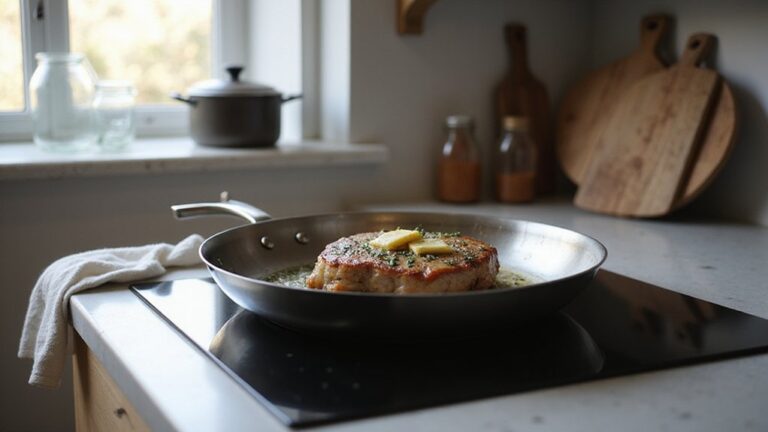
You’ll sear bone-in pork chops in a preheated cast iron skillet, applying a dry rub of salt, pepper, garlic powder, smoked paprika, and sage. While they cook to 140-143°F internally, you’ll caramelize thinly sliced onions over medium heat for 10-20 minutes. Build your gravy by whisking beef stock into the browned bits, then simmer with Worcestershire sauce and fresh thyme for 10-20 minutes. Rest your chops for 3-5 minutes before plating with the silky onion gravy—mastering each step transforms this dish into restaurant-quality excellence.
Ingredients and Seasonings
Success with cast iron skillet pork chops starts with selecting the right cut. You’ll want bone-in chops between ¾ to 1-inch thick, as they retain moisture better and deliver superior flavor. Plan for approximately ¾ to 1 pound per serving.
Your seasoning options create the foundation for exceptional results. You’ll combine salt, pepper, garlic powder, onion powder, and smoked paprika into a dry rub that builds savory depth. Ground sage contributes earthy herbaceous notes that complement pork beautifully. For additional complexity, you’ll incorporate cayenne pepper for subtle heat and fresh thyme sprigs during cooking. Using a cast iron skillet will provide superior heat retention that enhances the overall flavor and crust of the pork chops. Additionally, caring for your cast iron skillet properly, including thoroughly drying it after cleaning, will help to maintain its seasoning and effectiveness.
When preparing onions, select medium yellow ones and slice them thinly for even caramelization. You’ll use chicken broth as your braising liquid and all-purpose flour to create a rich gravy base finished with heavy cream.

One value pack of boneless pork loin, assorted chops weighing between 1.5 and 3.2 pounds

Cooking Techniques Using a Cast Iron Skillet
Because cast iron’s exceptional heat retention and distribution directly impact your results, you’ll want to master the foundational techniques that make this cookware superior for searing pork chops.
Start by preheating your skillet on medium heat for a couple of minutes. Test readiness by sliding oil across the pan surface—when it moves freely, you’re prepared. Apply a small amount of neutral oil with a high smoke point; excessive fat isn’t necessary. Additionally, ensure that you pat the chops dry before seasoning to promote better browning.
Press your pork chops firmly against the skillet to maximize surface contact and browning. Searing techniques depend on maintaining flat connection between meat and pan. Once edges brown properly, reduce heat to medium to prevent overcooking while preserving interior tenderness. Temperature adjustments throughout cooking guarantee consistent, quality results that cast iron’s heat retention facilitates effortlessly. Additionally, using a thermometer to check the safety of cooking practices ensures that your food is cooked to the correct temperature without any risk of undercooking.

Seasoned with oil for a natural, easy-release finish that improves with use

One boneless pork loin center-cut chops weighing between 0.5 and 1.5 pounds
Preparation and Cooking of Onions
While your pork chops sear to golden perfection, you’ll want to prepare onions that’ll complement the dish’s savory depth. Select yellow onions for their versatility and full flavor—they’re suitable for extended cooking periods. Refrigerate whole onions for 30 minutes before slicing to minimize tearing. Keep the root end intact while dicing to hold layers together, using a sharp chef’s knife on a sturdy cutting board for uniform thickness.
For best results, sauté your onions at medium heat with frequent stirring for 10-20 minutes until they’re lightly browned. If you’re using stored onions from fall or winter varieties, they’ll cook more quickly than fresh spring varieties due to their higher solids content. Prepare onions as close to cooking time as possible to preserve their vibrant flavor and aroma. Additionally, make sure to preheat your skillet to ensure even cooking and achieve that perfect caramelization. Consider using a well-seasoned cast iron skillet, as it heats evenly, enhancing the caramelization process.


Onion Gravy and Sauce Building
Once your onions reach a deep golden brown, you’re ready to transform them into a luxurious gravy that’ll cling to every bite of pork. Sprinkle flour directly over the onions or create a slurry by mixing it with water, then cook for 1–2 minutes to eliminate raw taste. Gradually whisk in 1.5 to 2.5 cups of beef stock, stirring continuously to prevent lumps and guarantee smooth consistency. This technique of creating a flavorful sauce is akin to building a berry crumble which enhances the overall dish.
For thickening agents, cornstarch dissolved in cold stock offers a glossy alternative to flour. Incorporate flavor enhancers like Worcestershire sauce, garlic powder, and fresh thyme to build complexity. Deglaze the pan with red wine if desired, reducing briefly before adding stock. Simmer for 10–20 minutes, then adjust seasoning with salt and pepper. Whisk in cold butter at the end for richness. A 12-inch skillet is often preferred for its versatility and practicality when searing pork chops.
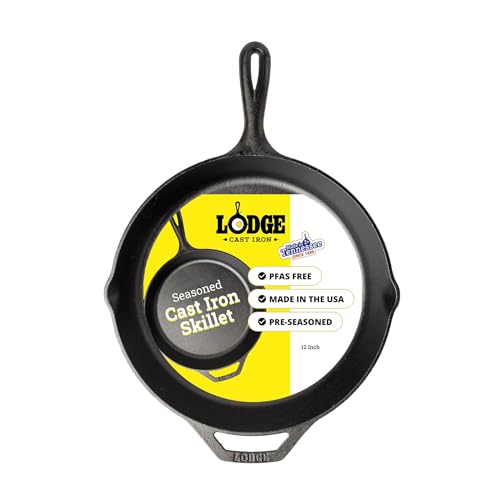
Quality Cast Iron Frying Pan: The Lodge Seasoned Cast Iron Skillet is loved for its great heat retention, incredible durability, and ability to make almost any recipe you dream up

Versatile Cooking Skillet: The Lodge Cast Iron Skillet is a multipurpose, everyday cooking pan that excels at searing, sautéing, baking, frying, and campfire meals

Secure Dual Assist Handle: The Lodge Seasoned Cast Iron Dual Handle Pan features dual assist handles for a secure grip when moving this cast iron skillet
Temperature and Doneness Guidelines
With your gravy simmering and enriched with butter, you’ll now master the final component that separates a mediocre pork chop from an exceptional one: proper temperature control and doneness. Use an instant-read meat thermometer inserted into the thickest part of each chop for accuracy. Remove your chops from the skillet at 140-143°F, allowing carryover cooking to reach your target of 145°F—the USDA’s safe minimum internal temperature. This cooking technique prevents overcooking while ensuring food safety. Additionally, proper preheating is crucial in other cooking methods, as it can significantly impact the quality of the dish. Rest your chops for 3-5 minutes before serving, permitting juices to redistribute and internal temperature to stabilize. Resting also allows your crust to settle. Using a meat thermometer never exceed 150°F, as higher temperatures dry out meat and compromise tenderness, diminishing your final dish.

Fast & Accurate: Get precise readings in just 1 second with ±0.9°F accuracy. NSF Certified for trusted food safety, this digital food thermometer features a 4.3 inches food-grade stainless steel meat probe, perfect for grilling, frying, baking, making candy and more

【Fast & Accurate】Our meat thermometer digital delivers accurate readings within ±1°F in just 1–2 seconds, with a wide temperature range of -58°F to 572°F (-50°C to 300°C). No more waiting over the heat - know your food's exact temperature instantly.

【8X Faster + 4X More Precise】: Upgraded with an industrial-leading professional thermocouple sensor, Themomonster meat thermometer digital with NIST certified ±0.5℉ precision provides you the accurate temperature of your food in just 0.5 Seconds.