You can season cast iron with coconut oil because its 350-400°F smoke point allows proper polymerization without degradation. However, you’ll develop softer, less durable seasoning layers than with unsaturated oils like grapeseed. Coconut oil’s high saturated fat content reduces bonding efficiency, requiring more frequent maintenance. Its solid state at room temperature also complicates even application. While accessible and antibacterial properties offer benefits, understanding the trade-offs between convenience and durability reveals why seasoning strategy matters considerably for cast iron longevity.
Why Coconut Oil Works for Cast Iron Seasoning
Coconut oil’s effectiveness as a cast iron seasoning agent stems from its high smoke point, which typically ranges between 350-400°F depending on whether it’s refined or unrefined. This thermal stability allows proper polymerization of seasoning layers without degradation, creating durable, long-lasting surfaces. You’ll benefit from coconut oil’s saturated fat composition, which forms stable bonds on your cookware that resist rancidity over time. Unlike unsaturated fats, these molecular structures maintain consistency across multiple applications. Additionally, coconut oil’s natural anti-inflammatory and antibacterial properties protect your seasoned surface against oxidation and microbial growth. Its ease of application—melting smoothly and buffing without pooling—enables you to achieve uniform seasoning development. These combined characteristics make coconut oil a superior choice for maintaining your cast iron’s protective coating. Furthermore, like beef tallow, coconut oil also supports the creation of a robust non-stick polymerized layer essential for cookware longevity. Moreover, using coconut oil is advantageous because it encourages the formation of durable seasoning layers, which are essential for ensuring the longevity of cast iron cookware.
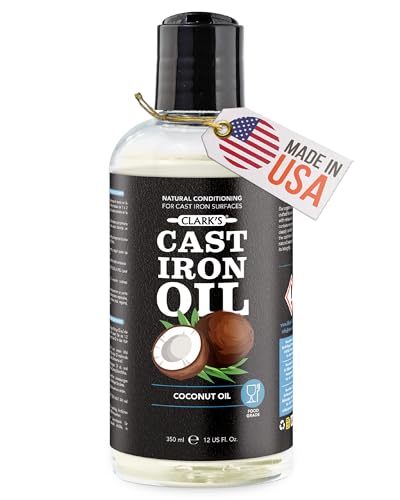
CLARK'S PREMIUM CAST IRON OIL - We use only highly refined Food-Grade Coconut Oil to ensure you get the best seasoning possible on your cast iron or carbon steel pots, pans, skillets, woks, griddles, and dutch ovens

Food Grade Cast Iron Seasoning Oil – Organic & Coconut Derived : Premium food-grade oil made from organic fractionated coconut oil. Designed specifically to season and condition cast iron skillets, pans, grills, griddles and Dutch ovens.

YOUR NEW GO-TO SEASONING SPRAY: The Lodge Seasoning Spray is the perfect seasoning spray to maintain your cast iron cookware. It is made of 100% canola oil - no additives or propellants, to protect your cookware and enhance its finish.
How Coconut Oil Compares to Other Oils
How does coconut oil stack up against other seasoning options for cast iron? In an oil comparison, coconut oil presents distinct trade-offs. Its 350°F smoke point falls below grapeseed oil’s 421°F and avocado oil’s 350–400°F range, making it more prone to burning during seasoning. Proper seasoning techniques can help mitigate some of these issues. Regarding polymerization, coconut oil’s saturated fat composition creates softer seasoning layers than unsaturated-fat oils, potentially requiring additional maintenance coats. However, coconut oil benefits include accessibility and affordability for plant-based practitioners. Traditional animal fats like lard and tallow remain superior for durability and faster polymerization. Additionally, coconut oil’s flavor residues may affect food taste, whereas neutral oils like grapeseed preserve versatility. While coconut oil works adequately, higher smoke point oils deliver more consistent, durable results. A well-seasoned cast iron skillet can enhance the cooking experience and provide better food release.

PREMIUM CAST IRON CONDITIONING & SEASONING OIL | Made with FOOD grade, solvent-less, refined coconut oil that is safe for food contact and cast iron surfaces. The result is a premium product that does not go rancid.
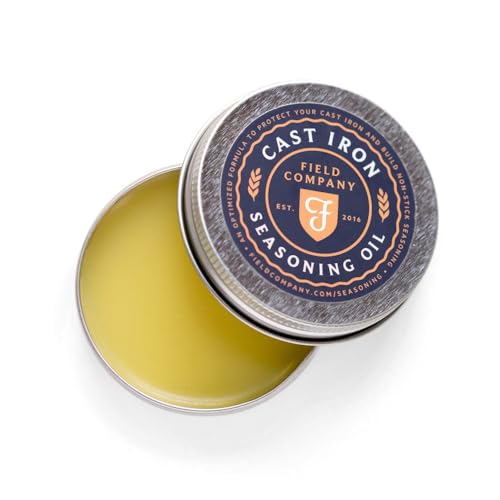
HOW TO USE: The key to naturally nonstick cast iron cookware? Cook often, and apply Seasoning Oil every time you clean your pan. Clean your cast iron with soap and a brush, then use a chain mail scrubber to smooth out existing seasoning layers. Apply a dab of Seasoning Oil and spread it thinly over the surface with a paper towel or clean rag. Wipe away excess oil to leave a dry, matte finish.

COMPLETE CAST IRON CLEANER KIT – This comprehensive cast iron cleaning kit includes CLARK'S food-safe cast iron seasoning kit (12 oz), cast iron soap (12 oz), cast iron brush, and round applicator pad—essential for cast iron accessories and bakeware.
Step-by-Step Guide to Seasoning Your Cast Iron
Before you can build a durable seasoning layer on your cast iron, you’ll need to properly prepare the pan’s surface. Wash it with warm, soapy water and dry thoroughly with a lint-free cloth to prevent rust. Inspect for debris and scrub with salt or steel wool if necessary.
Once prepared, apply your chosen oil—coconut oil or alternatives—using a lint-free cloth in an extremely thin layer across all surfaces, including the exterior and handle. Wipe away excess oil to avoid sticky buildup. Your oil selection and seasoning techniques greatly impact results. Flaxseed oil is highly recommended due to its ability to create a durable nonstick surface when seasoned correctly.
It is also important to choose an oil with a high smoke point, as heating the seasoned cast iron to this temperature helps create a strong polymerized layer that enhances the pan’s durability.
You can employ either oven or stovetop methods. For oven seasoning, place the skillet upside down at 450–500°F for one hour, then cool completely inside. Stovetop seasoning involves heating to the oil’s smoke point for 60–90 seconds. Repeat layers as needed for ideal nonstick properties.
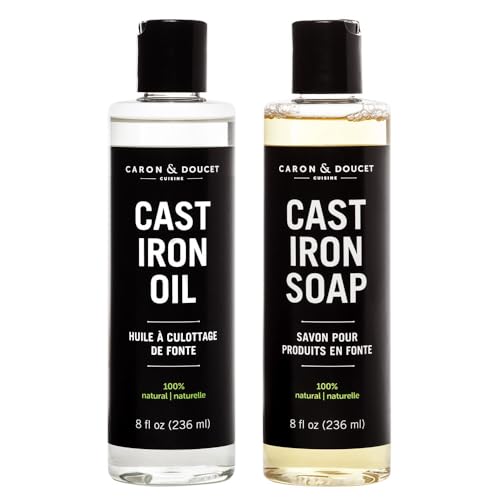
CLEANS CAST IRON | Includes our Cast Iron Soap unlike detergent based soaps, this soap is formulated with 100% natural plant-based oils & free of sulfates, phosphates, parabens & petrochemicals! Gentil on cast iron seasoning & on your hands!

Use on cast iron skillets, dutch ovens, and carbon steel cookware to build seasoning and protect from rust
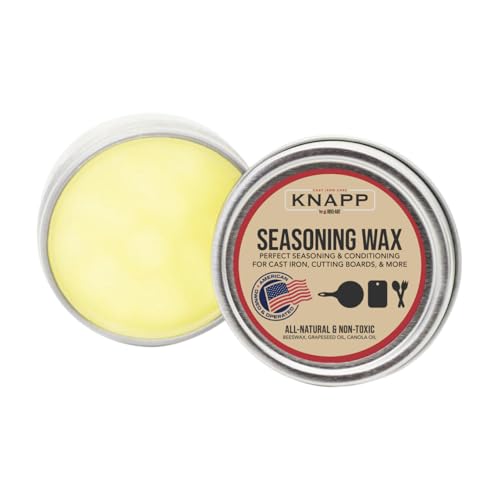
Perfect Seasoning and Conditioning: Cast Iron Seasoning Blend of Oil and Beeswax. Perfectly Seasons and Conditions Cast Iron Pans, Skillets, and Other Cookware. Our Formula Protects and Maintains Your Cast Iron Better Than Any Other Product on the Market.
Potential Drawbacks and Limitations
While coconut oil offers an accessible seasoning option, it comes with several practical limitations that you’ll want to evaluate before committing to this method. The high saturated fat content reduces polymerization efficiency, resulting in a softer, less durable seasoning layer that requires frequent re-seasoning. Virgin coconut oil’s 350°F smoke point falls below ideal polymerization temperatures, while refined varieties reach only 450°F—potentially insufficient for robust bonding. Additionally, some cast iron enthusiasts prefer to use oven cleaner for heavy-duty restoration when more traditional seasoning methods fail, which highlights the importance of choosing the right maintenance approach. Experts recommend using light olive oil for seasoning due to its higher smoke point, making it more effective for bonding. Cost implications matter too; coconut oil costs considerably more per ounce than vegetable or canola oils, discouraging regular maintenance. The flavor impact presents another concern—coconut oil imparts distinct flavor to foods, particularly during initial uses, which may compromise savory dishes. Additionally, coconut oil’s solid state at room temperature complicates application, often producing blotchy, uneven coats that compromise seasoning quality.
Best Practices for Optimal Results
To build a durable seasoning layer with coconut oil, you’ll need to prioritize proper preparation and technique at every stage. Start by thoroughly cleaning your pan with warm soapy water and a stiff brush to remove all residues. Dry completely before applying oil.
Apply thin, even coats across all surfaces using a cloth, then buff away excess oil with a towel. This step is essential—too much oil creates sticky buildup rather than polymerization.
Your seasoning techniques should include multiple rounds: bake at 350-400°F for one hour, allow cooling in the oven, then repeat at least 4-6 times. Place your pan upside down on the rack to prevent pooling.
Oil selection matters here—coconut oil’s 350°F smoke point works adequately, though higher smoke point alternatives build harder finishes. Reinforce seasoning through regular cooking with fatty foods. Additionally, regular maintenance can help preserve the skillet’s cooking surface for better long-term performance.

RESTORES & SEASONS CAST IRON COOKWARE: Culina Cast Iron Scrub is designed to restore cookware by removing stubborn rust spots, burnt residue, and stuck-on food that builds up...
Natural Alternatives and Additional Considerations
Since coconut oil’s saturated fat content and rancidity vulnerability present long-term durability concerns, exploring alternative oils and conditioning methods can better suit your cast iron needs. You’ll find that polyunsaturated natural oils like grapeseed and sunflower seed oil offer superior seasoning longevity through their high smoke points (400-450°F), enabling efficient polymerization without frequent reapplication. For irregular use patterns, you should consider oil and beeswax mixtures, which harden at room temperature and create protective barriers preventing degradation during storage. Flaxseed oil provides another option, though it requires multiple low-heat applications. Additionally, it’s important to remember that proper seasoning is crucial for cast iron’s performance, as it heats evenly and maintains its non-stick properties, and using a light layer of oil before storing is an essential step. You’ll want to store these products in airtight containers to prevent oxidation. These alternatives address coconut oil’s limitations while maintaining effective cast iron protection across varying usage schedules.

Mild and Easy: Grapeseed Oil is at its best in stir-fries and sautés; it doesn't overwhelm other ingredients and lets fresh flavors shine. When grilling or frying, it is a must-have in the pantry.

100% GRAPESEED OIL BULK SIZE: Expertly crafted by The Olive Oil People using wine grape seeds imported from France

TLC for your griddle cooktop: All you need to build a slick, easy-release surface that's protected from rust and easy to work with using Blackstone griddle seasoning and cast iron conditioner