You’ll create a durable, non-stick surface by applying thin olive oil layers to your cast iron skillet, then baking it at 450–500°F to polymerize the coating. Use refined olive oil for its superior 470–480°F smoke point, ensuring proper molecular bonding at the iron-oil interface. After thorough cleaning and preheating your skillet to 200–250°F, apply minimal oil with a lint-free cloth, wiping away excess to prevent gumminess. Build resilience through three to six seasoning cycles, allowing proper cooling between applications. The specifics of this layering technique’ll transform your skillet’s longevity.
What Is Cast Iron Seasoning
Cast iron seasoning is a protective polymerized coating that you create by applying a thin layer of oil to your cookware and heating it above the oil’s smoke point. During this process, free radicals chemically bond oil molecules into a hard, durable film that bonds molecularly to the iron surface. This process creates a natural, healthy non-stick surface that improves with use and care.
This seasoning layer serves multiple critical functions. It prevents rust and corrosion, eliminating the need for constant maintenance. The polymerized coating creates a natural nonstick surface that improves with use, enhancing your cooking techniques and reducing fat requirements. These properties deliver significant health benefits by allowing you to cook with minimal added oils while protecting your investment in quality cookware. Regularly maintaining your pans ensures they remain in good condition and mitigates the risk of going rancid due to infrequent use.
You’ll build seasoning gradually through repeated applications and regular cooking.

YOUR NEW GO-TO SEASONING SPRAY: The Lodge Seasoning Spray is the perfect seasoning spray to maintain your cast iron cookware. It is made of 100% canola oil - no additives or propellants, to protect your cookware and enhance its finish.

TLC for your griddle cooktop: All you need to build a slick, easy-release surface that's protected from rust and easy to work with using Blackstone griddle seasoning and cast iron conditioner
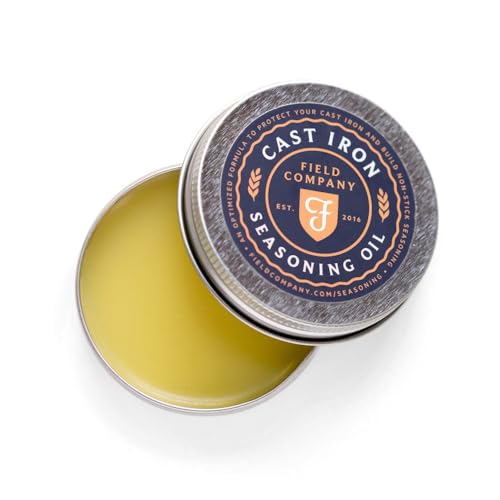
HOW TO USE: The key to naturally nonstick cast iron cookware? Cook often, and apply Seasoning Oil every time you clean your pan. Clean your cast iron with soap and a brush, then use a chain mail scrubber to smooth out existing seasoning layers. Apply a dab of Seasoning Oil and spread it thinly over the surface with a paper towel or clean rag. Wipe away excess oil to leave a dry, matte finish.
Why Olive Oil Works for Seasoning
While olive oil isn’t the absolute best choice for seasoning cast iron, it’s widely accessible and creates an effective protective layer when you select the right variety. Light olive oil’s higher smoke point (around 465°F) makes it more suitable than extra virgin for seasoning applications, reducing burning risks during polymerization. Additionally, using oils with high smoke points enables better results in the seasoning process.
When you heat olive oil beyond its smoke point, it undergoes polymerization, forming a hardened layer that bonds to cast iron’s surface. This barrier provides oxidation resistance by preventing moisture and oxygen contact, which protects against rust formation. Though olive oil offers moderate oil durability compared to high-polyunsaturated alternatives, its natural antioxidants contribute to seasoning longevity. Repeated applications strengthen the protective layer, enhancing rust prevention. For home cooks prioritizing accessibility and simplicity, olive oil delivers reliable results with minimal effort. Additionally, cast iron skillets benefit from proper seasoning techniques, ensuring optimal performance in your cooking endeavors.

100% GRAPESEED OIL BULK SIZE: Expertly crafted by The Olive Oil People using wine grape seeds imported from France

Mild and Easy: Grapeseed Oil is at its best in stir-fries and sautés; it doesn't overwhelm other ingredients and lets fresh flavors shine. When grilling or frying, it is a must-have in the pantry.

Use on cast iron skillets, dutch ovens, and carbon steel cookware to build seasoning and protect from rust
Choosing the Right Type of Olive Oil
Since you’re selecting an olive oil for seasoning, you’ll need to prioritize smoke point above all other considerations. Different olive oil types offer distinct advantages depending on your cooking temperatures and seasoning method.
Refined olive oil delivers the highest smoke point—470-480°F—making it ideal for high-heat seasoning cycles. Virgin oils reach 390-420°F, suitable for moderate-temperature applications. Extra-virgin olive oil, though rich in antioxidants that enhance polymerization, maxes out around 375-405°F, limiting it to low-heat use. Additionally, like olive oil, chocolate chips used in s’mores dip can also be sensitive to heat and should be chosen based on your intended baking temperature. When seasoning cast iron, using a high smoke point oil, such as sunflower oil, can be a practical alternative for creating a strong non-stick finish.
For cast iron seasoning specifically, refined oils prevent breakdown and residue buildup. However, if you prefer nutritional benefits and superior oxidative stability, extra-virgin works adequately at lower temperatures. Pure/light oils offer versatility, blending refined and virgin qualities for moderate-heat applications.
Match your chosen olive oil type to your intended cooking temperatures for best results.

America's #1 Avocado Oil for Cooking — Every batch of Chosen Foods avocado oil is independently tested to confirm 100% pure avocado oil with no fillers or seed oil blends. Our purity standard was verified by UC Davis as one of only two avocado oil brands to pass their rigorous quality test. This bottle delivers the clean, neutral taste and consistent high-heat performance that has made Chosen Foods the avocado oil of choice for home cooks, professional chefs, and clean-eating households across the United States.

Graza Frizzle Oil Made from 100% Olives: A neutral-flavored, high heat cooking oil made from 100% peak harvest olives. With a smoke point of up to 450 degrees, Frizzle is your high-heat kitchen hero. 1 bottle/750ml.

Light Buttery Flavor That Elevates Every Meal: Algae Cooking Club Chef-Grade Algae Oil enhances every dish with subtle richness. Its neutral profile makes it ideal for searing, baking, and dressings, transforming everyday meals into gourmet experiences.
Preparing Your Cast Iron Skillet
Success in seasoning hinges on meticulous preparation that removes contaminants and optimizes the pan’s surface for oil absorption. You’ll begin with thorough cleaning methods using hot water and a non-metal brush to eliminate residual food and grease. For stubborn buildup, apply coarse kosher salt as an abrasive with a towel, avoiding harsh detergents that damage seasoning layers.
Next, implement proper drying techniques by towel-drying immediately and completely. You should then place the skillet on low heat or in a warm oven for several minutes to evaporate trapped moisture entirely. Moisture prevents oil bonding and causes uneven seasoning or rust. Additionally, a 7 to 8 quart Dutch oven may be required for larger cooking tasks, ensuring proper heat circulation.
Finally, preheat your skillet gently between 200°F to 250°F for 10-20 minutes. This warming opens the iron’s pores, enhances oil absorption, and reduces pooling for an even application. Properly seasoning your skillet can significantly improve its performance and durability.

Complete Care System: The Lodge Cast Iron Care Kit combines everyday cleaning and maintenance essentials into one convenient set designed to help support long-lasting cast iron care

COMPLETE RESTORE, CLEAN & SEASON SYSTEM: Culina Cast Iron Care Set is a complete solution to restore, clean, and season cookware. Includes a restoring scrub to remove rust and stuck-on residue, cast iron soap for gentle cleaning, seasoning oil and stick for conditioning, plus a stainless scrubber and brush for complete cast iron cookware maintenance.

COMPLETE RESTORE, CLEAN & SEASON SYSTEM: Culina Cast Iron Care Kit is a complete solution to restore, clean, and season cookware. Includes a durable rust remover scrub to remove rust and stuck-on residue, a natural soap for cleaning, and a premium oil to enhance seasoning, protect surfaces, and extend the life of cast iron cookware.
Applying the Olive Oil Coating
With your skillet properly prepped and warmed, you’re ready to apply the olive oil coating that’ll form the foundation of your seasoning. Pour a small amount—roughly one teaspoon to one tablespoon depending on skillet size—directly onto the pan’s surface. Using a lint-free cloth or paper towel, spread the oil in thin, even layers across the entire skillet, including the handle and exterior. Your coating techniques must prioritize minimal oil application; excess creates gummy, sticky surfaces rather than smooth polymerized layers. Thoroughly wipe away all visible pooling and drips. Apply olive oil while the skillet’s warm, not hot, to promote ideal absorption without premature smoking. This careful application guarantees consistent coverage essential for effective seasoning development. Remember, proper cleaning is crucial before seasoning to ensure the best results. Additionally, a well-seasoned skillet can enhance the flavor of dishes like chicken pot pie over time.

RICH & BOLD FLAVOR: Reach for the flavor of bold garlic and rich olive oil to infuse everyday and special occasion meals with unforgettable flavor the whole family will love.

One 5 oz can of PAM Non Stick Olive Oil Cooking Spray

A TRUE GOURMET BREAD DIPPING: Calivirgin Olive Oil Dipping Spices combine 5 diverse, gourmet flavors in a unique, irresistible & incredibly delicious spice mix; Basil, sun-dried tomatoes, garlic, parsley & oregano
Baking and Cooling Your Skillet
Your properly oiled skillet now enters the critical baking phase, where heat transforms the thin oil layer into a durable polymerized coating. Position your skillet upside down and use proper oven preheating techniques by starting with a cold oven, allowing it to preheat with the pan inside for even heat distribution. Bake at 450-500°F for 50-60 minutes, watching for smoke indicators that signal polymerization beginning. When smoke ceases, polymerization completes, demonstrating the importance of reaching the smoke point for effective seasoning.
Turn off the oven without opening the door. This gradual cooling process solidifies and strengthens your seasoning layers. Allow your skillet to remain inside for a minimum of two hours, reaching room temperature slowly. This prevents thermal shock that’d compromise your new coating. Patience during cooling guarantees a resilient, long-lasting seasoned surface, complementing the skillet’s durable, non-stick layer that improves with use over time.
Building Multiple Protective Layers
Building durability into your cast iron requires multiple thin oil layers rather than a single heavy application. You’ll develop superior layer durability through repetitive seasoning cycles—at least three to six rounds—that progressively strengthen the seasoning structure.
Each new coating fills microscopic imperfections from previous layers, creating an increasingly uniform, hardwearing surface. This incremental approach prevents oil pooling and burning, which compromises seasoning quality. Between cycles, you’ll apply thin coats and wipe away excess thoroughly before baking at 450–500°F. Additionally, preheating the skillet on low heat before cooking helps ensure even heating, further enhancing the seasoning process. Taking care of your skillet by avoiding soaking ensures the longevity of the seasoning.
As you repeat this process, molecular bonding deepens at the iron-oil interface, establishing robust nonstick performance. Your skillet’s seasoning structure becomes more resilient with each layer. Over months and years, continued cooking naturally maintains and enhances these protective coatings, ensuring long-term durability.
Long-Term Maintenance and Care
Once you’ve built a robust seasoning foundation through multiple protective layers, maintaining that durability requires consistent, deliberate care practices. Frequent use naturally enhances your skillet’s seasoning through repeated heating and oil bonding, which strengthens nonstick properties over time. To prevent sticking and maintain performance, always preheat your skillet thoroughly to establish even heat distribution. For rust prevention, make sure you dry your skillet completely after each wash—moisture is iron’s primary enemy. Incorporate these maintenance tips: apply thin oil coats before storage, inspect surfaces regularly for early rust signs, and address spots promptly with a stiff brush followed by thorough drying. Minor seasoning damage from scrubbing repairs itself through continued cooking with oil. For serious degradation or flaking, gradually rebuild layers using oven seasoning or stovetop methods rather than attempting extensive reseasoning at once. Additionally, be cautious when using your cast iron skillet on certain cooking surfaces, as some manufacturers recommend avoiding cast iron altogether due to the risk of scratches or overheating the cooktop.