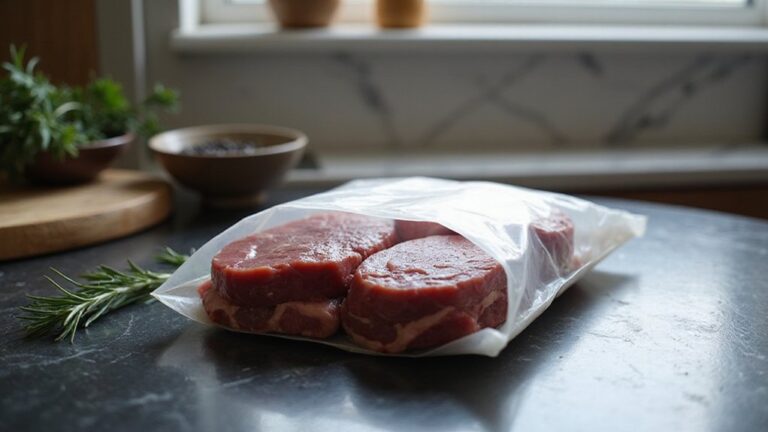
You’ll establish critical control points focusing on temperature management—cooling cooked foods to ≤4°C before sealing and maintaining refrigerated storage at ≤41°F. Implement seal integrity verification using visual inspections, bubble tests, and tensile peel tests per ASTM F88 standards. Develop SOPs covering biological and chemical hazards with mandatory staff training and detailed documentation. Submit your HACCP plan to local regulatory authorities for approval before operations commence. The sections ahead provide thorough guidance on implementing each component effectively.
Understanding Hazards in Reduced Oxygen Packaging
When you reduce oxygen levels to 21% or less in food packaging, you’re creating an environment that favors dangerous anaerobic bacteria—particularly Clostridium botulinum and Listeria monocytogenes—over the harmless aerobic spoilage organisms that’d normally signal food degradation.
Clostridium botulinum produces deadly neurotoxins under low-oxygen and temperature-abused conditions; these toxins resist cooking. Listeria monocytogenes causes listeriosis, posing severe risks to immunocompromised individuals and pregnant women, potentially causing fatal outcomes or stillbirths. Proper vacuum sealing methods can help extend the shelf life of meat; however, they also necessitate strict safety controls.
The critical hazard lies in masked contamination. Because anaerobic bacteria don’t generate typical spoilage indicators like color changes, odors, or slime, you can’t rely on visual inspection alone. Consumers may mistake extended freshness appearance for safety, unknowingly consuming contaminated products. Your HACCP plan must establish rigorous microbiological and process controls to detect hidden contamination risks that spoilage indicators won’t reveal. Additionally, implementing regular maintenance practices can help mitigate the risk of future contamination in packaging processes.

【Suitable for two types of Mason jars】The electric Mason jar vacuum sealer contains two sizes of mouth seals for your daily use. To get the standard mouth seal jar, simply insert the red arrow on the standard mouth seal converter, align it with the unlock symbol on the main unit and then insert it inside the silicone ring in the wide mouth seal area and tighten it clockwise, at this point the arrow is aligned with the lock symbol, which indicates a successful installation.
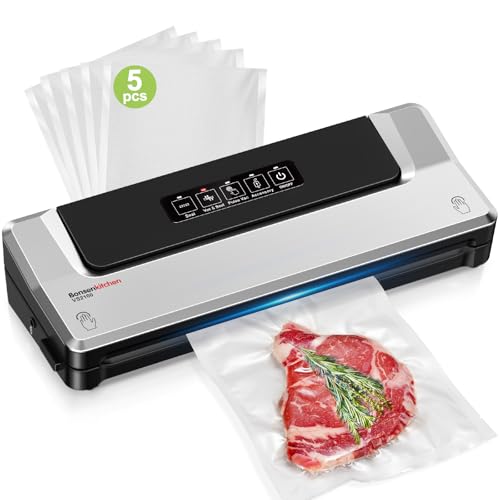
4 Modes : 'Vac & Seal' - one-touch automatic vacuum and seal, perfect for food that does not deform easily, such as meat, nuts, and vegetables; 'Pulse Vac' - manually control the vacuum process, suitable for soft food or moist food, such as bread or food with soup; 'Seal' - only seal, for potato chip bags; 'Accessory' - designed for vacuuming jars or sous vide bags

KEEP FOOD FRESHER & SAVE MONEY: The POTANE VS2690 vacuum sealers use enhanced heating wires and brushless motor. While other barginbrands use small heating wires and cheaper motor, That's why we ensure a 2-year no-hassle return guarantee and 5-year warranty, save your money by choosing a trustworthy machine.
Identifying Critical Control Points in Your Operation
Now that you’ve understood the hazards masked by reduced-oxygen packaging, you’ll need to map exactly where in your operation these risks can occur and establish the points where you must intervene to control them. Your critical control points typically include cooling before sealing, seal integrity verification, and cold storage maintenance. Each CCP requires measurable critical limits tied directly to hazard prevention, just as preheating is essential for achieving the best results in cornbread baking. You’ll establish monitoring protocols using calibrated equipment—thermometers for temperature verification and seal inspection tools for packaging integrity. Document all monitoring activities with timestamps and responsible personnel identification. Review your process flow diagram to identify where preventive measures are essential, avoiding redundancy with existing temperature management systems. These strategic intervention points guarantee you’re controlling hazards at their most vulnerable stages. Additionally, ensure that items are dry and folded before placing them in the bag to prevent contamination and maintain safety.
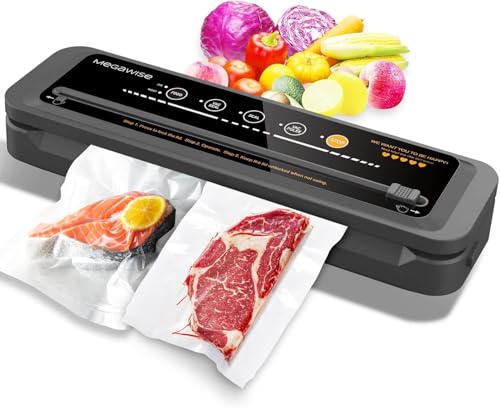
80kPa Suction Power: Updated 2025 vacuum sealer uses a DC motor pump with electromagnetics and pure copper for enhanced suction power. It sucks all air out tightly to preserve your meat and vegetables for 10 times longer or more to prevent oxidation and keep things fresh. Updated version solved many issues found from previous version
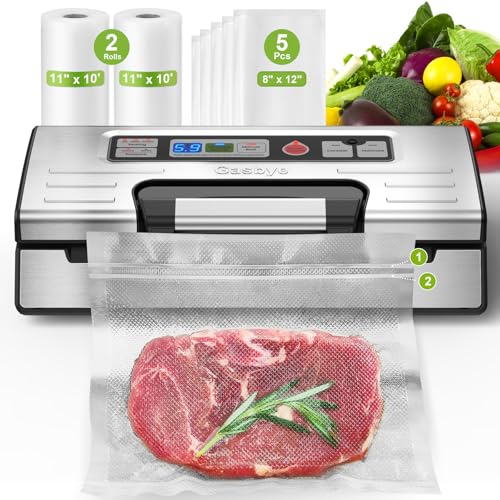
[95kPa Powerful Suction + Pulse Mode Control] Use Auto Vac & Seal for one-touch everyday sealing—powerful 95kPa suction delivers consistent vacuuming and tight seals. Use Pulse Mode for gentle, step-by-step control. It’s ideal for delicate foods to help prevent crushing, and for moist foods to help keep liquids in the bag—for cleaner, more reliable seals

This 2-pack indoor hygrometer thermometer helps monitoring room temperature and humidity in real time. Temperature range: -58 ~ 158 ℉( -50 ~ 70℃ ), Humidity range: 10%~99%
Temperature Management as Your Primary CCP
Temperature management stands out as your primary critical control point because it’s the most direct intervention preventing pathogenic growth in vacuum-sealed foods. You must establish critical limits: cool cooked foods to ≤4°C before sealing, reducing temperature from 135°F to 70°F within two hours, then to ≤41°F within four additional hours. Maintain refrigerated storage consistently at ≤41°F throughout all processing stages.
Monitor temperatures continuously using calibrated thermometers and data loggers, documenting cooling logs hourly during initial cooling phases. When temperature deviations occur, you’ll implement immediate corrective actions: reheating products to proper temperatures or discarding affected items. Document all corrective actions, notify supervisors, and investigate root causes. Verify your temperature control measures through monthly internal audits and quarterly microbiological testing, ensuring compliance with regulatory requirements and product safety. Additionally, understanding the importance of pre-freezing liquids can aid in safely sealing products and preventing spills during the process. To enhance food safety, ensure that you’re using proper vacuum sealer bags which help reduce oxidation and maintain the integrity of your frozen items.

💕Mega POWERFUL AND PRACTICAL💕 - Effortlessly save your energy with our innovative design - Experience the power of 80kPa suction for optimal vacuuming - Our higher-quality heating wire guarantees an airtight seal within 10-20 seconds - MegaWise vacuum food sealer extends food freshness 5x longer, eliminating waste and saving you money

𝟗𝟓𝐤𝐏𝐚 𝐃𝐮𝐚𝐥-𝐏𝐮𝐦𝐩 𝐏𝐨𝐰𝐞𝐫: 125W high power with a dual-pump system delivers up to 95kPa of professional-grade suction for fast sealing in 8–18 seconds—up to 50% faster than standard vacuum sealers. Ideal for meal prep, sous vide cooking, bulk storage.

Mega Reliable: Your satisfaction is our priority! We provide excellent customer service, and our dedicated team is just a click away, ready to help with any questions.
Establishing Seal Integrity Verification Procedures
How can you guarantee that your vacuum-sealed packages maintain their protective barrier throughout storage and distribution? You’ll establish seal inspection procedures using visual grading scales to evaluate uniformity, adhesion, and completeness. Implement leak testing methods appropriate for your product type—bubble tests for low vacuum levels, internal pressurization tests for greater sensitivity, or dye ingress tests for detecting micro-breaches. Conduct tensile peel tests per ASTM F88 to quantify seal strength, then correlate results with visual scores. Measure seal width consistently per ASTM F2203. For medical or sterile applications, perform aseptic opening tests per ISO 11607. Deploy inline pressure sensors for real-time monitoring, detecting microleaks as small as five microns. Document all findings systematically to verify your sealing parameters remain within acceptable limits.

AUTOMATIC VACUUM FOOD SEALER WITH STARTER KIT – This compact and easy-to-use vacuum sealing system removes air and seals bags to keep food fresher up to 5× longer compared to storage bags or containers, helping reduce waste and save money in the kitchen. It includes a full starter kit with reusable seal bags, a wine stopper, and an air suction hose for versatile sealing options.

Seal Large Intakes Instantly: Quickly seal irregular intake and exhaust ports with the inflatable intake adapter during EVAP and vacuum leak testing. Simply inflate to create a perfect airtight fit in seconds, eliminating smoke escape that plagues standard plugs. Perfect for cars and trucks before emissions inspections or when diagnosing rough idle.

COMPLETE LEAK TESTING KIT – Includes hand pump with gauge, M10/M9/M8 adapters, 60cm hose, and custom carry case. Everything you need to pressure test or vacuum test outboard gearboxes right out of the box.
Developing Standard Operating Procedures for Staff
Because vacuum sealing operations involve multiple critical control points and potential food safety hazards, you’ll need to develop thorough standard operating procedures (SOPs) that your entire staff can consistently follow. Establish a cross-functional team including management, food safety experts, operators, and quality control personnel for SOP drafting. Assign clear staff roles for documentation, review, training, and ongoing updates. Incorporate input from operators who handle vacuum sealers daily to capture practical considerations. Define specific procedures covering equipment operation, hazard identification, temperature control, and cross-contamination prevention. Document monitoring protocols, corrective actions, and sanitation requirements. Establish communication channels enabling real-time feedback from all operational levels. Ascertain your SOPs address biological, chemical, and physical hazards while maintaining traceability through standardized record-keeping systems.
Creating Comprehensive Documentation Systems
Your documentation system serves as the operational backbone of HACCP compliance, creating a verifiable record that you’re consistently implementing critical control procedures and responding appropriately to deviations. You’ll establish defined procedures for recording, storing, and controlling access to all documentation, ensuring electronic records comply with 21 CFR Part 11 requirements for authenticity and accuracy.
Your documentation best practices include capturing CCP monitoring data with dates, signatures, and timestamps. You’ll maintain thorough records of temperature logs, pressure readings, and seal integrity measurements alongside deviation and corrective action documentation.
Establish record retention timelines aligned with regulatory requirements and product shelf life. You’ll implement systematic storage methods that protect records from unauthorized changes while enabling quick retrieval for inspector review and internal verification activities.
Implementing Product Monitoring and Record-Keeping
Effective product monitoring and record-keeping form the operational foundation that demonstrates you’re actively controlling critical control points and responding to deviations in real time. You’ll establish monitoring techniques using calibrated equipment—thermometers for temperature verification, pressure gauges for seal integrity, and visual inspections for package integrity. Designate trained personnel to conduct continuous or periodic checks based on hazard risk and regulatory requirements.
Your record keeping practices must capture real-time data including date, time, measurements, and operator identification on legible forms or digital systems. You’ll store records securely and maintain documentation of all monitoring logs, deviations, and corrective actions. Regular reviews detect trends and missing data. Calibrate equipment routinely and conduct internal audits to verify staff adherence to monitoring procedures and guarantee CCP effectiveness.
Selecting Equipment and Approved Ingredients
Since vacuum sealing’s effectiveness depends entirely on proper equipment and ingredient selection, you’ll need to establish rigorous criteria for both components within your HACCP plan.
For equipment specifications, you must document the make, model, and calibration requirements of all vacuum sealers. Confirm devices create reliable seals and maintain proper temperature controls using calibrated monitoring devices. Select only food-grade vacuum bags designed for Reduced Oxygen Packaging that withstand your storage conditions. It is crucial to understand that a regular vacuum cleaner cannot achieve the same level of effective vacuum sealing as dedicated equipment.
Regarding ingredient sourcing, you’ll procure items exclusively from approved suppliers with documented certifications. Verify freshness and compliance before sealing, particularly for high-risk foods like cooked meats and seafood susceptible to Clostridium botulinum. Document all additives and preservatives within your plan, confirming regulatory compliance and labeling accuracy. Additionally, ensure that vacuum-sealed hard cheeses are stored properly to maximize their freshness and safety.

VACUUM SEALER BAGS ROLLS: 8"x20' 3rolls+11"x20' 3rolls, XinBaoLong Food Saver Bags Rolls, Commercial Grade, Heavy Duty, BPA Free for Vac Storage, Kitchen Gadgets, Kitchen Accessories
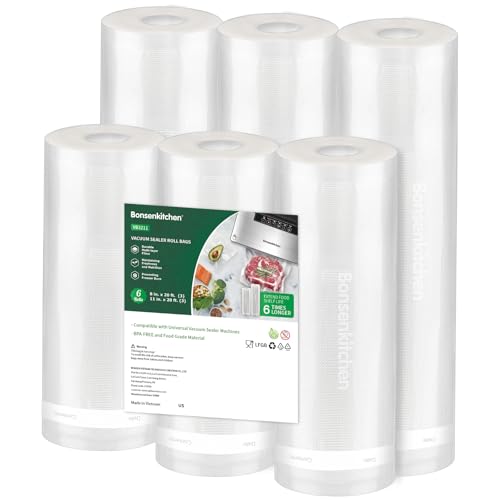
BPA FREE: Bonsenkitchen vacuum food sealer roll bags can be microwaved, frozen, re-used, washed, boiled and dishwasher safe. Allows you to precisely control your cooking temperature to achieve perfect results. You can cook sous vide in Bonsenkitchen bags by placing them in water at any temperature up to 230°F/110°C
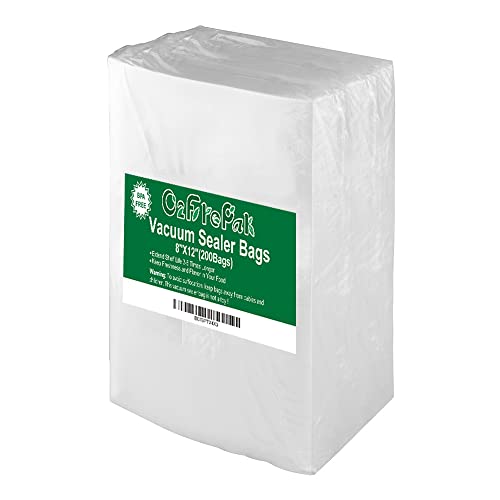
Universal Design: Compatible with All 'Clamp Style' Vacuum Sealer Machines
Meeting North Carolina Food Code Requirements
Because vacuum sealing involves Reduced Oxygen Packaging (ROP) that creates conditions where pathogenic bacteria can proliferate, North Carolina’s regulatory framework mandates HACCP plan approval before you can implement this specialized process. You must submit your HACCP plan to local regulatory authorities for approval prior to operations. Your HACCP Compliance documentation requires detailed flow diagrams, identified critical control points (CCPs), and specific monitoring procedures addressing cooking, cooling, cold holding, and packaging temperatures. You’ll establish corrective actions for CCP deviations and maintain records for regulatory review. For cooked foods or non-standard parameters, you need a state variance from the North Carolina Variance Committee. Your Risk Management strategy must include employee training on specialized processes, cleaning protocols, and temperature verification to prevent cross-contamination and unsafe food distribution.
Training Your Team on HACCP Implementation
Your HACCP plan approval sets the foundation, but the document won’t protect consumers without a trained team that understands and executes every procedure correctly. You’ll need to designate an HACCP coordinator who possesses advanced training and can lead implementation efforts across your operation.
Establish mandatory training before employment and schedule periodic refresher sessions covering critical control points, monitoring procedures, and corrective actions. Your training must combine theoretical HACCP principles with practical exercises specific to vacuum sealing processes. Encourage team collaboration during sessions using decision trees, flow diagrams, and your written SOPs as reference materials.
You’ll strengthen training feedback mechanisms by conducting performance assessments and reviewing monitoring documentation regularly. Maintain detailed training records for compliance verification and potential outbreak investigations. Management must allocate adequate resources and verify training effectiveness through audits and operational observations.