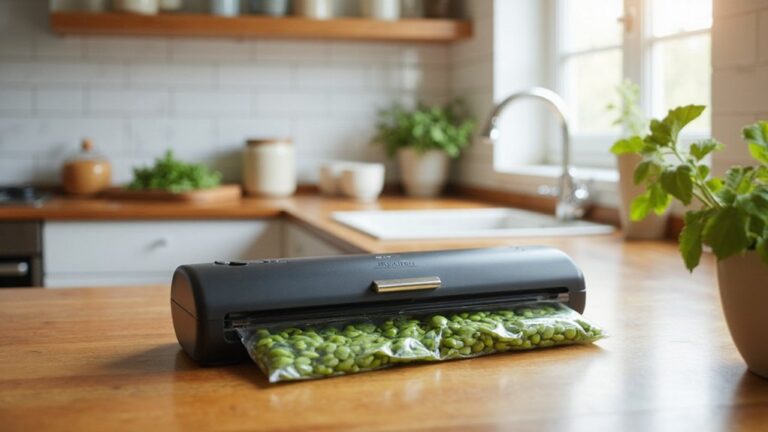
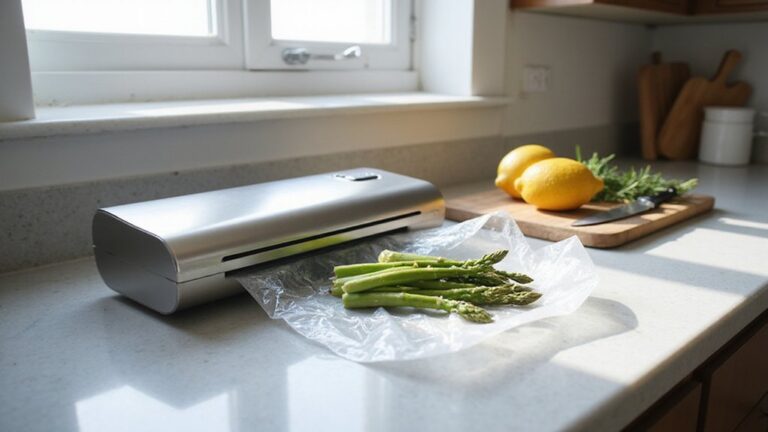
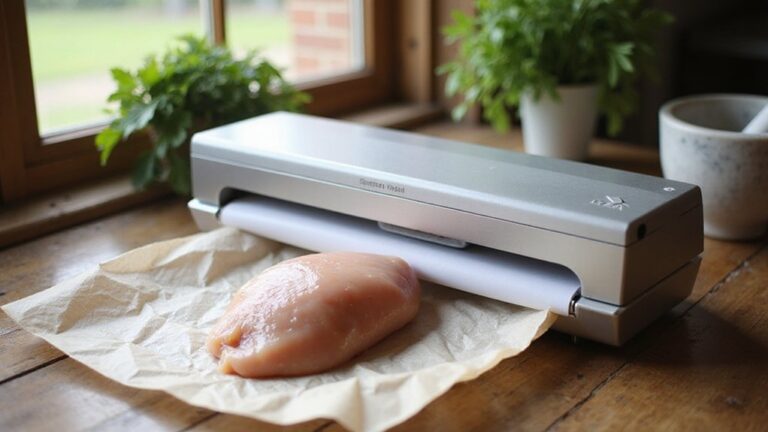
You shouldn’t use a regular vacuum cleaner for food sealing. Household vacuums lack the heat-sealing bars essential for creating airtight, hermetic seals that prevent oxidation and contamination. They’re also contaminated with dust, bacteria, and chemical residues that’ll compromise your food’s safety. Regular vacuums use only suction—they can’t generate the thermal fusion necessary for permanent packaging bonds. Food-specific vacuum sealers feature controlled suction, moisture traps, and food-safe materials that household models simply don’t provide. Understanding the critical differences between these devices reveals why proper equipment matters greatly.
How Vacuum Sealing Works for Food Preservation
When you vacuum seal food, you’re fundamentally altering the chemical environment surrounding it by removing oxygen and creating an anaerobic space. This oxygen removal is the primary preservation mechanism that inhibits spoilage organisms requiring air to survive.
By eliminating atmospheric oxygen, you prevent aerobic bacteria, mold, and yeast from proliferating. The microbial growth that typically causes food deterioration becomes impossible in oxygen-depleted conditions. Spoilage organisms simply can’t reproduce without the necessary air they depend on. In fact, vacuum sealing can be as effective as cooking methods like perfectly cooked chicken at inhibiting unwanted bacterial growth.
Additionally, you’re minimizing oxidation—the chemical reaction between oxygen and food compounds that degrades color, flavor, and texture. Heat sealing the bag after vacuum removal maintains the airtight barrier, preventing air from re-entering and microbial contamination from resuming. This controlled environment substantially extends your food’s shelf life, which is essential for extending food freshness when organizing your meals efficiently.

【BPA FREE】Bonsenkitchen vacuum food sealer roll bags can be microwaved, frozen, re-used, washed, boiled and dishwasher safe. Allows you to precisely control your cooking temperature to achieve perfect results. You can cook sous vide in Bonsenkitchen bags by placing them in water at any temperature up to 230°F/110°C

ECONOMICAL & & TIME SAVING: Total 150 count Bonsenkitchen 20 Gallon 11" x 16"+ 80 Quart 8" x 12"+ 50 Pint 6" x 10" vacuum sealer bags are different sizes of packaging, meet your different usage needs. Vacuum bags are pre-cut and ready-to-use, saving you time whenever you’re preserving leftovers, preparing make-ahead meals, and portioning bulk items in the freezer.Just pull out and use, no need to cut, no need to seal one side before putting food in

HEAVY DUTY AND PUNCTURE PREVENTION - 1 pack of 8 inch by 150 feet roll with embossed channels to increase suction, with a cutter box for cutting and storage, keep fresh without freezer burn or dehydration
Why Regular Vacuum Cleaners Are Not Suitable for Food
While you might be tempted to use a regular household vacuum for food sealing, doing so introduces multiple critical problems that undermine the preservation principles discussed earlier. Regular vacuums lack specialized sealing bars and heat-sealing functions necessary for creating airtight food storage solutions. Your household vacuum harbors dust, bacteria, and chemical residues incompatible with food contact. The inadequate and inconsistent suction leaves dangerous air pockets, creating anaerobic environments where pathogenic bacteria like Clostridium botulinum thrive. Vacuum cleaner safety standards don’t address food applications, and most units lack HEPA filtration or food-grade components. You’ll also risk packaging damage and cross-contamination. For proper food storage techniques, dedicated vacuum sealers with food-safe materials, consistent sealing mechanisms, and appropriate filtration are essential to prevent spoilage and foodborne illness.

Compact Vacuum Sealer Kit with 30 Reusable Vacuum Sealer Bags & 6 Sealing Clips – All‑in‑one compact vacuum sealer set includes 10 Small, 10 Medium, 10 Large reusable vacuum sealer bags plus 6 sealing clips to meet various food storage needs. All bags are food‑grade, BPA‑free, heavy‑duty with double‑zipper and upgraded air valve; leak‑proof, safe for freezer, fridge, microwave and dishwasher. Great reusable option for daily food storage and meal prep.

𝐒𝐌𝐀𝐑𝐓 𝐋𝐀𝐁𝐄𝐋𝐈𝐍𝐆 𝐒𝐘𝐒𝐓𝐄𝐌: Move beyond memory-based food storage with a smarter Seal–Label–Track routine. This smart vacuum sealer combines FreshTrack label printing with app-based food management, helping each sealed bag carry clearer information before it reaches the freezer. For homes that want more than a basic sealer, VSP801 helps make food preservation more organized from the start.

Dollar Saver: Preserve food up to 3 years in the freezer, maintaining its freshness and taste
Key Differences Between Vacuum Sealers and Household Vacuums
Understanding the fundamental distinctions between these two appliances is critical for proper food preservation. Vacuum sealer advantages include controlled, adjustable suction optimized for delicate foods and specialized sealing bars that create airtight, leak-proof packages. You’ll find these machines feature food-safe materials and built-in moisture traps for wet items. Additionally, vacuum sealing helps extend shelf life by removing oxygen, which reduces oxidation and inhibits bacterial growth. Furthermore, vacuum seal bags also significantly prolong storage by protecting food from spoilage and freezer burn.
Household vacuum drawbacks are substantial. Their unregulated suction crushes foods and pulls liquids into the machine, risking contamination. These vacuums lack sealing mechanisms, making them unable to close bags after air removal. They’re constructed from non-food-safe components harboring dust, allergens, and bacteria from previous cleaning tasks. Additionally, household vacuums won’t function with vacuum sealer bags designed for proper air removal. You’ll experience cross-contamination risks and failed packaging attempts.

Fully Automatic Operation: Fresko fully automatic vacuum sealer, includes 10 pre-cut bags, 140W power, dry & moist modes and bag-mouth clamp (prevent bag from moving for a better seal). The food sealer machine is Ideal for meal prep, food storage, and sous vide cooking

4 Modes : 'Vac & Seal' - one-touch automatic vacuum and seal, perfect for food that does not deform easily, such as meat, nuts, and vegetables; 'Pulse Vac' - manually control the vacuum process, suitable for soft food or moist food, such as bread or food with soup; 'Seal' - only seal, for potato chip bags; 'Accessory' - designed for vacuuming jars or sous vide bags
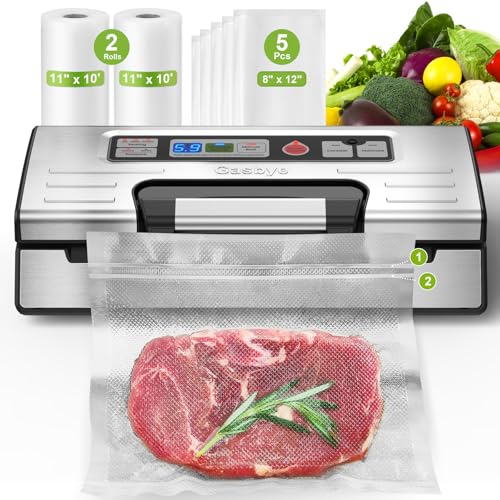
[95kPa Powerful Suction + Pulse Mode Control] Use Auto Vac & Seal for one-touch everyday sealing—powerful 95kPa suction delivers consistent vacuuming and tight seals. Use Pulse Mode for gentle, step-by-step control. It’s ideal for delicate foods to help prevent crushing, and for moist foods to help keep liquids in the bag—for cleaner, more reliable seals
Heat Sealing: the Critical Component Missing From Regular Vacuums
As you’ve learned, vacuum sealers and household vacuums differ fundamentally in their operating mechanisms—but the most critical distinction lies in heat application. Regular vacuums lack heating elements entirely, functioning solely through suction. Conversely, vacuum sealers employ precise thermal fusion, melting plastic film surfaces at temperatures between 135-170°C. This heat application causes the materials to fuse at the molecular level, creating hermetic seals that solidify upon cooling. Without thermal fusion, you cannot achieve the permanent bonds necessary for effective food preservation. Mechanical compression alone produces only temporary packaging compression, leaving your food vulnerable to oxidation, moisture infiltration, and microbial contamination. The heat component is non-negotiable for extending shelf life and maintaining food safety standards.
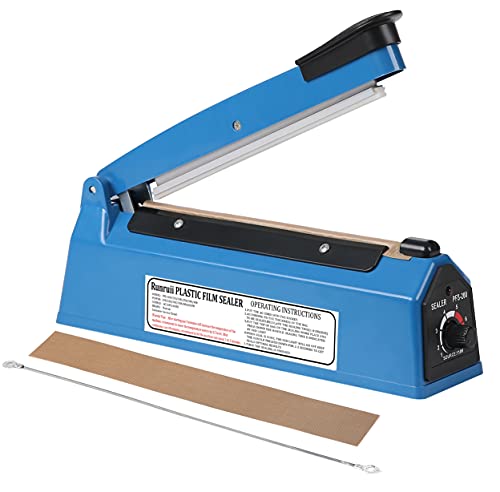
Instantly use: No warm up time needed, Lightweight Design 8 stalls temperature adjustme impulse manual hand bag sealer to meet any different materials bags. Important: This machine can't cut any bags!

80kpa Suction Power - Updated vacuum sealer uses a DC motor pump with electromagnetic perm and pure copper core to enhance its suction power. It sucks all air out tightly to preserve your meat and vegetables for 10 times longer or more to prevent oxidation.

Package content: you will receive 240 pieces of vacuum heat-seal bags, sufficient quantity for your daily usage and replacement, you can also share them with families and neighbors
Food Safety Concerns With Improper Vacuum Sealing Techniques
Because vacuum sealing removes oxygen from your food’s environment, it creates conditions that can actually promote the growth of dangerous anaerobic bacteria rather than prevent it. Clostridium botulinum thrives in low-oxygen settings, producing deadly toxins that won’t visibly change your food’s appearance.
Your bacterial contamination risks increase considerably when you use improper sealing techniques or maintain unsuitable storage conditions. Raw mushrooms and fresh garlic present particular botulinum concerns and shouldn’t be vacuum sealed. Additionally, soft cheeses harbor anaerobic bacteria that multiply rapidly in reduced-oxygen environments.
Effective food preservation strategies must include proper cooling before sealing, maintaining strict hygiene standards during the process, and ensuring adequate refrigeration afterward. Vacuum packaging alone doesn’t create shelf-stable food—it requires complementary preservation methods to remain safe.
Comparing Vacuum Sealers, Hand Pumps, and Regular Vacuums
Now that you’ve learned how improper sealing and storage conditions create serious food safety risks, you’ll want to select the right equipment to guarantee your vacuum sealing actually protects your food. Your vacuum sealer comparisons reveal three distinct options. Commercial vacuum sealers like FoodSaver employ heat-sealing technology that creates reliable airtight seals for dry foods. Hand pump alternatives offer comparable compression at considerably lower costs while eliminating moisture-related seal failures. They’re particularly effective with wet foods because they don’t require heat, and they also enhance food safety by providing a reliable barrier against spoilage. Regular household vacuums, however, present serious contamination risks through dust collection systems and lack food-grade components necessary for sanitary sealing. Their pressure output also damages delicate items. For the best safety and cost-effectiveness, hand pump alternatives represent your most practical choice across diverse food types. Additionally, choosing the right equipment is crucial for ensuring proper vacuum sealing maintains food quality and safety.

★【22pcs Sous Vide Bags】item with 5*large size 10.2x13.4in,6*medium size 10.2x11in,6*small size 8.3x8.7in ,1 hand pump and 4 sealing clips. perfect for reusable food vacuum storage bags for storing different size food

【IMPORTANT: HANDHELD SEALER ONLY】This item contains the hand held vacuum sealer for food body, charging cable, and manual only. Bags are sold separately.
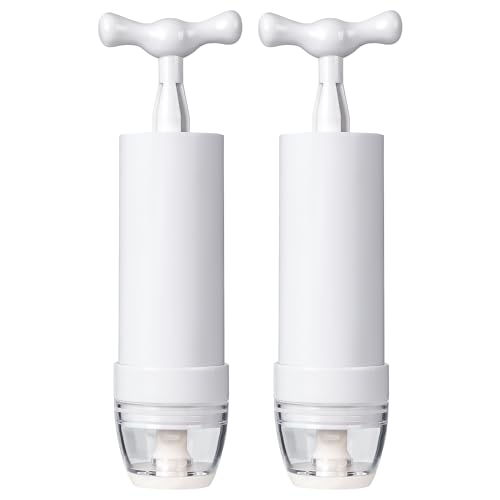
APPLICATION: Only suitable for Sous Vide Bags, Please confirm before purchasing
Benefits of Proper Vacuum Sealing Over Alternative Storage Methods
Once you’ve selected an appropriate vacuum sealing method, you’ll want to understand how it outperforms conventional storage alternatives. Proper vacuum sealing delivers substantial benefits overview by greatly extending storage longevity. Your meats remain fresh for up to three years when frozen with vacuum sealing, compared to months with standard wrapping. Dry goods like rice maintain quality for one to two years versus weeks in conventional pantry storage. In fact, specific products like frozen vacuum-sealed foods typically last 2 to 3 years, ensuring your items remain usable far longer than traditional methods.
The mechanism’s effectiveness stems from oxygen removal, which prevents oxidation and inhibits microbial growth. You’ll experience reduced freezer burn, color changes, and rancidity. Additionally, vacuum sealing creates an anaerobic environment that limits bacterial and fungal proliferation, comparable to canning’s safety advantages. Vacuum sealing’s role in preserving flavors is particularly beneficial, ensuring that your food waste decreases significantly while nutritional values and flavor profiles remain preserved throughout extended storage periods.
Best Practices for Safe and Effective Food Vacuum Sealing
Five critical dimensions determine whether your vacuum sealing process maintains food safety and effectiveness: hygiene standards, temperature control, specialized food handling, quality verification, and pathogen management.
You’ll maintain hygiene by washing hands thoroughly, using clean utensils, and designating surfaces exclusively for vacuum sealing. You must keep perishables refrigerated below 41°F or frozen at proper temperatures—never exceeding 2 hours at room temperature. When vacuum sealing sausages, remember that they can remain safe for 6–7 days when properly sealed in the refrigerator, significantly extending their shelf life.
You should avoid vacuum sealing raw onions, garlic, and mushrooms due to botulism risks. You’ll verify complete seals within 24 hours, checking for debris and resealing if necessary.
You must understand that vacuum sealing doesn’t kill existing pathogens or replace canning methods. Creative packaging solutions and time efficiency gains don’t compromise these non-negotiable safety protocols. You’ll label everything with processing dates and use-by dates for accountability.