

You’ll compress your belongings by up to 75% using vacuum seal bags. Start by folding items neatly, then seal the slider tightly while keeping contents away from the zipper. Remove air using a hand pump or rolling method for maximum compression. Stack flattened bags strategically into suitcase corners to optimize space. Label each bag for quick identification. Remember to re-seal bags at security checkpoints to maintain your space savings. There’s much more you should know about maximizing this packing technique effectively.
Benefits of Vacuum Seal Bags for Travel
Since travel luggage space is limited, vacuum seal bags offer a practical solution by compressing your items by up to 75%, which dramatically reduces the volume you’ll need to pack. You’ll fit more belongings into carry-on or checked bags, improving your travel efficiency greatly.
Beyond space savings, you’ll appreciate how these bags organize your items by type, person, or trip segment. They keep clean clothes separated from dirty ones, preventing odor transfer and mildew growth on damp swimsuits or gym gear. Using techniques like the water displacement method, you can effectively remove air from your bags without a vacuum machine, ensuring optimal compression.
You’ll also reduce excess baggage fees by maximizing luggage capacity. Since most travel vacuum seal bags don’t require electricity—you can expel air by rolling or hand pump—you’ll maintain convenience throughout your journey. Their reusability lessens environmental impact compared to single-use packing methods, making them a sustainable travel choice. Additionally, vacuum sealing locks out air and moisture to protect your items from spoilage and odors during your travels.
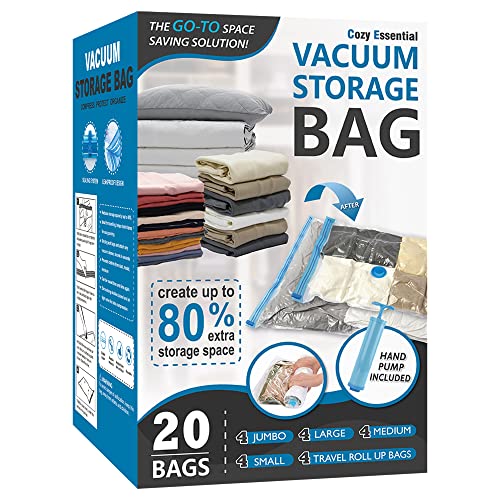
Expand your storage by up to 80%: Our vacuum seal storage bags effortlessly compress clothes, blankets, pillows, and travel essentials in seconds, transforming overcrowded closets and overpacked suitcases into clean, organized space- no clutter at home, no unnecessary luggage fees. Just more room whenever you need it.

Frosted Privacy & Heavy-Duty Protection.These vacuum storage bags feature a stylish frosted gray, semi-transparent finish that keeps your belongings organized while adding a touch of privacy. Crafted from durable, reusable PA+PE material and equipped with a secure double-zipper seal, they help keep clothing and bedding protected from dust and moisture while compressing bulky items to save up to 80% of storage space.

Kindly Note: This travel vacuum bags Includes 15+1 bags (total 16 bags): 5 Small, 5 Medium, and 5 Large. Plus an extra refill Large.
Types of Vacuum Seal Bags Available
Now that you understand how vacuum seal bags benefit your travels, you’ll want to know what options exist to match your packing needs and budget.
Vacuum bag materials range from basic plastic to premium heavy-duty TPU nylon, with reinforced seams and anti-rip construction offering superior durability. Higher-end models feature waterproof and odor-proof qualities that protect your belongings.
Compression methods vary greatly. You’ll find bags with integrated electric pumps—like USB-C rechargeable options—providing effortless air removal. Alternatively, manual roll-up bags rely on physical compression and cost less but require more effort. Some bags triple your packing space when properly compressed.
Sizes span extra small to jumbo, accommodating everything from carry-on needs to extensive packing. Premium bags typically include advanced sealing technology and convenience features, while budget options offer basic functionality at lower price points. Vacuum sealing also helps to maximize food freshness, ensuring that any snacks or ingredients you pack for your trip remain fresh throughout your travels.
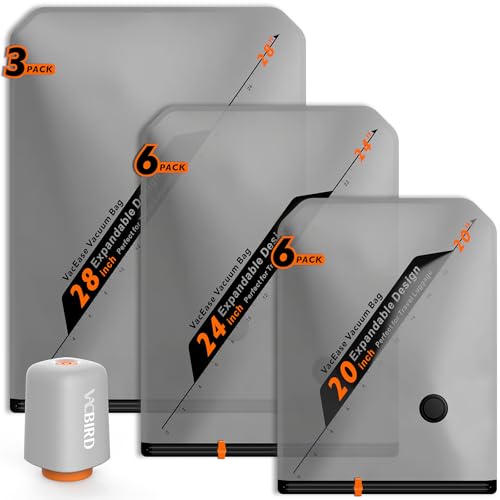
1800mAh Wireless Pump - No Outlet: Fast 3-sec vacuum, Type-C/wireless charging. 100+ uses per charge (vs. cordedpumps that tether you to a wall)

[The Ultimate All-in-One Travel Solution] - Why buy just bags when you can have a complete packing system? This premium bundle includes 18 vacuum storage bags PLUS 3 travel must-haves: a breathable laundry bag for dirty clothes, a waterproof shoe bag, and a TSA-approved clear toiletry bag. Everything you need to organize your suitcase like a pro.
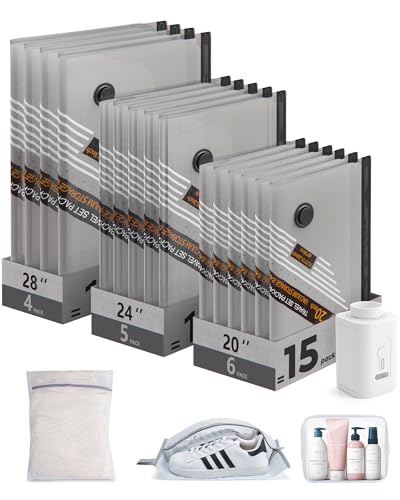
COMPRESS ANYWHERE — NO OUTLET, NO EFFORT: Wires chain you to a wall. The 1200mAh rechargeable pump sets you free. Press one button and a bag shrinks in 10 to 15 seconds — on the hotel bed, in the car, at the gate. Type-C charging means the cable that powers your phone powers your pump. No hand-pumping. No crawling under desks hunting for a socket.
Step-by-Step Usage Instructions
Mastering vacuum seal bags requires you to follow a methodical process that begins with careful preparation and ends with proper storage. Start by selecting soft, compressible items and folding them neatly to optimize space. Keep contents away from the zipper to prevent leaks, then close the seal tightly using the provided slider. These vacuum seal tips enhance your travel organization considerably.
Next, remove air using your preferred method: roll the bag firmly from the opposite end toward the valve, or attach a hand pump and operate it until resistance indicates maximum compression. Close the valve immediately to maintain the seal. Additionally, consider items that can be heated to 145°F as this will help you ensure they are safe for consumption after traveling. Finally, arrange flattened bags strategically in your luggage, combining different thicknesses for efficient packing. When traveling through security checkpoints, reseal bags to preserve space savings for your return journey.
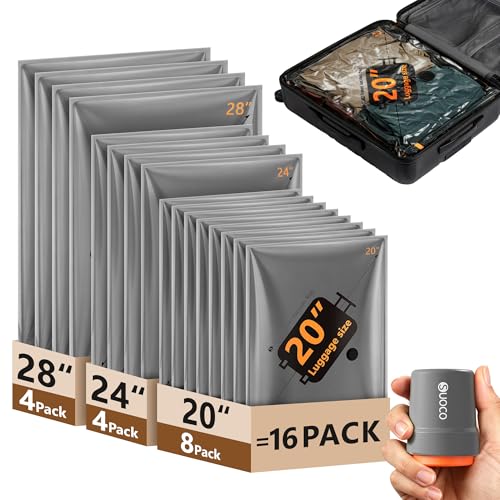
Travel Vacuum Bags: Space-saving travel essentials that double your suitcase capacity. Also ideal as household vacuum storage bags.

Vacuum Bags Designed for Travel – These bags are designed to fit perfectly inside 18-34” suitcases, travel backpack, or carry-on duffel bag. Whether you're trying to pack light with just a carry-on and skip the checked bag fees, you're a self-proclaimed overpacker who needs to bring every outfit possible, Ideal for long international trips, weekend getaways, business trips, cruise, or outdoor adventures, This set takes the stress out of limited luggage space and is the best travel companion

Dedicated Customer Support: Contact us directly for any product issues – we’re here to help/1-Year Warranty Included
Packing Strategies and Best Practices
Once you’ve mastered the mechanics of vacuum seal bags, strategic packing elevates your travel organization to the next level. Start by organizing clothing into categories—tops, bottoms, underwear—for efficient compression and easier unpacking. Place heavier items like jeans at the bag’s bottom for stability. Layer clothes flat and stack them neatly to maximize compression while minimizing wrinkles. Use multiple smaller bags instead of one large bag; this approach minimizes clutter and improves accessibility. Label each bag clearly for quick identification. Stack your compressed bags strategically into suitcase corners and gaps, filling space like Tetris pieces. This systematic method reduces your overall luggage volume while keeping everything organized and readily accessible throughout your trip.

Rechargeable cordless travel pump – 1500mAh battery offers up to 90 compressions per charge. USB charging via laptop/power bank ensures global compatibility
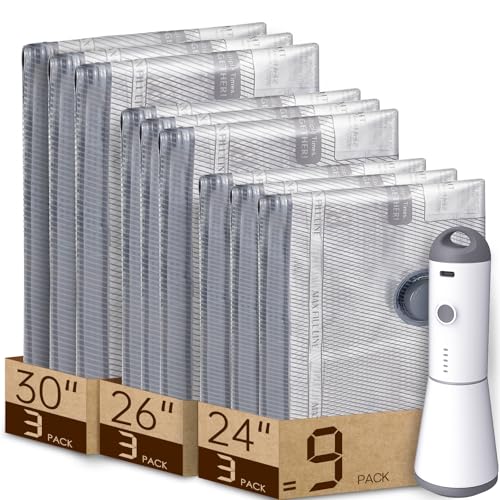
Rechargeable & Cordless for Travel – Powered by a 1500mAh battery, this pump compresses up to 90 bags per charge. USB charging via laptop or power bank ensures global compatibility

Rechargeable cordless travel pump – 1500mAh battery offers up to 90 compressions per charge. USB charging via laptop/power bank ensures global compatibility
What Not to Pack in Vacuum Bags
While vacuum seal bags excel at maximizing luggage space, they’re not suitable for everything you pack. Avoid sealing delicate fabrics like silk, lace, and velvet, which develop permanent creasing and texture damage under compression pressure. Embellished items with beads or sequins risk decoration damage.
Keep leather items out of vacuum bags entirely. Leather develops permanent creases, loses suppleness, and becomes susceptible to mold when moisture builds up inside sealed bags. Suede faces similar risks, requiring airflow to maintain its condition.
Don’t compress wool garments, cashmere, or specialty fibers like alpaca, as prolonged pressure causes felting, matting, and fiber breakage. Additionally, exclude medications, travel documents, and toiletries needed during flights—they require quick, easy access. Electronics and valuables also shouldn’t be vacuum sealed due to insufficient cushioning and pressure damage risks.
Maintenance and Care for Longevity
Now that you’ve packed your bags strategically—avoiding delicate fabrics, leather, and items you’ll need quick access to—you’ll want to protect your investment in vacuum seal bags through proper maintenance.
Start with regular bag cleaning using mild soap and water, ensuring they’re completely dry before reuse to prevent mold. Vacuum seal bags are designed to significantly extend shelf life by eliminating oxygen and slowing the spoilage process. Perform seal inspection before each use, checking zippers and valves for debris or damage that compromises closure.
Store bags flat in cool, dry environments away from sharp objects and extreme temperatures. These conditions preserve plastic flexibility and seal integrity. When pressure loss occurs, re-seal and re-vacuum the bag to restore compression. Additionally, maintaining proper seal integrity is essential to extend the longevity of your vacuum-sealed food during travel. Avoid harsh chemicals or abrasive tools during cleaning, as they damage materials and seals. By following these systematic maintenance practices, you’ll extend your bags’ lifespan greatly.
Airline Policies and Travel Considerations
Before you head to the airport with vacuum-sealed luggage, you’ll need to understand how TSA regulations and airline policies affect your packing strategy. While TSA allows vacuum bags in both carry-on and checked luggage, airline regulations require your bags to meet standard luggage size and weight limits. Keep your pump or manual compression method accessible during security—TSA officers may require tactile inspection, breaking your seal. When this happens, you’ll need to quickly reseal the bag to avoid delays. Select vacuum bags with built-in valves for easy resealing. Avoid overly compressed bags that raise suspicion and trigger lengthy security checks. It’s also advisable to remember that vacuum sealing helps extend shelf life and improves preservation, which can be particularly helpful when packing food items for your travels. Prepare to unpack and repack efficiently at checkpoints to guarantee smooth passage through airport security. It’s also important to choose bags that are specifically designed for vacuum sealing to ensure they can withstand the sealing process and maintain an airtight environment.


