You can measure water temperature with an infrared thermometer, though you’ll capture surface readings rather than bulk temperature. Water’s high emissivity (0.95–0.98) makes it suitable for IR measurement, but reflective properties and environmental factors like steam and ripples distort accuracy. You’ll need to verify your thermometer’s emissivity setting, stir the water thoroughly, and position the device perpendicular to the surface within five centimeters. Regular calibration against contact thermometers guarantees reliability. Understanding the nuances behind these measurements will greatly improve your results.
How Infrared Thermometers Work
Because all objects above absolute zero emit infrared radiation through atomic and molecular motion, infrared thermometers can detect this energy without touching the target surface. You’ll find that faster molecular motion correlates directly with higher temperatures and greater IR emission.
The device’s lens focuses reflected infrared radiation onto a thermopile detector, which absorbs this focused energy and converts it into heat. This temperature increase generates a proportional voltage output that the thermometer’s electronics translate into an electrical signal. You receive a digital temperature reading within seconds or fractions of a second.
The thermopile detector’s efficiency depends on the target’s emissivity—the surface’s ability to emit IR radiation. You’ll achieve more accurate readings on high-emissivity surfaces like biological tissue, while reflective surfaces require emissivity compensation.

【Highly Accurate & Adjusts to Any Surface】Designed with the latest thermopile sensor technology, the infrared laser thermometer gun is accurate to +/-1.5%; Improve this pizza oven thermometer gun measurements by adjusting the emissivity from 0.1–1.0 to match the surface material being measured

𝐖𝐢𝐝𝐞 𝐓𝐞𝐦𝐩𝐞𝐫𝐚𝐭𝐮𝐫𝐞 𝐑𝐚𝐧𝐠𝐞: Measure a temperature range from -58°–1130°𝙁 / -50°–610°𝘾 𝙖𝙣𝙙 𝙜𝙚𝙩 𝙮𝙤𝙪𝙧 𝙧𝙚𝙨𝙪𝙡𝙩 𝙞𝙣 0.5 𝙨𝙚𝙘𝙤𝙣𝙙𝙨; The display will also show the max temperature of the surface you’re measuring. Perfect heat gun for measuring.

Temperature measurement range:-50℃-500℃ (-58℉-932℉)Display resolution: 0.1 ℃ or 0.1 ℉
Why Water Temperature Measurement Is Challenging
While infrared thermometers work reliably on opaque surfaces with stable emissivity, water presents distinct measurement challenges that you’ll need to understand for accurate temperature evaluation. Water’s reflective properties distort readings by capturing ambient radiation rather than actual temperature. Surface ripples and varying emissivity conditions create inconsistent measurements across measurement points. Additionally, thermal stratification means you’re only measuring surface temperature, which doesn’t represent deeper water layers—a critical limitation when evaluating overall water mass conditions.
Sensor limitations compound these issues. Most commercial IR thermometers lack the rapid response time that water’s thermal characteristics demand. Environmental influences further complicate accuracy: wind speed, atmospheric humidity, dust, and aerosols all interfere with infrared radiation transmission. These combined factors create substantial measurement uncertainty requiring alternative methods for reliable water temperature monitoring.
Surface Temperature vs. Bulk Temperature
Since infrared thermometers only detect radiation from water’s uppermost layer, you’ll encounter a fundamental distinction between surface temperature and bulk temperature that directly affects your measurement strategy. Skin temperature, measured from the top 0–500 µm layer, differs from bulk temperature, which exists several centimeters to meters deep. You’ll find that skin temperature responds rapidly to atmospheric conditions and solar radiation, fluctuating by less than 1°C relative to bulk temperature. During daytime with calm winds, you’ll observe warmer skin temperatures as heat accumulates at the surface. Conversely, nighttime or windy conditions yield cooler skin readings. Understanding this distinction matters because your infrared thermometer captures only skin temperature, not the representative bulk measurement that oceanographic and climate studies typically require for accurate comparisons. Furthermore, it’s important to consider how the surface temperature can be influenced by materials like shiny surfaces, which may lead to inaccurate readings. For optimal accuracy, consider the distance-to-spot ratio to ensure your measurements reflect the intended surface.
The Role of Emissivity in Accuracy
Now that you understand how infrared thermometers capture only surface temperature, you’ll need to account for another critical variable affecting your measurements: emissivity. Emissivity measures how efficiently water radiates thermal radiation relative to a perfect blackbody. Water’s emissivity coefficient ranges from 0.95 to 0.98, making it an exceptionally high-emissivity material that radiates heat nearly as effectively as an ideal blackbody.
Most infrared thermometers come pre-set at 0.95 emissivity, which aligns perfectly with water’s actual range. This alignment eliminates significant measurement complications. However, you must verify your device’s emissivity setting before measuring. Algorithm corrections applied to thermometer data can reduce measurement bias from −1.393 to 0.002 for water surface emissivity measurement, substantially improving accuracy and reliability.

𝐕𝐞𝐫𝐬𝐚𝐭𝐢𝐥𝐞 𝐓𝐨𝐨𝐥𝐬: Infrared technology allows you to measure various objects at home and outdoors; Use it for 𝒎𝒆𝒂𝒕, 𝑫𝑰𝒀 𝒄𝒂𝒏𝒅𝒚, 𝒐𝒗𝒆𝒏𝒔, 𝒈𝒓𝒊𝒍𝒍𝒊𝒏𝒈, 𝒇𝒐𝒐𝒅, 𝒄𝒐𝒐𝒌𝒊𝒏𝒈, 𝒂𝒖𝒕𝒐𝒎𝒐𝒕𝒊𝒗𝒆 𝒖𝒔𝒆, 𝑨/𝑪, 𝒓𝒆𝒇𝒓𝒊𝒈𝒆𝒓𝒂𝒕𝒐𝒓𝒔, etc.

【Ultimate Versatility for Kitchen, Garage & House】Ideal for a multitude of tasks! Check pizza oven or griddle heat for perfect cooking, monitor HVAC system vents, or safely diagnose automotive repair issues like overheating engine parts, all with our infrared thermometer gun

𝐕𝐞𝐫𝐬𝐚𝐭𝐢𝐥𝐞 𝐓𝐨𝐨𝐥𝐬: Infrared technology allows you to measure various objects at home and outdoors; Use it for 𝒎𝒆𝒂𝒕, 𝑫𝑰𝒀 𝒄𝒂𝒏𝒅𝒚, 𝒐𝒗𝒆𝒏𝒔, 𝒈𝒓𝒊𝒍𝒍𝒊𝒏𝒈, 𝒇𝒐𝒐𝒅, 𝒄𝒐𝒐𝒌𝒊𝒏𝒈, 𝒂𝒖𝒕𝒐𝒎𝒐𝒕𝒊𝒗𝒆 𝒖𝒔𝒆, 𝑨/𝑪, 𝒓𝒆𝒇𝒓𝒊𝒈𝒆𝒓𝒂𝒕𝒐𝒓𝒔, etc
Best Practices for Measuring Water Temperature
To achieve reliable water temperature measurements with an infrared thermometer, you’ll need to implement several interconnected best practices that address surface preparation, device positioning, calibration, and environmental factors. Start by stirring your water vigorously to establish temperature stability throughout the liquid. Position your thermometer perpendicular to the water surface, maintaining the correct distance-to-spot ratio for accurate readings. Calibrate your device regularly using traceable standards, and allow 10–30 minutes for environmental acclimation. Clean the lens consistently with non-abrasive materials. Use opaque containers to minimize reflective interference, and guarantee your measurement techniques avoid boiling or agitated surfaces that distort results. These methodical steps eliminate variables that compromise data accuracy and guarantee your infrared measurements reflect genuine surface temperatures. Additionally, be aware that the accuracy of infrared thermometers can be influenced by environmental factors, which may lead to imprecise readings if not properly managed.

Digital LCD Fridge Thermometer, It only suitable for Fahrenheit,not for Celsius
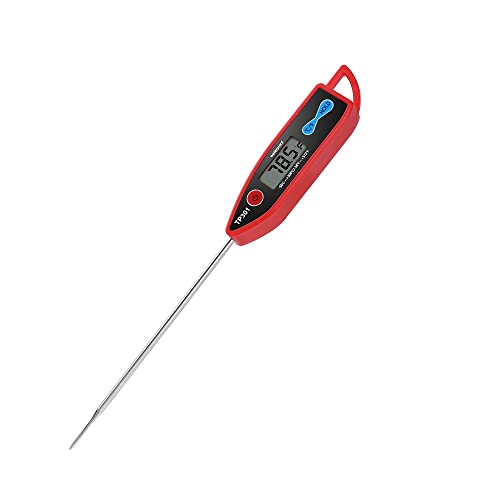
WATERPROOF - IPX7 waterproof. No worry on the rinse or wash under running water after measuring, easy clean and keep your digital food thermometer always in good shape!

WALL & FLOOR METER: The ME5 Moisture Meter offers non-invasive pinless testing of moisture in drywall, wood, flooring & building materials; dual-depth mode measures surface & core moisture, eliminating substrate influence when testing coverings
Infrared Thermometers vs. Contact Thermometers
While implementing the best practices outlined above guarantees reliable infrared measurements, you’ll find that comparing infrared and contact thermometers reveals fundamental differences in measurement methodology, accuracy specifications, and practical application suitability. Contact thermometers provide superior accuracy for water temperature measurement, delivering readings within 0.5°C through direct thermal conduction. Infrared devices measure only surface radiation, achieving 0.5 K accuracy but remaining vulnerable to steam interference and thermal gradients. In fact, unlike instant-read thermometers that should only be inserted near the end of cooking time, contact methods can be left in place for continuous monitoring. Your accuracy comparison shows contact methods excel in culinary and laboratory applications, while infrared technology suits industrial ranges from -50°C to 1000°C. Contact measurement techniques eliminate external variables, whereas infrared measurement techniques require vigorous stirring and proper emissivity calibration. For precise water temperature assessment, contact thermometers outperform infrared alternatives in reliability and measurement consistency. Furthermore, similar to how certain advanced thermometers can measure both internal and ambient temperatures, some infrared devices can also gauge surface temperatures effectively.

【Ultra-Fast & Precision Accurate】This meat thermometer digital delivers accurate readings within ±1°F/±1°C in just 1–2 seconds, with a wide temperature range of -58°F to 572°F (-50°C to 300°C). No more waiting over the heat - know your food's exact temperature instantly.

[ Waterproof - IPX7 ] With the strong waterproof ability, it’s very suitable for measuring the temperature of liquids, such as water, milk, candles. When used in the kitchen, food, powder and oil stains are inevitable. The whole body can be rinsed under water. Easy to clean and maintain!
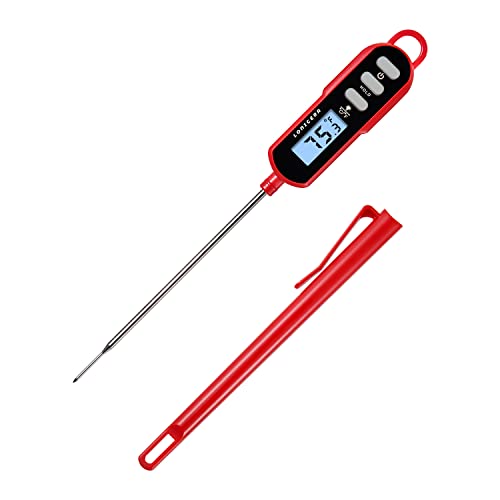
5" Probe & IPX6 Waterproof - Long 5-inch food-grade probe keeps your hands safely away from hot liquid and heat. IPX6 waterproof design lets you rinse it directly under running water for easy cleaning.
Common Errors and How to Avoid Them
Even when you’re familiar with infrared thermometer basics, several systematic errors can compromise your water temperature measurements—errors that stem from the device’s fundamental reliance on surface radiation rather than direct thermal contact.
Common mistakes include neglecting emissivity adjustments; water requires 0.95-0.98 calibration settings, while metal containers demand compensation. Measurement pitfalls arise from improper positioning—you must maintain a 90-degree angle within five centimeters of the surface, targeting the center directly.
Steam interference invalidates boiling water readings entirely. Confirm adequate stirring to equalize surface and subsurface temperatures before measuring. Lens contamination and obstructions introduce significant errors, demanding regular cleaning.
Validate your thermometer’s accuracy using ice-water mixtures at 0°C or comparing against calibrated thermocouples. These validation protocols establish baseline reliability for subsequent measurements. Additionally, understanding transmission fluid temperature can enhance your grasp of how infrared thermometers function in various contexts.
Calibration Methods for Improved Accuracy
Knowing where errors originate won’t eliminate them—you’ll need systematic calibration to correct your infrared thermometer’s readings against known reference temperatures. You can employ several calibration techniques to achieve temperature accuracy. The ice bath method provides a 0°C reference by combining crushed ice with cold water, stirred and stabilized for 1–2 minutes. The boiling water method uses distilled water heated to 212°F at sea level, accounting for altitude variations. Black body calibration sources deliver precise radiant energy at set temperatures with ±10 mK stability. Contact probe comparison involves immersing an accurately calibrated probe alongside infrared measurements at 3 inches above the water surface. Each technique requires perpendicular alignment and emissivity settings of 0.95 or 0.97 for ideal accuracy. Note that proper calibration of thermometers typically relies on standard methods involving ice point or boiling point references.
When to Use Infrared Thermometers for Water
Infrared thermometers excel at capturing surface temperature data quickly and non-invasively, making them valuable for specific water measurement applications where you don’t need subsurface readings or absolute precision. You’ll find infrared advantages particularly useful in food safety protocols, where rapid surface assessments after stirring prevent skin temperature variation. They’re ideal for monitoring pools, spas, and aquariums when surface conditions remain controlled and undisturbed by steam or mist.
However, you must recognize measurement limitations. Position your sensor within centimeters at 90° angles to minimize error from reflections and environmental interference. Calibrate against contact thermometers to verify accuracy, especially in industrial settings where hazardous conditions prevent direct contact. You’ll achieve maximal results when prioritizing temperature trends over exact bulk readings.
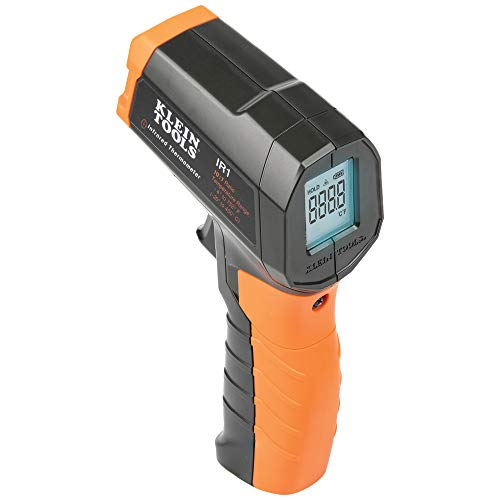
PRECISE TEMPERATURE MEASUREMENT: Optical resolution (distance-to-spot) of 10:1 ensures accurate temperature readings from a distance

🎁【High Accuracy】 DESOMIYE laser thermometer gun adopts the latest high-sensitivity temperature sensor, which can measure the temperature range of -50°C~600°C (-58°F~1112°F) in only 0.5 seconds. For best results, the reader should be 14 inches away from the object.

【ACCURACY】 Our infrared thermometer offers precise temperature readings on various surfaces, with adjustable emissivity in small increments from 0.10 to 1.00. It also has a 13-point laser guidance system and built-in Class 2 0.5-0.9Mw laser for accurate and safe targeting.