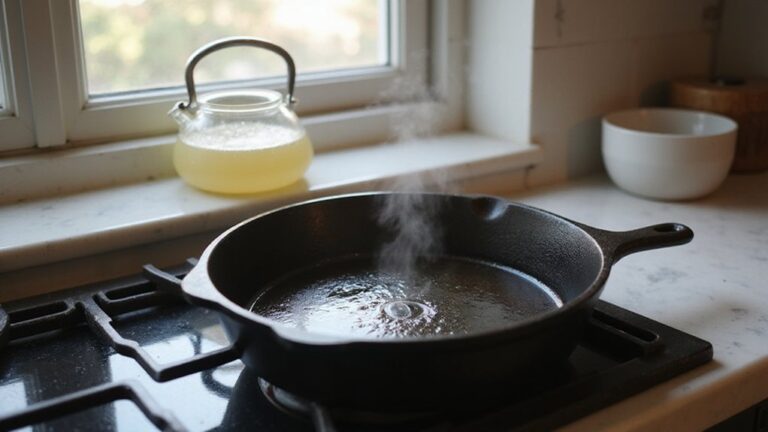
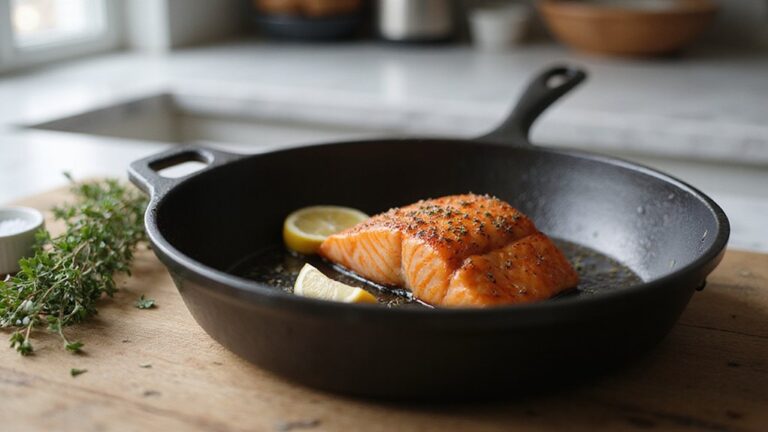
You can technically use an unseasoned cast iron skillet, but you’ll encounter significant practical challenges. Food’ll stick stubbornly to bare metal, making browning inconsistent and cleanup frustrating. Moisture exposure triggers rapid rust formation within hours, requiring immediate drying. Acidic ingredients may leach iron into your food, creating metallic tastes and potential bacterial concerns on unsealed surfaces. The factory seasoning eliminates these issues entirely, establishing a protective oil layer that polymerizes when heated. Understanding why seasoning matters fundamentally changes how you’ll approach cast iron care.
Understanding Pre-Seasoned Cast Iron
Why do cast iron skillets arrive ready to cook? Manufacturers apply a factory-applied oil layer that polymerizes when heated, creating an initial non-stick coating. This pre-seasoned benefits approach eliminates preparation steps before first use. Additionally, the initial coating is a crucial step in establishing a foundation for a durable seasoning layer that will improve over time with proper care.
You’ll find that factory seasoning typically uses 100% natural vegetable oil, protecting the porous cast iron surface from rust during shipping. However, this initial layer remains relatively thin and requires reinforcement through regular use. It’s essential to remember that proper cleaning and drying are crucial for maintaining seasoning and preventing rust.
Understanding seasoning techniques helps you maximize your skillet’s potential. Some users prefer removing factory seasoning through high-heat treatment and applying their own for ingredient control. Others accept the manufacturer’s work and build durability through consistent cooking and maintenance—hand washing, thorough drying, and periodic oiling.
Both approaches yield functional cookware; your preference depends on desired control and convenience.

Exceptional Heat Retention: Enjoy perfectly cooked meals with cast iron skillets that provide even heat distribution, ideal for searing, frying, and baking in a 12 inch frying pan.
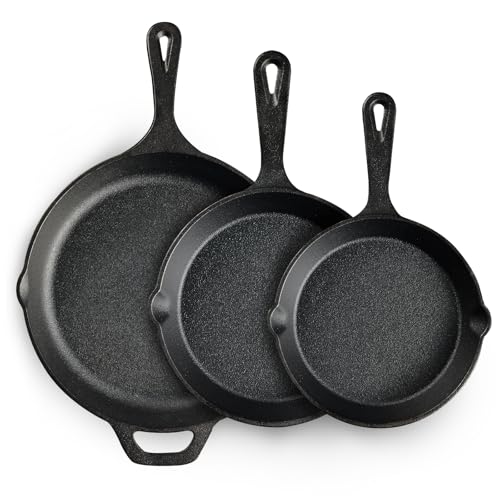
SEASONED COOKWARE FOR IMMEDIATE USE: Pre-seasons every pan with 100% natural vegetable oil, giving it a non-stick finish without synthetic chemicals, to enhance the non-stick performance and deliver authentic flavors right out of the box. The more you use your skillet, the better the seasoning becomes for effortless cooking.
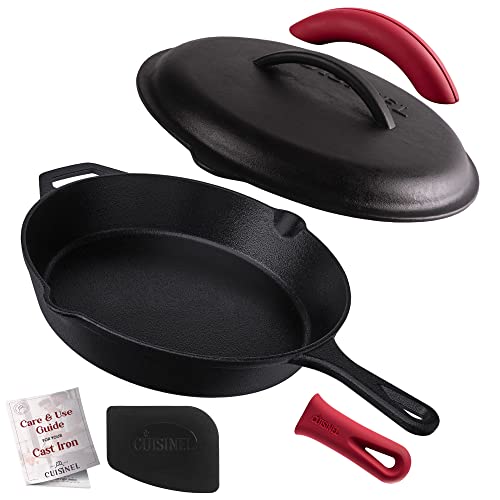
SUPERIOR HEAT RETENTION FOR PERFECT SEARING – Heavy‑duty cast iron distributes heat evenly so steaks, vegetables and more cook consistently on stovetop, oven, grill or campfire.
The Reality of Using Unseasoned Pans
While pre-seasoned cast iron skillets dominate the market, you might still encounter or deliberately choose to use unseasoned pans, and the practical implications warrant careful consideration. You’ll face significant unseasoned drawbacks that compromise your cooking experience. Food sticks persistently to bare surfaces, undermining browning and searing effectiveness. Your cooking frustrations intensify during cleanup, as residue adheres stubbornly, demanding aggressive scrubbing that risks surface damage. Moisture exposure accelerates rust formation, necessitating immediate drying. Acidic ingredients like tomatoes leach iron into your food, creating metallic tastes and potential health concerns for susceptible individuals. Additionally, rust contamination poses safety hazards requiring removal before food contact. The porous, unsealed surface harbors bacteria difficult to eliminate through standard washing. Most experienced cooks avoid unseasoned pans precisely because these challenges outweigh any purported benefits. Furthermore, using soap can be helpful in cleaning cast iron skillets and maintaining their seasoning, but this is only beneficial for seasoned pans.
How Rust Develops on Bare Cast Iron
The moisture problems we’ve discussed don’t stop at bacteria and sticking food—they accelerate a more destructive process that degrades your pan at a molecular level. When you expose bare cast iron to moisture, oxidation begins immediately. Iron molecules react with oxygen and water, initiating rust formation at the surface. Without seasoning’s protective oil layer, you’ve left your pan defenseless against this chemical reaction. Additionally, using a protective oil during seasoning can significantly enhance the skillet’s resistance to rust formation over time. Humidity amplifies this process greatly. Even residual dampness trapped in crevices or on the pan’s interior triggers rust development within hours. Scratches exposing bare metal become rust hotspots. Prolonged moisture exposure converts surface rust into flaky, powdery patches that compromise structural integrity. Left unchecked, rust spreads rapidly, weakening your pan irreversibly and potentially contaminating food with iron particles. To prevent this, ensure that your cast iron skillet is properly preheated before each use, as this helps create a barrier against moisture.

YOUR NEW GO-TO SEASONING SPRAY: The Lodge Seasoning Spray is the perfect seasoning spray to maintain your cast iron cookware. It is made of 100% canola oil - no additives or propellants, to protect your cookware and enhance its finish.
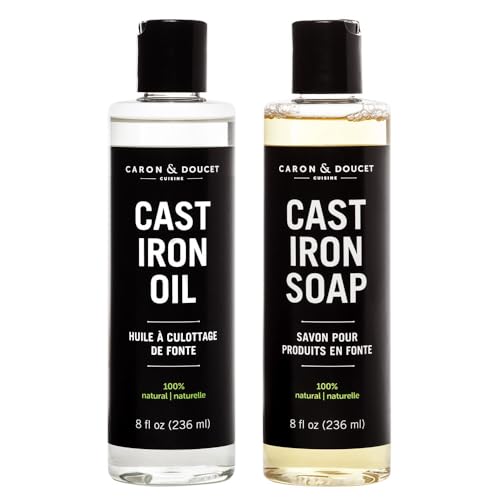
CLEANS CAST IRON | Includes our Cast Iron Soap unlike detergent based soaps, this soap is formulated with 100% natural plant-based oils & free of sulfates, phosphates, parabens & petrochemicals! Gentil on cast iron seasoning & on your hands!

RESTORE & PROTECT YOUR CAST IRON: Keep skillets, Dutch ovens, griddles, grill grates, and carbon steel cookware in peak condition with our premium cast iron skillets seasoning oil. Builds a durable protective layer that helps prevent rust, preserves the classic black patina, and maintains naturally nonstick cooking performance.
Building Non-Stick Properties Over Time
Once you’ve seasoned your cast iron properly, you’re not finished—you’ve only laid the foundation. The real magic happens through repeated use and consistent seasoning techniques that build layers incrementally.
Each cooking session contributes to your pan’s non-stick development. When you cook with fatty foods, oil polymerization continues, creating a harder, more slick surface that resists sticking. This process accelerates with frequent use—the more you cook, the faster your pan improves. Moreover, the skillet’s ability to retain heat evenly enhances the cooking process, further contributing to the development of its non-stick properties.
Multiple seasoning cycles compound these benefits. Each oven seasoning cycle at high temperatures (350°F–450°F) adds another polymerized layer, gradually transforming your skillet into a genuinely non-stick cooking surface. Over time, this accumulated seasoning becomes smoother and increasingly effective at food release, ultimately delivering the superior performance you seek. This concept echoes the idea of creating layers incrementally in other cooking methods, such as when using sous vide alternatives to achieve optimal results without traditional techniques.
Cooking With Acidic Foods on New Pans
Because acidic foods interact chemically with iron, you’ll want to understand how they affect both your pan and your food before cooking tomato-based sauces, vinegar dishes, or citrus preparations in cast iron. New, unseasoned pans present particular vulnerabilities during acidic food interactions. Without a protective seasoning layer, your cookware faces accelerated degradation while initial cooking challenges emerge immediately. Iron leaches into acidic ingredients at elevated rates—spaghetti sauce can absorb up to 5.7 mg of iron per 100 grams compared to 0.6 mg in traditional cookware. Metallic flavors develop quickly in unseasoned cast iron, particularly after 30-45 minutes of contact. Proper care for your cookware can help minimize these issues. Restrict acidic cooking to under 30 minutes on new pans, or switch to enameled cast iron for extended recipes. Build seasoning first through savory cooking before attempting acidic preparations. Additionally, consider utilizing vacuum sealing techniques to help extend the freshness of any prepped ingredients, allowing for easier and more flavorful cooking later.
The Factory Seasoning Advantage
If you’re worried about acidic foods damaging your new cast iron, here’s reassuring news: factory pre-seasoned pans arrive ready to cook straight from the box. Lodge’s factory advantage lies in polymerization technology applied at their South Pittsburg foundry. This process bakes oil onto your cookware at high temperatures, creating a molecularly bonded layer that prevents rust and provides immediate non-stick functionality. Proper care ensures this layer remains effective and minimizes the risk of rust formation over time.
The pre-seasoning benefits extend beyond convenience. You’ll skip the extended oven seasoning that unseasoned cast iron requires. Your pan develops a natural, easy-release finish without synthetic coatings, eliminating preparation delays entirely. Each subsequent cooking session builds additional seasoning, progressively smoothing your cooking surface. This foundation layer accelerates your pan’s improvement trajectory, allowing oil to seep deeper into the iron with regular use. You’re investing in cookware that becomes increasingly valuable over time. Additionally, proper cleaning and storage of your cast iron will further enhance its durability and performance.

PRECISION HEAT DISTRIBUTION and UNRIVALED HEAT RETENTION – Cuisinel cast iron is famous for that perfect, succulent sear, without losing any heat when cold food hits the pan. Whether you're using our premium cookware on your kitchen stove, oven, BBQ or even an inconsistent campfire, the lossless heat retention and consistent heat distribution makes managing your cooking times effortless. Can be used for frying, baking, grilling, broiling, braising and sautéing meats, vegetables and more!

Versatile Cooking Skillet: The Lodge Cast Iron Skillet is a multipurpose, everyday cooking pan that excels at searing, sautéing, baking, frying, and campfire meals
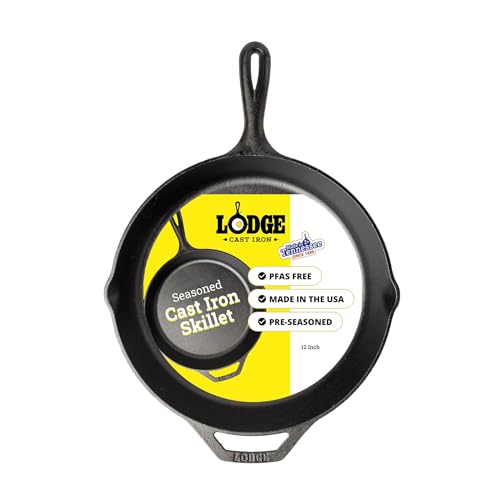
Quality Cast Iron Frying Pan: The Lodge Seasoned Cast Iron Skillet is loved for its great heat retention, incredible durability, and ability to make almost any recipe you dream up
Natural Seasoning Through Regular Cooking
While factory pre-seasoning provides an immediate advantage, your cast iron skillet’s seasoning truly develops through regular cooking with fats and oils. When you cook with ideal fats—bacon grease, avocado oil, or canola oil—at appropriate temperatures, polymerization bonds these oils to the iron’s surface. This chemical process creates microscopic layers that progressively strengthen your skillet’s non-stick properties and rust resistance. Thoroughly drying the skillet after washing is crucial in preventing moisture damage and rust. Ages of seasoning build through consistent use; each cooking session deposits additional protective layers. Fatty foods like bacon naturally contribute to this reinforcement, while frying and searing techniques promote even coverage. Though acidic foods occasionally compromise seasoning, typical cooking habits continuously improve overall quality. You’ll notice significant seasoning development within weeks of regular use, creating a durable patina uniquely tailored to your cooking style. Additionally, following proper cleaning and maintenance practices ensures your skillet remains in excellent condition for a lifetime of culinary adventures.

TLC for your griddle cooktop: All you need to build a slick, easy-release surface that's protected from rust and easy to work with using Blackstone griddle seasoning and cast iron conditioner

Mild and Easy: Grapeseed Oil is at its best in stir-fries and sautés; it doesn't overwhelm other ingredients and lets fresh flavors shine. When grilling or frying, it is a must-have in the pantry.

PREMIUM CAST IRON CONDITIONING & SEASONING OIL | Made with FOOD grade, solvent-less, refined coconut oil that is safe for food contact and cast iron surfaces. The result is a premium product that does not go rancid.
Proper Maintenance to Preserve Your Skillet
Proper maintenance stands as the cornerstone of cast iron longevity, directly determining whether your skillet develops a superior non-stick surface or succumbs to rust and deterioration. Your cleaning techniques greatly impact seasoning preservation. Avoid dish soap, which strips protective layers. Instead, wipe excess residue with soft cloths and use coarse salt with neutral oil for stubborn food. Dry your skillet thoroughly on low heat to prevent moisture-related rust, as the heating process helps evaporate moisture effectively.
Post-cleaning, apply thin oil layers and heat for 1-2 minutes, allowing absorption. This routine oiling maintains non-stick properties while preventing oxidation. Additionally, using light olive oil for seasoning can enhance the skillet’s durability due to its higher smoke point. Store your skillet in dry environments with paper towels between stacked pieces. Regular use combined with consistent maintenance naturally reduces rust risk and deepens your seasoning benefits, extending your skillet’s functional lifespan notably.
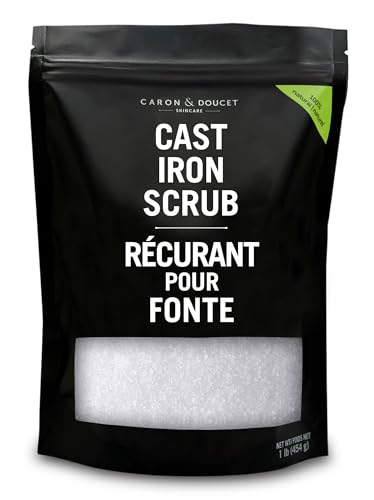
CLEANS & RESTORE CAST IRON | Best used for removing rust & burnt on food spots while helping to build & fortify the natural seasoning of cast iron cookware. A great solution for cleaning & restoring cast iron skillets, pots, pans, dutch ovens and grills.

YOUR NEW GO-TO ENAMELED CAST IRON CLEANER: The Lodge Enameled Cast Iron Cleaner will keep your enamel cast iron pans looking and cooking its best for generations. This gentle cleanser is entirely bleach and dye-free and specially designed to clean enameled cast iron, inside and out.
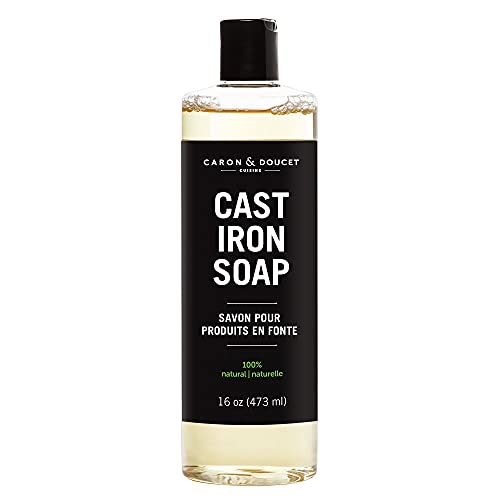
SOAP FOR CLEANING CAST IRON | Made using traditional soap making methods and free of sulfates, phosphates, parabens & petrochemicals! Gently cleans and maintains the natural seasoning on cast iron skillets, pans, woks and grills.