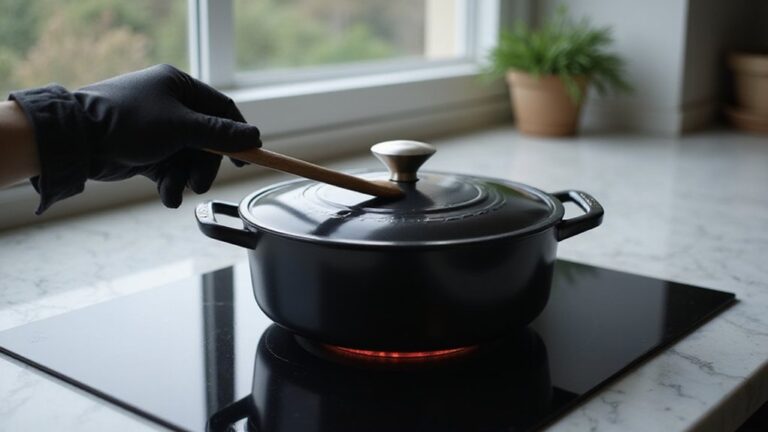
You’ll brown seasoned beef cubes in batches, then sauté aromatics like onions, celery, and garlic. Layer your vegetables over the meat, add beef broth, red wine, and tomato paste, then braise in a 325°F Dutch oven for 2.5 to 4 hours. Use flour as a thickening agent and reserve delicate vegetables for the final 15 minutes. Simmer gently to blend flavors without boiling. Mastering these layered techniques creates restaurant-quality depth that transforms humble ingredients into something extraordinary.
Ingredients Commonly Used
A successful Dutch oven beef stew relies on a carefully balanced combination of core vegetables, savory liquids, aromatic seasonings, and thickening agents that work together to create depth and richness.
You’ll build your base with vegetable varieties including carrots, potatoes, onions, celery, and garlic—each contributing distinct flavor and texture. For your liquid foundation, you’ll combine beef broth with dry red wine, adding Worcestershire sauce for umami complexity. Cooking with a tight-fitting lid ensures that the heat and moisture are well retained, enhancing the overall flavor of your stew.
Your spice combinations should feature kosher salt, freshly ground black pepper, thyme, and rosemary, enhanced by bay leaves simmered throughout cooking. You’ll thicken your stew using all-purpose flour, tomato paste, or cornstarch mixed with cold water.
Optional additions like mushrooms, peas, and fresh parsley elevate your dish with additional layers of flavor and visual appeal. Additionally, regular maintenance of your cooking equipment enhances your cooking experience, ensuring every meal is a success. These carefully selected ingredients transform simple components into a cohesive, restaurant-quality stew.

Hearty beef stew seasoning with onion, paprika, black pepper and thyme

Knorr Recipe Mix Vegetable (1.4oz) can be enjoyed as a soup, dip or seasoning mix to add flavor to many of your family's favorite recipes and simple meals

Hearty beef stew seasoning with onion, paprika, black pepper and thyme
Beef Preparation Steps
With your ingredients assembled, you’re ready to prepare the beef—the foundation of your stew’s depth and richness. Start by selecting chuck roast or beef stewing cubes, cutting them into 2-inch pieces for maximum tenderness. Remove thick fat deposits, sinew, and gristle before proceeding. Pat the beef dry with paper towels to promote proper browning and prevent steaming. A good sear creates a rich crust that enhances the flavor profile of your dish.
Next, apply seasoning techniques directly to the cubes using kosher salt at approximately 1½ teaspoons per pound and ground black pepper at 1 teaspoon per pound. This facilitates even distribution before flour coating. Toss the seasoned beef cubes in flour within a separate bowl, creating a protective barrier that aids browning and thickens your stew. Include any loose flour remaining in the bowl when adding beef to the pot. Cooking the beef at a low temperature allows it to become incredibly tender, similar to how chuck roast is prepared in a Dutch oven.
Vegetable and Herb Additions
Once you’ve browned your beef, you’ll build the stew’s flavor foundation with vegetables and fresh herbs. Begin by sautéing diced onions, celery, and carrots in olive oil until softened, then add minced garlic for approximately one minute. Your vegetable combinations should include firm potatoes like Yukon gold or red varieties that maintain structural integrity during the 2-3 hour braise. Dutch ovens excel at slow-cooking due to their excellent heat retention, making them ideal for dishes like this stew.
For herb selection, fresh thyme serves as your primary choice, delivering superior flavor compared to dried alternatives. Bay leaves and fresh rosemary complement thematic profiles without overpowering other elements. Layer vegetables atop the beef to protect them from excessive pressure. Consider optional enhancements like parsnips or turnips for earthy depth. Reserve delicate vegetables like zucchini and green beans for strategic addition near cooking’s end, preserving their texture and vibrant color. Additionally, incorporating bone-in, skin-on chicken thighs can provide a unique twist to traditional beef stew by lending rich flavor to the dish.
Liquid and Thickening Agents
Building the stew’s body requires both moisture and structure, achieved through strategic liquid selection and thickening agents.
You’ll want to use beef broth as your foundation—typically 3 to 4 cups of low-sodium variety gives you better salt control. Red wine (½ to 1 cup) adds complexity, while tomato paste contributes richness and acidity. When combining liquid types, you create layered flavor depth. The one-pot convenience of using a Dutch oven allows for seamless cooking of both the meat and vegetables together.
For thickening techniques, dust your seared meat and vegetables with 2 to 4 tablespoons of all-purpose flour, stirring thoroughly before adding liquid. You can also mix flour with broth beforehand to prevent clumping. As your stew simmers for hours, starches naturally break down, further thickening the liquid. If your final stew seems too thin, simply add additional flour mixed with broth. This methodical approach guarantees a properly textured, flavorful stew. Additionally, keep in mind the distance-to-spot (D:S) ratio when measuring the temperature of your ingredients if using an infrared thermometer.

Swanson Lower Sodium* Beef Broth is made with quality ingredients for a rich homemade taste

One (1) 32 oz carton of Pacific Foods Low Sodium Organic Beef Broth
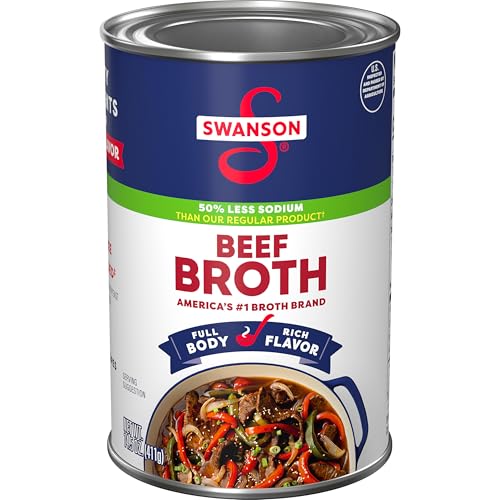
Swanson Lower Sodium* Beef Broth is made with quality ingredients for a rich homemade taste
Cooking Methods and Times
Now that you’ve built your stew’s flavor foundation with carefully balanced liquids and thickening agents, proper cooking methods and timing become your control points for achieving perfectly tender meat and vegetables.
Master searing methods by browning beef in batches over medium-high heat for 3–6 minutes per side using olive or avocado oil. This prevents overcrowding and steaming, ensuring ideal crust formation. Browning the meat at this stage is crucial for developing rich flavors.
For braising techniques, preheat your Dutch oven to 325°F for maximum tenderness. Braise beef alone for 1–1.5 hours, then add hearty vegetables like carrots and potatoes. Continue cooking for another 45 minutes to 1.5 hours until vegetables reach fork-tender doneness. Reserve delicate vegetables like peas for the final 10–15 minutes.
Your total cooking time ranges from 2.5 to 3 hours for ideal results, though larger cuts may require up to 4 hours. Additionally, remember that different cooking methods can impact the stew’s overall texture and flavor profile.

Even Heat Distribution Retention: This Dutch oven Made with heavy-duty enameled cast iron, ensures even heat distribution for perfect searing and slow cooking, locking in flavors. thickened walls lock in heat for slow braising, searing, and baking. Unlike thin pots that scorch food, this professional-grade Enameled cast iron pot maintains steady temperatures

Moisture-Locking Lid: The Lodge Essential Enamel Cast Iron Dutch Oven features a moisture-locking design ideal for roasting, braising, and slow cooking pot meals

Even Heat Distribution Retention: This Umite Chef Dutch oven Made with heavy-duty enameled cast iron, ensures even heat distribution for perfect searing and slow cooking, locking in flavors. thickened walls lock in heat for slow braising, searing, and baking. Unlike thin pots that scorch food, this professional-grade Enameled cast iron potSuperior heat retention after preheating (allow 5-7 mins for even distribution). CRITICAL: Always cool naturally for 45+ mins before cleaning. Thermal shock (hot-to-cold contact) cracks enamel. USE TIP: Preheat 2-3 mins on medium-low only
Key Tips and Techniques
Mastering Dutch oven beef stew hinges on precise meat preparation and controlled searing—two foundational techniques that directly impact your final dish’s texture and depth. You’ll achieve superior browning techniques by patting meat dry before seasoning generously with salt and pepper. Sear in batches using medium-high heat, browning each side for 2-3 minutes until golden.
For flavor enhancement, scrape the fond from your pot bottom after searing, then deglaze with red wine or beef broth. This concentrated residue dissolves into your liquid, building complex depth. Add tomato paste and cook briefly before incorporating flour to create a proper roux. Searing meat properly not only improves flavor but also helps in creating that enticing crust.
Chop vegetables uniformly for consistent cooking, placing heartier options on top of beef before roasting. Reserve delicate vegetables like peas for the final stages to preserve their texture and brightness. Additionally, understanding charcoal placement for outdoor cooking can further enhance the browning process, ensuring an evenly cooked stew.