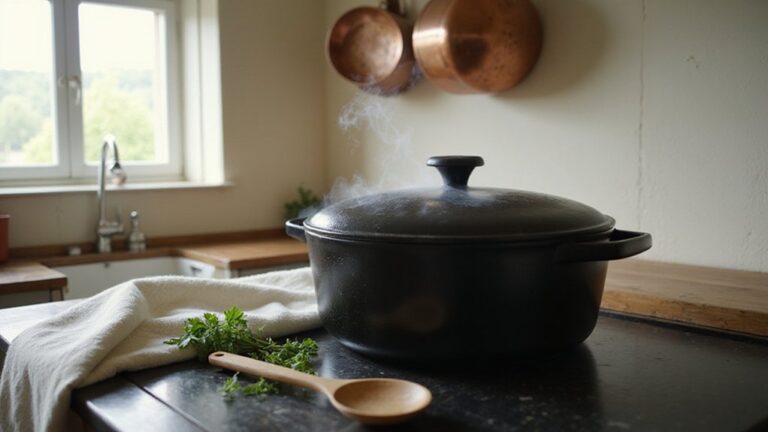
You’ll transform a tough chuck roast into a melt-in-your-mouth masterpiece by searing it until golden, then braising it low and slow in a Dutch oven with carrots, potatoes, and a rich wine-based sauce infused with garlic, thyme, and tomato paste. The Maillard reaction creates an irresistible savory crust, while the oven’s gentle heat coaxes vegetables toward fork-tenderness over hours. Your kitchen fills with an intoxicating aroma as flavors meld into pure comfort. Uncover how simple techniques reveal restaurant-quality results.
Ingredient Essentials
You’ll build your Dutch oven pot roast on a foundation of five essential ingredient categories, each contributing distinct flavors and textures to the final dish. Start with a 3-4 pound chuck roast, whose marbling delivers nutritional benefits and prime tenderness during braising. To ensure optimal results, safe refilling tips for your tools can be beneficial while preparing, such as using a properly filled fuel source for your kitchen torch if needed. Layer aromatic foundations using onions, garlic, thyme, and rosemary to create depth. Incorporate root vegetables—carrots and Yukon gold potatoes—cut uniformly for consistent cooking. Your braising liquid combines beef broth, red wine, tomato paste, and Worcestershire sauce, creating savory complexity. Finally, season with salt, pepper, and brown sugar to balance flavors.
Consider ingredient substitutions when needed: arm roast replaces chuck, red potatoes substitute for Yukon gold, and additional broth replaces wine. These adjustments maintain the dish’s integrity while accommodating preferences and availability. Additionally, using red wine for deglazing intensifies the flavor of the gravy as it helps to lift the caramelized bits from the bottom of the pot.

Quality Enameled Dutch Oven: The Lodge Essential Enamel Cast Iron Dutch Oven gives you all the benefits of cast iron cooking, great heat retention and durability, without fear of rust; it's also PFAS free

Even Heat Distribution Retention: This Umite Chef Dutch oven Made with heavy-duty enameled cast iron, ensures even heat distribution for perfect searing and slow cooking, locking in flavors. thickened walls lock in heat for slow braising, searing, and baking. Unlike thin pots that scorch food, this professional-grade Enameled cast iron potSuperior heat retention after preheating (allow 5-7 mins for even distribution). CRITICAL: Always cool naturally for 45+ mins before cleaning. Thermal shock (hot-to-cold contact) cracks enamel. USE TIP: Preheat 2-3 mins on medium-low only

IDEAL FOR FAMILY MEALS - Perfectly sized for families of 3–5 people, this 5.5QT Dutch oven handles everything from hearty soups and stews to one-pot dinners, pasta dishes, and Sunday pot roasts. Spacious enough for a whole chicken yet practical for everyday cooking, it delivers the ideal balance between daily family meals and weekend entertaining. Also well-sized for artisan bread bakers who want one pot for both family dinners and sourdough baking.
Preparation Techniques
Because a Dutch oven pot roast hinges on building layers of flavor from the moment you begin, proper preparation transforms tough muscle fibers into succulent, tender meat. Start by patting your three-pound chuck roast dry with paper towels—this essential step enhances browning and crust formation. Your seasoning techniques matter; generously coat all sides with kosher salt and ground black pepper for even distribution throughout the meat. Heat your Dutch oven to medium-high temperature, then add oil until it ripples across the surface. These browning tips guarantee you’re ready: sear each side for four to eight minutes, developing that light golden crust through the Maillard reaction. This foundation of flavor becomes the springboard for everything that follows in your braise. Additionally, the use of pepperoncini peppers enhances the tangy flavor profile of the dish, making it even more delicious. A well-developed rich crust is essential to deepening the overall taste and texture of the roast.
Cooking Methods and Temperatures
Once that golden crust forms on your chuck roast, it’s time to shift from stovetop searing to oven braising, where low, steady heat’ll transform your meat into something genuinely tender. You’ll want suitable temperatures between 325°F and 350°F, which’ll get you fork-tender results in roughly 2.5 to 3 hours. Position your Dutch oven on the middle rack, where heat circulates evenly around the lidded vessel. Your braising liquid—beef broth mingled with red wine, Worcestershire sauce, and tomato paste—should cover about half your roast. Fresh thyme and rosemary drift through the steam, their aromatics deepening as cooking duration extends. Additionally, consider adding vegetables like carrots and potatoes partway through cooking to enhance the flavor and texture of your dish. The high sides of a Dutch oven help to keep splatter contained while allowing for even cooking. Check doneness around the 2.5-hour mark; when an internal temperature hits 200-210°F, you’ve achieved that melt-in-your-mouth consistency that defines perfect pot roast.

Even Heat Distribution Retention: This Dutch oven Made with heavy-duty enameled cast iron, ensures even heat distribution for perfect searing and slow cooking, locking in flavors. thickened walls lock in heat for slow braising, searing, and baking. Unlike thin pots that scorch food, this professional-grade Enameled cast iron pot maintains steady temperatures

Moisture-Locking Lid: The Lodge Essential Enamel Cast Iron Dutch Oven features a moisture-locking design ideal for roasting, braising, and slow cooking pot meals

Vegetable Integration Strategy
As your roast reaches that essential 1.5 to 2-hour mark—when the meat’s already surrendered to tenderness but still needs companionship—the vegetables enter the Dutch oven in a carefully orchestrated dance. You’ll arrange chunked carrots and halved potatoes around the roast, maximizing their contact with simmering braising liquid. This vegetable timing guarantees they absorb the rich, herb-infused broth without disintegrating. Submerge celery sticks first to soften and flavor the liquid, then layer firmer root vegetables strategically—those touching bottom absorb more moisture, while top-placed pieces stay slightly firmer. You’re not simply adding ingredients; you’re engineering texture and taste harmony. The covered Dutch oven traps steam, coaxing vegetables toward fork-tenderness while they exchange flavors with meat drippings and aromatics for another 1.5 to 2.5 hours. Additionally, the Dutch oven’s excellent heat retention ensures that all ingredients cook evenly, optimizing the dish’s overall unity. This method not only enhances the overall flavor but also mirrors the approach used in dishes like Beef Bourguignon, showcasing the versatility of the Dutch oven.
Flavor Enhancement Components
The transformation of a simple pot roast into something extraordinary happens not in the Dutch oven’s heat alone, but through the deliberate layering of umami-rich ingredients that deepen and amplify every bite. You’ll build complexity by combining Worcestershire sauce, quality tomato paste, and beef stock—each contributing distinct savory dimensions. Additionally, the Dutch oven’s superior heat retention allows for consistent cooking throughout the dish, helping to meld the flavors effectively. Red wine vinegar brightens this umami balance, cutting richness while enhancing depth. Fresh thyme and bay leaves add herbal aromatics that meld during slow cooking, while garlic and caramelized onions introduce additional savory richness. As you deglaze your pan, those browned bits dissolve into your braising liquid, intensifying flavor concentration. This thoughtful flavor layering transforms ordinary ingredients into a cohesive, deeply satisfying dish. Additionally, paying attention to the thickening techniques you employ can elevate the consistency of your gravy to perfectly complement the roast.

Bold & tangy Worcestershire Sauce makes meat more tender and flavorful

Olive & Vine Worcestershire Powder comes in a reusable shaker jar, useful for garnishing any meal

The information below is per-pack only
Step-by-Step Instructions
Now that you’ve assembled your flavor-building components, it’s time to translate them into a finished dish through methodical preparation and careful heat management. Start by preheating your Dutch oven on high heat for 3–5 minutes, then add oil and sear your seasoned chuck roast for 5 minutes per side until deeply browned. A well-seared roast develops a deep brown crust, which enhances the overall flavor. Add onions and cook another 5 minutes. Pour in beef broth to cover halfway, along with your chosen seasonings and herbs. Cover and braise in a 300–325°F oven for 1.5–2 hours. Remove the pot roast, nestle in carrots and potatoes, then return to the oven for 1.5–2.5 hours until meat reaches 200–210°F internally and vegetables are tender throughout. It’s important to choose a well-marbled cut of meat for optimum tenderness and flavor.
Serving and Presentation
Your Dutch oven pot roast’s journey culminates in presentation—that crucial moment when careful cooking transforms into an unforgettable meal. You’ll want to select a platter that retains heat and complements your rustic aesthetic, whether that’s enameled cast iron or ceramic. Slice your meat against the grain, then arrange it alongside whole or halved carrots and potatoes for visual balance.
Fresh herb garnish options—parsley, thyme, or cilantro—add vibrant green contrast against the caramelized roast and golden vegetables. A good presentation also highlights the importance of proper cleaning techniques to keep your Dutch oven looking pristine. Drizzle natural pan juices across everything as a glossy glaze, then consider accenting with roasted garlic or caramelized onions for gourmet flair. Additionally, vacuum sealing any leftovers will help maintain their freshness and flavor for future enjoyment, extending the shelf life of your delicious meal. Serve immediately while steam rises, capturing both the aromatic intensity and the tender succulence your effort deserves.