You’ll master Dutch oven chicken thighs by searing skin-side down until crispy, then braising with aromatics and stock at 350–400°F until tender. Layer sophisticated flavors with mustard, coconut milk, or fresh herbs like thyme. Select quality, antibiotic-free thighs and trim carefully for ideal results. Serve over grains or roasted vegetables with acidic finishing touches. The concentrated pan juices create restaurant-quality sauces that’ll elevate your technique considerably.
Basic Dutch Oven Chicken Thigh Method
When you’re ready to master Dutch oven chicken thighs, start by patting them dry with paper towels—this essential step guarantees the skin’ll brown evenly and develop that coveted golden crust. Season your thighs generously with salt, pepper, and your chosen spices. Consider brining chicken beforehand for enhanced moisture and tenderness.
For increased flavor, try using bone-in or boneless cuts which are encouraged for their juicy texture.
Heat oil in your Dutch oven over medium-high heat, then sear thighs skin-side down for 3–8 minutes until crispy. Flip carefully and sear the other side. This technique locks in juices and develops complex flavors.
Return seared chicken to your pot after sautéing aromatics like garlic and onions. Add stock or wine to partially submerge the meat, cover, and braise at 350°F–400°F. Cooking times range from 20–45 minutes until internal temperature reaches 165°F–175°F. Rest covered for five minutes before serving with pan sauce. For optimal results, explore different Dutch oven chicken recipes that combine flavors and techniques, making each meal unique and delicious.
Mustard Sauce Variation
Once you’ve mastered the basic Dutch oven technique, elevating your chicken thighs with a sophisticated mustard cream sauce transforms the dish into restaurant-quality fare. Start by browning your thighs, then deglaze the pan with white wine to capture caramelized bits. Whisk in heavy cream or crème fraîche off-heat to prevent curdling, then incorporate your mustard sauce flavors carefully. Creative mustard combinations—blending Dijon with whole-grain varieties—add textural complexity and layered tanginess. The excellent heat retention of the Dutch oven helps to keep the flavors melded perfectly. Build depth with sautéed shallots, garlic, and herbs like thyme. A touch of honey provides sweet-savory balance. Bake covered at 375°F for 30-40 minutes until thighs reach 165°F internally. The result: a silky, sophisticated sauce that complements roasted potatoes or asparagus beautifully. Finish with fresh parsley for elegant presentation. Additionally, consider the importance of resting your chicken thighs after cooking to retain their juices before serving.
Brussels Sprouts and Quinoa Combination
While the mustard sauce approach emphasizes creamy elegance, pairing Dutch oven chicken thighs with Brussels sprouts and quinoa delivers a more robust, nutritionally complete one-pot meal. You’ll sear your chicken thighs first, then deglaze with broth before adding halved Brussels sprouts and raw quinoa. This combination offers exceptional Brussels benefits—vitamin C, K, and antioxidants—alongside quinoa’s complete protein profile. Understanding distance-to-spot (D:S) ratio is helpful in ensuring even cooking throughout the dish since the heat distribution can affect both the chicken and vegetables. Quinoa cooking occurs simultaneously with your chicken, absorbing flavorful liquids while maintaining texture. Season with garlic, thyme, and tomato paste for flavor balancing that complements Brussels sprouts’ natural bitterness. Gentle preheating is essential to achieve even heat distribution, ensuring optimal results in this dish. Baking covered at 400ºF for 20-25 minutes allows proper texture enhancement, with revealing near completion crisping your chicken skin and finishing the vegetables for best results.
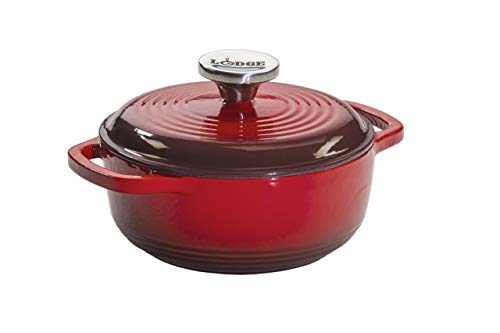
YOUR GO-TO DUTCH OVEN: A flawless pairing of form and function that doesn't quit. The Lodge Dutch Oven not only makes your kitchen look good but is an enameled cast iron...
Coconut Milk Braising Method
If you’re seeking to elevate your Dutch oven chicken thighs beyond traditional preparations, the coconut milk braising method delivers sophisticated Southeast Asian flavors through a deceptively straightforward technique.
You’ll sear your thighs skin-side down until golden, then sauté aromatics—shallots, garlic, ginger—in the rendered fat. Add curry paste to bloom, then deglaze with full-fat unsweetened coconut milk combined with chicken broth in a 2:1 ratio. The coconut milk benefits include richness and creaminess while balancing with broth prevents excessive heaviness.
Return your chicken skin-side up, cover your Dutch oven, and braise at 300-350°F for 25-60 minutes until tender. These braising techniques yield succulent meat and a velvety sauce. Finish with fresh cilantro and lime, serving over rice for an elegant presentation.
Vegetable and Stock Braising Approach
Where coconut milk creates richness through Asian aromatics, the vegetable and stock braising method builds depth through classical flavor foundations—a technique that showcases how Dutch oven braising adapts across culinary traditions. You’ll begin by selecting vegetables like onions, carrots, celery, and mushrooms, cutting them uniformly for even cooking. Sauté these aromatics until onions turn translucent and the pot bottom becomes sticky. Using the right ratio of liquid is crucial to prevent burning and encourage heat distribution in your dish. Your stock ratios should range from three-quarters cup to full submersion, depending on your desired sauce consistency. Add white wine for deglazing, then layer in fresh herbs like thyme and rosemary. Nestle your seared chicken thighs among the vegetables, cover your Dutch oven, and braise at 350-400°F for 20-40 minutes. The result delivers concentrated pan juices that become your finishing sauce. Additionally, the Dutch oven’s ability to retain and distribute heat ensures that your dish cooks evenly while developing rich flavors.
Lemon-Sage Butter Sauce Preparation
As your braised chicken thighs rest on warm plates, you’ll transform butter into a silken sauce that cuts through richness with bright acidity and herbaceous depth. Over medium-low heat, melt 4-6 tablespoons of butter, then add 8-12 fresh sage leaves—whether delicate common sage or peppery purple varieties—allowing them to infuse for approximately 6 minutes until their edges curl. Remove from heat and incorporate lemon zesting techniques by adding both zest and juice simultaneously, preserving the citrus’s vibrant brightness. This addition prevents oxidation while emulsifying the sauce through butter’s natural lecithin content. Whisking continuously guarantees a glossy consistency. Popular sous vide dishes like steak or chicken can also benefit from similar buttery sauces. Additionally, taking care of your cast iron cookware will help ensure optimal cooking performance and longevity. Drizzle this golden sauce directly over your chicken thighs, garnishing with fried sage leaves for visual sophistication and textural contrast.
Selecting and Preparing Quality Chicken Thighs
Before you can craft that silken lemon-sage butter sauce, you’ll need to start with chicken thighs that’ll reward your technique with superior flavor and texture. During quality assessment, examine the meat for a pinkish hue and white or yellow fat—gray areas signal inferior quality. Press gently; resilient meat springs back immediately. Avoid packages with excess liquid, which dilutes both taste and texture. Incorporating vacuum sealing techniques can help maintain the quality of chicken thighs from purchase to preparation.
For preparation techniques, follow natural muscle seams using smooth, deliberate cuts. Remove small bones, cartilage, and silver skin meticulously; these elements become rubbery when braised. Work deliberately around joints, checking thoroughly for bone fragments. Trim away tough tendons that compromise the eating experience.
Choose USDA Grade A thighs or those labeled air-chilled and antibiotic-free for prime results. This foundational work guarantees your Dutch oven transforms quality thighs into restaurant-caliber dishes. Additionally, using a cast iron Dutch oven can enhance flavor and moisture retention during cooking, ensuring optimal results.

Meets standards for animal welfare, feed, and more, so you can know about what you're buying (and eating)

Meets standards for animal welfare, feed, and more, so you can know about what you're buying (and eating)

Traceable to farm or ranch.
Essential Dutch Oven Techniques for Optimal Results
Your Dutch oven’s success hinges on mastering three foundational techniques: searing, temperature management, and lid control. Start by preheating your Dutch oven until oil smokes, indicating sufficient heat for proper browning techniques. Sear chicken thighs 2-3 minutes per side—resist flipping constantly, as this reduces heat and extends cooking time. Once seared, deglaze with white wine or stock to capture browned bits and build depth. This process mirrors the way beef broth is used in pot roast recipes to enrich the flavor.
It’s crucial to use a well-marbled cut of meat, as this contributes to the dish’s overall flavor and tenderness.
Maintain oven temperature between 350-400°F during the braising phase. Cover your Dutch oven to trap steam, which gently cooks the chicken while keeping it moist. After 20-40 minutes, remove the lid for 5-10 minutes to achieve steam control, allowing skin recrisping and enhanced browning. Monitor internal temperature, targeting 165-175°F for ideal doneness and food safety.

Even Heat Distribution Retention: This Umite Chef Dutch oven Made with heavy-duty enameled cast iron, ensures even heat distribution for perfect searing and slow cooking, locking in flavors. thickened walls lock in heat for slow braising, searing, and baking. Unlike thin pots that scorch food, this professional-grade Enameled cast iron potSuperior heat retention after preheating (allow 5-7 mins for even distribution). CRITICAL: Always cool naturally for 45+ mins before cleaning. Thermal shock (hot-to-cold contact) cracks enamel. USE TIP: Preheat 2-3 mins on medium-low only

Pre-seasoned 2-in-1 cast iron dutch oven: The 2-In-1 cast iron dutch oven pot with skillet lid has been burned with vegetable oil,(no synthetic coatings or chemicals). The shallow skillet that can be used as a lid

FEAST & BATCH COOKING - Designed for large families, holiday gatherings, and weekend meal prep, this 7QT Dutch oven comfortably serves 5–8 people. Its generous capacity easily handles family-size soups, large-batch stews, pot roasts, and whole chickens without overcrowding ingredients. Perfect for Thanksgiving recipes, holiday entertaining, and batch cooking with fewer rounds in the kitchen.
Seasoning Strategies for Maximum Flavor
Once you’ve mastered the technical foundation of Dutch oven cooking, seasoning becomes your vehicle for transforming simple chicken thighs into complex, memorable dishes. You’ll create sophisticated flavor layers by combining dry spice blends—granulated garlic, paprika, and turmeric—applied directly to skin before browning. This maximizes flavor absorption during the searing stage. Next, build aromatic foundations using minced garlic and classical mirepoix vegetables. Dutch oven desserts can also inspire creative seasoning ideas, as the versatility of a cast iron Dutch oven allows for both savory and sweet culinary exploration. Deglaze with white wine to dissolve browned bits, then reduce to concentrate flavors. Layer in fresh and dried herbs like thyme and rosemary, adding Worcestershire sauce for umami depth. Finally, introduce acidic components like cherry tomatoes to balance rich fats. Additionally, seasoning enhances not only flavor but also preservation quality when paired with proper cooking techniques, ensuring your dishes are as delightful as possible. These strategic spice combinations create dimensional, unforgettable results that elevate your Dutch oven preparations.

Features a blend of natural flavors and seasonings, including garlic and rosemary

CALIFORNIO = BRIGHT, BALANCED, ANYTIME: Simple, savory, and lightly herbacious with garlic and onion, this all-purpose blend gives a lift to almost everything including grilled chicken, salmon, skirt steak, taco fillings, and roasted veg without overpowering.

Usage: Apply olive oil or oil of choice to meat or vegetable, then sprinkle all sides with Chicken Dust before grilling.
Serving Suggestions and Pairing Ideas
The layered seasoning and complex flavors you’ve built in your Dutch oven chicken thighs deserve equally thoughtful accompaniments that’ll enhance rather than overshadow your work. Select beverage pairings strategically: medium-bodied whites like Chardonnay complement spiced preparations, while Pinot Noir suits herbaceous variations. Consider Belgian ales for richness-forward dishes or mint tea for Moroccan-inspired recipes. Furthermore, using a cast iron grill skillet can add an extra layer of flavor through its superior searing capabilities.
Your serving styles should highlight textural contrast. Arrange chicken attractively over roasted vegetables or grains, drizzling pan juices deliberately across the plate. Garnish with fresh herbs to brighten presentation and aroma. Serve complementary sauces separately, allowing guests customizable flavor intensity. Furthermore, classic recipes like Beef Stew showcase how adaptable the Dutch oven can be for various types of cooking.
Balance rich chicken with crisp roasted vegetables, nutty grains like quinoa, and acidic finishing touches—lemon zest or vinegar-based condiments. This thoughtful curation transforms your Dutch oven creation into a sophisticated, cohesive dining experience.

Exceptional Heat Retention: Enjoy perfectly cooked meals with cast iron skillets that provide even heat distribution, ideal for searing, frying, and baking in a 12 inch frying pan.

Steakhouse Sear At Home: The Lodge Square Cast Iron Grill Pan delivers high-heat searing and bold grill marks while channeling excess grease away

Fabric Type: Rubber