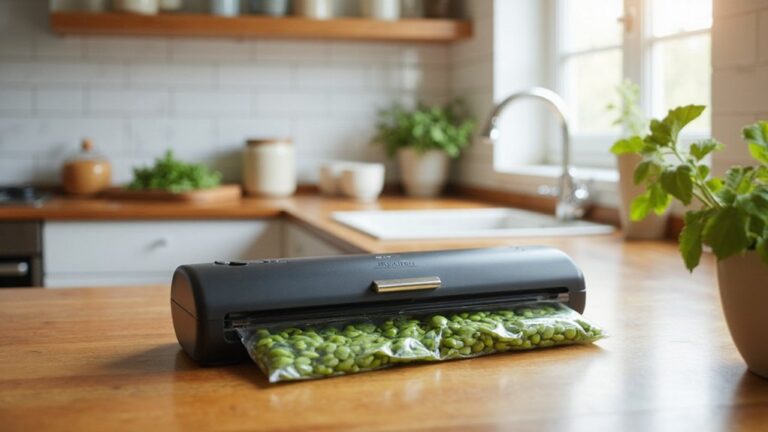
You’ll maximize vacuum seal effectiveness by matching bags to your sealer type—textured bags for external models, flat for chamber sealers. Select multilayer compositions like PA/PE with EVOH for superior oxygen barriers reducing transmission to 1-10 cc/m²/day. Pre-freeze moisture-heavy foods, guarantee dry seal areas, and verify manufacturer compatibility with FoodSaver or VacMaster systems. Proper technique extends shelf life five times longer than traditional methods. Understanding material specifications and application requirements reveals why some bags consistently outperform others.
Understanding Vacuum Seal Bag Features and Materials
The architecture of vacuum seal bags hinges on material selection and layer composition, which directly determine their performance across puncture resistance, barrier properties, and seal integrity. You’ll find that most standard bags employ PA/PE two-layer structures, where polyamide delivers puncture resistance while polyethylene enables heat sealing and food-safe contact. For enhanced preservation, multilayer compositions incorporate EVOH or PVDC barrier layers, dramatically reducing oxygen transmission from ~100 cc/m²/day to just 1-10 cc/m²/day. It’s crucial to remember that using specifically designed vacuum sealer bags will ensure optimal sealing efficiency. You can also choose aluminum foil composites for superior light and moisture blocking, though these sacrifice flexibility. Chamber bags typically measure 3-4 mil thickness with 80% polyethylene emphasis, while external bags feature embossed textures facilitating air extraction. These material benefits and layer structures directly optimize your sealing efficiency and product longevity. Additionally, using a vacuum sealer can significantly enhance the quality of your sous vide cooking by ensuring an airtight seal.

These plastic vacuum seal bags can be used to store fruits, vegetables, meat, duck's neck and other foods as you like. It also ideal for storing, packaging, sampling, displaying, kitchen storage or home organization.

Product: 3 x Rolls 203 mm x 6.1 Metre 4 x Rolls 279 mm x 4.88 Metre 50 Pre-cut 1 QT Bags 20.3 x 25.4 cm With Packaging: D 137.2 x W 294.6 x H 248.9 mm

Custom Travel-Size Storage Bags – Includes 12 vacuum storage bags in 3 sizes (15.7"×19.7", 15.7"×23.6", and 19.7"×23.6"), reducing luggage volume by up to 80% for versatile packing
How Vacuum Seal Bags Perform and Maintain Food Quality
While material composition and layer architecture establish vacuum seal bags‘ structural foundation, their real value emerges through their performance in preserving food quality and extending shelf life. You’ll experience vacuum sealing benefits immediately: food lasts up to five times longer than traditional storage methods because the process removes nearly all air, greatly slowing oxidation and microbial growth. You preserve nutritional value, flavor, and texture without adding preservatives or applying high temperatures that degrade quality. For frozen items, you’re protected against freezer burn and dehydration through the airtight barrier. Individual bags prevent cross-contamination between products while eliminating harmful bacteria introduction. This food freshness preservation approach creates a measurably safer storage environment, reducing foodborne illness risk considerably in both home and commercial settings. Additionally, using vacuum sealing methods can significantly extend shelf life, allowing you to enjoy fresh food for longer periods without sacrificing quality. Properly vacuum sealed meat can maintain best quality for 2 to 3 years in the freezer, enhancing its longevity even further.
Choosing the Right Bag Type for Your Cooking Method
Selecting the appropriate vacuum seal bag depends on three critical variables: your cooking method, temperature requirements, and sealer equipment. For sous vide applications below 180°F, you’ll find 3-mil embossed bags sufficiently durable. However, if you’re rethermalizing or cooking above 180°F, upgrade to 4-mil or 5-mil pouches that withstand extended heat exposure up to 212°F. Your sealer type determines bag compatibility—embossed bags work universally across external suction models, while boilable pouches require chamber vacuum machines. Zipper-style bags from VacMaster maximize suction efficiency with compatible equipment. Consider specialized applications too: reusable silicone bags eliminate sealer dependency entirely, while customizable rolls enhance material usage. It’s essential to maintain heat retention by using the appropriate bag type for your cooking method to ensure ideal food preservation and preparation results. Additionally, using vacuum-sealed bags helps prevent freezer burn and maintains the quality of your food during storage.

✔️【Wide Range of Use】Made of PE/PA food grade material, FIRAWER sous vide cooking bags are reusable up to 10 times, can keeps fresh for meat, seafood, vegetables, fruits, grains, nuts snacks and sandwiches, ect. Suitable for kitchen, camping, spring outing, travel and other scenes.

🔋 Cordless & Rechargeable for Anytime Use Enjoy powerful suction without cords! Our electric handheld vacuum sealer features a built-in rechargeable battery, making it perfect for home kitchens, camping trips, or meal prepping on the go.

Super Large Size Sous Vide Bags:13pcs 11.8x13.4in/30x34cm big size reusable sous vide bags,2pcs bag sealing clips,keep you food flesh,moisture-proof, anti-deterioration, anti-worm, more longer storage,food storage freezer safe
Weighing Cost Against Environmental Impact
Once you’ve matched your bag type to your cooking method, you’ll want to evaluate whether the upfront costs align with your long-term savings and environmental priorities. Your cost analysis reveals that vacuum sealing reduces household food waste by 60-80%, potentially saving $1,000-$1,400 annually. This offset justifies initial sealers and bag investments through extended shelf life and reduced spoilage-related repurchasing.
However, sustainability considerations complicate this calculation. Traditional plastic bags pollute environments unless properly recycled, while biodegradable alternatives carry higher upfront costs with potentially inferior barrier properties. Reusable containers minimize waste but demand greater initial resource input. Manufacturing emissions from bag production ultimately prove negligible against food waste reduction benefits. Additionally, vacuum sealing significantly extends the shelf life of food by slowing bacterial and mold growth, making it a worthwhile investment for both your budget and the environment. Moreover, vacuum sealed foods can last up to 2 to 3 years in the freezer, making it an effective way to reduce spoilage. Balancing effectiveness in prolonging freshness against material environmental impacts remains critical for your decision-making.
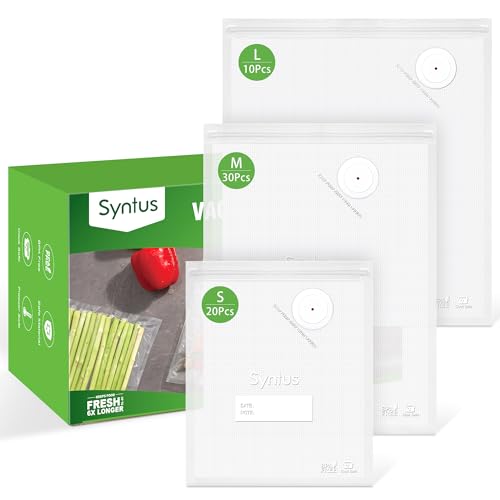
Package Contents: This set includes 60 vacuum zipper bags in three practical sizes: 20 pieces of 8" x 10", 30 pieces of 10" x 13.8", and 10 pieces of 11.8" x 13.8".Crafted from BPA-free materials, these bags are safe for food storage and suitable for use in microwaves, cabinets, refrigerators, freezers, and sous vide cooking. Designed for strength, the bags feature a smooth side (up to 3.15 mil thick) and a textured dotted side (up to 3.95 mil thick), providing sturdy protection against punctures from sharp items like bones.

Package Contents: This set includes 40 vacuum zipper bags in four versatile sizes: 10 each of 8" x 8", 10" x 11", 12" x 13", and 12" x 19". Crafted from BPA-free materials, these bags are safe for food storage and suitable for use in microwaves, cabinets, refrigerators, freezers, and sous vide cooking. Designed for strength, the bags feature a smooth side (up to 3.15 mil thick) and a textured dotted side (up to 3.95 mil thick), providing sturdy protection against punctures from sharp items like bones.

3 Versatile Sizes in One Pack – Includes 10 bags each of 8.3"x8.7" (perfect for sides/desserts), 10.3"x11" (ideal for entrees), and 10.3"x13.4" (great for large meals) – total 30 bags with secure lids.
Essential Tools and Techniques for Proper Sealing
Three foundational elements—preparation, equipment selection, and technique execution—determine whether your vacuum sealing produces airtight storage or premature spoilage. You’ll establish pre-sealing cleanliness by ensuring the seal area remains wrinkle-free and dry, then folding the top 1.5-2 inches upward before insertion. Proper bag alignment prevents misalignment that reduces seal tension. You must eliminate petal folds in the seal area when preventing bag leakage. Inspect and clean your sealing strip regularly to block dirt accumulation. For moisture-heavy foods, you’ll pre-freeze items on trays for several hours before sealing, protecting your device’s motor. This step is particularly important for vegetables like green beans that often require blanching before sealing to maintain quality. Utilize the pulse function for manual sealing control, stopping once you’ve removed the majority of air. Incorporate oxygen absorbers strategically after air removal but before final compression completes. Additionally, consider methods like the water displacement method for sealing vacuum bags without a machine to further enhance your food preservation efforts.

[SIZE & QUANTITY] . Pack of 30 mylar bags of 1 gallon for long term food storage - With 400cc oxygen absorbers (30) & Stickers (30) - Very thick 14,8 Mil layers made of PET & Mylar foil - Mylar bag of 10"x15" Inch

✅ 【Preminum Food Grade Oxygen Absorbers】: Our factory have 18 years experience in oxygen absorber, Also we have ISO9001 Certificate, All our oxygen absorbers are preminum food grade material and tested under strict food regulation, Very safe to be used with foods and pharmaceuticals storage.

[SIZE & QUANTITY] 10 extra large 5 gallon mylar bags for food storage. Includes 2500 cc. oxygen absorbers + 10 labels. Made out of strong and thick PET & Aluminium foil. Perfect for pantry food like flour, sugar, rice, freeze dried, dehydrated foods.
Maximizing Storage Efficiency and Food Preservation
Your mastery of proper sealing technique now enables you to leverage vacuum seal bags‘ primary advantage: dramatically extending food shelf life while optimizing storage space. By removing nearly all oxygen, you reduce oxidation and microbial growth, preventing spoilage and extending preservation up to five times longer than conventional methods. Moisture control proves equally critical—vacuum sealing eliminates dehydration and freezer burn that degrades texture and nutritional value. This process enhances food safety by preventing spoilage through bacteria and ensuring frozen items maintain quality for weeks, months, or years when properly sealed. Additionally, compressed vacuum bags conform flexibly to food shapes, maximizing your refrigerator and freezer capacity while minimizing clutter. This space efficiency enables better inventory management and bulk purchasing strategies. Individual sealing also reduces cross-contamination risks by physically isolating separate food items within distinct pouches. Furthermore, vacuum sealing can help prevent oxidation and microbial growth, ensuring your stored foods remain fresh and safe for longer periods.
Comparing Vacuum Sealers and Bag Compatibility Options
While you’ve mastered sealing technique, matching the right sealer to compatible bags proves equally essential for consistent results. External vs. chamber sealers demand fundamentally different bag specifications. External clamp-style machines require textured bags that facilitate air extraction through open ends, yet they can’t seal liquids. Chamber models accept flat bags costing up to 80% less, enabling liquid sealing and thorough air removal. Your bag texture choice directly impacts performance—textured options work exclusively with external sealers for dry foods and delicate items, while flat bags optimize chamber sealers for bulk preparation and marinating applications. Verify manufacturer compatibility before purchasing; FoodSaver, VacMaster, and UltraVac each offer specialized bag lines matching their sealer designs. This strategic alignment between sealer type and bag specifications maximizes preservation effectiveness and minimizes waste. By choosing the right bags, you’ll enhance food freshness while utilizing vacuum sealing methods. When utilizing vacuum sealing methods, ensure that items are dry and folded properly to achieve optimal results.

【BPA FREE】Bonsenkitchen vacuum food sealer roll bags can be microwaved, frozen, re-used, washed, boiled and dishwasher safe. Allows you to precisely control your cooking temperature to achieve perfect results. You can cook sous vide in Bonsenkitchen bags by placing them in water at any temperature up to 230°F/110°C
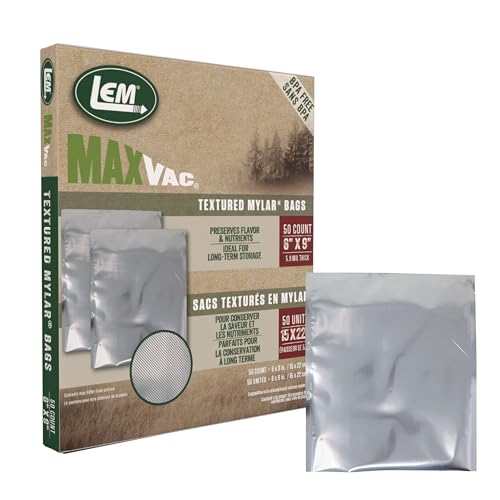
Professional Results: Designed for hunters, preppers, and home processors, these heavy-duty mylar bags provide long-term food storage with reliable sealing performance for maximum flavor and freshness

[BPA-Free & Versatile Usage] Made from food-grade, BPA-free materials that can withstand temperatures from -4°F to 212°F. Perfect for storing both raw and cooked foods, and suitable for use in freezers, refrigerators, sous-vide cooking, boiling, microwaving, and dishwashers.