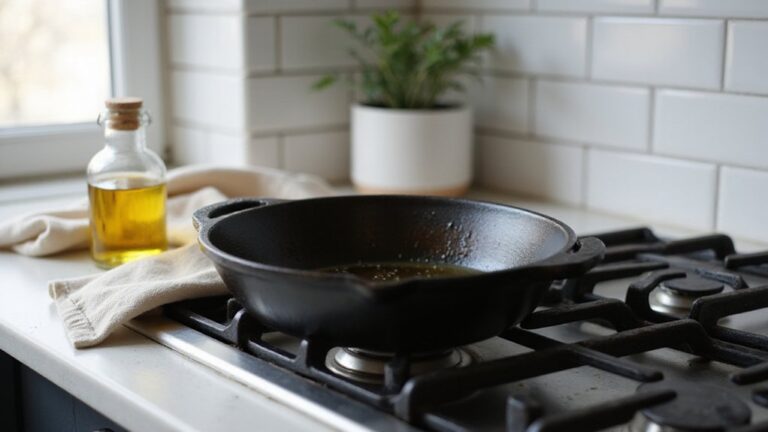
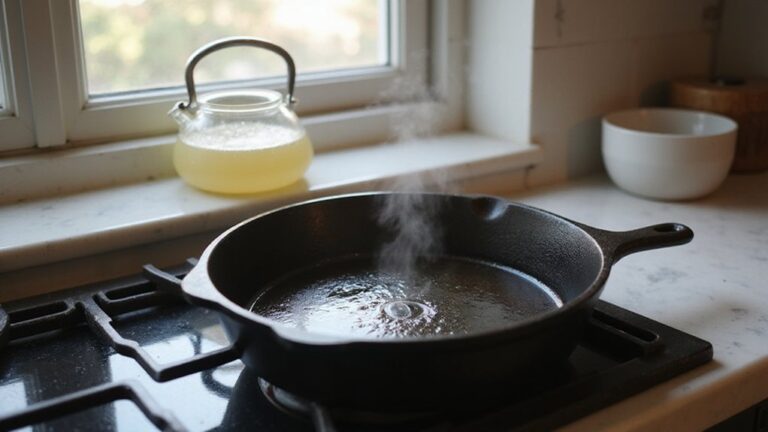
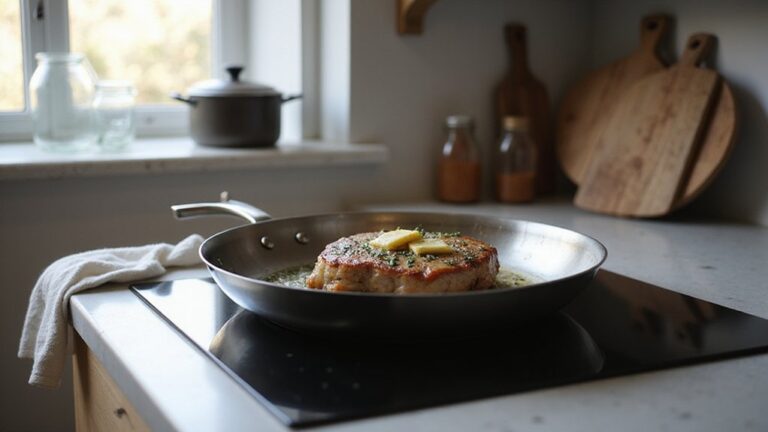
You can cook with butter in cast iron, but you’ll need careful temperature management. Regular butter’s 350°F smoke point is lower than typical cooking temperatures, so start at low heat and gradually increase to medium. Watch for shimmering—not smoking—to prevent burning the milk solids. While butter won’t damage seasoning at moderate temperatures, clarified butter or high-heat oils work better for initial seasoning. Clean promptly after cooking and apply a thin oil layer to maintain your pan’s protection. Understanding the nuances of butter cooking will greatly enhance your cast iron results.
Understanding Butter’s Smoke Point in Cast Iron
Why does butter smoke so quickly in your cast iron? Regular butter contains milk solids that burn and break down before reaching typical cast iron cooking temperatures, which often exceed 400°F. Butter’s smoke point sits around 350°F (177°C)—noticeably lower than most cooking oils. Cooking methods that create a brown crust, like stovetop pan-searing, may utilize butter effectively at lower temperatures while adding rich flavor to the steak.
Your butter selection greatly impacts cooking methods and results. Standard butter requires careful temperature control or blending with higher smoke point fats to prevent scorching and smoking. Clarified butter (ghee) offers a superior alternative, reaching 485°F (252°C), making it suitable for higher-temperature cooking without dairy solids interfering. Perfectly cooked eggs in a cast iron skillet can help you appreciate the nuances of using fats while cooking.
Understanding this limitation helps you choose appropriate cooking methods. Reserve regular butter for moderate to low-heat applications like finishing or basting, where its flavor shines without burning.

SUPPORTS GUT HEALTH – Made from grass-fed butter, this ghee contains naturally occurring butyric acid and CLA, beneficial fatty acids that help support digestive balance and overall gut health. A simple, high-quality addition to your daily routine.
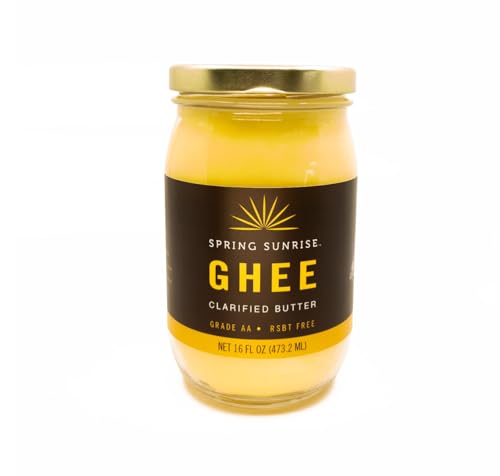
PREMIUM CLARIFIED BUTTER: Includes one 16 oz jar of Spring Sunrise Classic Ghee, slow-cooked from Grade AA butter to remove milk solids and water for pure, nutty flavor, golden color, and creamy texture.

SUPPORTS GUT HEALTH – Made from grass-fed butter, this ghee contains naturally occurring butyric acid and CLA, beneficial fatty acids that help support digestive balance and overall gut health. A simple, high-quality addition to your daily routine.
Temperature Control for Optimal Cooking
Three critical factors determine your success when cooking with butter in cast iron: gradual heating, precise temperature management, and active monitoring.
You’ll achieve ideal results by maintaining medium heat—roughly 250°F to 320°F—where butter’s melting characteristics allow proper browning without scorching. Start your skillet on low, gradually increasing to your target temperature over 5–10 minutes. This temperature regulation technique prevents hot spots that commonly plague stovetop cooking.
Watch your butter carefully; it should shimmer and melt quickly without smoking. Use visual cues like color changes to guide your adjustments. Infrared thermometers can be used for checking the temperature of your skillet more accurately as you cook. When you’re searing meats, begin with high-heat oil, then finish with butter-based techniques on lower heat. Remember that cast iron retains significant heat, so you’ll need to reduce burner settings dynamically throughout cooking to maintain consistent temperatures and prevent burning. Additionally, proper seasoning is crucial for effective heat management, ensuring that your cast iron skillet performs optimally with butter.
How Butter Affects Cast Iron Seasoning
Although butter’s lower smoke point makes it unsuitable for initial seasoning, understanding how it interacts with your cast iron’s existing layer is essential for long-term maintenance. When you cook with butter at moderate temperatures, you’ll deposit thin fat layers that mildly enhance your seasoning. However, butter residues contain milk solids that can create stickiness, requiring diligent cleaning afterward. The water content in butter generates steam during heating, potentially causing uneven seasoning bonding. If you don’t clean your pan promptly, butter residues oxidize and turn rancid, compromising your seasoning’s integrity. For best results, reserve butter for low-heat cooking and prioritize immediate cleanup. Additionally, using butter for water-based dishes like soups or stews can help maintain seasoning without compromising it. Consider ghee or high-polyunsaturated oils for superior seasoning layers that withstand regular use. Additionally, consistent proper cleaning of your skillet is crucial to maintaining its seasoning and preventing any damage from residues.

Easy Cleanup Tool: The Lodge Scrub Brush is designed to help tackle stubborn food residue and simplify cast iron cookware cleanup

Scrubs without soap to preserve seasoning and protect surfaces
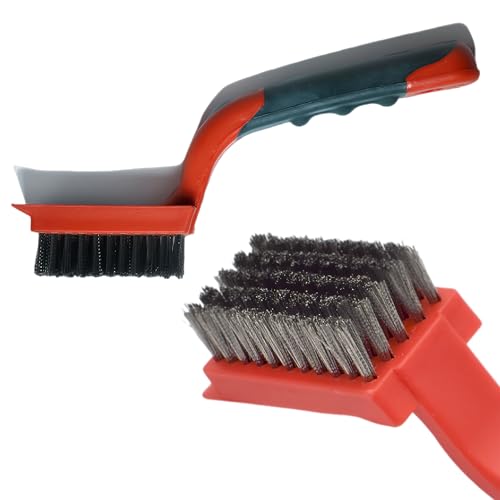
Safe for Cast Iron: Specifically designed for use with cast iron cookware, the brush ensures thorough cleaning without stripping away the seasoning.
Preventing Sticking and Burning
Getting butter to the right temperature before you add food is absolutely essential to preventing sticking and burning in cast iron. Watch for a shimmer across the oil’s surface—this indicates proper heat for cooking. Smoking signals excessive temperature, which’ll cause butter absorption and food adhesion issues. A well-seasoned cast iron pan can enhance cooking performance and further reduce sticking challenges.
Apply sufficient butter coating across your entire pan surface to prevent bare spots where food sticks. Lean proteins need more butter than fatty foods like chicken thighs. Once you add food, leave it undisturbed while simmering to establish a non-stick layer. Avoid crowding the pan, which causes steaming rather than proper searing.
Don’t manipulate food prematurely. Allow adequate cooking time on each side before scraping, reducing sticking resistance considerably. Temperature control combined with proper butter application prevents both sticking and burning effectively.

Versatile 2-Pack: This set of mini cast iron skillet works as a small sauce pan (for sauces), fried egg pan, milk heater, or butter warmer for seafood—ideal for daily kitchen tasks


UNIQUE DESIGN: This fun keychain features a detailed miniature waffle sitting in a cast iron skillet, complete with a tiny butter pat on top.
Cooking With Acidic Ingredients and Butter
While proper heat and butter application prevent sticking in most scenarios, cooking with acidic ingredients introduces a different challenge: protecting your cast iron’s seasoning layer. Acidic interactions with your pan’s polymerized oil coating require careful management. Keep acidic butter sauces—featuring lemon juice, wine, or tomato—under 45 minutes to minimize seasoning damage. Butter’s low smoke point demands moderate heat control when combined with acids to prevent burning. Additionally, be mindful that rust removal methods can help maintain your cast iron for future use. As you experiment with different cooking techniques, it’s helpful to remember the importance of heat control, as even small changes can affect the texture of your meat, similar to the way mastering meat doneness relies on understanding heat levels.
After cooking, promptly clean your pan with warm water and mild soap, then thoroughly dry it. Apply a light oil layer to restore protection. Avoid prolonged post-cooking contact between acidic mixtures and your pan’s surface. This seasoning preservation approach maintains your cast iron’s durability despite occasional acid exposure.
Health and Safety Considerations
When you’re cooking with butter in cast iron, you’re introducing several health and safety factors worth understanding. Heating butter at high temperatures triggers fat polymerization, creating solid molecular layers that bind to the iron surface. This process generates compounds potentially linked to cardiovascular disease and cancer when consumed regularly in large quantities. Cooking with oil in a well-seasoned cast iron skillet is generally safer, as it helps preserve the seasoned layer and minimizes harmful effects. Butter oxidation accelerates with prolonged high-heat exposure, releasing harmful fumes that pose respiratory risks with excessive inhalation. You’ll minimize these concerns by maintaining proper temperature control—keeping heat below 500°F—and ensuring adequate ventilation to reduce smoke production. Additionally, preserve your pan’s seasoning layer through regular maintenance and gentle hand washing. A well-maintained seasoning barrier decreases both iron leaching and contact with oxidized fats, substantially improving your cooking safety profile. It’s also essential to use specialized tools like candy thermometers when working with fat to ensure precise temperature management and reduce the risk of harmful compound formation.
Clarified Butter and Oil Alternatives
Given the temperature constraints outlined above, clarified butter emerges as a superior choice for high-heat cooking in cast iron, offering you a smoke point of approximately 485°F—right at the safety threshold you’ll want to maintain. By removing water and milk solids, you eliminate burning risks while achieving peak browning and caramelization. Additionally, it’s important to note that using high smoke point oils is essential for proper seasoning to avoid imparting an unwanted flavor to dishes.
The clarified butter benefits extend beyond temperature stability. You’ll experience enhanced nuttier flavors and improved heat conduction that elevates your cooking techniques across searing, sautéing, and frying applications. For delicate proteins like seafood, clarified butter prevents the scorching that regular butter causes.
If you prefer alternatives, ghee delivers similar high-heat performance with intensified nutty notes. Vegetable oils like canola or avocado oil offer neutral flavors and comparable smoke points. Your choice depends on desired flavor profiles and specific cooking methods in cast iron. Additionally, using safe vacuum sealing practices ensures that any ingredients you infuse or prepare maintain their quality and prevent foodborne illnesses.

SUPPORTS GUT HEALTH – Made from grass-fed butter, this ghee contains naturally occurring butyric acid and CLA, beneficial fatty acids that help support digestive balance and overall gut health. A simple, high-quality addition to your daily routine.

SUPPORTS GUT HEALTH – Made from grass-fed butter, this ghee contains naturally occurring butyric acid and CLA, beneficial fatty acids that help support digestive balance and overall gut health. A simple, high-quality addition to your daily routine.

GRASS FED & ORGANIC: Made from 100% grass-fed small-farm organic butter, this smooth, additive-free ghee offers rich butterfat that supports keto life, clean cooking, and feel-good daily fats.
Proper Cleaning and Maintenance After Cooking
Since cast iron’s seasoning and integrity depend on immediate post-cooking care, you’ll want to clean your skillet promptly after use to prevent food residue from hardening onto the surface. Use hot water and a stiff-bristled brush or chainmail scrubber for effective cleaning techniques. For stubborn residue, apply coarse salt as a gentle abrasive, as this method can help remove stuck-on food and maintain the skillet’s surface. Avoid soaking or using harsh detergents, which strip seasoning.
Dry your skillet immediately with a lint-free cloth, then place it on low heat to evaporate all moisture completely. Never air dry cast iron. Once fully dry, apply a thin, even oil layer—vegetable, canola, or bacon grease work well—using a paper towel. Proper cleaning and maintenance tips protect your surface and preserve seasoning between uses.
Common Misconceptions About Butter Use
Many home cooks harbor misconceptions about butter’s role in cast iron cooking, often believing it’ll either ruin their seasoning or prove unsuitable for high-heat applications. These butter myths stem from misunderstanding fat stability and temperature management. You don’t damage seasoning through controlled butter use at moderate temperatures; overheating without proper heat management does. Butter’s milk solids burn around 302°F, but this creates burnt flavor—not pan damage. You’ll find butter contributes essential fats for seasoning reinforcement when used appropriately. Interestingly, beef tallow’s high smoke point makes it an ideal choice for seasoning cast iron, proving that other fats can be just as effective as butter in specific contexts. Additionally, cooking with cast iron cookware can help improve flavor over time as its seasoning develops, enhancing the overall cooking experience. Another misconception: butter’s inferior to oils for seasoning. It isn’t. Combining butter with higher smoke-point oils optimizes both fat stability and flavor. You’re simply matching the right fat to your cooking temperature and desired outcome.
Best Practices for Long-Term Cast Iron Care
Understanding butter’s role in cast iron cooking sets the foundation for recognizing that seasoning isn’t a one-time achievement—it’s an ongoing process requiring consistent maintenance. By applying a thin layer of oil after cooking, you’ll maintain your pan’s performance by establishing regular seasoning frequency—periodic re-seasoning every few months prevents degradation from butter’s lower smoke point. Your cooking techniques matter greatly; use medium heat when cooking with butter to avoid breaking down seasoning layers. Clean immediately after cooking, dry thoroughly, and apply a thin oil coat to preserve protection. Inspect your pan regularly for wear or rust spots. You’ll also benefit from using compatible utensils like wooden or silicone tools to minimize scratching. Thorough drying after washing is crucial for maintaining your skillet’s longevity. These consistent habits guarantee your cast iron lasts generations while performing at its best.

YOUR NEW GO-TO SEASONING SPRAY: The Lodge Seasoning Spray is the perfect seasoning spray to maintain your cast iron cookware. It is made of 100% canola oil - no additives or propellants, to protect your cookware and enhance its finish.
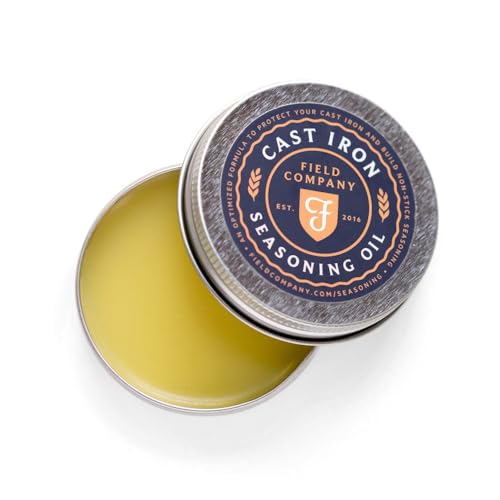
HOW TO USE: The key to naturally nonstick cast iron cookware? Cook often, and apply Seasoning Oil every time you clean your pan. Clean your cast iron with soap and a brush, then use a chain mail scrubber to smooth out existing seasoning layers. Apply a dab of Seasoning Oil and spread it thinly over the surface with a paper towel or clean rag. Wipe away excess oil to leave a dry, matte finish.

TLC for your griddle cooktop: All you need to build a slick, easy-release surface that's protected from rust and easy to work with using Blackstone griddle seasoning and cast iron conditioner