While you don’t strictly need a lid, you’ll dramatically improve your sous vide results by using one. You’ll reduce energy consumption from 2.775 kWh to 0.704 kWh per cycle, prevent up to 34% heat loss, and minimize water evaporation during extended cooking. A lid also protects your circulator from damage and stabilizes water temperature, reducing reheating cycles. You’ve got several options—from affordable ping pong balls to custom-fitted covers—each offering distinct advantages worth exploring further.
Heat Loss Prevention and Temperature Stability
Because heat escapes rapidly from an exposed sous vide container through both the water surface and vessel walls, you’ll want to understand how these mechanisms affect your cooking. Revealed containers lose heat through direct air exposure and conduction, compromising your ability to maintain thermal equilibrium. Higher cooking temperatures accelerate this dissipation, while ambient room conditions further influence heat loss rates. When you add a cover, you’ll prevent up to 34% of heat loss by reducing convective and evaporative pathways. This containment dramatically improves heat retention, particularly over extended cooking periods. You’ll notice noticeably smaller temperature drops after one hour with a cover in place. Stable water temperatures reduce your sous vide device’s reheating cycles, directly supporting consistent results and energy efficiency throughout your cooking session. Additionally, choosing the right food-safe plastics for your bags can also play a crucial role in heat retention and the safety of your sous vide cooking. Regular cast iron skillet care, like avoiding soaking or leaving wet, can similarly enhance cooking consistency due to improved heat retention.
The Problem of Water Evaporation During Extended Cooking
How quickly does your sous vide water bath evaporate during extended cooking sessions? You’ll find that evaporation rates accelerate considerably during sous vide operations exceeding 24 hours. Multiple factors compound this issue: higher water bath temperatures intensify moisture loss, while open containers expose greater surface area to ambient air. Metal containers conduct heat more efficiently than plastic alternatives, further accelerating evaporation.
This water loss creates substantial cooking safety concerns. Exposed food portions fall outside the water column, resulting in uneven cooking and potential bacterial growth. Your circulator’s heating elements risk damage if water levels drop sufficiently. Additionally, frequent topping-up disrupts temperature stability and introduces potential contaminants. Energy consumption increases as your system works harder maintaining target temperatures with reduced water volume. Understanding these evaporation dynamics proves essential for successful extended sous vide cooking. Furthermore, vacuum-sealing food can prevent moisture loss and prolong freshness during extended cooking sessions, allowing meals to maintain their nutritional value and safety.

1. Upgraded Stronger Hinged Lid: Redesigned with a thicker split-hinge structure to replace the old thin one-piece hinge, giving the lid better strength and durability for repeated opening and closing.

【Flip Open for Easier Long Cooks】 – The hinged design lets you open the lid to add water, check progress, or remove food during long cooks without taking off the whole lid, making sous vide cooking more convenient for multi-step or longer sessions.
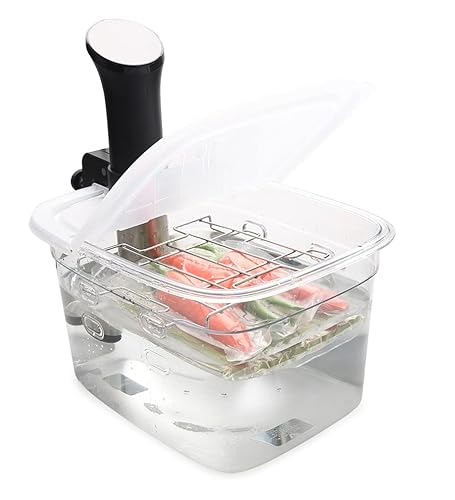
Sous Vide Container with Hinged Lid - 12 quart Everie sous vide container and a collapsible hinged lid and a removable built-in sous vide rack . The bundle works perfectly with Anova Nano AN400-US00 750w and AN500-US00 1000w and also with Instant Pot and Breville Joule though the hole on the lid is slightly bigger than Instant Pot.
How Condensation Helps Maintain Water Levels
While water loss from evaporation poses significant challenges during extended sous vide cooking, you can offset a portion of this loss through condensation—a naturally occurring process that works in your favor. When steam rises and contacts cooler surfaces, it condenses and drips back into the bath, creating measurable condensation benefits.
You’ll maximize steam collection by using tight-fitting lids or floating covers like ping pong balls. These barriers reduce exposed surface area and trap steam above the water, promoting condensation formation. Plastic lids work particularly well because they insulate effectively and support the domed shape ideal for water collection and drainage.
However, recognize that condensation doesn’t fully compensate for long-term evaporation. It’s a supplementary mechanism—useful but limited. You’ll still need periodic water-level monitoring, especially during extended cooking sessions exceeding several hours. Maintaining optimal conditions such as keeping the lid on can further enhance your sous vide experience.
Energy Efficiency and Long-Term Cost Savings
A lid transforms your sous vide setup into a heat-retention powerhouse, delivering measurable reductions in both energy consumption and operational costs. You’ll consume as little as 0.704 kWh with insulation and a lid versus 2.775 kWh without them—dropping your per-cycle cost from 28 cents to 7 cents at standard electricity rates. These energy savings accumulate considerably across multiple cooking sessions. Beyond immediate utility bill reductions, you’ll extend your immersion circulator’s functional lifespan by minimizing heat cycles and mechanical strain on the heating element. Fewer dry-heating risks from evaporation further protect your equipment. Additionally, vacuum sealing food can also enhance the overall efficiency of your sous vide cooking by further preserving flavors and nutrients. Though lids and insulating accessories require upfront investment, their cost efficiency becomes evident through combined electricity savings and reduced maintenance expenses over time. Additionally, using a lid allows for even heat distribution similar to how cast iron skillets excel at maintaining temperature, which is essential for optimal sous vide results.
Custom-Fitted Lids for Optimal Performance
When you’re investing in sous vide equipment, standard lids won’t deliver the performance gains that custom-fitted designs provide. Custom fit lids optimize the seal for your specific container dimensions, reducing water evaporation by up to 90% when combined with insulation balls. This precision engineering maintains stable water levels throughout extended cooking sessions, minimizing circulator strain and extending equipment lifespan.
The lid benefits extend beyond evaporation control. Custom-fitted designs prevent temperature fluctuations by sealing the water bath surface, enabling precise ±0.1°C accuracy maintenance. Your thermal circulator recovers faster after adding food, ensuring consistent texture and doneness across all items. Polycarbonate construction rated for -40°C to +100°C withstands repeated thermal cycling without warping. These specifications make custom-fitted lids essential for reliable, high-volume sous vide operations requiring stable conditions and professional-grade performance.

✅ Lid for the the LIPAVI C10 Sous Vide Container - Perfect fit for all major immersion circulators on the market

Sous Vide Container Bundle - A must have bundle of 12 quart sous vide container and a universal silicone lid. Lid is with cutout at corner and compatible with Anova 800W 900W 1000W, Anova Nano, Anova AN500-US00, Joule, Wanacle and Instant Pot sous vide cookers
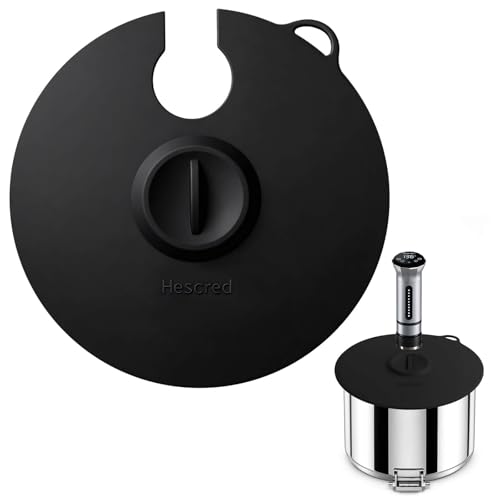
【Sous Vide Precision Cooker Silicone Lids】This heavy-duty silicone lid is specifically designed for Anova and compatible with most sous vide cookers, ensuring a perfect cook with incredible flavor.
Ping Pong Balls as an Affordable Alternative
For those seeking a budget-conscious alternative to custom-fitted lids, ping pong balls deliver impressive performance without the premium price tag. You’ll spend roughly half the cost of a standard sous vide lid—typically $15–25 for 75–100 balls versus $40–60 for specialized lids.
The ping pong ball benefits extend beyond affordability. You’ll experience reduced evaporation, lower energy consumption, and consistent temperature maintenance during extended cooks. Balls conform to any container shape, eliminating the need for custom measurements or modifications.
This sous vide accessibility matters practically too. You can easily add or remove food bags without disturbing the entire setup. After cooking, you simply strain and reuse the balls indefinitely. Their reusable nature contrasts sharply with disposable alternatives like plastic wrap or aluminum foil, maximizing long-term value while maintaining visual monitoring capability. Additionally, using “vacuum sealing” techniques ensures that your sous vide meals are prepped efficiently and stored for maximum freshness.

JOOLA - A PROFESSIONAL TABLE TENNIS BRAND TRUSTED FOR 60+ YEARS: Launched in the 1950s, JOOLA has been the proud sponsor of the biggest tournaments in the world, including the Olympics, World Championships, and US Open; Equipment designed for all levels

BULK PACK: 12 Pack Colored 40mm Table Tennis Balls. Ping Pong Balls Bulk Quantity and Cheap color balls without Logo. Low bounce Table Tennis Balls for Beginner & Adults. Not Suitable For Professional players.

STIGA – Since 1944, STIGA has been the innovative leader in table tennis equipment. STIGA combines superior craftsmanship with exceptional performance in every product. The highest quality equipment for all, from amateur to pro. That’s the STIGA heritage
Comparing Different Lid Materials and Options
While ping pong balls offer an economical solution, they’re just one of several lid options available for sous vide cooking. Your material comparison reveals distinct trade-offs in lid durability and performance.
Polycarbonate lids provide transparency and ease of modification, though they’re susceptible to cracking under stress. Additionally, using specialized sous vide bags helps ensure that your food cooks evenly and safely. Stainless steel options deliver superior heat retention and durability for heavy use, but sacrifice visibility. Custom-fit Cambro lids guarantee ideal sealing and temperature stability, yet remain brand-specific.
Silicone collars offer adjustable versatility across circulator sizes while reducing damage risk. They’re dishwasher safe and maintain performance at sous vide temperatures. Additionally, using alternatives like freezer-safe Ziploc bags for sous vide can enhance cooking flexibility without requiring dedicated equipment.
Your selection depends on usage intensity: casual cooking favors affordable polycarbonate, while professional applications warrant stainless steel’s longevity. Silicone components enhance any option’s functionality regardless of primary material composition.
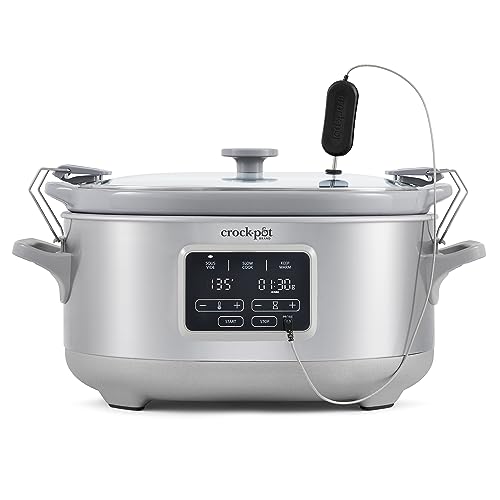
Sous Vide Function: Food cooks in a temperature controlled water bath, in air-tight bags, for unrivaled results. The removable probe ensures food reaches a precise internal temperature, so there's no over- or under-cooking. Finish on the stove for a perfect, caramelized sear

𝗨𝗻𝗶𝘃𝗲𝗿𝘀𝗮𝗹 𝗖𝗼𝗺𝗽𝗮𝘁𝗶𝗯𝗶𝗹𝗶𝘁𝘆: Compatible with most wand-style immersion circulators, including Anova, Breville Joule, and Inkbird. The precision lid cutout ensures proper clearance for your sous vide machine, creating a clean, natural fit. The sturdy container lets your device clamp on securely and stay firmly in place.
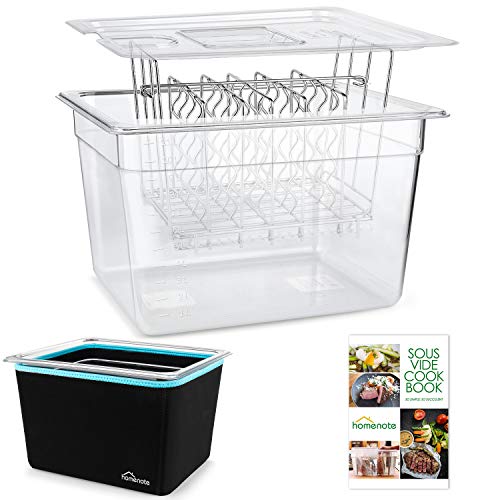
Complete sous vide essential accessories: 12 Qt container and lid with pre-cut holes (middle mount), sous vide rack and sleeve that make up these bundle kits are all you need to start your sous vide cooking
Managing Water Levels Without a Cover
Cooking sous vide without a lid demands active water management because your exposed bath loses approximately 1/4 litre per hour through evaporation—a rate that accelerates with higher temperatures and extended cook times. Implement systematic water level monitoring by checking your bath every few hours, as sudden drops expose the circulator and disrupt cooking consistency.
Your refill strategies should prioritize temperature stability. Add water heated to or near your cooking temperature to prevent thermal shock that extends cook time. Use visual inspection as your most reliable monitoring method, and set reminders for extended cooks. Additionally, using a lid in sous vide can help reduce water loss through evaporation, making your cooking process more efficient.
For extended operations, consider deeper containers that provide larger water reserves, reducing exposure risk. Add only enough water to maintain circulator submersion, avoiding contamination or splashing that compromises your sous vide process.
Practical Setup Recommendations for Your Sous Vide Bath
Because you’ll realize that lid selection fundamentally impacts your cooking efficiency and results, you’ll want to match your container and cover setup to your specific needs. Select rectangular stainless steel sous vide containers—they’re at least 6 inches deep and optimize water circulation. During lid installation, verify custom cutouts fit your immersion circulator snugly, preventing heat and moisture escape. For irregular containers, deploy sufficient ping pong balls to create an adaptable floating surface. Seal edges properly to minimize steam leakage. This configuration reduces energy consumption by approximately 66%, cuts evaporation losses, and maintains stable temperatures. Using a lid can also help preserve food quality by reducing oxidation, which is crucial for achieving consistent results in sous vide cooking. Well-fitted setups yield superior texture and doneness uniformity while extending circulator lifespan and supporting sustainable cooking practices. Additionally, using a lid can help minimize evaporation losses, which is crucial for achieving consistent results in sous vide cooking.

Complete Sous Vide Setup (Cooker Not Included) – Includes a 12-quart sous vide container + collapsible hinged lid + stainless rack divider, giving you a cleaner, more organized water bath right away.

Sous Vide Accessory Bundle Kit - Includes a 12 quart Everie sous vide container and a collapsible hinged lid and a stainless steel sous vide rack. The bundle works perfectly with Anova Nano 750w and new model AN500-US00 1000w and also with Instant Pot though the hole on the lid is slightly bigger than Instant Pot. It does not work with Anova Bluetooth or WiFi.

【Sous Vide Precision Cooker Silicone Lids】This a heavy silicone lid designed for Anova, it is also compatible with most sous vide cookers,Sous vide containers with lids help you to get a perfect cook while achieving great flavor