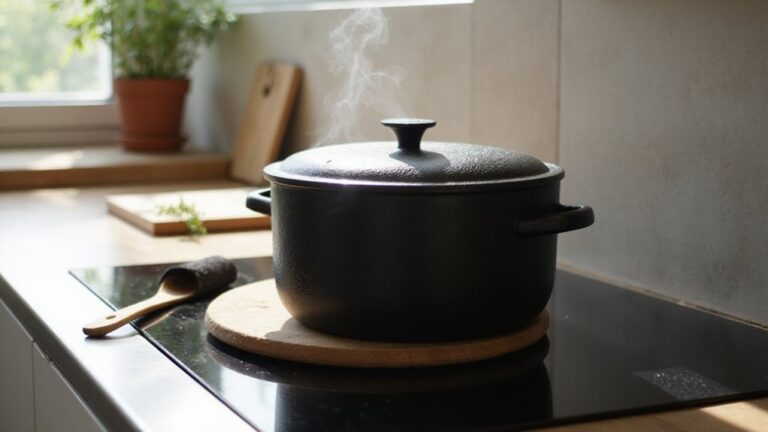
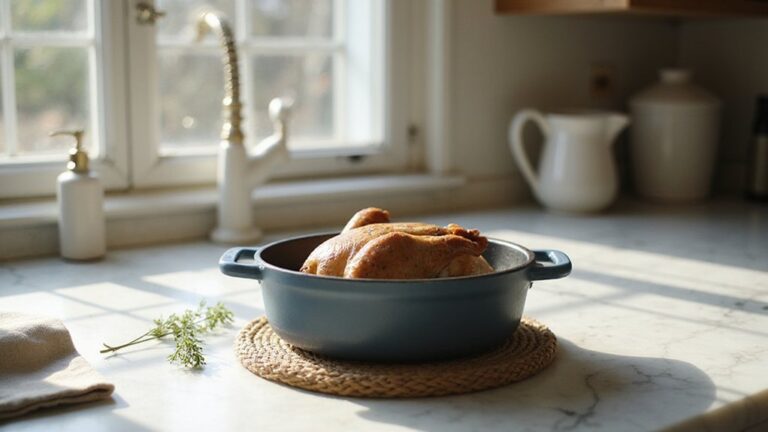
You’ll want to prioritize material durability—enameled cast iron offers rust resistance and low maintenance, while stainless steel resists warping. Evaluate heat retention capabilities; cast iron excels here with superior performance. Examine lid design closely; tight-fitting, domed lids create essential moisture seals for tender results. Consider weight and handle design for practical handling, typically 5-7 quarts suits most home cooks. Assess enamel coating quality to prevent chipping. Understanding these core factors positions you to make an informed selection tailored to your cooking style.
Material Options and Their Benefits
When you’re shopping for a Dutch oven, the material you choose will greatly impact its performance, maintenance requirements, and longevity. Enameled cast iron dominates today’s market, offering exceptional durability and rust resistance through its protective coating. The enamel benefits include effortless cleaning and low maintenance, though the weight demands careful handling. Dutch ovens are ideal for slow-cooking techniques, showcasing their versatility across a range of recipes.
Stainless alternatives provide lighter construction suitable for frequent cooking. These multi-ply options require no seasoning and resist acidic foods without reactivity concerns. They’re responsive to temperature fluctuations, enabling precise heat control for quick cooking applications.
Aluminum heats rapidly but sacrifices heat retention. Ceramic delivers even distribution and non-reactivity yet remains fragile. Each material presents distinct tradeoffs between weight, heat performance, durability, and maintenance demands, requiring you to prioritize your cooking style and preferences. Additionally, selecting the right material can significantly enhance food preservation techniques, allowing for safer storage of leftovers.

Even Heat Distribution Retention: This Umite Chef Dutch oven Made with heavy-duty enameled cast iron, ensures even heat distribution for perfect searing and slow cooking, locking in flavors. thickened walls lock in heat for slow braising, searing, and baking. Unlike thin pots that scorch food, this professional-grade Enameled cast iron potSuperior heat retention after preheating (allow 5-7 mins for even distribution). CRITICAL: Always cool naturally for 45+ mins before cleaning. Thermal shock (hot-to-cold contact) cracks enamel. USE TIP: Preheat 2-3 mins on medium-low only

BREAD BAKER'S DUTCH OVEN, 500°F OVEN-SAFE, SOURDOUGH-READY – one of the highest ratings in its class – delivering the sustained heat that sourdough, artisan bread, and pizza dough demand. Thick cast-iron walls trap and circulate heat like a brick oven, producing bakery-quality crusts at home. The tight-sealing lid features raised self-basting nodes that continuously recirculate steam: a perfect moisture chamber, every single bake.

【Airtight Lid Locks In Freshness & Flavor】Experience the magic of this Dutch oven with lid, precision-engineered to create a tight seal. It locks in moisture and essential nutrients, delivering richer flavor and incredibly tender, juicy results in every dish—from slow-braised meats to hearty soups. Achieve a perfect, crispy crust on your artisan loaves—it's the ultimate Dutch oven for bread baking. The interior self-basting dots continuously redistribute condensation, ensuring your food stays perfectly moist, never dry or mushy
Heat Retention and Distribution Capabilities
Because cast iron’s inherent thermal properties fundamentally distinguish Dutch ovens from other cookware options, understanding heat retention and distribution capabilities becomes crucial to selecting the right vessel for your cooking needs.
Cast iron Dutch ovens excel at retaining heat due to their thick-walled construction, which distributes warmth evenly throughout the vessel once heated. While initial preheating takes longer, this thermal mass guarantees superior cooking performance for braising, stewing, and baking applications. Additionally, allowing your Dutch oven to acclimate to room temperature, similar to the acclimation period recommended for infrared thermometers, can further enhance its cooking efficiency.
Testing reveals minimal performance differences between major brands, as most Dutch ovens feature similar wall thicknesses and gray cast iron composition. However, higher-quality options demonstrate more consistent heat retention metrics, enabling deeper, more even searing and superior results in long-duration cooking scenarios where sustained temperature stability becomes critical. Additionally, enameled cast iron provides excellent heat retention and allows for cooking with acidic ingredients without damaging the cookware.
Lid Design and Sealing Performance
Your Dutch oven’s lid fundamentally determines cooking performance, influencing everything from moisture retention to heat management during braising, stewing, and baking. Lid innovation has evolved through domed and flat designs, each optimizing steam management differently. Domed lids redirect condensation back into your vessel, ensuring even moisture redistribution across food surfaces. Flat self-basting lids feature textured undersides that accomplish similar results with contemporary aesthetics. A Dutch oven can also be incredibly effective for baking no-knead bread, leveraging its lid design for excellent moisture control during the baking process.
Handle design greatly impacts functionality—large knobs provide superior grip control compared to two-finger brass handles, particularly when shifting heavy cast iron between stovetop and oven. Your lid’s tight-fitting construction creates a moisture-seal environment essential for transforming tough cuts into tender results. Lastly, if stored properly, vacuum-sealed smoked salmon can maintain quality and safety for up to 3 weeks, which is similar to how proper sealing enhances your Dutch oven’s performance. Cast iron lids maintain oven-safe ratings up to 600°F, while glass lids limit you to 400°F, affecting your cooking method options and overall versatility.

𝐃𝐨𝐦𝐞 𝐃𝐞𝐬𝐢𝐠𝐧: Perfect for Crusty Sourdough The AHJ pre-seasoned Dutch oven is ideal for sourdough baking. When used with the lid in the oven, it locks in steam—ensuring condensation drips down the lid walls without soggying the bread—for an ultra-crisp crust and soft, fluffy interior. The 5-quart large capacity easily accommodates big sourdough loaves, perfect for sharing with the whole family.

【10QT CAMPING DUTCH OVEN】 The Velaze 10 Quart camping dutch oven is made of cast iron with a high-quality design and excellent thermal conductivity and heat retention. The flanged lid holds hot coals and inverts for use as a griddle. The extra stand support allows the oven to sit perfectly over the table.

PFAS-FREE & NON-TOXIC COOKWARE: ATTENTION: If your manual mentions "enamel" or "low-medium heat only", it is incorrect. This is 100% pure cast iron cookware! Not Enamel-Coated: Safe for High-Heat Cooking! Metal utensils OK (avoid sharp edges) Every Umite Chef cast iron pot has been burned with 100% natural, food-grade vegetable oils—absolutely zero PFAS, PFOA, PTFE, synthetic coatings, or toxic chemicals. Our seasoning naturally builds with use, developing a superior non-stick surface over time while ensuring oven-to-table safety
Weight and Handling Considerations
While a well-designed lid manages steam and heat efficiently, the Dutch oven’s weight fundamentally shapes how you’ll interact with it in your kitchen. Your weight tolerance directly influences which capacity you’ll comfortably manage. Models under 12 pounds suit individuals requiring frequent repositioning between stovetop and oven. Conversely, heavier Staub constructions deliver superior heat retention but demand two-person handling when filled. Additionally, heavy cast iron skillets allow for even cooking, much like Dutch ovens, enhancing your overall cooking experience.
Handle design greatly impacts handling ease. Le Creuset’s wider openings reduce strain during lifting and carrying. Consider your storage constraints too—standard cabinets accommodate 5-7 quart models adequately, while larger sizes present accessibility challenges. The practical sweet spot for most home cooks remains 5-7 quarts, balancing capacity with manageable weight. Evaluate your physical capability and cooking demands when selecting your Dutch oven’s size. Additionally, preheating your cooking vessel can significantly enhance cooking results, just as it does with cast iron skillets for cornbread.
Durability and Long-Term Maintenance
A Dutch oven’s material composition fundamentally determines its durability trajectory and maintenance demands. Enameled cast iron offers exceptional longevity with minimal upkeep—you’ll simply hand-wash it with mild soap and water. Importantly, avoid using abrasive scrubbers that can damage enamel coatings. Bare cast iron requires regular seasoning and careful drying to prevent rust, though it can last generations with proper care. Stainless steel resists warping and corrosion, requiring no specialized maintenance, though it may lack superior heat retention. Ceramic Dutch ovens present fragility concerns; you’ll need to avoid thermal shock and careful handling to prevent cracking.
Key durability factors include material quality and construction standards. Your maintenance tips should emphasize gentle cleaning, dry storage, and avoiding temperature extremes. High-quality enamel coatings resist chipping effectively, ensuring decades of reliable performance when you follow recommended care protocols. Additionally, regular seasoning can protect the exposed cast iron edges and enhance the skillet’s durability when using enameled cast iron cookware.

【Airtight Lid Locks In Freshness & Flavor】Experience the magic of this Dutch oven with lid, precision-engineered to create a tight seal. It locks in moisture and essential nutrients, delivering richer flavor and incredibly tender, juicy results in every dish—from slow-braised meats to hearty soups. Achieve a perfect, crispy crust on your artisan loaves—it's the ultimate Dutch oven for bread baking. The interior self-basting dots continuously redistribute condensation, ensuring your food stays perfectly moist, never dry or mushy

Even Heat Distribution Retention: Crafted from heavy-duty enameled cast iron, the Wildone Dutch Oven ensures superior even heat distribution for flawless searing and slow cooking, locking in flavors. Thick cast-iron walls trap and circulate heat like a brick oven, producing bakery-quality crusts at home. Whether you're a beginner or a seasoned baker, consistent results are now within reach

Quality Enameled Dutch Oven: The Lodge Essential Enamel Cast Iron Dutch Oven gives you all the benefits of cast iron cooking, great heat retention and durability, without fear of rust; it's also PFAS free
Cooking Versatility and Use Cases
Dutch ovens excel across virtually every cooking application because their design fundamentally supports multiple techniques within a single vessel. You’ll appreciate how the heavy cast iron distributes heat evenly, enabling seamless shifts from stovetop searing to oven-finished braising. For slow cooking, the tight-fitting lid traps steam, creating self-basting cycles that tenderize proteins and meld flavors deeply. This method is particularly effective for creating a fall-apart tender pot roast, enhancing the overall dining experience.
Your meal prep efficiency increases considerably with one-pot preparation. You’re searing meat, sautéing vegetables, and finishing dishes without transferring ingredients between cookware. This approach minimizes cleanup while developing complex flavor profiles naturally.
Beyond traditional applications, you’ll find Dutch ovens indispensable for bread baking, where trapped steam creates perfectly crispy crusts and soft interiors. Additionally, their ability to preserve nutrients during cooking makes them a thoughtful choice for health-conscious meal preparation. Whether you’re preparing soups, stews, or campfire meals, this versatile vessel adapts to virtually any culinary demand you’ll encounter.
Comparing Cast Iron, Stainless Steel, and Ceramic
How you’ll choose among Dutch oven materials depends on prioritizing heat performance, durability, maintenance demands, and your specific cooking style. Cast iron benefits include superior heat retention and even distribution, making them ideal for slow cooking and braising. However, bare cast iron requires regular seasoning and reacts with acidic ingredients. Enameled cast iron eliminates these concerns but costs considerably more. Additionally, Dutch oven potato recipes showcase the versatility of pot materials in achieving delicious results.
Stainless steel advantages center on non-reactivity, minimal maintenance, and lightweight handling. Yet stainless steel conducts heat less effectively, potentially causing uneven cooking unless constructed with aluminum or copper cores.
Ceramic Dutch ovens offer the lightest weight and versatility but sacrifice durability and heat responsiveness. Additionally, considering corn preservation techniques can help you better understand the importance of heat performance for certain cooking methods. Your choice ultimately reflects your cooking priorities: whether you value heat performance, convenience, budget, or portability.

Quality Enameled Dutch Oven: The Lodge Essential Enamel Cast Iron Dutch Oven gives you all the benefits of cast iron cooking, great heat retention and durability, without fear of rust; it's also PFAS free
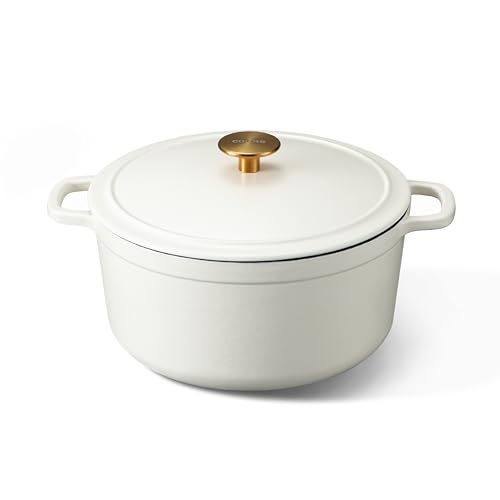
Superior Even Heat Control: One-piece thick cast iron delivers uniform heat with zero hot spots and excellent heat retention, ideal for searing, braising and crusty bread baking. Preheat on medium-low heat; cool naturally before washing to prevent enamel cracking.

Quality Enameled Dutch Oven: The Lodge Essential Enamel Cast Iron Dutch Oven gives you all the benefits of cast iron cooking, great heat retention and durability, without fear of rust; it's also PFAS free
Choosing the Right Dutch Oven for Your Needs
Once you’ve settled on a material, you’ll need to evaluate size, shape, and design features to match your cooking habits and household needs. Consider your household size and cooking priorities when selecting cooking capacities. Single individuals benefit from 3-to-4.5-quart vessels, while families of four typically require 6-quart models. For entertaining, opt for 7-quart or larger sizes. A well-sized Dutch oven can also accommodate slow cooking methods that enhance flavor and tenderness.
Dutch oven shapes considerably impact functionality. Round vessels fit standard burners and excel for soups, stews, and bread baking. Oval designs provide additional space for whole roasts and braised meats with accompanying vegetables, though they’re less efficient on stovetops.
Evaluate lid features and interior finishes based on your preferences. Spiked or ribbed lids enhance moisture retention through improved condensation management. Dark interiors conceal crazing and scratches better than light finishes, preserving aesthetic appeal throughout years of use. Additionally, consider the appropriate Dutch oven size according to group size for optimal cooking efficiency.

Even Heat Distribution Retention: Crafted from heavy-duty enameled cast iron, the Wildone Dutch Oven ensures superior even heat distribution for flawless searing and slow cooking, locking in flavors. Thick cast-iron walls trap and circulate heat like a brick oven, producing bakery-quality crusts at home. Whether you're a beginner or a seasoned baker, consistent results are now within reach

OVEN SAFE DESIGN: Withstand temperatures up to 500 degrees Fahrenheit, making this enamel cast iron dutch oven suitable for various cooking methods