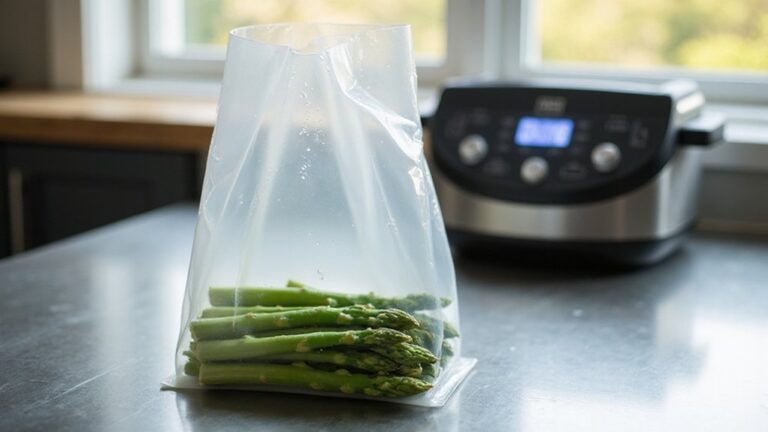
You can safely use FoodSaver bags for sous vide cooking when you respect their 212°F temperature ceiling. They’re constructed from five FDA-approved plastic layers—including nylon and polyethylene—that are BPA and phthalate-free. Third-party testing confirms they won’t leak chemicals during prolonged heat exposure. Proper sealing techniques and compatible equipment guarantee contamination prevention. Understanding their material composition and regulatory compliance reveals why they’re engineered specifically for this cooking method.
What Are FoodSaver Bags Made From?
FoodSaver bags are engineered from five distinct plastic layers that work together to create an airtight seal and durable barrier against oxygen and moisture. You’ll find polyethylene in the composition, which provides material flexibility and heat-seal compatibility essential for vacuum packaging. The outer nylon layer greatly enhances bag durability by resisting punctures while blocking contaminants effectively.
The smooth side measures approximately 3 mils thick, while the textured side reaches 11.5 mils thick to accommodate your sealer’s heating element. This layering arrangement allows you to evacuate air completely while maintaining structural integrity. The FDA-approved, food-safe plastics contain no BPA or phthalates, ensuring you’re storing food safely. These bags’ construction enables you to reseal them multiple times when cleaned properly. Additionally, they significantly extend shelf life of food by preventing spoilage and nutrient loss. Furthermore, using vacuum sealing for meats can help retain their quality and prevent freezer burn, allowing for longer storage periods.

Compatible with All Desktop Vacuum Sealers: These vacuum sealer bags are designed to work with all traditional desktop vacuum sealer machines. Simple to operate and convenient to use. (Note: These bags do not feature an air valve and are not compatible with handheld vacuum sealers.)

Customizable Length: Cut the roll to suit your specific storage needs

✔️【Wide Range of Use】Made of PE/PA food grade material, FIRAWER sous vide cooking bags are reusable up to 10 times, can keeps fresh for meat, seafood, vegetables, fruits, grains, nuts snacks and sandwiches, ect. Suitable for kitchen, camping, spring outing, travel and other scenes.
Temperature Limits and Heat Resistance for Sous Vide
When you’re planning to use vacuum-sealed bags for sous vide cooking, understanding their temperature limits is essential to preventing seal failure and food contamination. FoodSaver bags maintain safe heat resistance up to 212°F (100°C) maximum. Exceeding this threshold risks seal separation, where plastic expansion causes water penetration into your food. You should maintain cooking temperatures between 185°F and 212°F to guarantee peak performance. However, verify your specific bag’s temperature rating before use—specialized cooking bags rated for higher temperatures exist if you need them. Additionally, investing in a vacuum sealer can enhance cooking results and food quality. Never assume thickness indicates heat resistance; manufacturer specifications always take precedence. By respecting these temperature limits and heat resistance parameters, you’ll achieve reliable sous vide results safely. Additionally, using bags that are BPA-free and tested helps ensure food safety during cooking.
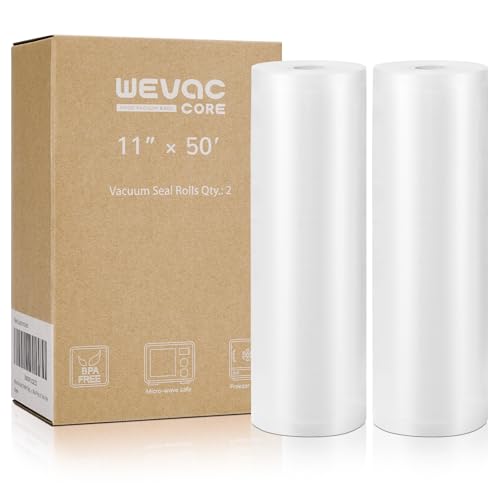
HEAVY DUTY AND PUNCTURE PREVENTION - 2 pack of 11 inch by 50 feet rolls with embossed channels to increase suction, keep fresh without freezer burn or dehydration
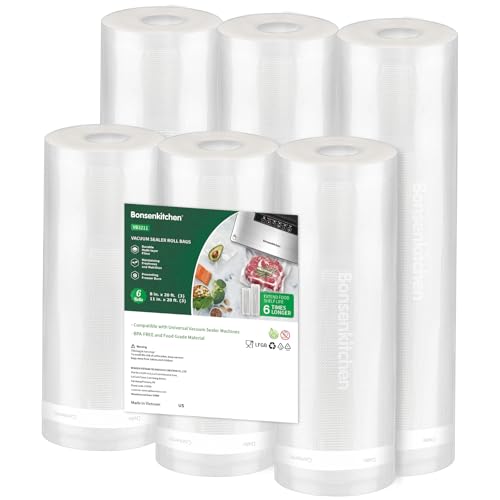
BPA FREE: Bonsenkitchen vacuum food sealer roll bags can be microwaved, frozen, re-used, washed, boiled and dishwasher safe. Allows you to precisely control your cooking temperature to achieve perfect results. You can cook sous vide in Bonsenkitchen bags by placing them in water at any temperature up to 230°F/110°C

🔋 Cordless & Rechargeable for Anytime Use Enjoy powerful suction without cords! Our electric handheld vacuum sealer features a built-in rechargeable battery, making it perfect for home kitchens, camping trips, or meal prepping on the go.
Safety Certifications and Regulatory Compliance
Since you’re investing in sous vide equipment, you’ll want assurance that your vacuum-sealed bags meet rigorous safety standards. Foodsaver bags comply with FDA food safety regulations and Health Canada standards, confirming their suitability for food contact. These bags are BPA-free and contain no phthalates or hormone-disrupting chemicals, addressing primary health concerns in food packaging.
The certification processes involve third-party testing of seal integrity, permeability, and durability under sous vide temperatures (50–90°C). Foodsaver’s patented five-layer construction—featuring nylon outer layers—maintains vacuum integrity while preventing chemical leakage during extended cooking. This multi-layer design guarantees oxygen and moisture barriers meet food-grade criteria. The company’s recognition as an industry leader reflects adherence to strict North American regulatory frameworks, giving you confidence in your bags’ safety profile.
Chemical Composition and Health Considerations
Understanding what’s actually in your vacuum-sealed bags goes beyond regulatory stamps—it’s about knowing the specific materials contacting your food during extended heating. FoodSaver bags contain five polyethylene layers with a nylon outer shell, deliberately formulated without BPA, phthalates, or plasticizers that could pose health risks. You’re working with chemically stable materials that won’t degrade at typical sous vide temperatures—60°C (140°F) and below. Additionally, sous vide cooking creates a hot and humid environment that can enhance flavors while safely cooking food over long periods. Testing confirms no measurable chemical leaching occurs during eight-hour cooking periods, as polyethylene maintains structural integrity under these conditions. The bag’s composition follows FDA food-contact standards, ensuring the barrier protecting your food remains uncompromised. You’re fundamentally using materials engineered specifically to prevent the chemical migration that concerns home cooks pursuing safe sous vide cooking. Additionally, vacuum sealing can extend the shelf life of food by 3 to 5 times longer compared to conventional storage methods, which further emphasizes the benefits of using high-quality bags like FoodSaver for cooking and preservation.
Proper Usage and Compatibility Guidelines
To maximize the performance of FoodSaver® bags for sous vide cooking, you’ll need to guarantee your vacuum sealer matches the specific equipment requirements. You’ll find that reusable bags work exclusively with FoodSaver vacuum sealers featuring built-in or handheld accessories, including battery-powered models. Chamber vacuum sealers aren’t necessary for proper operation.
For proper sealing, press the valve’s center after vacuuming completes, then secure the zipper with the included black clip before submerging. Maintain water temperatures just below 212°F to prevent material degradation. Remember that vacuum sealing can significantly slow microbial growth, further enhancing the safety and longevity of your food. Additionally, vacuum sealing helps extend the shelf life of food, making it an excellent choice for sous vide cooking.
Storage recommendations dictate keeping bags flat and dry at room temperature, refrigerated, or frozen. Label your bags for easy identification and store food for up to three months maximum. Avoid direct sunlight and heat sources to preserve bag integrity and prevent odor absorption.

Multilayer Design: Ensures an airtight seal, extending freshness and locking in flavors.

VACUUM SEALER BAGS ROLLS: 8"x20' 3rolls+11"x20' 3rolls, XinBaoLong Food Saver Bags Rolls, Commercial Grade, Heavy Duty, BPA Free for Vac Storage, Kitchen Gadgets, Kitchen Accessories

Increased Durability: 30% thicker than regular FoodSaver precut bags
Maximizing Food Preservation and Sustainability
Beyond proper sealing technique, FoodSaver® bags for sous vide offer significant advantages for preserving nutritional quality and extending food longevity. You’ll retain more B vitamins and essential minerals like copper, potassium, and magnesium since vacuum sealing prevents nutrient leaching into cooking water. The oxygen-free environment inhibits aerobic bacterial growth, extending shelf life up to 42 days depending on your food type. Additionally, vacuum sealing can keep raw vacuum-sealed chicken safe for up to 1 to 2 weeks in the refrigerator, significantly reducing spoilage risk. Vacuum sealing is especially effective for certain foods like meats that can benefit from an extended shelf life.
Your sustainability practices improve dramatically through reduced food waste. You can cook only what you need and store vacuum-sealed portions efficiently, minimizing spoilage. Longer shelf life decreases disposal frequency while supporting bulk purchasing and seasonal ingredient utilization. Lower cooking losses mean you retain more edible product per batch, improving overall resource efficiency while maintaining superior flavor concentration and texture consistency.